REVIEW · PORTO
Porto: 2-Hour Shared Tuk-Tuk Tour
Book on GetYourGuide →Operated by Tuktour Porto · Bookable on GetYourGuide
Porto on a tuk-tuk feels made for fast orientation. This 2-hour shared ride pairs a 100% electric tuk-tuk with a local guide’s stories, so you’re not just collecting photos—you’re learning why the city looks the way it does. I also like the small-group size (up to 8), which keeps the chat going without turning your morning into a meeting. The biggest drawback: it’s not wheelchair-friendly, and you’ll want sturdy shoes because some streets and stops involve steep, uneven walking.
What you get for the money is a smart mix of classic Porto icons and quick photo breaks that help you decide what to explore later. Guides in the same program have shared great pacing and personality—people have praised folks like Gustaf, Felisberto, Helena, Diogo, Thomas, Tomas, Raphael, Mac, Diego, Mateos, and Matheus for making the time fly and for pointing out details you’d miss on foot. If you hate sharing space with other travelers or want a strictly private, custom route, a shared tour may feel a bit less flexible than you’d like.
Key Points at a Glance
- 100% electric tuk-tuk ride cuts down the hassle and makes the experience smoother in traffic
- Up to 8 people keeps it interactive without feeling crowded
- Photo stops built in at Serra do Pilar and Porto Cathedral help you capture the big moments
- Pass-by highlights like Aliados Avenue and the Clérigos Tower area give you fast landmarks
- Local guide stories turn viewpoints and streets into context you can remember
- Flexible route means you may see more than the obvious stops, depending on timing
In This Review
- Why a shared electric tuk-tuk works so well in Porto
- The route focus: Serra do Pilar, Aliados Avenue, and Clérigos
- Mosteiro da Serra do Pilar (photo stop)
- Avenida dos Aliados (pass by)
- Clérigos Tower (pass by)
- Porto Cathedral: the best quick reset point
- What you should do during the stop
- What you’ll likely see along the way (Ribeira, bridges, viewpoints)
- Small group energy: sharing the ride without feeling boxed in
- Guides and stories: what to listen for so it sticks
- Comfort on a tuk-tuk: what to bring and what to watch
- Bring
- Expect the “ride feel”
- Price and value: is $41 fair for 2 hours?
- Who this tour suits best (and who might skip it)
- Should you book the Porto 2-hour shared tuk-tuk tour?
- FAQ
- Where is the meeting point for the tour?
- How long is the Porto 2-hour shared tuk-tuk tour?
- Is this tour private or shared?
- What language is the live guide?
- Which stops are included during the 2-hour route?
- Is snacks included?
- What should I bring?
- Is the tour wheelchair accessible?
Why a shared electric tuk-tuk works so well in Porto
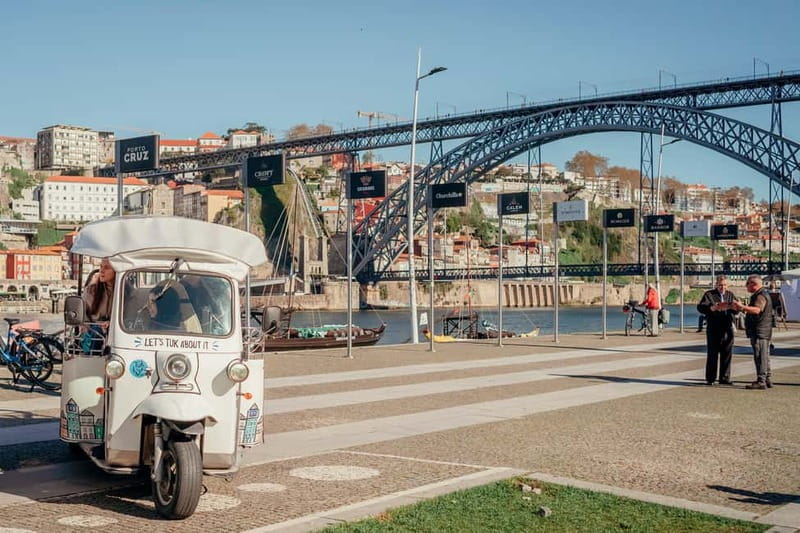
Porto is gorgeous, but it’s also steep. After a day of walking, you start feeling it in your legs. A tuk-tuk is a practical reset button: you cover ground quickly, then use the walking time only where it matters—photo stops and short stretches to reposition.
What I like about this tour format is the balance. You’re not stuck in a bus line, and you’re not left alone trying to read the city from a map while your energy drains. With a guide onboard, you get the why behind the landmarks, from street layout to the purpose of major viewpoints.
Since it’s shared, the vibe stays social. That matters in a place like Porto, where it’s easy to do everything solo and still feel a little disconnected. You’ll be joining other visitors for the ride, which usually makes the ride feel lighter and the questions easier to ask.
The route focus: Serra do Pilar, Aliados Avenue, and Clérigos
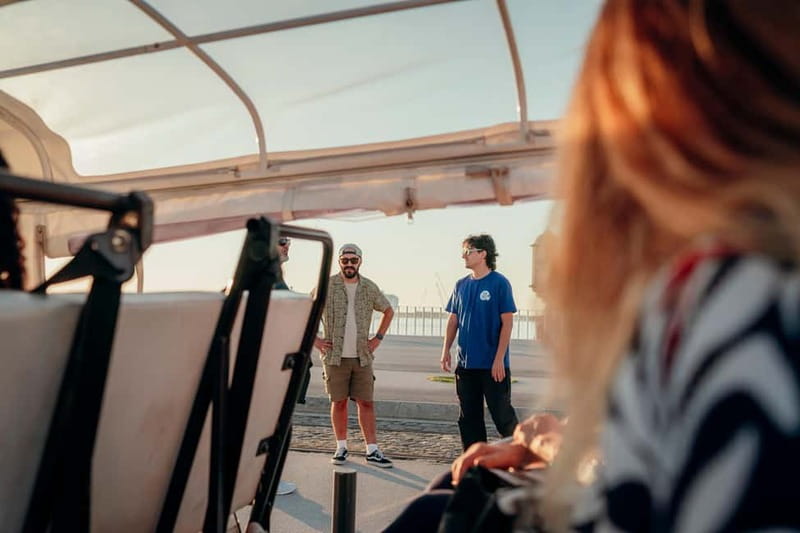
This tour is built around a tight loop, with a few “pause and look” moments and a bunch of “ride and notice” segments. It starts at Rua Alexandre Herculano 251, then heads toward some of the city’s highest-feeling spots and central streets.
A few more Porto tours and experiences worth a look
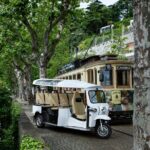


Mosteiro da Serra do Pilar (photo stop)
The Serra do Pilar stop is your first real angle into Porto. Expect a 15-minute photo stop, which is long enough to frame the view and wander a bit at a relaxed pace. Even if you’re not a church-and-monastery person, this is one of those places that instantly teaches you Porto’s geography—where the river sits, how the hills step up, and why certain neighborhoods look the way they do.
Practical note: this is a photo stop, not a full guided walk-through. If you want deep time inside buildings, you’ll use this tour to learn what to return to later.
Avenida dos Aliados (pass by)
Next comes Avenida dos Aliados, a classic Porto street for a quick hit of the city’s central energy. It’s listed as a 5-minute pass, so don’t expect long exploring here. Think of it as a moving landmark check: you’ll see the street’s scale and its role as a city hub, then continue toward other signatures.
If you’re the type who loves streetscape details—signage, façades, and how people flow—this pass can still be useful. The guide can connect what you’re seeing to why it became such a key address.
Clérigos Tower (pass by)
Clérigos Tower is another fast landmark moment, also a 5-minute pass. What makes this worth doing on a tuk-tuk is that it pairs big-city icon status with the surrounding context. From the ride, you can get the tower as a reference point, then later decide if you want to climb or spend longer nearby on your own.
If you’re hoping for lots of time here, you may feel the clock. This tour is designed for orientation, not for slow sightseeing.
Porto Cathedral: the best quick reset point

The most satisfying part of a short tour is often the last “anchor” stop, and that’s where Porto Cathedral fits in. You get another 15-minute photo stop here, which is a great use of time for two reasons.
First, it’s a major landmark that helps you understand where central Porto sits in the bigger map. Second, this timing gives you a chance to re-ground your sense of direction before you ride back to the starting point.






What you should do during the stop
Don’t treat this like a race. Use the 15 minutes to:
- take a couple of angles (front view and any best-side viewpoint you spot)
- look up at the towerlines and roof shapes
- pick one nearby street to follow later after the tour ends
Also, remember you’re in a shared group. It’s easy to get caught up waiting for everyone, so keep your photos moving and save your deep exploring for after.
What you’ll likely see along the way (Ribeira, bridges, viewpoints)

Even though the schedule includes specific stops, the experience is also described as flexible—so your route can include key Porto scenes beyond the short listed moments. The tour highlights mention iconic areas such as Cais da Ribeira and the Dom Luís I Bridge.
This is where the tuk-tuk shines. On foot, you’d spend a lot of time doing the hard part—climbing, descending, and crossing between viewpoints. On the tuk-tuk, you get to connect distant landmarks into one story in 2 hours.
One helpful way to think about this: you’re not just seeing the sights, you’re learning the city’s “routes.” Afterward, you’ll have a better sense of where the riverfront begins, where the bridge fits, and which neighborhoods feel closer to your next day’s plan.
If you’re a photo-first traveler, this portion of the ride usually delivers. If you’re more into wandering, you can still benefit: the tour points you toward spots you can later explore at your own pace, when you can afford to take your time.
Small group energy: sharing the ride without feeling boxed in
With a maximum of 8 participants, this isn’t a big bus tour. It’s close enough that you’ll hear the guide, ask questions, and compare notes about what you should prioritize afterward.
This small-group setup also helps the guide do something important: adjust pace. Several guides in this program have been praised for making the ride feel friendly and tailored, not stiff or scripted. Names that have come up include Helena, Diogo, Thomas, Tomas, Raphael, Mac, Diego, Mateos, and Matheus—people have highlighted their ability to keep the storytelling fun while still hitting the important stops.
Another nice detail: some groups end up mixed, and at least one guide has been noted for switching between English and Spanish during the experience. So if you’re traveling internationally and you speak a second language, you might get more back-and-forth than you expect.
If you’re traveling solo, a shared tour like this often works because you’ll be stuck together for the ride time anyway. Instead of standing around wondering what to do next, you’ll have an easy flow: ride, listen, ask, photo, then move on.
Guides and stories: what to listen for so it sticks
The best part of any short city tour is the storytelling—because it turns a list of places into a memory. This tour is guided by a local person, and the program is set up so you hear history, culture, and traditions as you pass key neighborhoods.
From the guide style described in the experience, you can expect a mix of:
- historical context that explains why buildings and streets matter
- practical tips for where to go next after the tour ends
- a conversational tone that keeps the 2 hours from feeling like a lecture
I also like that the route includes both landmark names and smaller details. If you’ve ever toured somewhere famous and still felt like you missed the real vibe, this is the antidote. Instead of only pointing at famous monuments, the guide helps you read the city like a local.
A smart strategy: take notes on just three things during the ride—one viewpoint you want to return to, one neighborhood street you want to wander, and one question you didn’t get to ask. You’ll use those to build your next-day plan fast.
Comfort on a tuk-tuk: what to bring and what to watch
Porto can be hot, and this tour includes open-air tuk-tuk time plus short walking moments during photo stops. You’ll be happier if you come prepared.
Bring
- Comfortable shoes (steep, uneven, and short walking time)
- Camera (the schedule is designed for photo moments)
- Water (snacks aren’t included)
You might also want sunglasses and a light layer, depending on season, because you’ll be exposed during the ride segments.
Expect the “ride feel”
Tuk-tuks move differently than cars. You’ll feel the turns more, and you’ll notice how quickly the driver threads through streets. That’s part of the fun—but it also means you should stay seated, keep your footing steady during boarding, and avoid distractions when you’re getting on or off.
Also, smoking isn’t allowed. If you need a break from the ride, ask your guide when it makes sense—don’t try to multitask during stops.
Price and value: is $41 fair for 2 hours?
$41 for a 2-hour shared tour may sound high until you look at what’s included and what you’re buying: time, access, and guidance.
You’re getting:
- a local guide for the full duration
- the electric tuk-tuk ride
- liability and personal accident insurance
- a small-group cap (so it’s not a giant crowd experience)
Value-wise, the key is that you’re not paying for one famous building. You’re paying for an efficient “first chapter” of Porto—orientation, landmark context, and a handful of photo stops. If you use the tour to decide where you want to spend your next hours, the cost usually starts to feel very fair.
Also, sharing helps. A private tuk-tuk for the same time would likely cost far more. Here, you’re paying for the guide and route expertise while splitting the ride cost with other people.
The only time I’d question the price is if you’re already fully confident navigating Porto and you don’t need a guide’s context. In that case, you could replicate parts of the route on your own. But if you want the city to make sense quickly—this is the kind of shortcut that pays off.
Who this tour suits best (and who might skip it)
This tour is best for people who want a fast, friendly overview and don’t want to spend the first day hauling uphill. It’s especially good for:
- first-time visitors who want a clear sense of where things are
- solo travelers looking for an easy social setup
- photo-minded travelers who want planned stops and quick landmark framing
- people who want to save energy for later neighborhood wandering
You might skip it if:
- you need wheelchair access (it isn’t suitable for wheelchair users)
- you prefer to travel completely at your own pace without any sharing
- you expect long stops at each major sight (this is built for quick orientation)
Should you book the Porto 2-hour shared tuk-tuk tour?
Book it if you want Porto to click fast. The structure—short iconic passes plus two solid photo stops—is ideal for getting your bearings and picking smart follow-up plans.
You should also book if you like guided storytelling. Multiple guides associated with this experience have earned strong praise for making the ride fun, adjusting the conversation, and helping people find spots they might not reach as easily by foot or by car.
Skip it only if accessibility or a strict private pace is your top priority. Otherwise, for a two-hour window, this is one of the most practical ways to experience Porto without exhausting yourself before the real exploring even starts.
FAQ
Where is the meeting point for the tour?
The meeting point is at Rua Alexandre Herculano 251, Porto.
How long is the Porto 2-hour shared tuk-tuk tour?
The tour lasts 2 hours.
Is this tour private or shared?
It’s a shared tour, with a small group limited to 8 participants.
What language is the live guide?
The live tour guide speaks English.
Which stops are included during the 2-hour route?
You’ll have a photo stop at Mosteiro da Serra do Pilar (15 minutes) and at Porto Cathedral (15 minutes). You’ll also pass by Avenida dos Aliados (5 minutes) and Clérigos Tower (5 minutes).
Is snacks included?
No, snacks are not included.
What should I bring?
Bring comfortable shoes, a camera, and water.
Is the tour wheelchair accessible?
No. This tour is not suitable for wheelchair users.