REVIEW · SAO MIGUEL ISLAND
Ponta Delgada: Historical Walking Tour
Book on GetYourGuide →Operated by Azores For All · Bookable on GetYourGuide
Ponta Delgada tells stories on foot. This 3-hour historical walking tour strings together the places locals actually use and the landmarks that explain how the city grew—so you don’t just see buildings, you understand why they matter. You’ll start at the Ernesto do Canto Public Library by Luís de Camões, then work your way through markets, theaters, churches, gardens, and viewpoints tied to the sea.
Two things I really like: you get a true sense of everyday Azorean life at the Mercado da Graça, and the route keeps switching gears between culture and civic history. One other plus is that you’re not left to wander on your own; the guide is there to connect the dots across multiple stops over a short time.
One possible drawback: the tour’s content and pacing can vary by guide and day. If you’re picky about strict “history only” storytelling, or you’re sensitive to English clarity, it’s smart to go in with realistic expectations and ask questions early.
In This Review
- Key Highlights Worth Planning For
- Why This Ponta Delgada Walk Works (Even If You’re Short on Time)
- Start Smart at Ernesto do Canto Library and Luís de Camões
- Mercado da Graça: The Azores You Can Smell and Taste
- Culture in Motion: Teatro Micaelense and the Island’s Artistic Side
- Carlos Machado Museum: Biodiversity Meets Regional Culture
- Igreja do Colégio and the Story-Powered Gardens
- Padre Sena Freitas Garden and Palácio da Conceição: Power, Islands, and Autonomy
- Coliseu Micaelense and Campo de São Francisco: The City’s Pulse
- Forte de São Brás and Santo Cristo Festivities: Sea History Meets Major Celebration
- Portas da Cidade and the City Center Heart: Municipality and Matriz Church
- Finish at Mercado CORES (Azores for All): Crafts and Creative Identity
- The Price: Is $41 Good Value for Three Hours?
- Who Should Book This Tour (And Who Might Want Something Different)
- Small Tips That Make the Walk Smoother
- Should You Book This Ponta Delgada Historical Walking Tour?
- FAQ
- How long is the Ponta Delgada historical walking tour?
- Where does the tour start?
- Where does the tour end?
- What’s included in the price?
- What languages is the live guide available in?
- Is the tour wheelchair accessible?
- What should I bring, and what isn’t included?
Key Highlights Worth Planning For
- Meeting at Ernesto do Canto Public Library (Luís de Camões bust) sets a literary and civic tone right away
- Mercado da Graça gives you colors, smells, and real Azorean daily rhythms, not staged sightseeing
- Carlos Machado Museum + Teatro Micaelense + Coliseu Micaelense means culture shows up in more than one form
- Antero de Quental Garden and poetry stops turn “history” into stories you can remember
- Political autonomy theme at Padre Sena Freitas Garden and Palácio da Conceição adds an Azores-specific angle
- Forte de São Brás and Santo Cristo festivities connect the city’s sea past with one of Portugal’s biggest religious celebrations
Why This Ponta Delgada Walk Works (Even If You’re Short on Time)
If your plan is Ponta Delgada for a day (or just a few hours between other island adventures), this tour is built for that exact problem: you want context fast. The route is a smart mix of public spaces—libraries, markets, gardens, theaters—plus a few bigger “you’re here for a reason” landmarks like the forte.
I also like that the tour is walking but structured. You’re moving, yes, but you’re also hitting major stops in a sequence that makes the city feel coherent rather than random. And the duration matters: three hours is long enough to connect ideas, but short enough that you don’t feel trapped in one neighborhood.
The other value piece is practical: entry to the attractions listed is included, along with personal accident and liability insurance. That means you’re not constantly wondering what costs extra once the walking starts.
You can also read our reviews of more walking tours in Sao Miguel Island
Start Smart at Ernesto do Canto Library and Luís de Camões
Your tour kicks off at the Ernesto do Canto Public Library, right by the bust of Luís de Camões. That’s not a random detail. Camões is one of Portugal’s best-known poets, so starting here gives you a lens: Ponta Delgada has always been shaped by Portuguese culture and by its own island identity.
Expect an opening that sets the tone—literary references, civic context, and how the city’s institutions connect to daily life. If you like tours that give you a “map in words,” this start helps.
Wear comfortable shoes at this stage. Even if you’re an easy walker, early momentum matters on a city route where several stops are close but not “sit-down” attractions.
Mercado da Graça: The Azores You Can Smell and Taste
Next comes Mercado da Graça, and this stop is one of the best reasons to book the walk. Markets are where you see what a place eats, buys, and talks about every day. You’ll experience it as color, aromas, and flavors—exactly the kind of sensory grounding that makes later landmarks easier to place in your mind.
Even if you’re not buying much, you’ll get something useful: a feel for the tempo of the city. It’s the kind of pause that breaks up formal sightseeing and makes the tour feel local.
If you have dietary limits, keep it simple: browse first, then decide. You’re on a guided schedule, so don’t get stuck trying to test every stall.
Culture in Motion: Teatro Micaelense and the Island’s Artistic Side
After the market, you move into culture with Teatro Micaelense. This theater is a big landmark of cultural life in the Azores, and it signals something important: Ponta Delgada isn’t only administrative and coastal—it has a strong arts rhythm too.
This section works well if you like seeing how “culture” isn’t an optional extra. A theater is civic infrastructure. It’s where community gathers, where performances turn into shared memory, and where island identity gets expressed.
If you’re curious about local arts, ask your guide to connect what you’re seeing to everyday life rather than treating it as a standalone building.
Carlos Machado Museum: Biodiversity Meets Regional Culture
Then you’ll reach the Carlos Machado Museum, where natural history meets regional culture. This is a great pivot point. Ponta Delgada’s story is inseparable from the ocean and the archipelago, so learning about biodiversity and traditions helps you understand the Azores beyond postcard views.
What I like here is the balance. You’re not only learning dates and names. You’re also getting the “why” behind island life—how the environment shaped traditions, and how locals relate to their natural world.
You might want to slow down for a few moments here. Even with a guided route, museums ask you to read and absorb. If you rush, you’ll miss the payoff.





Igreja do Colégio and the Story-Powered Gardens
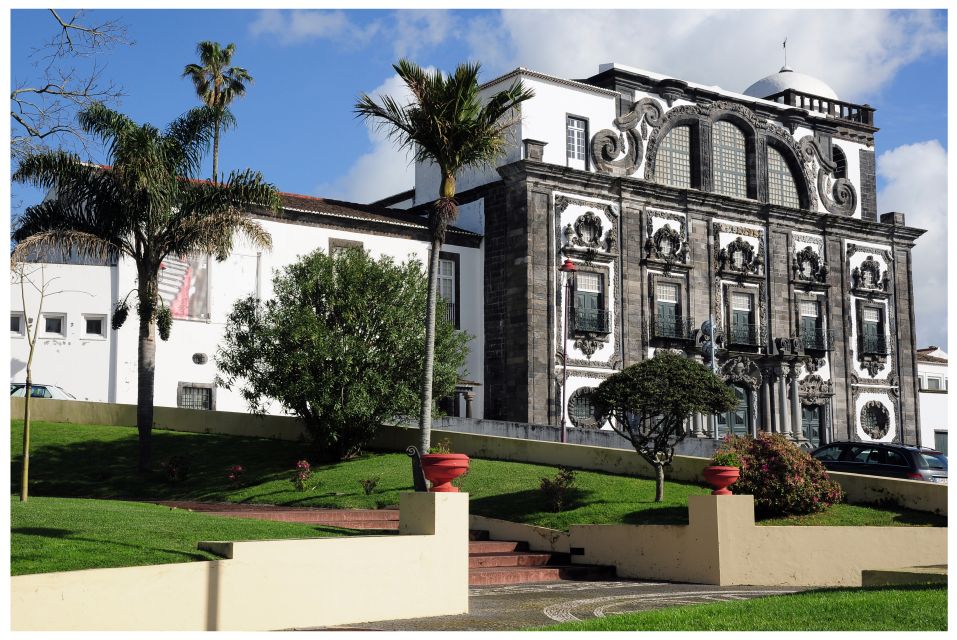
After the museum, the route heads to Igreja do Colégio and then into the Antero de Quental Garden. This is where the tour leans into Portuguese literary heritage again. You’ll connect Antero de Quental’s influence on Portuguese literature with what you’re seeing in the physical spaces around you.
There’s a second library stop mentioned where you’ll hear stories about Antero de Quental and his influence. Depending on the exact timing and day, this part can feel like a guided “set of reflections,” where you’re stopping in places that naturally invite you to look, listen, and remember.
Garden stops also help you handle real walking fatigue. Shade and open space make the pacing feel kinder, and you get a visual break between indoor venues.
Padre Sena Freitas Garden and Palácio da Conceição: Power, Islands, and Autonomy
One of the more distinctive parts of the itinerary is the theme of political autonomy. You’ll visit the Padre Sena Freitas Garden and the Palácio da Conceição to learn about Azorean political autonomy and how power is divided among the islands.
This is not the usual “tour-bus history.” It’s Azores-specific. If you want to understand why island life feels different from mainland Portugal, this is the section that helps the most.
A good tour does two things: it gives facts and it gives context. This is where you can ask questions if something doesn’t click immediately. Even a short answer from your guide can make later stops feel more meaningful.
Coliseu Micaelense and Campo de São Francisco: The City’s Pulse
Then comes the Coliseu Micaelense, described as one of the largest theaters in the archipelago. It’s another cultural anchor, but with a slightly different feel from Teatro Micaelense. Together, these stops show that arts and public gathering aren’t an afterthought in Ponta Delgada—they’re part of how the city functions.
After that, you’ll reach Campo de São Francisco, and this sets you up for the tour’s most dramatic sea-and-faith junction.
Forte de São Brás and Santo Cristo Festivities: Sea History Meets Major Celebration
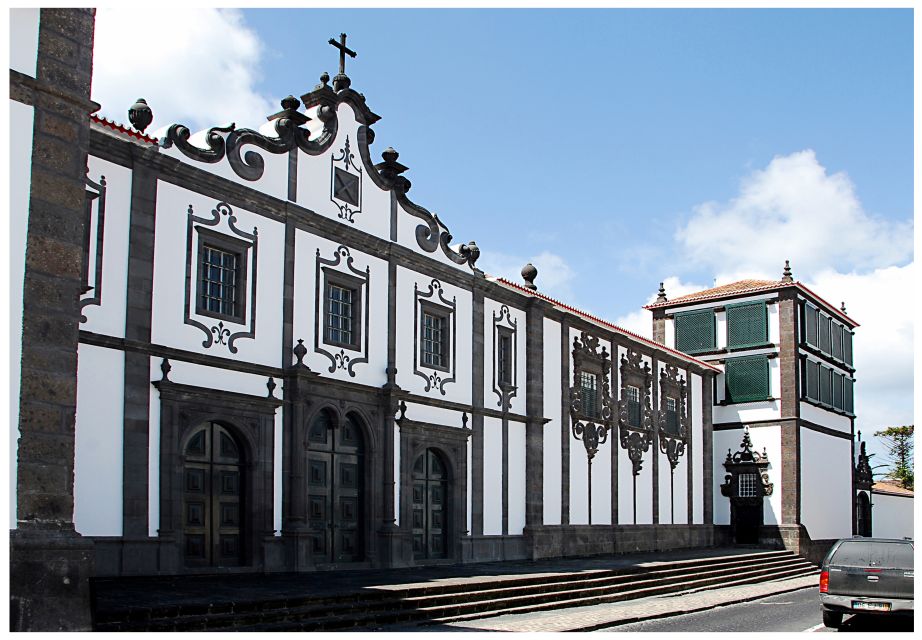
At Campo de São Francisco and the Forte de São Brás, you’ll get the connection between the Azores, the sea, and long-running celebrations. The tour highlights the Santo Cristo festivities, noting they’re the second-largest religious celebration in Portugal.
This stop can be one of those “aha” moments: the city’s strategic importance over centuries isn’t just about trade or geography—it also links to how communities organized around big religious events.
Practical note: forts and outdoor plazas can feel cooler or windier than the streets. Bring layers if you’re traveling in shoulder seasons.
Portas da Cidade and the City Center Heart: Municipality and Matriz Church
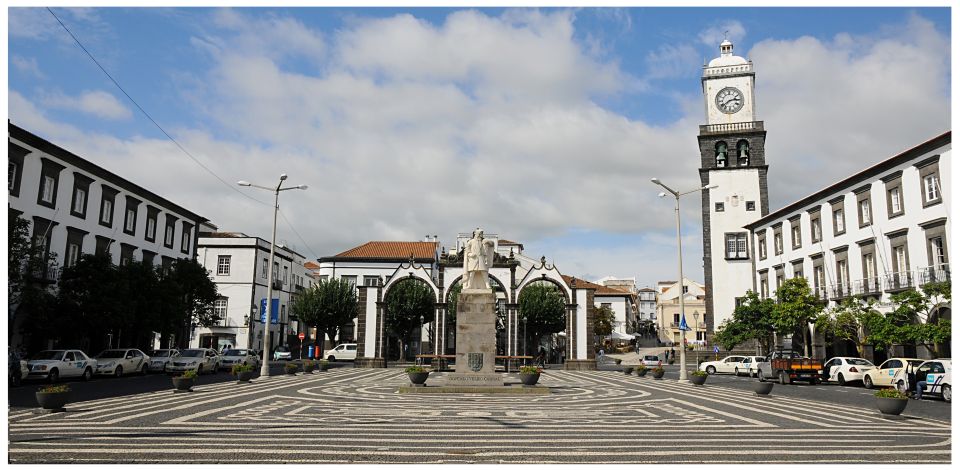
Near the end, the tour ties the experience back to the city’s center with the Portas da Cidade—described as a symbolic gateway to the Azores. It’s a great finish marker because it feels like the tour is “folding” back to where the city identity is most visible.
From there, you’ll visit the Câmara Municipal and the Igreja Matriz de São Sebastião. This is the heart of the city in a practical sense: governance and community religion. Seeing these together helps you understand how Ponta Delgada organizes life, not just how it looks.
If you like tours that end with civic grounding, this portion is a strong close.
Finish at Mercado CORES (Azores for All): Crafts and Creative Identity
Finally, you’ll return to Mercado CORES | Azores for All. The purpose here is different from Mercado da Graça. This last stop is about local crafts and creative projects that celebrate Azorean identity, giving you something tangible to take away.
I like finishing with a place where you can browse at your own pace. By the time you get here, you’ve built context from the walking route, so the crafts feel less like random souvenirs and more like extensions of what you learned earlier.
The Price: Is $41 Good Value for Three Hours?
At $41 per person for about three hours, this is the kind of price point that makes sense when you do the math on stops. You’re not just viewing exterior landmarks. You’re also getting entry to attractions listed plus guide time across multiple points, and that’s before you factor in insurance.
For many cities, a single museum visit plus guided commentary can eat into your budget fast. Here, the model is a clustered “greatest hits with context” route, where the included entries help justify the ticket price.
That said, the best value depends on what you want from a guided narrative. If you’re hoping for straight historical facts only, you should check the guide style for your comfort level. The tour has themes that can include religious or story elements as part of the storytelling.
Who Should Book This Tour (And Who Might Want Something Different)
This tour is ideal if you want a compact introduction to Ponta Delgada that touches real local life—markets, gardens, cultural venues, and city institutions. It’s also a good fit if you’re interested in how Azorean identity shows up in places tied to literature, autonomy, and major celebrations.
You might want a different style of tour if:
- You’re extremely sensitive to guide language clarity and need consistently strong English or another specific language.
- You strongly prefer strictly factual history and would rather avoid any religious or biblical-style storytelling.
- You dislike group pacing that doesn’t include energy breaks, like a coffee stop, during long stretches.
Small Tips That Make the Walk Smoother
Bring water and wear comfortable shoes—this isn’t a “pretty shoes only” route. The itinerary includes multiple outdoor stretches, and you’ll feel better if you pace yourself.
If you’re visiting on a day when some stops might be closed, don’t panic. You’ll still cover a lot of ground, and your guide can often adjust flow. If closures would bother you, ask your guide what to expect for that specific day.
Also, if you care about the storytelling angle (history vs. religious narratives), it helps to set expectations early. A quick check-in can steer the balance toward what you actually want to hear.
Should You Book This Ponta Delgada Historical Walking Tour?
I’d book it if you want a three-hour guided framework for Ponta Delgada that goes beyond seeing landmarks. The combination of Mercado da Graça, museum time at Carlos Machado, culture venues like Teatro Micaelense and Coliseu Micaelense, plus the political autonomy theme makes it feel distinctly Azores—not generic Portugal.
I’d think twice if you need uniform English quality or you want a strictly academic history presentation with zero story elements outside pure civic facts. In that case, ask questions before you commit so your expectations match the guide’s approach.
For most people—especially first-timers on São Miguel—this walk is a solid way to get your bearings fast and understand why the city feels the way it does.
FAQ
How long is the Ponta Delgada historical walking tour?
The tour lasts 3 hours.
Where does the tour start?
The meeting point is the Ernesto do Canto Public Library, next to the bust of Luís de Camões.
Where does the tour end?
It finishes at Mercado CORES | Azores for All.
What’s included in the price?
The guide, entry to attractions listed, and insurance (personal accident and liability) are included.
What languages is the live guide available in?
The tour guide is available in English, Portuguese, Scots Gaelic, and Spanish.
Is the tour wheelchair accessible?
Yes, the tour is wheelchair accessible.
What should I bring, and what isn’t included?
Wear comfortable shoes and bring water and comfortable clothes. Lunch, pickup, and drop-off are not included.