REVIEW · LISBON
Óbidos: Medieval Tales & Secrets Spots
Book on Viator →Operated by Silver Coast Travelling · Bookable on Viator
Óbidos feels like a movie set. This 2-hour guided stroll through the medieval walls is built around stories you can actually see—tile-lined churches, the castle footprint, and street-level history including the Jewish neighborhood—ending with a sip of ginjinha at someone’s home. I especially like the small group size (max 8) that keeps the conversation going, and I like the home-stop for ginjinha, which makes the tour taste local instead of just looking local. One thing to consider: Óbidos is hilly with cobblestones, so if wet streets happen, you’ll want good grip shoes and a steady pace.
You’ll meet your guide at the Óbidos Tourist Office on R. da Porta da Vila 16, then walk your way through highlights that feel grouped by theme rather than by ticket lines. In the church interiors you’ll spot Portuguese tilework from the 17th and 18th centuries and paintings tied to Josefa de Óbidos. If you’re hoping for long time on the castle viewpoints or a long stop for food, this tour is short on purpose, and you’ll want to plan your meal afterward on your own.
In This Review
- Key moments that make this Óbidos walk worth it
- Óbidos medieval walls: what you’re really buying for $42.33
- Finding the meeting point and building a smooth plan from Lisbon
- Stop 1: Igreja de Santa Maria for Portuguese tiles and Josefa de Óbidos
- Stop 2: São Tiago Church, now a bookstore, and how that changes the feel
- Stop 3: Castelo de Óbidos for a 12th-century Portuguese conquest story
- The ginjinha stop at a local home: why it’s more than a drink
- Learning the Jewish neighborhood story on the streets, not in a lecture hall
- How long is long enough in a walled town?
- What the guides do well: engaging English and story-led pacing
- Footwear, hills, and cobblestones: your small comfort checklist
- Who should book this Óbidos walking tour?
- Should you book this tour?
- FAQ
- How long is the Óbidos Medieval Tales & Secrets Spots tour?
- What’s included in the price?
- What language is the tour offered in?
- Do I need to print anything, or is it electronic?
- Is food included?
- Where does the tour start and end?
- What happens if the weather is bad?
Key moments that make this Óbidos walk worth it

- A maximum of 8 travelers: the vibe stays personal and questions get answered.
- Church interiors with real art details: 17th–18th century Portuguese tiles and Josefa de Óbidos paintings.
- São Tiago Church as a bookstore: you’ll see how history carries on in everyday places.
- Castelo de Óbidos for the 12th-century story: Portuguese conquest history tied to where you stand.
- Ginjinha at a local’s home: not a bar stop, more like a warm welcome.
Óbidos medieval walls: what you’re really buying for $42.33
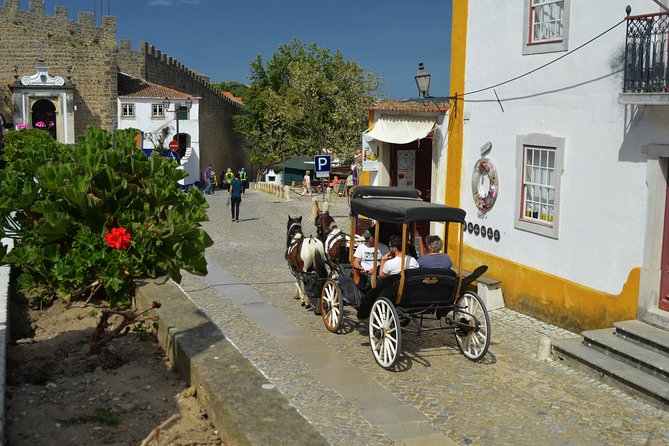
At $42.33 per person for about 2 hours, this tour isn’t trying to sell you a long checklist. You’re paying for a guide who helps you read Óbidos like a living puzzle: why certain streets feel “planned,” what certain buildings meant, and how different chapters of Portuguese history show up in stone and tile.
The value is strongest if you’re short on time. From a practical traveler point of view, 2 hours is often the sweet spot for getting oriented in a walled town without feeling like you’re sprinting between sights. The other value is the size: a maximum of 8 means the tour doesn’t turn into a crowd herding exercise.
Is it perfect for everyone? If you want a slow, pick-your-own-adventure day with lots of free wandering, you might prefer a lighter plan. But if you like structure and want the stories connected to what you’re actually seeing, this is a good deal.
You can also read our reviews of more tours and experiences in Lisbon.



Finding the meeting point and building a smooth plan from Lisbon
You’ll start and finish at the Óbidos Tourist Office (R. da Porta da Vila 16, 2510-089 Óbidos, Portugal). That matters because you don’t have to figure out a complicated end location later—you’re dropped right back at the same point.
Coming from Lisbon is common, and the tour team has helped people ensure they get on the right bus stop for the return trip. If you’re doing the Lisbon-to-Óbidos bus day, do one simple thing: listen carefully to your guide’s return-point advice and treat it as your “go here when you’re ready” instruction.
Also, this is a walking experience, so plan to arrive a few minutes early. Óbidos streets can be tight, and once you start, you’ll keep moving.
Stop 1: Igreja de Santa Maria for Portuguese tiles and Josefa de Óbidos
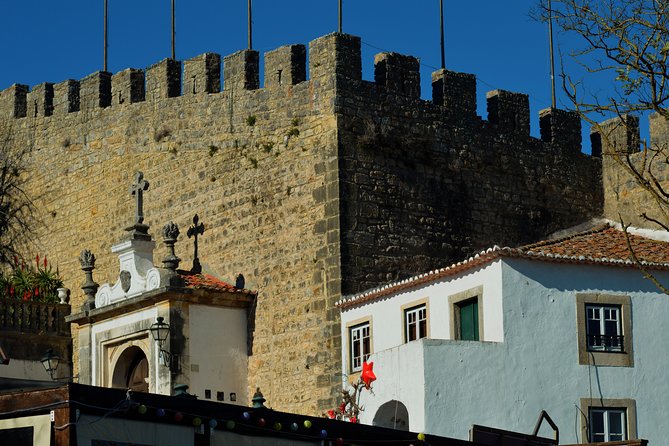
Igreja de Santa Maria is the kind of first stop that resets your brain. You’re not just entering a church—you’re learning how Portuguese craftsmanship decorated faith and identity.
What makes this stop stand out is the specific art you’ll be pointed to:
- Portuguese tilework from the 17th and 18th centuries
- Five paintings of Josefa de Óbidos (a 17th-century painter)
Even if you’re not the type to study art history, it helps to have someone narrate what you’re looking at. Those tile details and the Josefa de Óbidos paintings give you a “why this matters” hook before you move on to the rest of the town.
Practical note: it’s listed as about 10 minutes with admission ticket free. That doesn’t mean you’ll be rushed, but it does mean you should be ready for a focused visit and move onward.
Stop 2: São Tiago Church, now a bookstore, and how that changes the feel
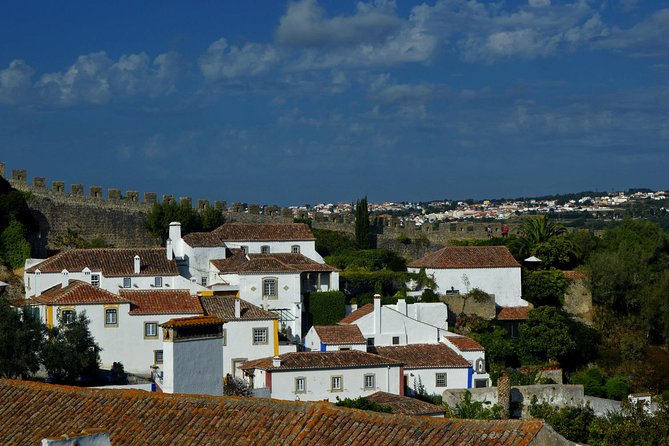
Next is the São Tiago Church, where today’s use flips the mood. Instead of the building sitting only as a monument, it functions as a bookstore in the present day.
That’s a big part of why this tour feels more than sightseeing. Religious buildings often get explained as though they’re frozen in time. Here, you get a live example of how spaces can keep working while still carrying their original atmosphere.
This stop is also about 10 minutes and admission ticket free. The real value isn’t an all-day museum experience—it’s the contrast. You’ll move from tilework and paintings to a building that’s still active, which helps you understand how Óbidos stays itself instead of becoming just a stage.
Stop 3: Castelo de Óbidos for a 12th-century Portuguese conquest story
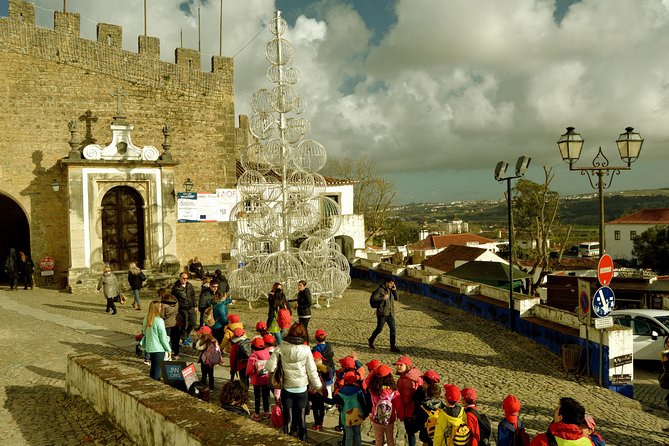
The castle is where Óbidos goes from “pretty medieval town” to “strategic fortress.”
The stop focuses on the original castle conquered in the 12th century by Portuguese forces. When you’re standing in the castle area, it helps to hear the story tied to the defensive purpose: why walls were built where they were, how control of a walled town shaped daily life, and how the town’s layout reflects that older power structure.
One consideration: the castle viewpoint areas and surrounding streets can be uneven and steep. There’s also a real-world cobblestone factor—wet days can make footing slippery. A couple of guides and notes from people who did the walk emphasize grip shoes. I agree. Bring shoes that can handle stone, and you’ll enjoy the experience more.
Time-wise, plan for a focused visit (about 10 minutes). If you want long lingering on panoramic views, you’ll likely need to do that afterward on your own.



The ginjinha stop at a local home: why it’s more than a drink
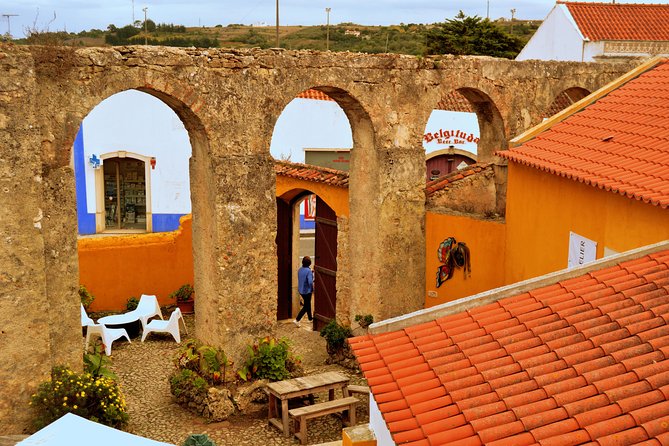
This tour includes alcoholic beverages, and the signature local taste is ginjinha—a sour cherry liqueur.
What you’re getting here is the difference between a tour-bought sip and an actual welcome. The tour includes a stop at a local’s home for ginjinha, which tends to change the tone of the whole experience. Instead of feeling like you’re collecting stops, you feel like you’re being treated as a short-term visitor in someone’s community.
It’s also a practical perk: it breaks up the walking day with a comfortable moment. And because it’s included, you don’t have to budget or hunt down a bar for the “must try” drink.
If you don’t drink alcohol, you might want to check expectations before booking—but the tour data clearly says alcoholic beverages are included, so treat that as part of the format.
Learning the Jewish neighborhood story on the streets, not in a lecture hall
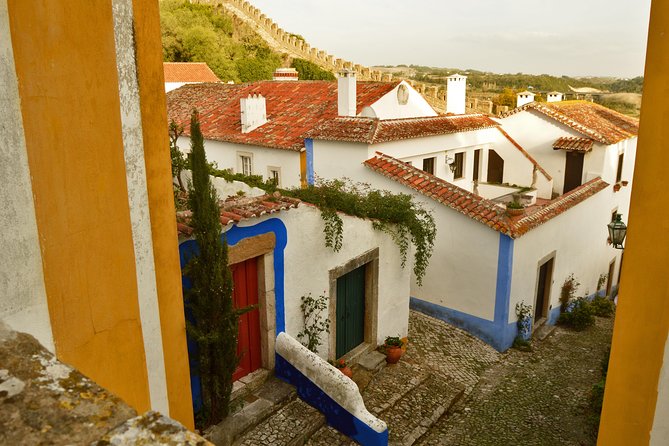
Óbidos has a layered past, and this tour includes history tied to the Jewish neighborhood. The best way to learn this in a place like Óbidos is through street-level cues, context, and what to notice as you walk.
Even without a separate named “Jewish neighborhood stop,” the guide approach matters. You get references as you pass relevant parts of town, which helps you connect names and chapters of history to the physical layout you’re standing in.
This is also where a great guide makes a noticeable difference. Several guides linked with this tour have a style that turns facts into stories you can remember later—less recitation, more conversation. If you care about understanding how communities lived and how towns changed, you’ll likely appreciate that narrative thread.
How long is long enough in a walled town?
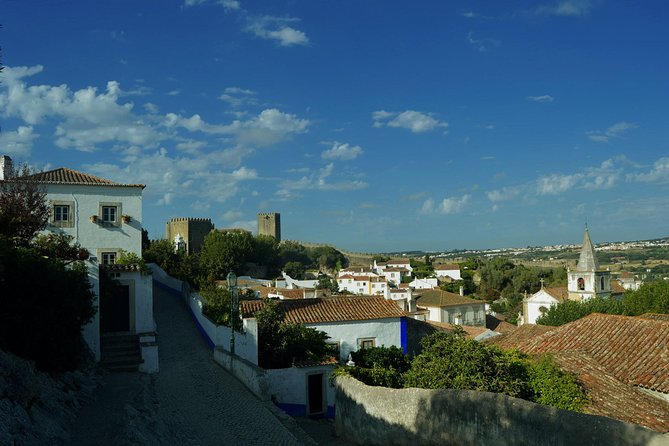
The tour is listed at about 2 hours. That short duration is part of the strategy. Óbidos is compact, but it has hills and stone streets. A longer tour can start to feel like work rather than travel.
Within those 2 hours, you’ll hit:
- a major church interior with notable Portuguese tilework and paintings
- another church space repurposed as a bookstore
- a castle-focused look at 12th-century conquest context
- time for ginjinha at a local home
- guided storytelling, including the Jewish neighborhood
If you’re the type who likes to keep your afternoons flexible, you’ll probably prefer this length. You’ll finish back at the meeting point, and you can decide how much extra time to spend wandering or eating.
If you’re the type who wants to linger in churches or spend extra time photographing stone details, you may wish you’d added time on your own after the tour.
What the guides do well: engaging English and story-led pacing
The guide quality is one of the strongest themes in the feedback tied to this tour. Names that come up include Ivo, JP, Evu, and João Paulo. People highlight that the guides speak clear English, and they explain details in a more conversational style than pure fact-dumping.
Here’s why that matters for you: in a place like Óbidos, it’s easy to feel like you’re walking around “old buildings.” A good guide gives you a handle—what to look for, what to remember, and how the town’s changes connect to larger Portuguese history.
Another practical plus mentioned with this experience: guides have helped participants keep their travel day on track, including helping confirm the correct bus stop for the return trip. That kind of care is underrated until you’re standing near a bus stop thinking, now what.
Footwear, hills, and cobblestones: your small comfort checklist
Óbidos is beautiful, but it’s not flat. The town walls sit above streets and lanes, and the surface is often cobbled. On wet days, that can get slippery.
So here’s the traveler move: wear shoes with grip, and don’t wear anything that you’d hate to slip in. One review note specifically calls out that the stone streets can be slick when wet, and the walking includes hills. Plan on a steady pace, and you’ll enjoy more of the town rather than focusing on footing.
Also, bring water if you’re sensitive to heat. The tour includes alcoholic beverages, but the data does not say water is included.
Who should book this Óbidos walking tour?
This tour fits best if you:
- want a guided introduction to a walled medieval town in about 2 hours
- like history told through places you can see (church art, castle context, street-level stories)
- prefer a smaller group experience (max 8)
- want ginjinha included as part of the cultural visit, not as an afterthought
It may not be the best choice if you:
- want a full-day independent wander without scheduled stops
- need lots of free time for cafés or long church stays
- have mobility concerns that make uphill cobblestone walking hard (the data says most travelers can participate, but it also suggests cobblestones and hills)
Should you book this tour?
Book it if you want a guided walkthrough that actually explains what you’re seeing, plus a genuine local moment with ginjinha at a home. The best reason is the combination: small group, art-and-architecture stops, castle context, and story-led history in a time window that won’t steal your whole day.
Pass or consider something else if your dream Óbidos day is mostly about unstructured wandering, long stops for meals, or you can’t do uneven stone surfaces comfortably.
If you’re doing Óbidos as a Lisbon side trip and want to leave feeling like the town has meaning—not just photos—this is a smart way to spend your time.
FAQ
How long is the Óbidos Medieval Tales & Secrets Spots tour?
It runs for about 2 hours.
What’s included in the price?
You get a local guide, all activities on the tour, and alcoholic beverages. Admission at the listed stops is free.
What language is the tour offered in?
The tour is offered in English.
Do I need to print anything, or is it electronic?
You’ll receive a mobile ticket.
Is food included?
Food and drinks are not included unless specified.
Where does the tour start and end?
It starts at Óbidos Tourist Office, R. da Porta da Vila 16, 2510-089 Óbidos, Portugal, and it ends back at the same meeting point.
What happens if the weather is bad?
The experience requires good weather. If it’s canceled due to poor weather, you’ll be offered a different date or a full refund.