REVIEW · LISBON
Lisbon River Boat Sightseeing Tour with a Drink
Book on Viator →Operated by Blue Cruises · Bookable on Viator
Lisbon has a way of making you forget maps. This cruise helps you see the city’s shape fast, while the river does most of the talking. You get a scenic run along big waterfront landmarks, plus a culture-focused audio route in English.
I love the value for the time: 1 hour 40 minutes feels like a solid overview without draining your whole day. I also like the variety of stops, from the grand Praça do Comércio waterfront to historic Belém and viewpoints toward Almada—so your land-plans start making sense.
One thing to consider: on hot or crowded sailings, the boat can feel stuffier than you want, especially on the lower decks and if the outdoor upper area fills quickly.
In This Review
- Key things to know before you go
- A River Cruise That Shows Lisbon’s Big Picture
- Where You Start: Estação Fluvial Sul e Sueste
- Praça do Comércio: The Waterfront Landmark That Anchors Everything
- 25 de Abril Bridge: Golden Gate Color, Bay Bridge Style
- MAAT and Tejo Power Station: Lisbon’s Art and Industrial Power
- The Navigator Monument and Belém’s UNESCO Feel
- Bugio Lighthouse: Estuary Views and Fort Energy
- Christ the King Over Almada: The Hilltop Moment
- São Jorge Castle and Old Alfama, Seen From Below
- Drink, Audio, and Seating Strategy (This Is Where Comfort Wins)
- How Long Is Enough? (And When to Go)
- Price and Value: Why $22.83 Can Feel Worth It
- Who This Lisbon River Cruise Is Best For
- Should You Book This Lisbon River Boat Tour?
Key things to know before you go
- Phone-based audio guide (English): plan to use the Blue Cruises app and/or QR prompts
- A fixed route with big landmarks: Praça do Comércio, 25 de Abril Bridge, Belém, Bugio area, Christ the King, São Jorge Castle
- Outdoor views are weather-dependent: sunshine and wind can be great or uncomfortable
- Your included drink may be limited: in some departures it’s orange juice/water; wine availability can vary
- Timing matters for better seating: early boarding helps you snag shade or a comfortable spot
- Crowd limit is capped: the tour runs with up to 150 people, so it stays fairly manageable
A River Cruise That Shows Lisbon’s Big Picture
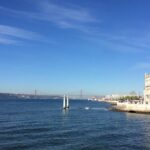
If you’ve ever walked Lisbon for hours and still felt like everything was uphill and disconnected, this boat ride is a quick fix. From the water, the city’s geography clicks: the wide Tagus (Tejo) frames the central waterfront, then the route stretches toward Belém and out into the estuary.
What makes this cruise especially useful is how it mixes iconic landmarks with practical “future trip” thinking. As you glide past major sites—bridges, modern museums, forts, and hilltop viewpoints—you start spotting what you want to revisit on foot. The audio layer is there to give you names and context, so it’s not just a pretty cruise with zero story.
The main trade-off is comfort. Some days are easygoing and breezy; other days can be crowded and warm. If you hate heat, come prepared.
You can also read our reviews of more boat tours in Lisbon



Where You Start: Estação Fluvial Sul e Sueste
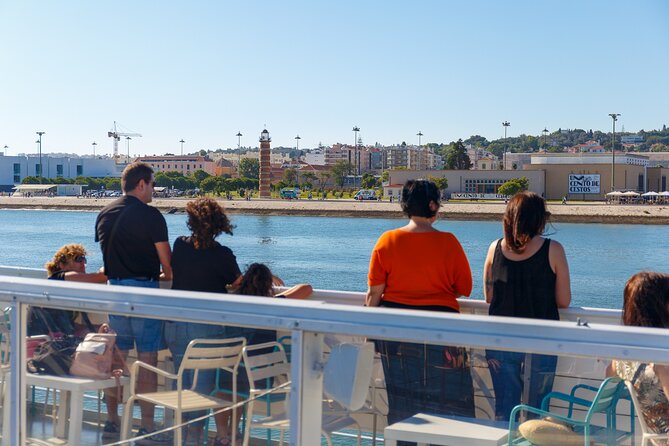
Your meeting point is Estação Fluvial Sul e Sueste, at Av. Infante Dom Henrique 1B, 1100-016 Lisboa. This matters because it sets the tone: you’re starting from a real working riverside area, not a remote pier.
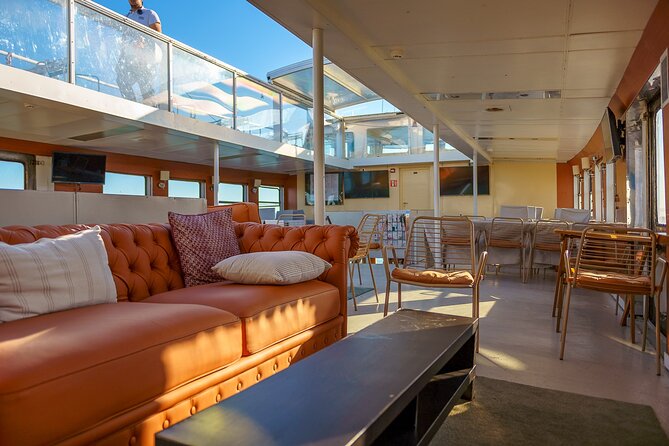
Plan to arrive early enough to choose your spot. The boat has multiple seating areas, but the upper deck is the one most people want for views. When that area fills, you’ll be more reliant on what you can see from inside.
Also keep an eye on your phone battery. Since the commentary is delivered via an app and scanning prompts, a dead battery can turn your trip into a silent photo session.
Praça do Comércio: The Waterfront Landmark That Anchors Everything
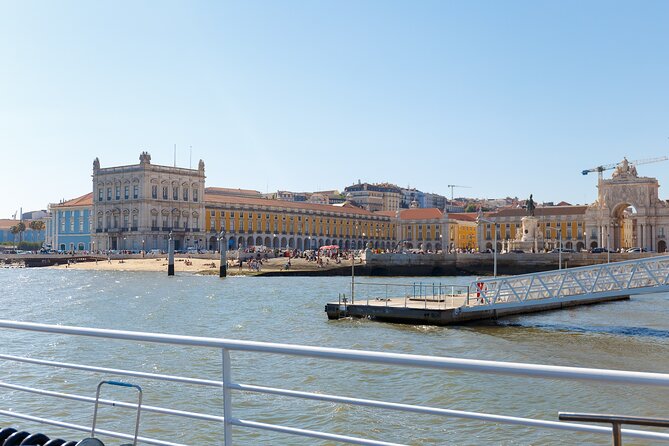
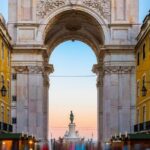
The cruise begins at Praça do Comércio, also known as Terreiro do Paço. This is one of Lisbon’s grand, harbor-facing squares right on the Tagus. It’s a powerful start point because it’s the visual center of the riverside: you see the breadth of the water and how the city opens outward.
This plaza was rebuilt after the 1755 earthquake, which helps explain why it looks so “planned” and symmetrical compared to older neighborhoods. From the water, that redesign feels more obvious. You also get a sense of Lisbon’s history as a seat of state power from the 19th century onward.
Practical tip: this is a good moment to orient yourself. Look for what looks easiest to walk to later, and note which direction you want to head after the cruise.
25 de Abril Bridge: Golden Gate Color, Bay Bridge Style
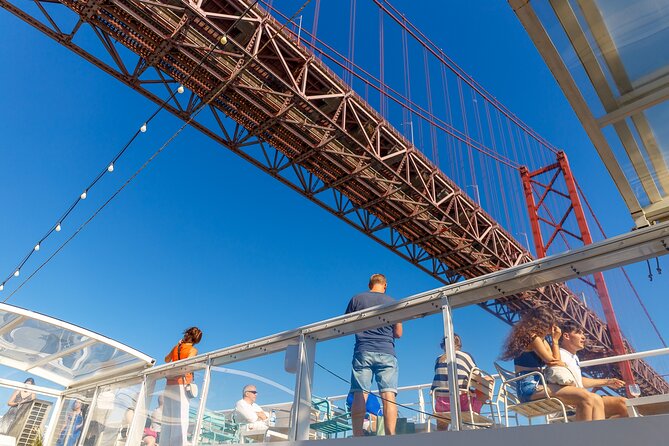
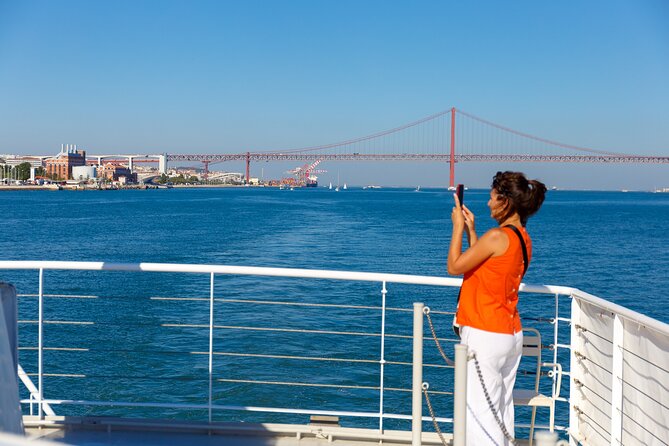
Next comes one of Lisbon’s most recognizable engineering views: the 25 de Abril Bridge. It was once called the Salazar Bridge until the Carnation Revolution, and now it’s often called the Tagus River Bridge too.
What I like about this stop is that it’s not just a landmark—it’s a story you can see. The bridge is painted the same International Orange as the Golden Gate Bridge, and the design echoes the San Francisco–Oakland Bay Bridge. Knowing that connection helps your brain file it as more than local scenery.
From the boat, you get long sightlines and that sense of scale that you rarely get from the streets. If you’re a photographer, this is the kind of segment where you can grab wide shots without constantly dodging traffic.
MAAT and Tejo Power Station: Lisbon’s Art and Industrial Power
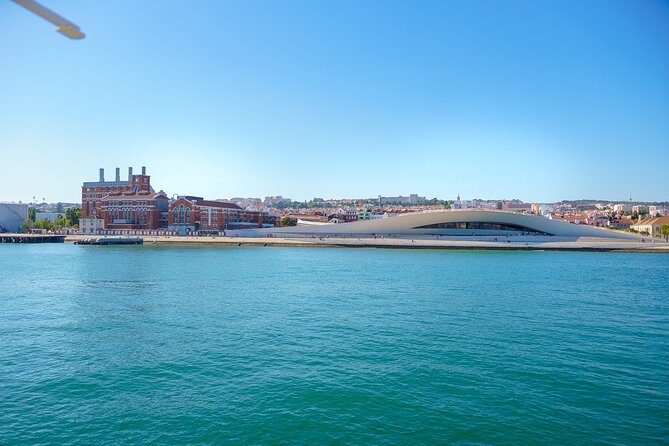
As the cruise continues, you pass MAAT, a cultural project focused on Art, Architecture, and Technology. The building sits on the Tagus west of the center and is designed by Amanda Levete Architects. Even if you don’t go inside, the shape of MAAT reads as “Lisbon is modern too,” not just tiles and hills.
MAAT connects visually to the Tejo Power Station, one of Portugal’s best examples of early 20th-century industrial architecture. This is one of those places where the river view does something subtle: it shows how Lisbon used to use the Tagus for power and transport, and how the city repurposed that industrial space into public culture.
If you’re the type who likes to understand a city’s timeline, this section delivers. You’ll see the contrast without having to do extra ticket-hopping.



The Navigator Monument and Belém’s UNESCO Feel
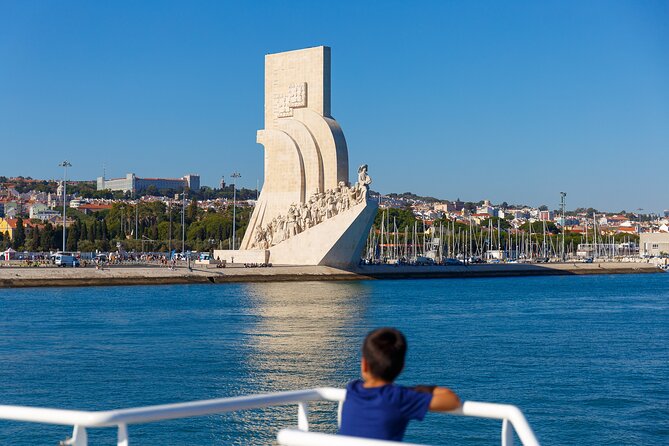
The route also includes the monumental zone linked with Infante Henry the Navigator. The concept dates to 1939, and the permanent monument was built for the fifth centennial of his death. From the water, this area feels ceremonial—like a ceremonial gateway to Lisbon’s maritime era.
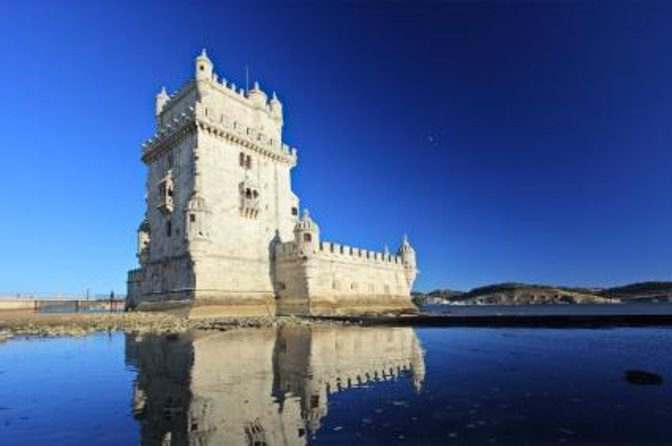
Then the cruise reaches Belém Tower (officially the Tower of Saint Vincent). It’s a 16th-century fortification tied to Portuguese exploration—an embarkation and disembarkation point and also a ceremonial marker for arrivals.
A nearby stop is the Jerónimos Monastery, one of the strongest examples of Portuguese Late Gothic Manueline style. It’s a UNESCO World Heritage Site as well, together with Tower of Belém.
Here’s the practical side: you’re seeing these places from the Tagus, not from the ticket line. If you want to go inside later, you’ll have a much clearer sense of where everything sits and what to prioritize.
Bugio Lighthouse: Estuary Views and Fort Energy
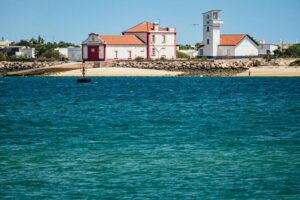
As you move toward the estuary area, you’ll pass the Bugio Lighthouse, located on an island in the Tagus estuary connected to the Fort of São Lourenço do Bugio.
This is where the cruise starts to feel less like a straight city tour and more like a move through waterways. The estuary setting changes the light and the mood. It can also be a calmer stretch for people who don’t want constant historical processing.
If weather is good, this is also a strong photo segment. Even when it’s just breezy, it’s a refreshing break from the dense visual rhythm of the city.
Christ the King Over Almada: The Hilltop Moment
The cruise includes the Sanctuary of Christ the King in Almada, overlooking Lisbon. The giant Christ figure forms a cross, with the arms extended toward the city—an image that’s instantly recognizable even from a distance.
The value here isn’t just the postcard view. It helps you understand Lisbon’s vertical story: the city isn’t only waterfront and streets, it’s also viewpoints on hills across the river. You get a sense of why people build big monuments up high.
If you’re short on time, this is a great “you should know this exists” stop. You’ll be more motivated to schedule a viewpoint afterward if you feel the urge.
São Jorge Castle and Old Alfama, Seen From Below
On the return stretch, the cruise includes São Jorge Castle, perched on a hill with a long resume: royal palace, military barracks, home to the Torre do Tombo National Archive, and now a museum and national monument.
From the water, you can see the castle’s placement in the city’s structure. It’s not just a standalone attraction—it’s the anchor above the neighborhoods, especially Alfama, the oldest district. Alfama survived the 1755 earthquake with relatively less damage, so its layers feel older and tougher in a way you notice when you look at the hillside from the river.
The route also references the Mouraria quarter. It gets its name from the area where Muslims were confined after Lisbon’s reconquest. Even without going into every alley, you get a sense this part of town has deep roots and a complicated past.
Tip: when you spot Alfama’s slope and tight urban texture, that’s your cue for later. If you’re the kind of traveler who likes to “earn” walking streets, the cruise helps you pick where the uphill wandering will feel worth it.
Drink, Audio, and Seating Strategy (This Is Where Comfort Wins)
This cruise includes a drink, but the details aren’t always what people expect. Some sailings offer sweet wine options; others report that the included drink is limited to orange juice or water, and that it’s not necessarily a choose-anything situation. If your heart is set on wine, plan to be flexible and ask what’s included when you board.
For the audio commentary, the key move is simple: download the Blue Cruises app and bring headphones. Many parts of the experience rely on phone audio or QR scanning. Some reports mention no Wi‑Fi on the boat, so don’t assume your data plan will save the day. Also, keep your phone battery in mind—late in the day, it can be draining.
Seating is the biggest comfort lever:
- The upper deck is where you want to be for photos and fresh air, but it can fill fast.
- Windows inside may not open fully on some boats or some days, so inside can get warm.
- Bring a hat and something light for wind. Even in sunshine, river breezes can flip the feel from warm to chilly fast.
And one more practical point: there are no big announcements in the classic guided-tour sense. A lot of the learning is “listen while you look.” That’s not bad—it just changes what kind of experience you’re booking.
How Long Is Enough? (And When to Go)
The cruise runs about 1 hour 40 minutes. That’s a sweet spot: long enough for multiple landmark zones, short enough that it won’t hijack your whole day.
I like it most for two travel moments:
- First-time in Lisbon, when you need a map made of real sights.
- Late in your trip, when you want an easy reset after more intense walking.
Choose your departure time based on your tolerance for sun and heat. On warmer days, getting on early can make the difference between shade-and-breeze and sun-and-sweat.
Price and Value: Why $22.83 Can Feel Worth It
At about $22.83 per person, this isn’t a high-cost experience, and that matters. You’re paying for a viewpoint-heavy tour format, not an all-access museum package. For the time on the water, it’s good value, especially if you’ll use the cruise to decide what to do next on land.
The math flips if you’re expecting:
- a live human guide talking nonstop
- guaranteed sunny outdoor comfort
- an included drink that always matches the description you saw
In that case, you might feel like you’re paying for a scenic cruise with phone support. Still enjoyable, but different from a traditional guided tour.
Who This Lisbon River Cruise Is Best For
This works well if you:
- want an overview route with landmark variety
- enjoy learning through an audio guide while you photograph
- like relaxing time on the water, especially at calmer hours
- are traveling as a couple or small group and want seats with decent personal space
It may feel less ideal if you strongly dislike phone-based listening, hate heat, or need air flow above all else. Since the upper deck can be regulated and fill up, you may not always get the exact comfort setup you hoped for.
Should You Book This Lisbon River Boat Tour?
I’d book it if you want a straightforward sightseeing cruise that helps you understand Lisbon’s waterfront, bridges, and major Belém sights in under two hours. The included audio route is a solid way to add context without doing extra ticket time, and the river perspective is genuinely worth paying for.
Skip it or at least go in with eyes open if you need a live guide experience, you’re very sensitive to crowd heat, or you’re assuming the drink choice will be the same for every sailing. If you do book, do two things: download the app before you go, and arrive early so you’re not stuck chasing shade after boarding.