REVIEW · LISBON
Lisbon Revelation Tour
Book on Viator →Operated by Lisbon Walker · Bookable on Viator
A Lisbon walk that turns streets into answers. This intro guided walking tour is a practical way to understand how Lisbon’s neighborhoods connect, with a guide who frames what you see as art and history. I also like that you get an included food tasting (pastel de nata or ginjinha), not just photo stops. One catch: it covers a lot of ground with hills and steps, so moderate fitness helps.
This tour also feels efficient for a first day. You start at Praça do Comércio area in the morning and end at Miradouro de São Pedro de Alcântara, which means your afternoon stays open for more wandering on your own. With a small group cap (16 people), it’s easier to hear the guide and ask questions without the walk turning into a crowded shuffle.
Logistics are pretty straightforward. You’ll use a mobile ticket, go in English, and keep moving in all weather (so bring rain cover or sun protection). If you’re sensitive to steep streets, wear grippy shoes and plan on a brisk pace.
In This Review
- Key things that make Lisbon Revelation Tour worth your time
- Why this Lisbon walking tour is a smart first-day move
- Meeting at Cervejaria Antártida and ending at the São Pedro viewpoint
- From Praça do Comércio to Rossio: power, rebuild, and city center orientation
- A compact downtown rhythm: how the route keeps you moving without getting lost
- Santa Justa and the miradouro finish: the view payoff is built in
- Largo do Carmo to Chiado & Carmo: Lisbon’s political and Gothic turns
- Igreja de São Roque: a Baroque pause that feels worth the steps
- Included tasting: pastel de nata or ginjinha, and why it works on this route
- Price and value: what $30.25 buys you in Lisbon
- Pace, hills, and comfort: who should book (and who should plan differently)
- Should you book Lisbon Revelation Tour?
- FAQ
- How long is the Lisbon Revelation Tour?
- What language is the tour offered in?
- Where do I meet, and where does it end?
- What food is included in the tour?
- Is admission included for all stops?
- Does the tour run in bad weather?
Key things that make Lisbon Revelation Tour worth your time
- A morning start (10:00 am) with free afternoon time to explore beyond the route
- Professional art historian guide that ties squares and churches to the bigger Lisbon story
- Pastel de nata or ginjinha tasting included, so you’re not just looking
- Top view payoff at the end at Miradouro de São Pedro de Alcântara
- Small group size (max 16) for better listening and question time
- A loop through Baixa, Chiado, and viewpoints so you get your bearings fast
Why this Lisbon walking tour is a smart first-day move
Lisbon can feel like a puzzle at first. You’ve got grand squares, steep streets, and neighborhoods that change character every few blocks. This tour is built for that moment when you want answers, not just landmarks.
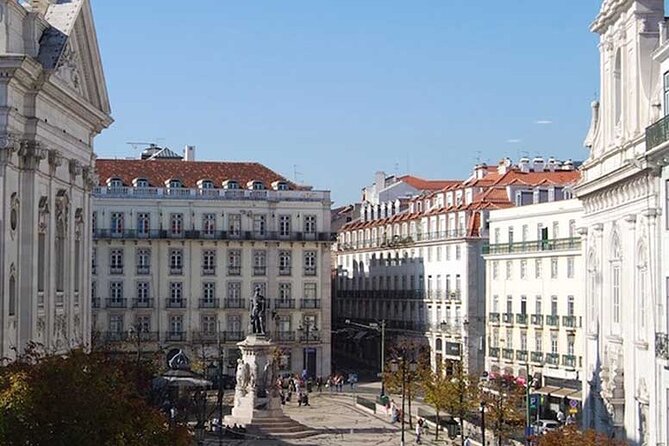
The route hits the areas you’ll likely circle again later: the downtown core (Baixa and Rossio), the viewpoints on higher ground, and the historic layers around Carmo and Chiado. Instead of treating the city like a checklist, the guide’s job is to explain why these places exist in the exact shape you see today.
The included tasting helps too. When you add one small food moment into a walking day, it breaks up the effort and makes Lisbon feel like a place you can live in—not just a site you pass through.
You can also read our reviews of more tours and experiences in Lisbon.

Meeting at Cervejaria Antártida and ending at the São Pedro viewpoint
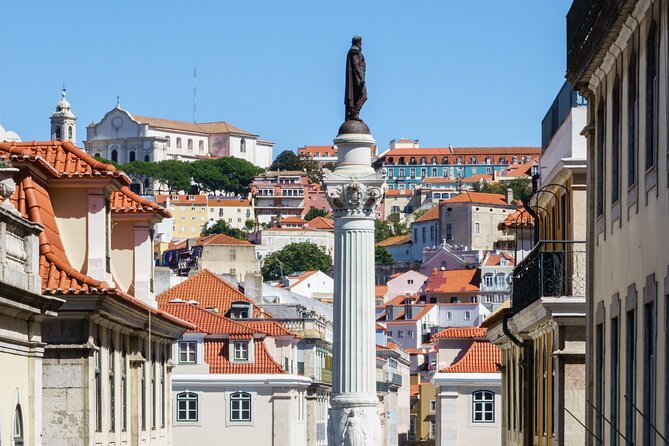
You’ll meet at Cervejaria Antártida Lisboa, on the Praça do Comércio side (Rua C 20-23). That’s an excellent starting point because it puts you near Lisbon’s big public-space energy right away.
The tour ends at Miradouro de São Pedro de Alcântara. That matters because the final stretch is where Lisbon usually clicks for people: you can look out over the city’s hills and rooftops and finally understand why the streets feel the way they do.
Plan to arrive with a little buffer. The meeting point is in a lively area, and you’ll want a relaxed start before you start climbing and descending.
From Praça do Comércio to Rossio: power, rebuild, and city center orientation
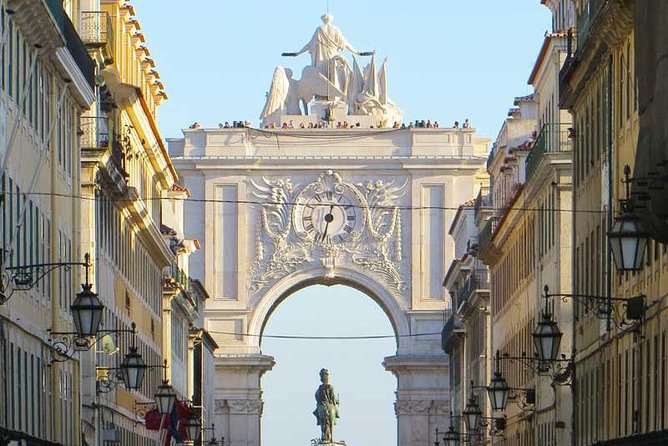
Stop 1 is Praca do Comercio (Terreiro do Paco), framed as Lisbon’s long-running center of power. This square is where the city’s “official face” shows up: wide space, strong lines, and a sense of how commerce and government shaped Lisbon’s growth.
Stop 2 moves you into Baixa, Rossio & Restauradores, described as the “new city” built after the Earthquake. Even if you don’t know the details, the point here is visual. You see a planned downtown layout that contrasts with older textures in other parts of the city. It’s the part of Lisbon where the streets feel engineered for movement, markets, and daily life.
Stop 3 takes you to Praca da Figueira, a traditional market square. This is a short stop, but it gives you something valuable: a sense that Lisbon’s center isn’t only museums and viewpoints. It’s also trade, food, and noise—things you can keep exploring after the tour ends.
Then you bounce between downtown identity stops:
- Praca dos Restauradores, described as the image of a European capital
- Praca Dom Pedro IV, the heart of downtown
These small segments help you connect place names to real streets. That’s the practical value: you’ll recognize where you are later when you’re trying to get from a tram stop to a miradouro.
A compact downtown rhythm: how the route keeps you moving without getting lost
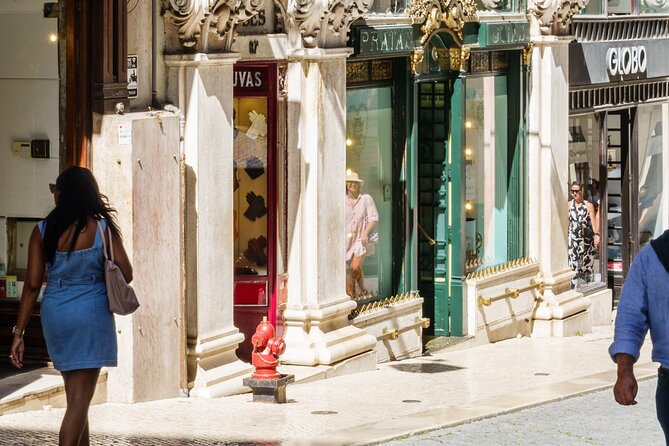
A good introductory tour does two things: it gives you highlights and it teaches you the street logic. This one does it with short, timed stops that keep your momentum while still letting the guide point out what you’d miss if you were walking solo.
There’s a reason you keep seeing squares. In Lisbon, squares act like “anchors.” When you learn how one square connects to the next, you stop feeling trapped on hills and start navigating with confidence.
You’ll also appreciate the pacing. The stops are mostly 5–10 minutes, with the longest stretch used on the big visual areas (like Baixa/Rossio). That helps you handle the physical side without losing the explanation.
Still, keep your expectations realistic. You’re moving through Lisbon’s core, not taking a slow stroll through gardens. Bring water, wear shoes meant for uneven pavement, and don’t plan to stop for long breaks mid-tour.
Santa Justa and the miradouro finish: the view payoff is built in
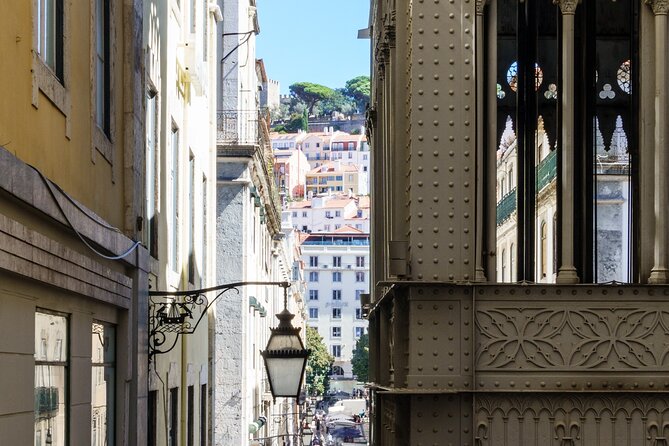
Stop 6 is Elevador de Santa Justa, with a promised 360º view over the downtown district. Even if you don’t obsess over architecture, this is the moment when your brain finally connects the walking you did to the city’s shape.
From there, the tour shifts from “downtown map building” to “Lisbon’s story in layers.” It doesn’t mean the day gets less interesting. It just changes tempo: more meaning per minute, fewer flat shots.
Stop 10 is the grand finale: Miradouro São Pedro de Alcântara, described as a breathtaking view over Castle Hill. Ending here is a smart design choice because it gives you a strong last memory and a useful orientation point. Even after you leave the tour, you can use the view as a reference when you plan where to go next.



Largo do Carmo to Chiado & Carmo: Lisbon’s political and Gothic turns
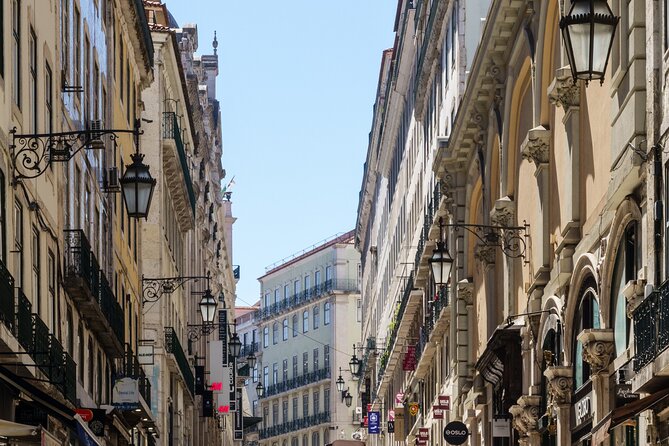
Stop 7 is Largo do Carmo, noted as the setting for the democratic revolution of 1974. This is where the tour goes beyond pretty streets and talks about political moments that shaped modern Lisbon. A square is a stage, and this one is tied to an era.
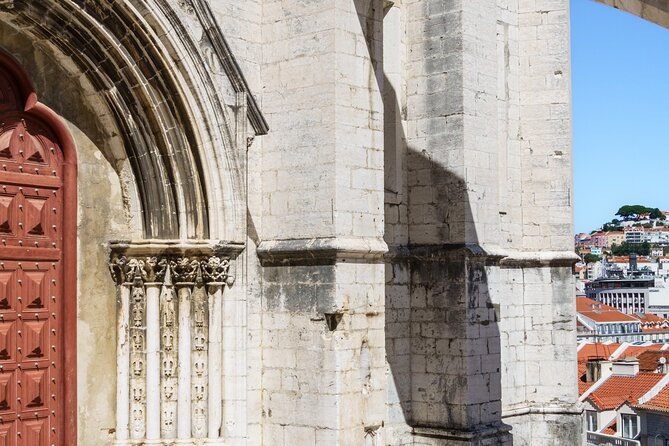
Stop 8 takes you into Chiado & Carmo, with the guide calling out the only Gothic monument of the city. That’s a striking detail and it gives you a clear frame: don’t treat Chiado as just shopping streets. In this part of Lisbon, you’re seeing the city’s timeline compressed into one walk.
The route also includes a brief mention of a tribute to the Discoveries epic poet and a stop connected to the lively bohemian district. Even without extra context, those moments matter because Lisbon’s identity isn’t just Catholic churches and royal squares. It’s also writers, artists, and the creative neighborhoods that keep the city from becoming a postcard.
Igreja de São Roque: a Baroque pause that feels worth the steps
Stop 9 is Igreja de Sao Roque, described as a Baroque extravaganza. This kind of stop is a great counterbalance to all the outdoors time earlier. When you step inside, the guide can point you toward what makes Baroque feel dramatic: showy detail, strong contrasts, and an emotional style that’s meant to hit you quickly.
Even if your interest in churches is practical (mostly: how to notice what’s in front of you), this stop helps. It teaches you what to look for so you don’t just walk past the most interesting parts.
Short church visits can also be a sanity saver. If you’ve been walking in bright sun or on uneven stone, a quiet interior break changes the whole day.
Included tasting: pastel de nata or ginjinha, and why it works on this route
Your tour includes a food tasting: either a pastel de nata (cream custard) or ginjinha (brand cherry liquor). For most people, that’s a perfect Lisbon pairing with a walking day because it’s quick, iconic, and easy to enjoy without slowing your group too much.
If you want to sample both, you might need to do that on your own after the tour. But as an included perk, this is solid value because it turns the day into a real experience instead of only sightseeing.
This is also one reason I like the guide approach here. A tour that mixes art explanation with a food moment tends to keep people engaged. It gives Lisbon multiple entry points—visual, historical, and taste-based.
Price and value: what $30.25 buys you in Lisbon
At $30.25 per person, this tour sits in the budget-friendly zone for an English walking tour with a professional guide. The value isn’t only the price tag. It’s what’s included and how the route is structured.
You’re paying for:
- A guide described as a professional art historian
- A focused route through major squares and viewpoints
- A timed walking plan that avoids wasting your limited energy
- A tasting (pastel de nata or ginjinha)
Also, with a maximum of 16 people, you’re not paying for a crowd experience. It’s much easier to hear details in a smaller group, and that’s where your money turns into actual understanding.
The one thing to watch: one stop lists an admission ticket not included. If your curiosity nudges you to go inside or access something ticketed, you may need to budget extra at that point. Most other stops are listed as free, so the extra cost shouldn’t be a constant theme.
Pace, hills, and comfort: who should book (and who should plan differently)
This tour calls for moderate physical fitness. That’s code for: you’ll deal with elevation changes, steps, and uneven street surfaces.
If you’re comfortable with a steady walking pace and you don’t mind changing levels in Lisbon, you’ll probably find this tour a confidence booster. It’s also a strong fit if you’re traveling solo, as the group size keeps it social without being chaotic.
If you’re using mobility aids, have knee issues, or need frequent slow-down stops, you might feel the route more than you’d like. The good news is that you can still take in the city on your own at your pace after you learn the basics from the guide.
For everyone: dress for all weather conditions. Lisbon can shift quickly between sun and wind, and the tour runs anyway.
Should you book Lisbon Revelation Tour?
Book it if you want a first-day orientation that actually explains Lisbon instead of only pointing at it. The combination of key downtown squares, Carmo/Chiado layers, church detail, and a strong miradouro finish gives you a full-scope sense of where you are and why it matters.
Skip it or plan alternatives if you hate hills, you’re expecting a slow, lounge-style walk, or you’re traveling only for very specific sights. This tour is about flow and context, not deep time in one building.
If you do book, go in with a simple plan: wear your best walking shoes, bring water, and treat the tour as your map lesson. Then spend the afternoon chasing what the guide pointed out—because that’s when Lisbon starts feeling personal.
FAQ
How long is the Lisbon Revelation Tour?
It lasts about 3 to 4 hours.
What language is the tour offered in?
The tour is offered in English.
Where do I meet, and where does it end?
You start at Cervejaria Antártida Lisboa near Praça do Comércio (Rua C 20-23). The tour ends at Miradouro de São Pedro de Alcântara.
What food is included in the tour?
The tour includes a tasting of either a pastel de nata or ginjinha.
Is admission included for all stops?
Most stops are listed as free, but Praca do Comercio (Terreiro do Paco) lists an admission ticket as not included.
Does the tour run in bad weather?
Yes. It operates in all weather conditions, so dress appropriately.