REVIEW · LISBON
Lisbon on a Tuk Tuk Tour: History & Viewpoints
Book on GetYourGuide →Operated by Boost Portugal · Bookable on GetYourGuide
Lisbon’s best viewpoints come with a steering wheel. On a private, customizable ride in a 100% electric tuk tuk, you float through Alfama and Belém and stop at major miradouros without the foot-slog up and down Lisbon’s hills. I love the quiet, smooth pace that makes steep streets feel manageable, and I love that you can shape the route to your day. The main drawback to plan around is that seating space is tight, so very long legs or mobility limitations may feel awkward.
I also like how the experience is guided by a local who can switch the plan on the spot. Guides such as Luca, Rafael, Tiago, Bruno, and Marta come up again and again in the good stories, often because they help you time photo stops and point out what to look for beyond the obvious. Keep in mind it’s still a small vehicle tour, so you’ll want to be ready to hop out quickly at photo points.
For value, $49 per person makes the most sense if you have limited time (or limited patience for stairs). With 1–4 hours, you can sample a lot of Lisbon in a way that feels more efficient than cobbling together transport plus walking—especially if you’re traveling in a group of up to six.
In This Review
- Key highlights that matter (not just brochure points)
- Lisbon’s steep streets, solved: why the electric tuk tuk works
- How the 1–4 hour timing changes your whole trip
- Pickup and meeting points: what makes it easy (and what to watch)
- Alfama and Mouraria: medieval alleys with minimal stress
- Santa Luzia, Graça, and Portas do Sol: your best photo math
- Rossio, Principe Real, Chiado, and Largo do Carmo: Lisbon’s city-center gears
- Belém: the monuments-and-pastéis stretch that actually pays off
- What the guide-driver really adds (beyond facts)
- Comfort, space, and who this tuk tuk suits best
- Value check: is $49 per person actually worth it?
- Simple game plan for your best day
- Should you book this Lisbon tuk tuk tour?
- FAQ
- How long is the tuk tuk tour in Lisbon?
- Is this tour private or shared?
- What’s included in the price?
- Are entry fees included?
- Where are the pickup options if my hotel isn’t in the city center?
- What languages are the guide-driver available in?
- Is the tuk tuk fully electric?
- What should I bring?
- Are there restrictions on who can ride?
- Can children ride?
Key highlights that matter (not just brochure points)
- Private and customizable route: you choose the focus and how much time each area gets.
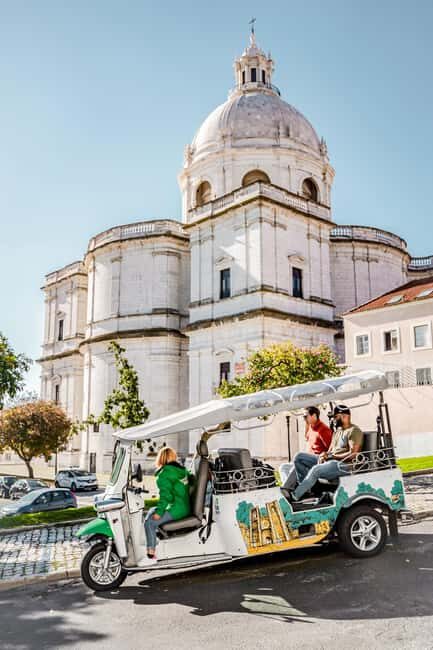
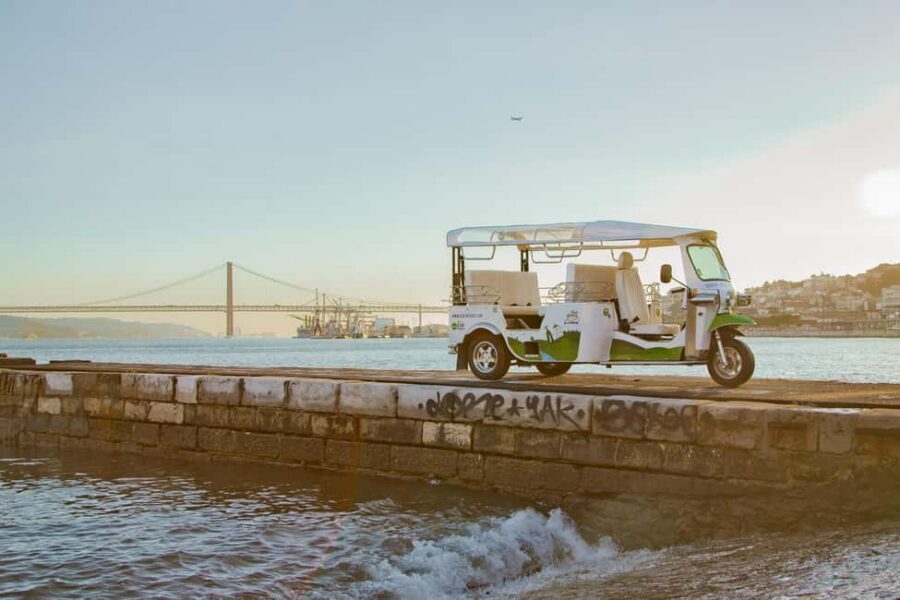
- Electric tuk tuks for narrow streets: quieter ride, no exhaust smell, easier on steep climbs.
- Miradouros built into the plan: photo stops at viewpoints like Portas do Sol, Graça, and Santa Luzia.
- A strong first-time structure: Alfama, Baixa/Chiado, Rossio areas, plus the Belém block.
- Comfort details in cooler weather: blankets available for windy months.
- Small group sizing: up to six people per tuk tuk.
Lisbon’s steep streets, solved: why the electric tuk tuk works
Lisbon has a way of making you work for every view. That’s part of the charm, but it’s also why many visitors burn out fast. This tuk tuk tour solves the problem with a simple idea: you get the sightseeing without trying to “win” the hill climb.
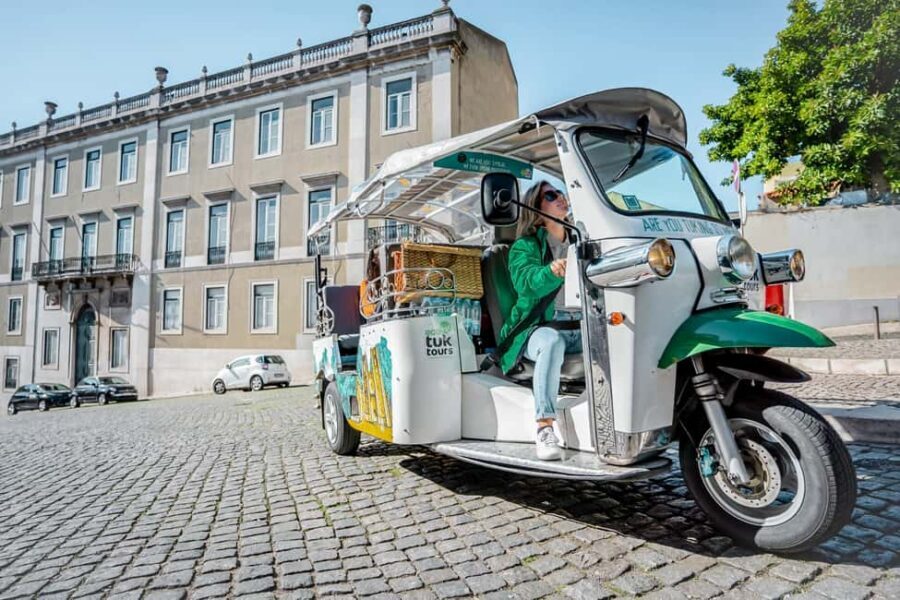
The electric tuk tuk matters more than you’d think. It’s quieter than the old-school engine carts, so conversation is easy and you don’t feel like you’re shouting over traffic. It also helps the ride feel calmer when you’re squeezed into narrow lanes in older neighborhoods. And because it’s designed for tight streets, you can actually get closer to viewpoints and landmarks than you might by walking alone.
You can also read our reviews of more historical tours in Lisbon



How the 1–4 hour timing changes your whole trip

The biggest advantage here is control. You’re not locked into one set loop. You can do a short 1-hour orientation to get your bearings, or stretch it into a 3–4 hour Lisbon hits tour where you add more neighborhoods and more time for photos.
Here’s how I’d plan it, depending on your style:
- If you’re only in Lisbon for a day, aim for 2–3 hours. You’ll usually have enough time for Alfama and a viewpoint stop or two, plus time to reach the Baixa/Chiado area.
- If you want a “first Lisbon” sweep, go closer to 3–4 hours, because you’ll have room for the transition to Belém and a proper stop for Pastéis de Belém.
- If you hate rushing, take the longer window and let your guide adjust on the fly. The route can shift to match how your energy and interests are landing.
Pickup and meeting points: what makes it easy (and what to watch)

This tour is built around hotel pickup in central Lisbon. If your hotel is outside the pick-up area, you switch to one of two starting points: Hard Rock Cafe Lisboa (on Avenida da Liberdade) or the kiosk in Jardim do Tabaco, near the cruise terminal.
Two practical tips that help:
- Be ready about 5 minutes before your start time. The timing is tight because you’re coordinating cars, guides, and narrow-street traffic.
- If you don’t specify a pickup location ahead of time, the default meeting spot is Hard Rock Cafe Lisboa.
Also note the vehicle setup: it’s small, and luggage or large bags aren’t allowed. So if you’re arriving with more than a daypack, plan to store bags first.
Alfama and Mouraria: medieval alleys with minimal stress

Most Lisbon “must-sees” sound good on paper. In real life, the challenge is the walk. That’s why this portion feels like a smart use of your time.
In Alfama, you’ll move through medieval lanes, then connect to viewpoints tied to Lisbon’s story—often with sight lines that explain why this city clings to the hills. You’ll also cover key references like São Jorge Castle, at least from the outside viewpoints and surrounding streets, with context from your guide about what shaped the neighborhood.
Then comes Mouraria, which you’ll typically visit as a guided walk-and-drive segment. Mouraria is one of those places where details matter: street shapes, stair angles, and how people live layered on steep ground. On a tuk tuk, you still get the feeling of the neighborhood without trying to make it your entire walking workout.
A drawback to consider: Alfama and Mouraria roads can be uneven and tight. The ride is designed for it, but you’ll want to keep your expectations realistic. This isn’t a lounge cruise. It’s a sightseeing ride in the city’s older fabric.
Santa Luzia, Graça, and Portas do Sol: your best photo math

Lisbon’s miradouros (viewpoints) are the reason people fall in love with the city. The good news is your route doesn’t just promise them. It builds photo stops into the tour so you’re not wandering around searching for the perfect angle.
You’re set up for classic viewpoints such as Portas do Sol, Graça, and Santa Luzia. Expect the typical pattern:
- Your guide drives you into position.
- You hop out briefly for photos and quick orientation.
- Then you get back on and move before you lose time to traffic or walking detours.
How to make these stops work for you:
- Wear shoes that handle short, uneven surfaces.
- If you care about sunrise/sunset photos, tell your guide early. They can adjust time allocation because the whole experience is built to be flexible.
- If it’s windy or cooler, you’ll have access to blankets in colder months, which makes those viewpoint minutes feel less miserable.





Rossio, Principe Real, Chiado, and Largo do Carmo: Lisbon’s city-center gears
After the hill neighborhoods, Lisbon shifts into its more formal city-center zones. This is where you get contrast: squares, street life, and elegant architecture.
Your tour commonly includes:
- Rossio Square, a major gathering point in central Lisbon.
- Stops around Príncipe Real and nearby gardens like Jardim do Príncipe Real.
- Chiado, where streets and storefronts create a different feel than Alfama.
- Largo do Carmo Square, a quick guided segment that helps connect the neighborhood textures you’re seeing.
One of my favorite parts of this section is how it ties together the city’s layout. You start to understand Lisbon not as separate postcards, but as connected neighborhoods with shifting moods. Your guide’s stories help translate what you’re seeing into something you can remember.
If you’re someone who loves wandering, this part is where you’ll want a bit of time. Some stops include short guided segments plus a little breathing room to look around.
Belém: the monuments-and-pastéis stretch that actually pays off
Now for the big travel payoff. Belém is where Portugal’s Age of Discoveries becomes visible in stone, and where the iconic pastry shows up in real life.
You’ll typically do this:
- A photo-and-drive approach to major Belém sights, including the Monument to the Discoveries.
- A stop for Jerónimos Monastery with photo time and guided context.
- Time for Pastéis de Belém, including a food tasting.
Two notes to keep it enjoyable:
- Entry fees are not included, so if you want to go inside Jerónimos or any other ticketed spot, you’ll need to budget that separately.
- Pastéis time matters. If you want the most satisfying tasting experience, don’t treat it like a fast grab-and-go. Let your guide set your timing so you’re not rushing through the flavor part.
This Belém block is a strong choice if you want one practical outcome: leave Lisbon feeling like you visited the discovery-era core, not just snapped a few photos outside.
What the guide-driver really adds (beyond facts)
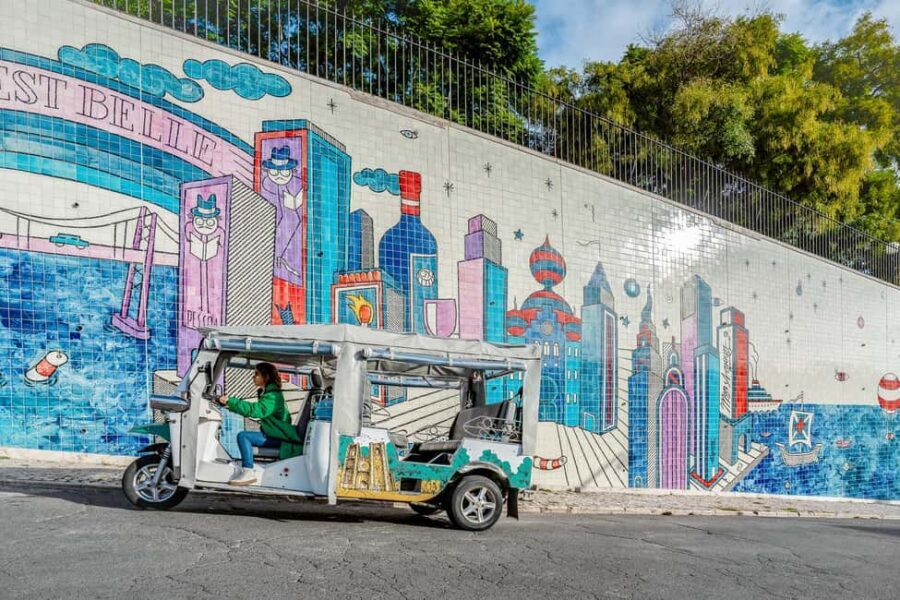
The best part of this tour style is the human variable. A guide isn’t just reading a script; they help you decide what matters on your day.
From the guide stories linked to this experience, a few patterns show up:
- They’re good at adjusting pacing to match you. Guides like Rafael and Bruno are praised for tailoring stops and giving enough time at viewpoints for photos.
- They can route you through less touristy streets, which helps the city feel more personal. Amaro and Antonio are called out for making the ride comfortable and safe, including during rain and for families.
- They often give real-life food or restaurant recommendations. That kind of tip can save you from the usual tourist trap decisions later.
I’d treat your guide like a co-pilot. If you tell them what you care about—history vs views, photography vs neighborhoods, family-friendly pacing vs a faster sweep—you’ll feel the difference.
Comfort, space, and who this tuk tuk suits best
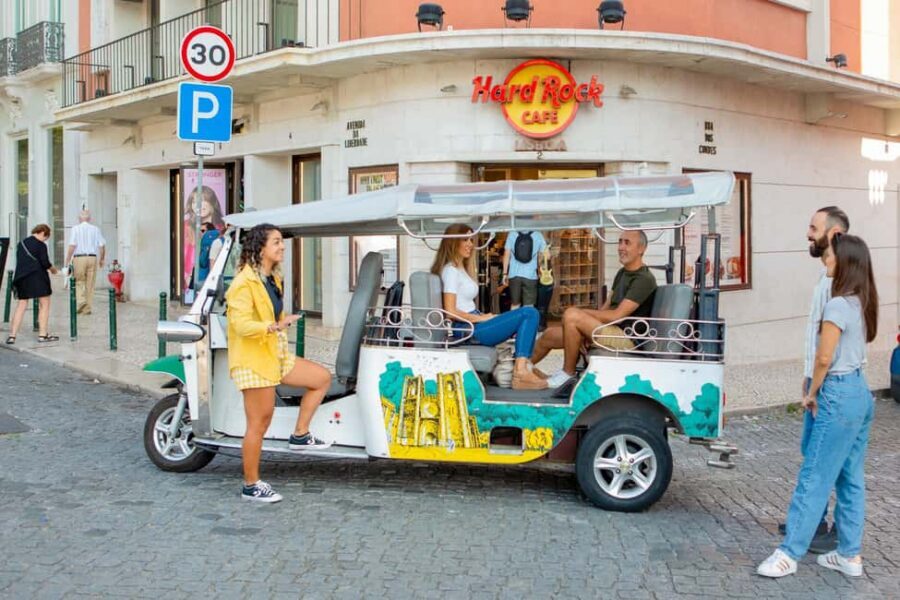
This tour is built for smooth sightseeing, but it has real limits.
Key comfort reality checks:
- Maximum six people per vehicle. It’s private, but the car is still small.
- Cozy blankets are available in cooler months.
- The vehicle has a transparent side cover that can roll up with good weather.
Then there are limitations that matter for safety and comfort:
- Not suitable for wheelchair users.
- Not suitable for pregnant women and people with back problems.
- Not suitable for intoxicated individuals.
- Children under 7 years can’t ride.
- Children 7 to 12 may ride with a booster seat if needed, and you must let the operator know.
Also plan for quick check-in timing: you should be ready about 5 minutes before.
If your group fits those needs—couples, small families with older kids, friend groups who want a view-heavy day—this is a great match.
If you need accessibility accommodations or you’re counting on lots of luggage space, you’ll want to look for another format.
Value check: is $49 per person actually worth it?
Pricing is where this tour can either feel like a smart shortcut or an unnecessary splurge. Here’s the clean value math:
You’re paying for:
- A private vehicle
- Local guiding
- Hotel pickup in central areas (or meeting point support)
- A route that’s adjustable over 1–4 hours
- Electric comfort, plus blankets in cooler weather
- Insurance coverage
What you’re not paying for:
- Entry fees (like interior visits)
At $49 per person, it tends to be good value when:
- You have limited time and want high return per hour.
- You don’t want to manage multiple lines, transfers, and ticketed walking circuits.
- You’re traveling with someone who doesn’t love stairs (or you don’t want to test your own knees).
It’s less “worth it” if your day is already structured for long walks, and you don’t care much about viewpoint photo stops. But if you want an efficient orientation plus memorable city angles, the price usually feels fair.
Simple game plan for your best day
If you want to leave with the strongest memories, do this:
- Start by telling your guide your priorities: viewpoints, neighborhoods, or the Belém monuments.
- Plan for at least one viewpoint stop where you actually pause and photograph.
- If Belém is a must, don’t overschedule the rest of the day. Pastéis and monastery context take time, even when you’re short on it.
And if you’re coming in on a cruise day or arriving at a busy time, lean on the Jardim do Tabaco kiosk or Hard Rock Cafe Lisboa meeting points. It reduces stress because you’re not trying to coordinate a pickup on a complicated route.
Should you book this Lisbon tuk tuk tour?
Book it if you want a private, flexible, view-focused Lisbon day where the hills don’t steal your energy. It’s especially good for first-timers, couples, and small groups who want a mix of neighborhoods plus the Belém monuments and a proper pastry stop.
Skip or reconsider if you need wheelchair access, you have significant back limitations, you’re traveling with lots of luggage, or you want a purely walking experience with long museum hours. Also, if interior sights are your main goal, budget extra for entry fees.
If you’re aiming for the best use of a tight schedule, this is one of those rare Lisbon experiences where the format matches the city. You’ll spend less time fighting steep streets and more time seeing Lisbon the way it looks when you’re standing in just the right spot.
FAQ
How long is the tuk tuk tour in Lisbon?
The duration is flexible from 1 to 4 hours, so you can choose a shorter highlights loop or a longer route with more stops.
Is this tour private or shared?
It’s a private group experience with up to six people per vehicle.
What’s included in the price?
Included are hotel pickup (for central Lisbon hotels), a private customizable tuk tuk ride, a friendly guide-driver with local insights, blankets for cooler weather, insurance, and VAT.
Are entry fees included?
No. Entry fees are not included.
Where are the pickup options if my hotel isn’t in the city center?
You can meet at Hard Rock Cafe Lisboa or at the kiosk in Jardim do Tabaco near the cruise terminal.
What languages are the guide-driver available in?
The live guide is available in English, French, Portuguese, and Spanish.
Is the tuk tuk fully electric?
Yes. The tuk tuks used are 100% electric, designed for quiet rides and cleaner travel.
What should I bring?
Bring a passport or ID card.
Are there restrictions on who can ride?
The tour is not suitable for wheelchair users, pregnant women, people with back problems, and it’s also prohibited for intoxicated individuals.
Can children ride?
Children under 7 can’t ride. Children 7 to 12 can ride on a booster seat if needed, and minors must be accompanied by an adult.