REVIEW · FARO
Grand Lagos & Cape St.Vincent Bus Tour
Book on Viator →Operated by MTS Globe Portugal · Bookable on Viator
A day by the Atlantic edge sounds easy, but it’s packed with Portuguese discoveries. This coach tour uses hotel pickup, an expert guide, and quick stops in historic Lagos and windy Cape St. Vincent so you can hit the highlights of the Age of Discoveries without planning a thing. You’ll also have real photo time at the coast, plus time to wander the town streets on foot.
I like how the itinerary mixes big landmarks with human-scale walking: the Church of Santo António area, the Antonine Museum’s Roman artifacts, and Prince Henry the Navigator’s Lagos story all connect into one theme. I also appreciate the comfort perks—air-conditioned transport with WiFi and a maximum group size of 49. The main drawback to plan for is timing: because pickups and drop-offs run across many hotels, the total day can feel long even though the sightseeing blocks are short.
In This Review
- Key things to know before you go
- Lagos and Cape St. Vincent from Faro: the point of this tour
- Price and value: what you’re actually buying
- How the pickup works (and why it affects your schedule)
- Lagos: Age of Discoveries stories plus Roman artifacts
- The Church of Santo António and the Antonine Museum area
- Walking time and what to do with free time
- Prince Henry the Navigator: why Lagos mattered
- Sagres: a remote village with a nautical-school angle
- Cape St. Vincent: end-of-Europe lighthouse views (with wind)
- Timing reality check: how to plan your day
- What’s included (and what you need to budget)
- Group size and comfort: 49 people max
- Who this tour is best for
- Should you book Grand Lagos & Cape St. Vincent from Faro?
- FAQ
- What is the start time for the tour?
- How long is the tour?
- Is hotel pickup and drop-off included?
- Where are pickup options offered?
- What’s included in the price?
- Is the Church of Santo António or museum entry included?
- How much time is given at Cape St. Vincent?
- What if I need to cancel?
Key things to know before you go
- Hotel pickup and drop-off across many Algarve towns cuts down on hassle (but adds some driving time).
- Lagos on foot: city-center walking plus optional time in the Church of Santo António and museum area.
- Age of Discoveries focus: Prince Henry the Navigator links Lagos, Ceuta, and Sagres in one story arc.
- Sagres village and fishing harbor: a quieter stop that’s more about atmosphere than big-ticket sights.
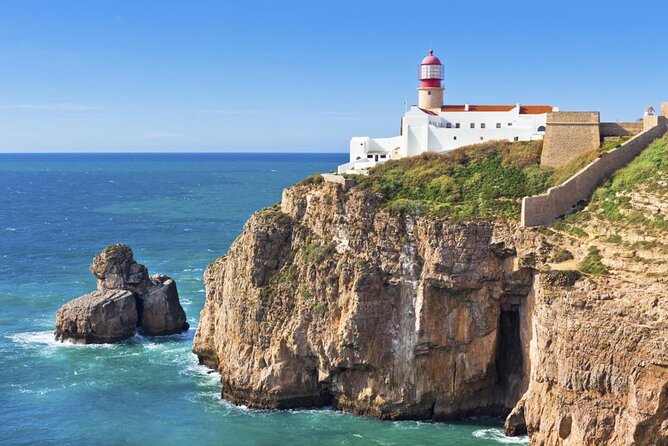
- Cape St. Vincent lighthouse views: short but scenic, and it can be quite windy—bring a jacket.
- Mobile ticket + WiFi on board: small conveniences that help when schedules shift a bit.
Lagos and Cape St. Vincent from Faro: the point of this tour
If you’re staying in the Algarve, this tour is a practical way to see two big names on the western-south coast: Lagos and Cabo de São Vicente (Cape St. Vincent). Instead of juggling buses and parking, you get delivered from your hotel area in an air-conditioned coach, with a guide to connect what you’re seeing to the Portuguese Age of Discoveries.
I like tours like this when you want structure. You get guided context—why Lagos mattered, who Prince Henry the Navigator was, and how Portugal’s maritime push accelerated—then you get just enough free time to wander and take photos. It’s also ideal if you’re traveling solo or as a couple and don’t want to coordinate a second car for a coast day.
The catch is that the calendar can move slowly. Pickup times vary by hotel location, and the tour runs across a wide chunk of the Algarve (including places like Faro, Quarteira, Vilamoura, Albufeira, and farther east like Olhão and Tavira). So your “time on site” can feel shorter than the overall day length suggests.
You can also read our reviews of more tours and experiences in Faro.

Price and value: what you’re actually buying
At about $53.23 per person, you’re paying mostly for three things: transport, a professional multilingual guide, and a guided plan that hits the top photo stops. Food isn’t included, so you’ll budget for lunch/snacks on your own.
Where this can feel like great value is if you’re not trying to build an itinerary on your own. Lagos and Cape St. Vincent are not far on a map, but they’re awkward without a car—especially if you’re aiming to walk around the historic center and then still catch the lighthouse views before the day ends.
Where value may disappoint you is if you’re expecting long free time in each place. The experience is structured around guided segments and quick stops, and driving between towns takes time. If your priority is hours of wandering in Lagos or staying longer at Cape St. Vincent, you’ll want to mentally reset your expectations before you book.
How the pickup works (and why it affects your schedule)
You meet at a designated meeting area in Albufeira (Estr. de Ferreiras 200A, 8200-567 Albufeira) and then get picked up at/near your hotel. The tour notes that not every hotel can be picked up at the door; if yours isn’t available, you’ll be directed to a nearby location.
Pickups depend on where you’re staying in the Algarve. Centrally located hotels in places like Faro, Quarteira, Vilamoura, Lagoa, Alvor, Carvoeiro, and others are included, plus additional pickups in East Algarve areas such as Olhão and Tavira. That spread is convenient for you, but it also means the bus may spend time collecting passengers before you reach Lagos.
Bottom line: if you’re an early-morning planner, go with the flow. Once you’re on board, the day is guided and organized—but your exact pace will be shaped by where everyone else is coming from.
Lagos: Age of Discoveries stories plus Roman artifacts
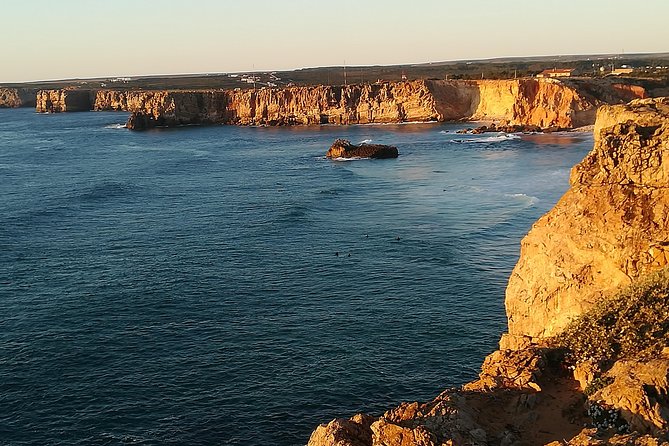
Lagos is the anchor of this tour. You’ll travel there by coach and then start with guided time that combines history, architecture, and city-center walking. The guide’s theme is the Portuguese Age of Discoveries, and you’ll learn why sailors, trade routes, and major decisions connected back to Lagos.
What I like here is the way the guide ties the places together instead of listing facts. You’re not just looking at buildings—you’re seeing how Lagos became a launching point in the 15th-century European story, including its link to the black slave trade through a documented slave market that was once part of the town’s history.
The Church of Santo António and the Antonine Museum area
The big guided stop inside the 18th-century Church of Santo António includes ornate wood carvings and blue-and-white tiling. Even if you’re not a museum person, this is a worthwhile pause because it’s visually specific and tied to the town’s older layers.
Inside, you’re pointed toward Roman artifacts at the Antonine Museum. That’s a neat contrast: you’re in a church tied to Portuguese identity, and then you’re looking at objects that point to Roman-era presence in the region.
One note to keep you comfortable: the itinerary info says the Church stop is own expense, while the museum admission is also marked as admission ticket free. Because that’s a mismatch, don’t assume the cost is identical for everyone. Your booking confirmation should clarify exactly what’s included.




Walking time and what to do with free time
Lagos is the part where you’ll want your camera ready. You’ll likely get a mix of guided walking and then some time to explore on your own. If you want the best return for your minutes, keep your wanderings focused: follow your energy toward the historic lanes first, and then look for coastal angles for photos.
If you’re visiting on a Monday, plan for some closures. The tour info doesn’t promise open hours, and at least some sights can be shut down that day, which can tighten the schedule further.
Prince Henry the Navigator: why Lagos mattered
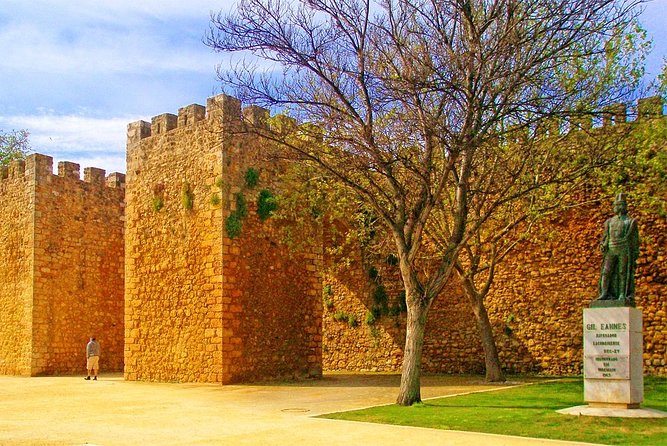
The name Prince Henry the Navigator comes up for a reason. In Lagos, you’ll hear the story tied to the town and its role in Portuguese expansion—specifically his sailing efforts in 1415 to capture Ceuta (on the north African coast).
The point isn’t just biography. It’s cause and effect. Your guide connects that event to how Portugal’s maritime ambitions grew into the wider Age of Discoveries era. You’ll also see the Prince Henry the Navigator statue in Lagos, which gives you a physical reference point for the story.
This is the kind of guided explanation that makes your photos better later. When you look at the statue or imagine the harbor lines, you’ll understand what you’re seeing and why the region became so important.
Sagres: a remote village with a nautical-school angle
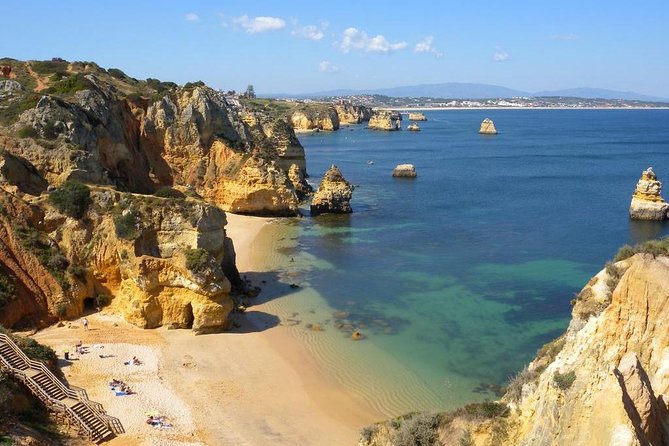
After Lagos, the tour moves west to Sagres. This stop is framed around Prince Henry developing the first nautical school in the 15th century. It’s a smaller, quieter setting than Lagos, and that’s part of the appeal.
You’ll walk through the village center with your guide and get a feel for the harbor area where fishing life and sea views set the tone. If you like places where the coast shapes everyday life, Sagres is a good match. If you expect big monuments and long museum time, you might find it underwhelming—but that’s more about your expectations than the stop itself.
Also, Sagres weather can be shiftier than people expect. One of the strongest practical tips from past experiences is to pack a jacket, because the wind can arrive fast around the cliffs.
Cape St. Vincent: end-of-Europe lighthouse views (with wind)
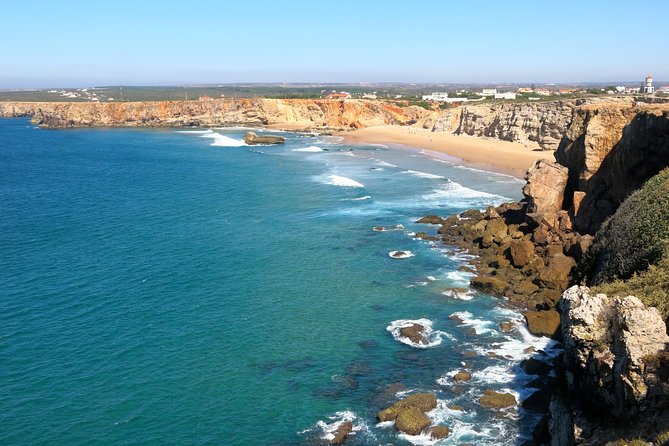
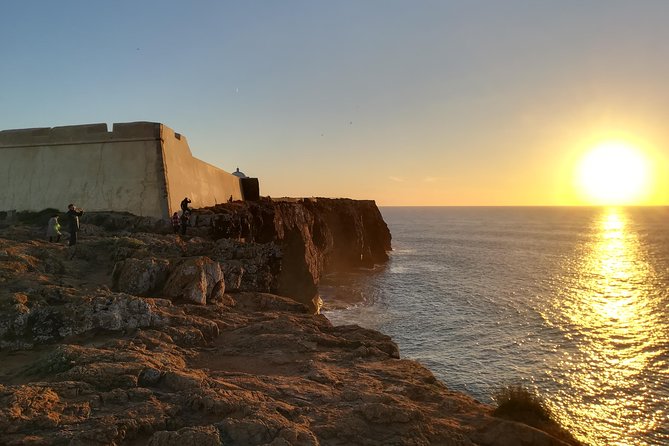
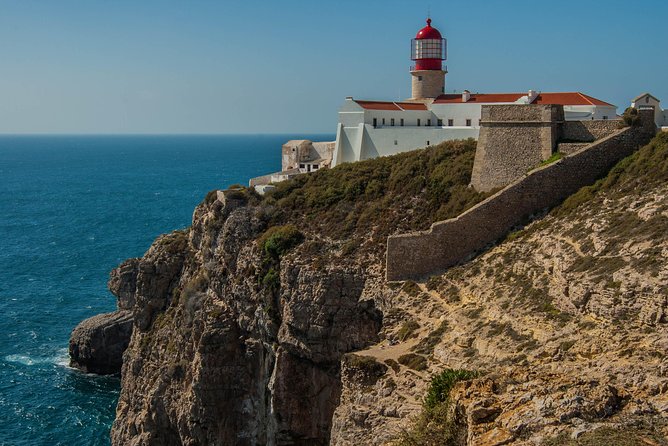
Cape St. Vincent is the classic payoff stop: the southwestern tip of Europe, known for being the end of the world (a nickname you’ll hear and understand quickly once you see the dramatic coast). You’ll arrive by coach and then have about 30 minutes for Cape St. Vincent views and photos.
During that short window, the goal is simple: walk to where you can see the lighthouse and open Atlantic angles, then decide what’s worth extra steps. Because the stop is brief, you’ll get the most out of it by moving purposefully—don’t let the first viewpoint be the only one.
And yes: it can be windy. Pack accordingly. A light jacket or windbreaker can save the day, especially if you’re the type who starts taking photos and suddenly feels the cold.
Timing reality check: how to plan your day
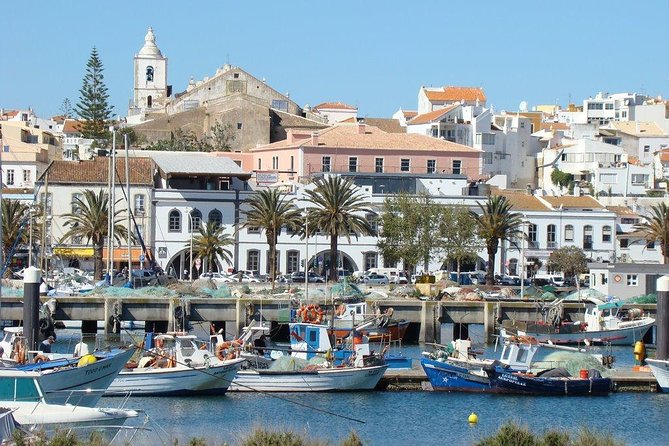
The tour is listed as 10 to 11 hours approx., and you’ll start at 9:00 am. That’s not a typo, it’s just the nature of hotel-to-hotel pickup. Expect more time in transit than a car-rental itinerary would take.
Many people feel the day mostly becomes logistics until the places start. You can reduce stress by doing two things:
- Bring a light layer for the early hours and later wind.
- Plan to eat whenever there’s a gap, not on a strict lunch schedule.
If you’re traveling with someone older or less mobile, the guided walking in Lagos and Cape areas still matters even if the stops are short. You don’t need to be a marathon walker, but you should be comfortable with uneven sidewalks and quick photo stops.
What’s included (and what you need to budget)
Included:
- Hotel pickup and drop-off (or a nearby pickup point if your exact hotel isn’t served)
- Professional guided tour to Lagos and Cape St. Vincent
- Air-conditioned vehicle
- WiFi on board
- Mobile ticket
Not included:
- Food and drinks
That’s the simple budget. Before you go, decide where you’ll eat in Lagos (or bring a snack for the bus ride). Once you’re out near Cape St. Vincent, options can be limited depending on timing and day—so don’t assume you’ll find exactly what you want right when you arrive.
Group size and comfort: 49 people max
The maximum group size is 49 travelers. That’s big enough to feel like a group tour, but not so huge that you’ll constantly lose the guide completely.
Because you’re traveling by coach, the comfort factor is real. You’ve got A/C and onboard WiFi, which helps during longer travel stretches and makes it easier to keep family or friends in the loop.
Just keep in mind that on a shared bus day, the schedule is a balancing act. One delay or one slow pickup can ripple through the route, which is why being flexible helps.
Who this tour is best for
This experience is a good fit if you:
- Want to see Lagos and Cape St. Vincent without renting a car
- Like history when it’s tied to real places (church, Roman artifacts, Prince Henry landmarks)
- Enjoy photo stops and short guided walks more than long free-time wandering
- Are comfortable with a day that includes driving and multiple pickup points
It may be less ideal if you:
- Plan your trip around maximizing time in only one town
- Hate windy cliff viewpoints (Cape St. Vincent can be exposed)
- Want a food-focused day with long meal breaks (meals aren’t included)
Should you book Grand Lagos & Cape St. Vincent from Faro?
I’d book it if your goal is a solid, guide-led highlights loop: Lagos for architecture and Age of Discoveries connections, then Sagres for the nautical-school story and coastal mood, then Cape St. Vincent for lighthouse views. For the price, you’re buying a lot of guidance and transport convenience, which is especially valuable in the Algarve if you don’t want to drive.
I wouldn’t book it if you want long, unhurried time in Lagos or Sagres. The day is built around quick segments, and the pickup pattern across many hotels can make the overall schedule feel stretched.
If you like your sightseeing packed with meaning—and you’re okay with short stops—this tour is a practical way to hit the Algarve’s dramatic western edge. Just bring a jacket, keep your expectations realistic about time, and plan to spend your camera battery wisely.
FAQ
What is the start time for the tour?
The tour starts at 9:00 am.
How long is the tour?
It’s listed as approximately 10 to 11 hours.
Is hotel pickup and drop-off included?
Yes. Pickup and drop-off are included, with pickup at your hotel if available or at a nearby location if it’s not.
Where are pickup options offered?
Pickup is available in centrally located areas around Faro, Quarteira, Vilamoura, Albufeira, Lagoa, Alvor, Vau, Praia da Rocha, Carvoeiro, Armacao de Pêra, and Galé. East Algarve pickup is also offered in Olhão, Tavira, and Vila Real de Santo António.
What’s included in the price?
The tour includes professional guided time, air-conditioned transportation, WiFi on board, hotel pickup and drop-off, and a mobile ticket. Food and drinks are not included.
Is the Church of Santo António or museum entry included?
The Church of Santo António stop is described as own expense, while the Antonine Museum admission is marked as admission ticket free. Check your booking confirmation for the exact arrangement.
How much time is given at Cape St. Vincent?
You get about 30 minutes at Cabo de San Vicente.
What if I need to cancel?
Free cancellation is available. You can cancel up to 24 hours in advance for a full refund.