REVIEW · FARO
Faro: Dolphin and Wildlife Watching in the Atlantic Ocean
Book on GetYourGuide →Operated by Ocean Vibes Algarve · Bookable on GetYourGuide
Faro’s dolphin hunt is pure Atlantic drama. You’ll cruise from Faro through Ria Formosa Natural Park toward the open ocean, then scan for dolphins, porpoises, and (seasonally) whales. What I like most is the marine biologist guidance and the careful, rule-based dolphin watching. The only real drawback is the wild part of it: you might spend time searching, and a 100% sighting rate is never promised.
You also get a scenic payoff on the way. Expect views over the barrier islands—Deserta and Culatra—or the marshlands as you head out. One more practical thing: windy days can mean a cold spray on your clothes, so plan to dress for the sea, not just the sunshine.
In This Review
- Key Points to Know Before You Go
- From Faro Harbor to Ria Formosa’s Barrier Islands
- The Marine Biologists: What You’ll Learn While You Search
- The Atlantic Scan: Dolphins, Whales, Birds, and More
- Cetaceans (the headline act)
- Birds overhead
- Fish and marine life
- The 30 Minutes With Dolphins: Respecting the Animals While You Watch
- Boat Ride Reality: Seats, Spray, and the Atlantic Mood
- Value Check: Is $76 Worth It for 2.5 Hours?
- Who This Faro Dolphin Tour Fits Best (and Who Should Skip It)
- Practical Tips for Getting the Best Day on the Water
- Should You Book This Faro Dolphin and Wildlife Watching Tour?
- FAQ
- Where is the meeting point in Faro?
- How long is the tour?
- What is included in the price?
- Is hotel pickup and drop-off included?
- What languages are the guides?
- What should I bring?
- Is dolphin viewing guaranteed?
- When are whales most likely to be seen?
- What wildlife might I see besides dolphins?
- What are the main rules on the boat?
Key Points to Know Before You Go
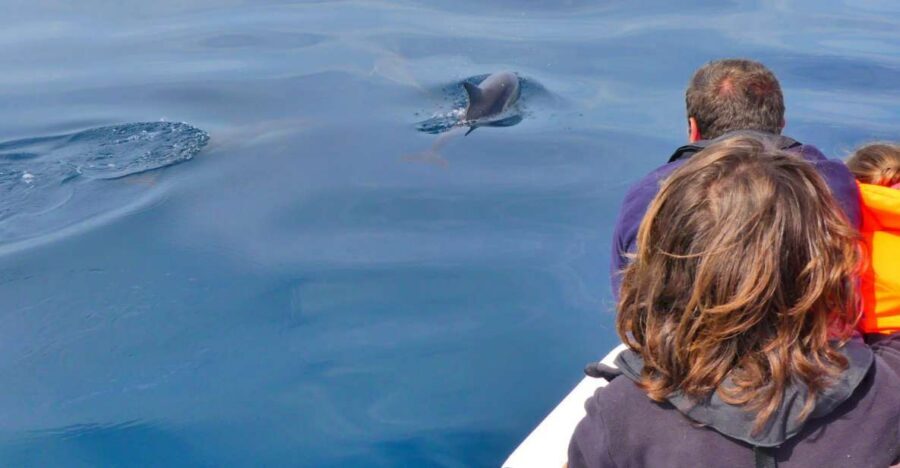
- Marine biologists guide the search and explain what you’re seeing, plus how dolphin research data gets collected
- Ria Formosa setup first, so even the transit has wildlife-and-scenery value
- Whale season is Feb to May, while dolphins are resident year-round
- You’re allowed 30 minutes per dolphin pod, designed to watch without stressing animals
- Birds and sharks can show up too, not just dolphins
From Faro Harbor to Ria Formosa’s Barrier Islands
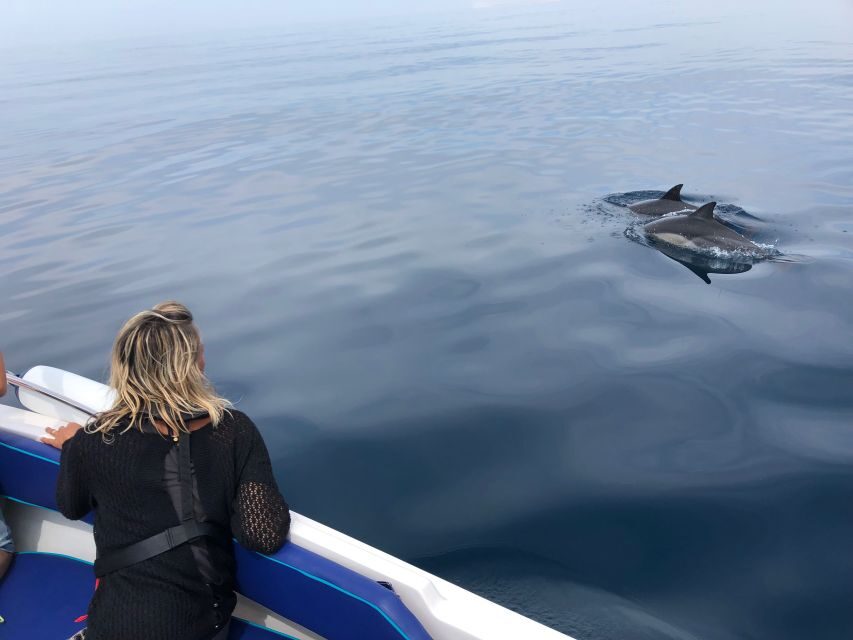
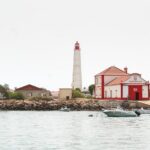
This trip starts in Faro at the Ocean Vibes Algarve office, in the Faro harbour/marina area. You’ll want to look for the shared store with the banner Ocean Emotions. No hotel pickup is included, so build in time to get to the marina yourself.
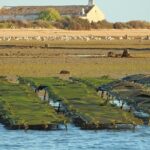
Why that beginning matters: Ria Formosa isn’t just a route. It’s a protected natural area, and you cruise through it before you ever reach the open Atlantic. That means you’re not staring at nothing for the first stretch—you’re already moving through a living system of marshlands, birds, and coastline views.
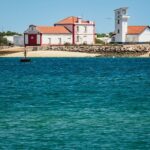
On the way out, the boat can head across the natural park with views over the barrier islands of Deserta and Culatra—or through marshland scenery. Either way, you get that “Algarve coast from the water” perspective. It also helps with expectations: even if the dolphins take a bit to show, the cruise itself has a sense of place.
You can also read our reviews of more dolphin watching tours in Faro
The Marine Biologists: What You’ll Learn While You Search
The heart of this experience is the two marine biologists on board. They’re there to help you spot species and to translate the ocean into plain facts you can actually use.
From the trip’s structure, you can see the philosophy:
- search methodically once you reach the Atlantic
- keep enough distance and calm approaches
- explain behavior and ecology as you go
Guide names you may hear include Miguel and Alfredo, plus Pedro and Ines/Inez—and others in the team depending on the sailing. The key point for your planning is what the guides do: they don’t rely on tricks. They work locations, watch surface activity, and they’re willing to take the time needed to find something.
A detail I really appreciate for value: after you spot a group of dolphins, you’ll get a focused observation window—plus time to ask questions. That’s when the tour shifts from wildlife spotting into education, including how biologists collect data for dolphin population research. If you care about conservation, this part matters. You’re not just taking photos; you’re learning how monitoring works.
The Atlantic Scan: Dolphins, Whales, Birds, and More
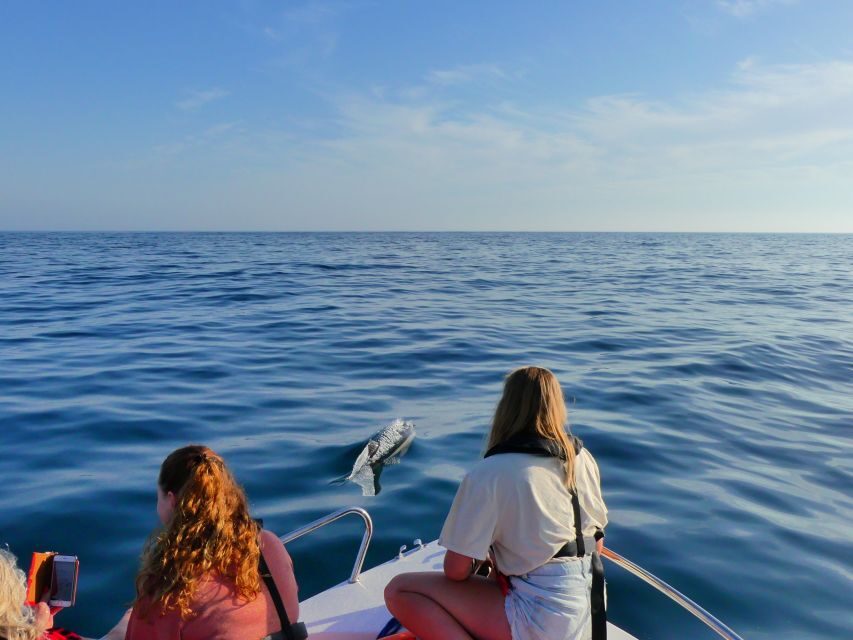
Once you cross into the Atlantic side, the real waiting begins. The good news: you’re not only looking for one thing. The tour is built around finding multiple categories of wildlife—cetaceans first, then seabirds and other marine life.
Here’s what you should expect you might spot, based on season and the ocean’s mood:
Cetaceans (the headline act)
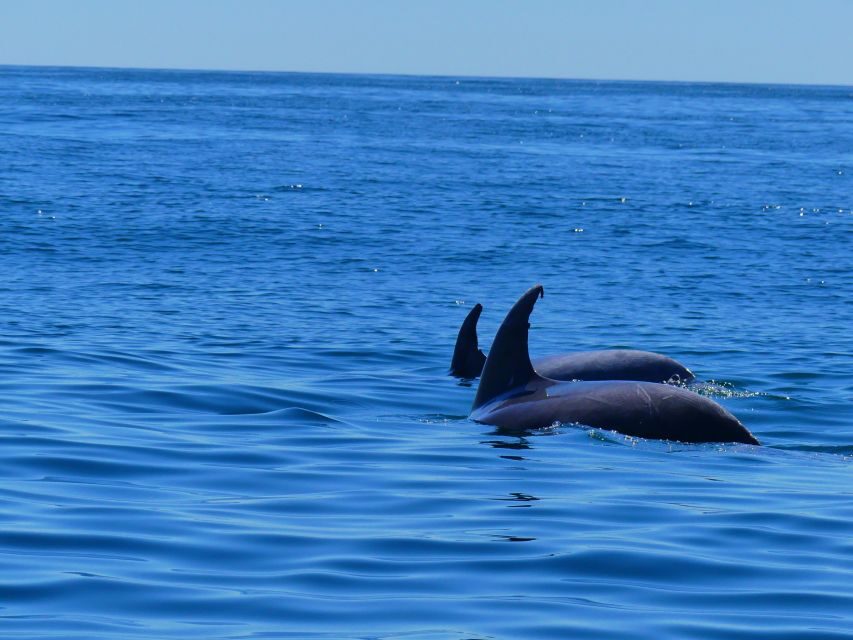
- Dolphins are resident all year round, so they’re the most consistent sighting.
- Whale season runs February to May. During that window, your odds of seeing whales go up.
- You’ll also be searching for other cetaceans like porpoises, and the tour aims for multiple species when conditions allow.
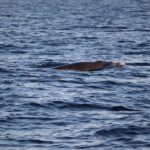
The experience can include everything from common pods to surprises. Some trips report sightings like a whale and her calf, or pods of orcas and even calmer moments where animals linger nearby. There are also reports of rare-feeling sightings like sharks in the mix.
Important reality check: dolphins are swimming freely in the wild, so you can’t count on a guaranteed sighting. The tour notes that normally 9 out of 10 tours are successful. That’s a strong success rate, but it still means you should plan to enjoy the boat ride even if the ocean plays hard to bargain.
Birds overhead
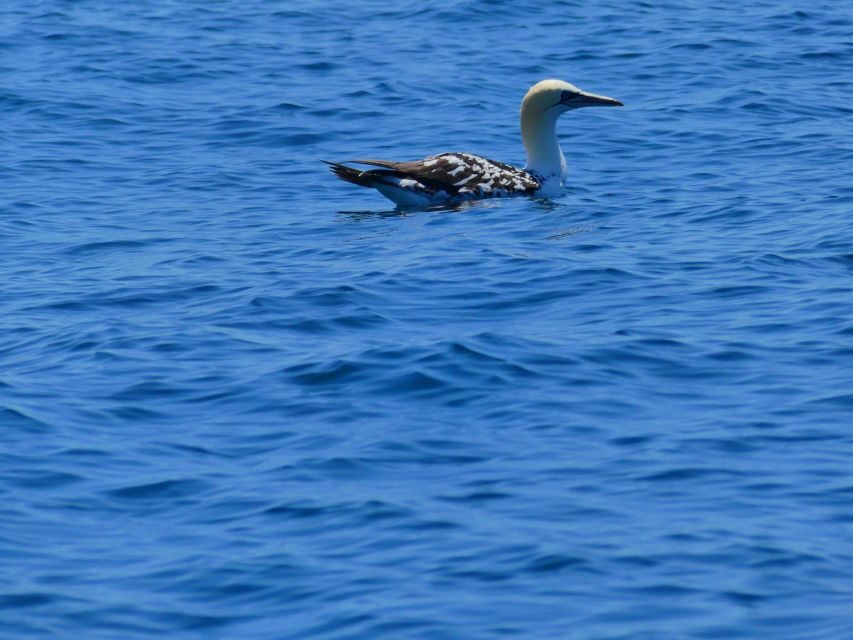
You may see seabirds such as gannets and shearwaters flying overhead. This is a good reminder that wildlife spotting on this route is three-dimensional: look not only at the water but also at what’s moving in the sky.




Fish and marine life
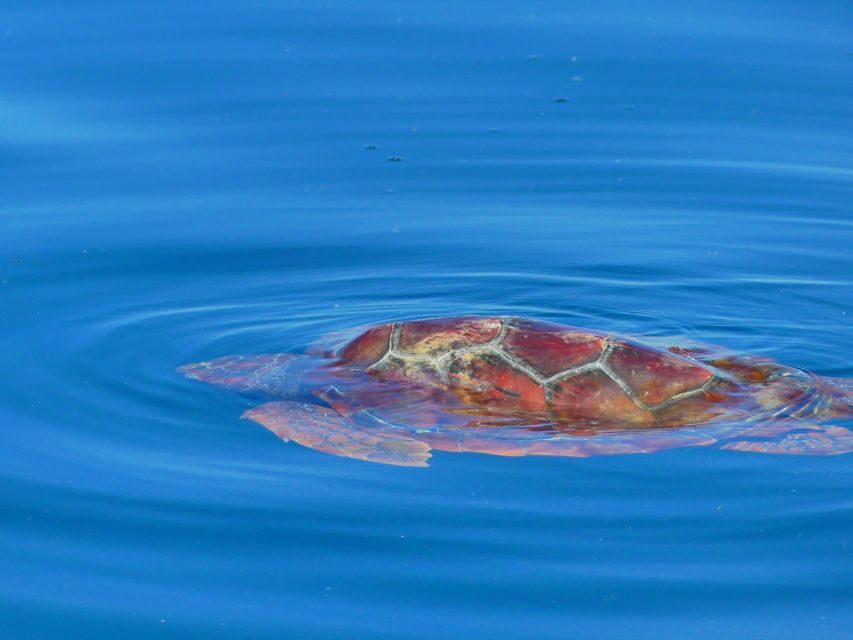
The tour also mentions chances to spot species like ocean sunfish, plus sharks such as blue sharks and hammerhead sharks, and you may even see marine turtles. Not every trip will produce all of that. But the point is you’re not on a one-track dolphin-only hunt.
The 30 Minutes With Dolphins: Respecting the Animals While You Watch
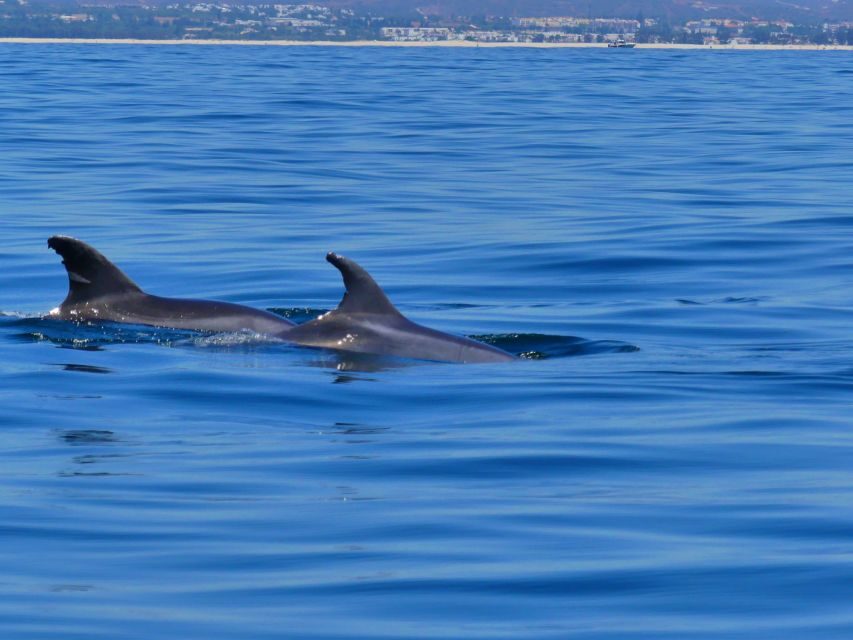
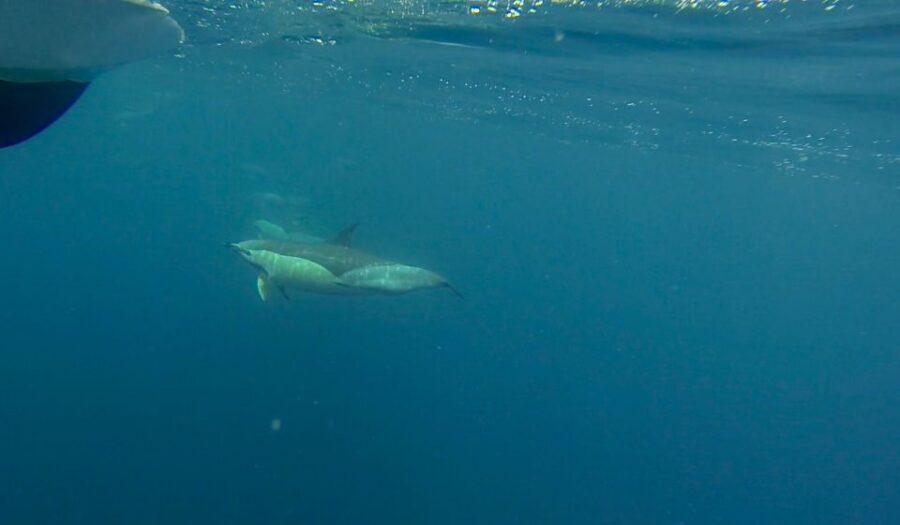
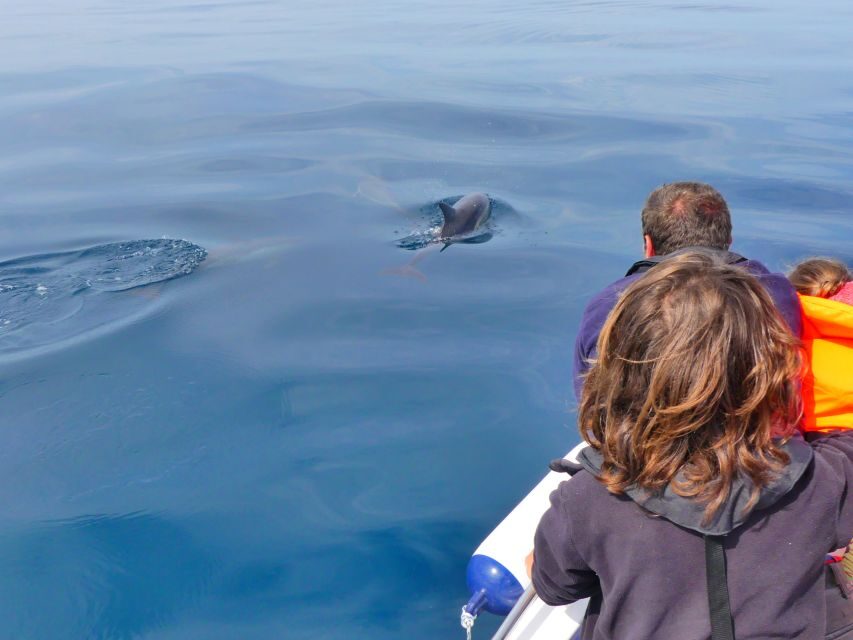
When you finally find a group of dolphins, you get about 30 minutes to watch them freely. The way the tour frames it is thoughtful: follow the pod while keeping behavior unforced. That matters, because dolphins are wild animals, not aquarium performers.
You can also feel that the guides care about the rules. Some of the dolphin time is clearly about letting the animals act naturally—swimming, surfacing, moving around the boat on their own terms. During that window, you’ll have time to ask questions, too, so you can connect what you’re seeing with what the dolphins are doing and why.
There’s another practical advantage to this rule-based setup: it keeps the tour from turning into a chaotic stampede of boats. It also helps you know what “success” looks like. Even if you don’t get whales, you’re still set up for a meaningful dolphin viewing block.
Boat Ride Reality: Seats, Spray, and the Atlantic Mood
This is a boat trip out of Faro and across water that can change fast. Even on good days, expect motion.
A few things to plan for:
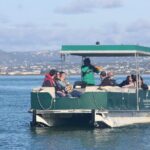
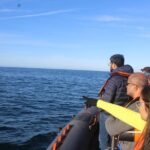
- You may get a little wet on windy days, and the wind can feel cold even when it’s warm on shore. Bring a jacket.
- The boat can feel bumpy at times. Several accounts mention it can be rollercoaster-ish when conditions are rough.
- Seating can get uncomfortable for some people by the end, especially on a 2.5-hour outing where you’ll likely stand, lean, and watch.
If you’re prone to seasickness, you’ll want to take that seriously. The tour doesn’t give medication guidance, but you should dress in layers and keep your expectations aligned with a real Atlantic crossing, not a lake cruise.
What to bring is simple and important:
- comfortable clothes
- water
- suncream
- a jacket for wind
And if you run warm easily, bring layers you can shed without turning the day into laundry.
Value Check: Is $76 Worth It for 2.5 Hours?
At $76 per person for 2.5 hours, this isn’t a budget “stand on deck” experience. It’s priced like an eco-focused wildlife tour with professionals doing real work on the water.
Here’s what justifies the cost:
- You’re paying for marine biologists to guide both spotting and interpretation. That’s not a general tour guide reading off facts.
- You’re also paying for a conservation-style approach: life vests, rules about behavior around animals, and a limited watch window per pod.
- The success rate is strong, and the tour is designed to keep searching rather than treating wildlife as a lottery ticket.
The best sign of value is how the tour handles the hard part: time. When dolphins aren’t immediately visible, the guides keep at it. When dolphins or other wildlife appears, you get that structured viewing time and learning space afterward.
If you want a predictable sightseeing checklist, this might feel less “controlled” than other tours. But if you want a genuine wildlife encounter in the Atlantic—with real expertise on board—this price lines up well with the experience.
Who This Faro Dolphin Tour Fits Best (and Who Should Skip It)
This tour is a good match if you:
- want wildlife watching with education baked in
- enjoy searching and watching wildlife behavior, not just ticking off a photo
- are comfortable with being out on open water for a couple hours
- like knowing that a team is focused on animal respect and data-minded conservation
It’s not recommended for people with limited mobility, and it also isn’t suitable for:
- children under 2 years
- pregnant women
- people with back problems
- people with mobility impairments
Also note the “don’t mess with nature” rules:
- no smoking
- no pets (assistance dogs allowed)
- no feeding animals
- no touching marine life or touching animals
If any of those restrictions affect your needs, it’s worth reconsidering.
One more detail that can help you decide: dolphins are resident year-round, but whales are seasonal (Feb to May). If whales are your top target, plan timing with that window in mind.
Practical Tips for Getting the Best Day on the Water
You’ll have the best time if you treat this like an outdoor wildlife expedition, not a theme-park ride.
Here’s how to set yourself up:
- Dress for wind. A light jacket can be the difference between comfortable and miserable.
- Bring sunscreen and water. You’ll likely be outside and focused for the whole outing.
- Expect a search phase. Even successful tours can take time before dolphins show up.
- Bring your curiosity. The best moments often happen when you ask questions once the biologists put the sightings in context.
- If you’re scheduling other things after, give yourself a little breathing room. Some trips have been extended slightly to improve sighting chances.
And the big mindset shift: you’re watching wild animals do what they do, not “perform.” That’s the reason it feels special.
Should You Book This Faro Dolphin and Wildlife Watching Tour?
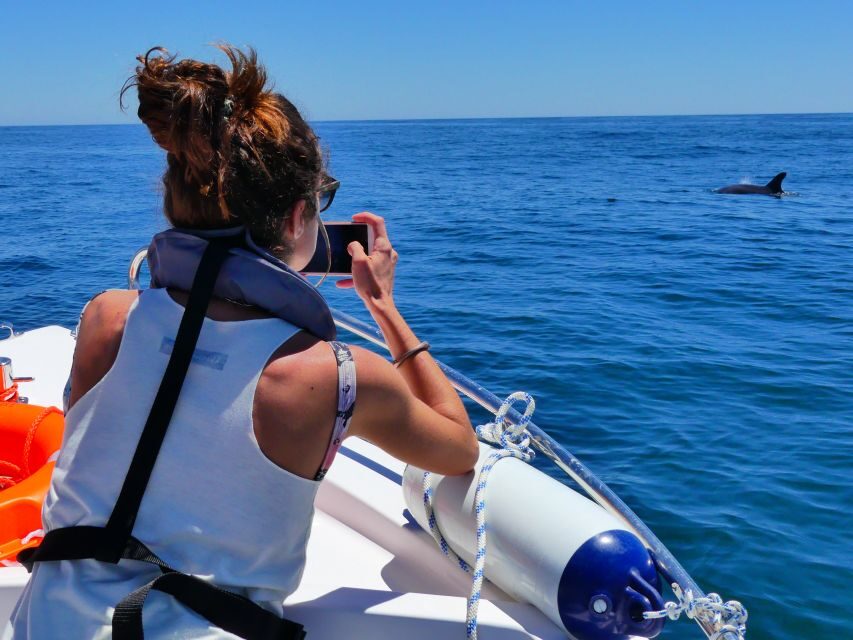
Book it if you want a high-odds dolphin experience with marine biologists doing real explanation and real wildlife tracking, and you’re okay with the wild reality that sightings aren’t guaranteed.
Skip it if:
- you’re not comfortable with open-water conditions (bumpy rides, wind-chill, possible spray)
- you need a very controlled, predictable itinerary with minimal waiting
- your mobility or health situation falls into the tour’s not-suitable categories
If you’re traveling in the Algarve and you care about authenticity—wild animals in their own world with a respectful team watching closely—this is the kind of tour that earns its price. The ocean search is part of the magic, and the dolphin watching rules make sure the experience stays ethical while still being genuinely exciting.
FAQ
Where is the meeting point in Faro?
You meet at the Ocean Vibes Algarve office in the Faro harbour/marina area. Look for the shared store with a banner saying Ocean Emotions.
How long is the tour?
The duration is 2.5 hours.
What is included in the price?
The tour includes a guided boat tour, a marine biologist guide, and life jackets.
Is hotel pickup and drop-off included?
No, hotel pickup and drop-off are not included.
What languages are the guides?
The live tour guide operates in English, French, Portuguese, and Spanish.
What should I bring?
Bring comfortable clothes, plus water and suncream. On windy days, bring a jacket since it can get cold.
Is dolphin viewing guaranteed?
No. Dolphins are wild and you can’t guarantee a 100% sighting rate. The tour notes that normally 9 out of 10 tours are successful.
When are whales most likely to be seen?
Whale season is between February and May.
What wildlife might I see besides dolphins?
You might see birds such as gannets and shearwaters, plus other marine life including fish like ocean sunfish and sharks, and possibly marine turtles.
What are the main rules on the boat?
Smoking is not allowed. Pets are not allowed (assistance dogs are allowed). You cannot feed or touch animals or marine life.