REVIEW · FARO
Cork Factory Tour & Cork Shop
Book on Viator →Operated by Algarve Rotas · Bookable on Viator
Cork starts as bark, not bottle stoppers. At Eco-Fábrica de Cortiça in Faro, you’ll get a guided look at cork harvesting and how it turns into graded material used in everyday products. It’s an easy, hands-on way to understand why Portuguese cork matters.
I really like the live cutting and grading demos. You’re not stuck watching from a distance; you can see skilled staff at work, plus you may even get a chance to try cork cutting yourself. I also appreciate the pace: there’s real time for questions so you can get clear answers instead of rushing through facts.
One possible drawback: this tour is often mostly indoors, so if you’re hoping to watch cork being stripped from trees right there, you might want to know that upfront. Bad weather can also make it harder to hear explanations in some situations, so going on a dry day helps.
In This Review
- Key things to know before you go
- Getting there: meeting at Eco-Cork in Faro
- What you learn at the Eco-Cork factory: from bark to graded cork
- Live demonstrations: cutting, grading, and knife-sharpening
- Q&A with the guide: how to get the answers you actually want
- Cork shop time: buying gifts with better context
- Price and logistics: why $21.17 feels fair (or not)
- Who should book this Cork Factory Tour
- Should you book Cork Factory Tour & Cork Shop?
- FAQ
- How long is the Cork Factory Tour & Cork Shop?
- What time does the tour start in Faro?
- How much does the tour cost?
- Is food or hotel pickup included?
- Is the tour offered in English, and will I use a mobile ticket?
- Is the Cork Shop visit included?
Key things to know before you go
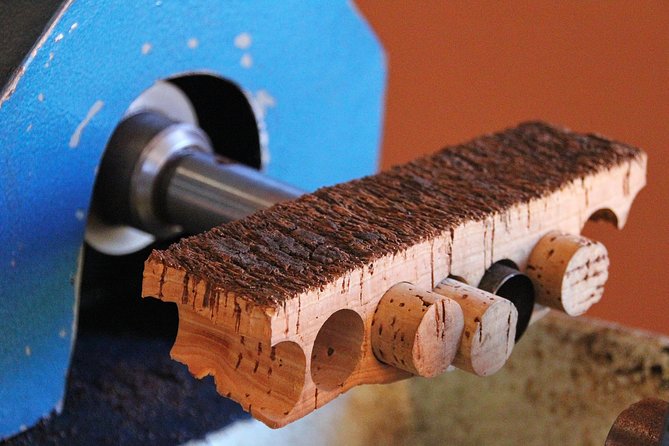
- Eco-Cork factory walkthrough on one focused route so you leave with a clear picture of the full process.
- Small group size (up to 30) which makes questions feel normal, not awkward.
- Cutting, grading, and knife-sharpening demonstrations that show the craft behind the product.
- A dedicated cork shop visit right after the tour, so you can buy while the details are fresh.
- English-language guidance and a setup that works for most visitors.
- A chance to participate (like cutting cork) depending on the flow of the session.
Getting there: meeting at Eco-Cork in Faro
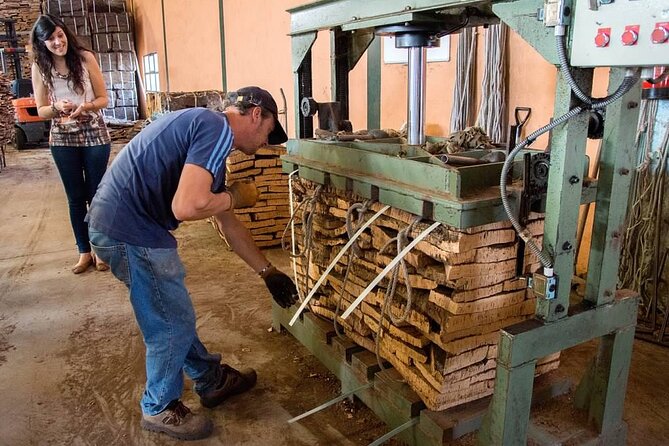
This is a straightforward, self-arranged outing. You meet at the Eco-Cork Factory (Eco-Fábrica de Cortiça) at the address listed for Francisco Carrusca, Sítio da Mesquita Baixa, 8150-048, Portugal, and the tour starts at 11:30 am. There’s no hotel pickup or drop-off, so plan a bus/taxi/ride-share moment to get yourself to the site.
For me, the practical upside here is the simplicity. You don’t need to coordinate a whole pickup schedule, and you don’t have to wonder who finds your group. You just show up, get your mobile ticket, and join your small group.
The tour ends back at the meeting point, so you’ll want to factor in how you’ll get back to wherever you’re staying. Also, the factory visit and shop portion take about 1 hour 10 minutes, so it’s a good slot if you want something educational without eating your entire day.
If you’re traveling with kids, good news: child seats are available on request, and the activity is listed as suitable for most travelers. Just note that since it’s a factory setting, you’ll be on your feet and listening in a working environment.
You can also read our reviews of more tours and experiences in Faro.

What you learn at the Eco-Cork factory: from bark to graded cork
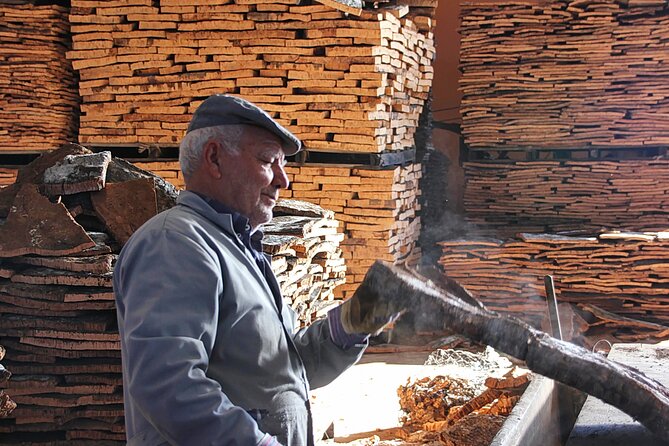
The core experience is a guided walk through how cork turns from something you recognize on a bottle into a carefully processed material. The best part is that the explanations don’t stay vague. You learn the steps and the logic behind them.
Expect to start with an intro-style presentation and then move through the premises. You’ll hear about how cork begins on the tree (what harvest means in cork production), how the bark is prepared, and why grading matters so much. In fact, one of the moments that tends to click is understanding that cork quality isn’t one-size-fits-all. Different grades lead to different end uses.
You’ll also hear how cork is processed for shipment and how it’s handled before it reaches factories and brands farther along the chain. One of the repeated themes from what people liked most is the step-by-step clarity: harvesting, cutting, grading, and then processing that prepares it for the market.
And this is not just a wine-stopper story. You’ll get a broader sense of the many uses of cork—so if your mental map is only bottles and bulletin boards, you’ll likely leave with a wider view. Some explanations even touch on why cork is tied to Portugal’s economy, which helps you see it as more than a craft item.
If you’re the type who likes to connect small details to bigger outcomes, this is your tour. Once you understand grading and processing, you’ll start noticing cork quality conversations in other places (like shops or tastings).
Live demonstrations: cutting, grading, and knife-sharpening
The factory section gets real fast—because you see the process in action. The standout teaching tool here is the live demonstration. Instead of reading about it, you watch staff handle the material, trim it, and sort it.
People commonly highlight three kinds of moments:
- Cutting and grading demonstrations, where you can see how different pieces get assessed.
- Knife sharpening skills, which makes you realize how much precision is involved.
- Interactive participation, where you might get a turn cutting cork or taking part in a quick try.
There’s a craft-skill vibe to it. You watch how quickly experienced hands move, and you get a sense of why cork isn’t just a natural product—it’s also a processed one. One person noted that skilled workers even shared impressive knife work, which is a great reminder that quality isn’t accidental.
You may also see examples of finished or semi-finished cork crafts. One guide mentioned by name in the experience feedback is Elena, praised for clear English explanations. And there’s at least one mention of a cork assessor making a hand crafted bowl, which adds a fun “see the end result” layer to the lesson.
I like this format because it answers the question people don’t always think to ask: how do they keep the material consistent? Watching the grading steps helps you understand what “good cork” really means.
Q&A with the guide: how to get the answers you actually want
This tour has an advantage that’s easy to miss when you’re booking: there’s room for questions. That matters, because cork involves terms and trade-offs—grading, uses, and what changes during processing. If you only hear a few key points, it’s easy to walk away with half-understood information.
In practice, your best strategy is to ask follow-ups based on what you care about. If your interest is wine, ask how cork quality connects to closures. If you’re into crafts, ask what kinds of cork grades tend to work for different projects. If eco concerns are your focus, ask how the process protects the tree and why cork harvesting is treated differently than other bark-like materials.
Also, if you care about the difference between natural cork and synthetic alternatives, don’t be shy. One comment mentioned confusion around synthetic products and whether they were discussed clearly. So if this matters to you, ask directly during Q&A. A good tour should give you confident answers, even if you came in with a strong opinion.
One more tip: since the tour is in English and has a small cap, don’t wait until the very end to speak up. Ask early while you’re still in the section that relates to your question. It keeps the explanation grounded in what you’re seeing.
Cork shop time: buying gifts with better context
After the factory walkthrough, you’ll visit the Cork Shop included with the experience. This is a smart stop because you’re shopping while the production details are still fresh in your mind.
Here’s the practical value: you’ll know what grading means when you look at cork items. That can help you avoid buying something that’s less suited to what you want. For example, if you’re buying a cork craft as a gift, it helps to understand that not all cork pieces are equal in texture and quality.
People also mention the shop as small but genuinely worth a look. Common takeaways include:
- Cute cork items and gift options
- A shop that feels directly tied to the production side of the factory
- Comments that the shop can be cheaper than what people found elsewhere nearby
One shop strategy: decide what you’re buying before you arrive. Cork items range from everyday souvenirs to more craft-style pieces. If you’re short on space in your bag, stick to flat or lightweight options. If you’re shopping for something you’ll actually use, look for items that match the cork qualities explained during the tour.
Even if you don’t buy, the shop is useful. It turns the “how it’s made” portion into “how it’s used,” which makes the whole trip feel more complete.



Price and logistics: why $21.17 feels fair (or not)
At $21.17 per person for about 1 hour 10 minutes, the big question is value. Here’s how I’d judge it.
First, the factory visit includes admission. You’re not just getting a walk-and-talk. You’re getting a guided tour of the Eco-Cork factory plus a Cork Shop stop. That combination matters because the shop is tied to what you just learned—so you don’t lose the thread.
Second, the group size cap (up to 30) is an underrated value driver. Smaller groups usually mean more personal interaction, more time for Q&A, and fewer people talking over each other. In a factory setting, that’s important.
Third, what’s not included helps you plan: no food or drinks, and there’s no hotel pickup/drop-off. So you should either eat before you go or bring a snack plan for later. And since it’s not a long day tour, you can usually fit it between other Faro area plans.
Where the “fairness” can wobble is if you’re expecting an outdoors-only tree-harvest show. Some people wanted more first-hand harvesting from the trees. If that’s your main goal, you may still enjoy the process and craftsmanship, but you should calibrate your expectations: this is largely about processing and understanding.
Overall, I see this as a strong value if you like practical education and hands-on craft details. If you’re only after a quick souvenir stop, you might find it a bit long for that purpose alone.
Who should book this Cork Factory Tour
This tour fits best if you enjoy making sense of products you already use. If you’ve ever looked at a cork stopper and wondered what happens before it becomes part of a bottle, you’ll appreciate the chain-of-process teaching.
It also works well for:
- Families, since the experience is structured and interactive
- People who like eco-minded production stories and Portugal-linked industries
- Visitors who enjoy craft skill demonstrations (cutting, grading, and knife work)
- Travelers who want a short, focused activity near Faro without committing to a whole day
Who should think twice? If you specifically want to watch cork harvesting from trees in the field, you might feel like the tour is more about processing than about the harvest itself. And if you’re sensitive to sound, poor weather can affect how well you hear explanations in indoor spaces—so if you have a choice of days, go when conditions are calmer.
Should you book Cork Factory Tour & Cork Shop?
Book it if you want a clear, hands-on explanation of how cork becomes a usable material—and you like the idea of ending with a shop where you can buy with better context. I especially think it’s worth your time if you enjoy craft precision and you like asking questions.
Skip it or pair it with another cork-focused idea if your main goal is tree-level harvesting visuals. Also, come hungry for learning, not just shopping. The shop is good, but the real value is the process lesson.
If you can make it on a dry day and arrive ready to ask questions, this is one of those short tours that leaves you with a stronger appreciation than you expected—so you’ll look at cork differently long after you leave Faro.
FAQ
How long is the Cork Factory Tour & Cork Shop?
It runs for about 1 hour 10 minutes.
What time does the tour start in Faro?
The start time is 11:30 am.
How much does the tour cost?
The price is $21.17 per person.
Is food or hotel pickup included?
No. Food and drinks are not included, and there’s no hotel pickup or drop-off.
Is the tour offered in English, and will I use a mobile ticket?
Yes, it’s offered in English, and the tour uses a mobile ticket.
Is the Cork Shop visit included?
Yes, the visit to the Cork Shop is included, and the tour ends back at the meeting point.