REVIEW · COIMBRA
Coimbra: TukTuk Adventure. Local and multilingual host. Hotel pickup.
Book on GetYourGuide →Operated by Monumental Tuk Tours · Bookable on GetYourGuide
Coimbra can feel like a lot of hill-and-stairs. This electric tuktuk route is a calmer way to get your bearings fast, while still hitting the city’s most memorable lookouts and landmarks with a local, multilingual host.
What I really liked most is the silent, eco-friendly electric tuktuk plus those removable transparent covers, which make the whole ride comfortable even when the weather turns. I also appreciated how the host tells the story as you pass through the real streets, not just from one big viewpoint to the next—guides I met (including Gonçalo and Sergio) clearly love Coimbra, and it shows.
One consideration: the timing is tight. You’ll get photo stops (including University of Coimbra and major viewpoints), but you’re not doing long, ticketed visits inside attractions, so it’s best if you want an overview and great streets-and-views storytelling rather than a slow museum day.
In This Review
- Key Things You’ll Notice on This Coimbra TukTuk Adventure
- Why an Electric Tuktuk Works So Well in Coimbra
- Price and Group Size: What $135 Really Buys You
- Meeting Point at Largo da Portagem (and How Not to Get Lost)
- The 2-Hour Route Plan: How the Timing Feels on the Ground
- Start at Banco BPI: Getting Oriented Before You Climb
- Major Seminary of Coimbra Photo Stop: Seminário Maior Viewpoints
- Penedo da Saudade: A Short Stop That Pays Off in Photos
- University of Coimbra Photo Stop: Seeing the Landmark Without a Long Ticket Line
- Hell Valley (Vale do Inferno) Viewpoint: The Name Makes Sense
- Santa Clara-a-Nova Monastery Photo Stop: Finishing With a Big Impression
- The Printed Six-Language Guides: A Small Detail That Really Helps
- Comfort, Weather, and Safety: Why the Clear Covers Matter
- Who This Tour Fits Best (and Who Might Want Something Else)
- Should You Book This Coimbra TukTuk Adventure?
- FAQ
- Is this a private tour?
- How long is the Coimbra tuk-tuk tour?
- What is the price?
- Where does the tour start and end?
- Is hotel pickup available?
- Are entrance tickets included?
- What languages are offered?
- Can I bring a pet or use a wheelchair?
Key Things You’ll Notice on This Coimbra TukTuk Adventure
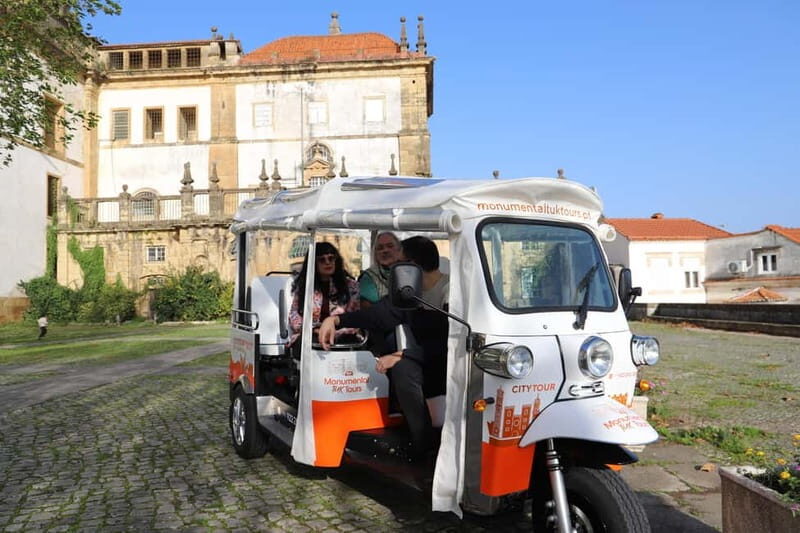
- Electric and quiet ride that keeps sightseeing easy on the nerves and your legs
- Local host in multiple languages, with commentary that connects the dots as you go
- Five photo stops that cover big-name sights and the best viewpoints
- Removable clear covers that help you stay comfortable in rain or cooler weather
- Printed guides in six languages, with a map you can actually use
- Works well for mobility needs and pets, with wheelchair accessibility and an animal-friendly setup
Why an Electric Tuktuk Works So Well in Coimbra
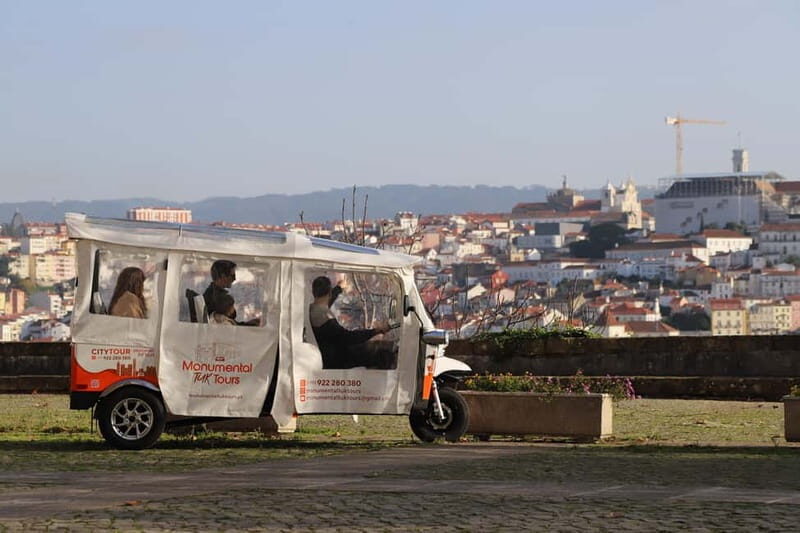
Coimbra is beautiful, but it can be physically demanding if you’re not used to slopes. This electric tuktuk method avoids the sweat-and-stumble cycle by taking you through the historic areas where you’d otherwise fight uphill after uphill.
Another practical win is the quiet feel. You’re not blasting past streets with a loud motor; you’re set up to hear the host’s explanation as you roll toward each stop. That matters in Coimbra, where the details—old quarters, viewpoints, and university-related history—land better when you get the context in motion.
You can also read our reviews of more tours and experiences in Coimbra.


Price and Group Size: What $135 Really Buys You
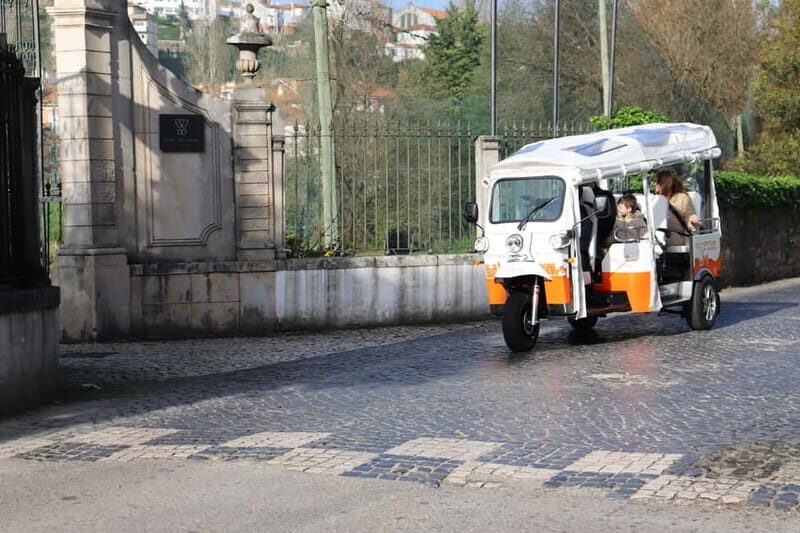
At $135 per group up to 3 people, this tour is priced like a “private overview,” not a shared bus-and-chatter experience. For a family, a couple, or a small trio, that can feel like good value because you’re paying for the host time, the vehicle, and the route planning that hits multiple areas in two hours.
Also, you’re not just buying transport. You’re getting a guided route designed to reduce confusion in a hilly city: quick narration while you pass important places, plus five photo stops so you can park yourself at key vantage points without hunting for them.
The one trade-off is that you’re not buying “ticket time.” Entrance tickets aren’t included, and the pace is made for seeing and learning broadly. If what you want is deep time inside specific monuments, you’ll need to pair this with other visits later.
Meeting Point at Largo da Portagem (and How Not to Get Lost)
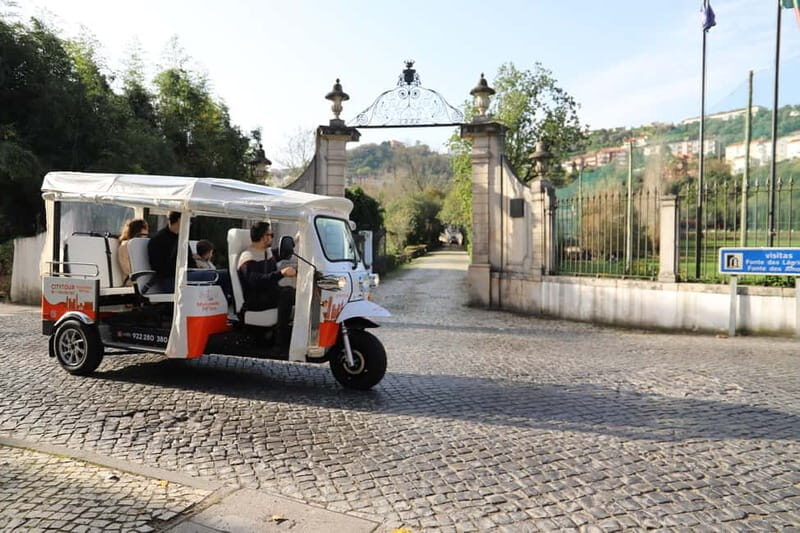
The usual start and end point is Largo da Portagem, opposite Banco de Portugal, with the tour starting near Banco BPI | Coimbra – Portagem. Pickup can be arranged at your hotel or somewhere else in the historic center, but it helps to have your exact pickup plan in writing before you head out.
One review flagged that Google Maps can point you to the wrong side of the street. My advice: when you book, double-check the location description (plaza in front of the bank) and ask the host to confirm the precise curb/plaza spot.
If you’re doing pickup from your hotel, aim to be ready a bit early. In older centers, one minute of wandering can become 10 minutes of circling, especially with narrow streets.
The 2-Hour Route Plan: How the Timing Feels on the Ground
This is a two-hour private tour, structured to mix riding time (for stories and connections) with short moments on foot (for photos and viewpoints). The “guided ride” segments are intentionally short between stops, so you don’t lose the thread while moving through different areas.
You’ll also notice the tour’s rhythm:
- ride + narration while passing key spots
- stop for photos
- ride again, with the host connecting the next place to the last one
- finish back near the starting area
That pacing is ideal if you’re arriving in Coimbra and want to understand how the city is laid out before committing to longer walks.
Start at Banco BPI: Getting Oriented Before You Climb
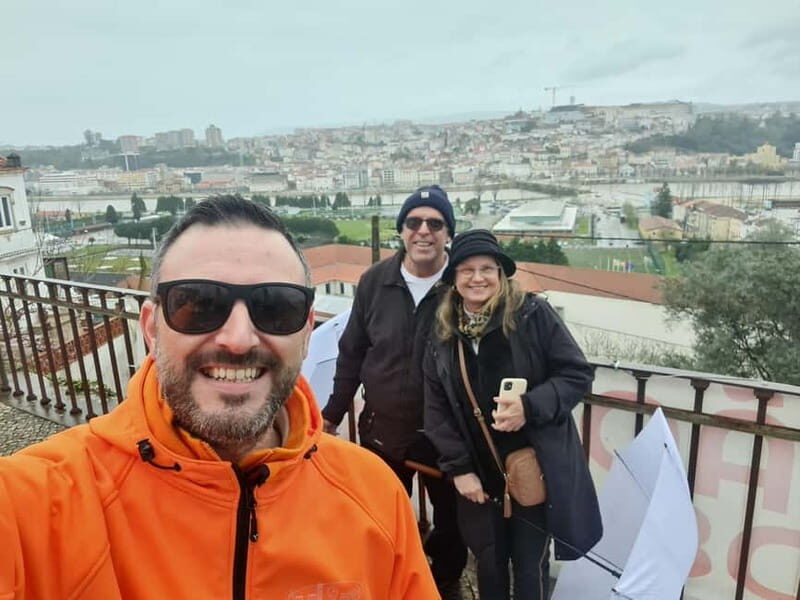
You begin at Banco BPI | Coimbra – Portagem. This isn’t a random convenience stop; it’s near the historic core where the city changes quickly as you move toward viewpoints and university areas.
From the first moments, the host’s job is to help you see Coimbra as a system: where viewpoints sit relative to neighborhoods, why certain places matter historically, and how the city’s identity ties back to the university and Portugal’s earlier capital days.
If you’ve ever visited a hill town and felt like you were walking in circles, you’ll appreciate this start. It helps you understand the map in 3D, not just on paper.





Major Seminary of Coimbra Photo Stop: Seminário Maior Viewpoints
One of your first real photo moments is the Major Seminary of Coimbra area (often linked with the Miradouro do Seminário Maior viewpoint). You’re not there for a long visit; you’re there to pause, frame the city, and let the host point out what you’re looking at.
This kind of stop is smart. Coimbra’s views aren’t just scenic—they’re informative. When you look out over the surrounding streets and hills, the rest of the route starts to make sense.
Practical tip: bring your most comfortable shoes anyway, even if you’re in a tuktuk. These stops are short, but you’ll still step out for a few minutes, and a good photo often means standing where the light is best.
Penedo da Saudade: A Short Stop That Pays Off in Photos
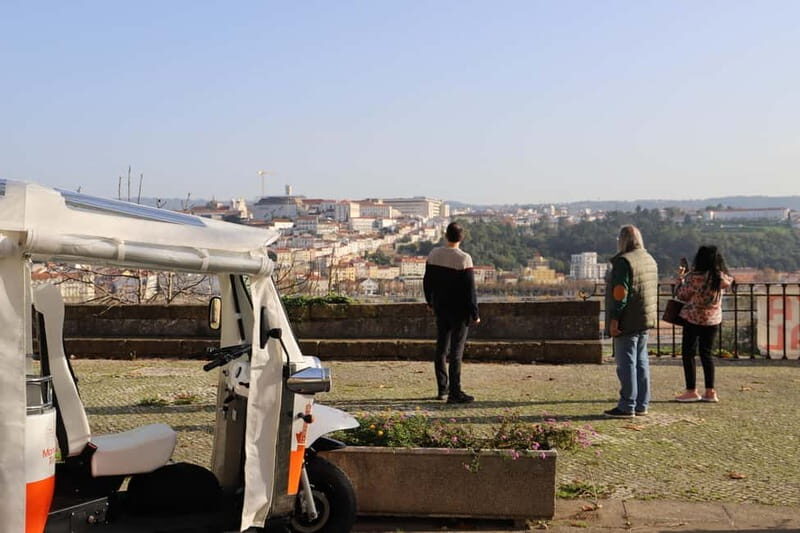
Next comes Miradouro do Penedo da Saudade (the Penedo da Saudade viewpoint). It’s one of those Coimbra moments where the scenery feels like it has a personality—more than just a background.
Why this works in a two-hour format: viewpoints like this show you the city’s dramatic verticality. Seeing it from above helps you avoid future “wait, which way is that?” moments when you later explore on your own.
If the weather is gray, don’t worry too much. The tuktuk’s removable transparent covers mean you can still comfortably travel between viewpoints without that sudden dash-to-shelter feeling.
University of Coimbra Photo Stop: Seeing the Landmark Without a Long Ticket Line
You’ll have a photo stop at University of Coimbra. This is a big one, and the tour’s approach is clear: get you to the right place, give you orientation, and keep the day moving.
Entrance tickets are not included, so plan on viewing from outside and using this stop for photos and host-led context. If you want to do an in-depth university visit later, you’ll be able to return with a better sense of what you’re looking for.
This timing also helps you avoid the classic Coimbra problem: planning a long university visit without realizing you still need time to catch the viewpoints and monastery area.
Hell Valley (Vale do Inferno) Viewpoint: The Name Makes Sense
The tour includes a photo stop at Hell Valley Viewpoint (Miradouro do Vale do Inferno / Vale do Inferno). The name grabs you immediately, but the value of the stop is what the host explains as you look down.
Again, the goal here isn’t a long hike—it’s quick clarity. You’ll see why certain streets and areas feel so steep and close together, and you’ll get a better feel for how people historically moved through the city.
This is also a nice checkpoint for your photos. By this point, you’ll have already learned which angles work and how the host frames the city—so your picture-taking is smoother.
Santa Clara-a-Nova Monastery Photo Stop: Finishing With a Big Impression
The last major photo stop is Monastery of Santa Clara-a-Nova. This is the kind of place that sticks even after you leave Coimbra, because it gives you a strong visual anchor at the end of the route.
What I like about ending here is that it feels like closure. Earlier stops build your “how Coimbra works” understanding, and Santa Clara-a-Nova gives you a final, memorable sight—perfect for turning into postcards, gallery-wall photos, and future you saying, I remember why I loved this city.
You’ll ride back afterward to the meeting point near Banco BPI | Coimbra – Portagem.
The Printed Six-Language Guides: A Small Detail That Really Helps
You get printed guides in Portuguese, English, Spanish, French, German, and Italian, plus a map. That’s more than a nice extra. In a city with lots of viewpoints and overlapping historic areas, a map you can glance at during the tour keeps you from feeling lost.
It also solves an everyday problem: even if you understand the host’s live language, you can use the printed material to refresh details afterward. It’s also handy if you’re traveling with someone who speaks a different language.
The host also offers live commentary in Portuguese, English, and Spanish, so you should be covered even if your group language isn’t perfect.
Comfort, Weather, and Safety: Why the Clear Covers Matter
One of the standout practical features is the electric tuktuk with removable transparent covers. In rain, you won’t be stuck choosing between sightseeing and getting soaked. You can still move between stops, stay relatively dry, and keep listening to the story instead of constantly stopping to regroup.
The tour also works well for real-world mobility needs. It’s wheelchair accessible, and the animal-friendly policy means pets are welcome. If you’ve traveled with a dog or needed extra mobility support in historic centers, you already know how valuable this can be.
Who This Tour Fits Best (and Who Might Want Something Else)
This Coimbra TukTuk Adventure is a strong match if you:
- want a fast, guided introduction to the city’s highlights
- prefer less walking in hilly streets
- travel with pets
- need a wheelchair-accessible option
- like photo stops with context, not just sightseeing from a bus window
It might be less ideal if you’re the type who wants to spend a long time inside one monument. Since entrance tickets are not included and the stops are timed for photos, you’ll likely want to add separate visits if you want deeper access.
Should You Book This Coimbra TukTuk Adventure?
If you’re going to Coimbra for the first time and you want the city to make sense quickly, I’d book this. The mix of a quiet electric ride, local storytelling, and five viewpoint photo stops is exactly the kind of structure that saves time and reduces the uphill fatigue.
Also, the printed six-language guide and map are a smart support tool for figuring out what to do next after the tour. Just do one thing before you go: confirm the meeting point clearly (Banco BPI / Largo da Portagem) so you don’t lose time to GPS quirks.
FAQ
Is this a private tour?
Yes. It’s listed as a private group experience, designed for your group rather than a large shared tour.
How long is the Coimbra tuk-tuk tour?
The duration is 2 hours.
What is the price?
The price is $135 per group for up to 3 people.
Where does the tour start and end?
The usual starting and ending point is Largo da Portagem, opposite Banco de Portugal. The meeting point is listed as Banco BPI | Coimbra – Portagem.
Is hotel pickup available?
Yes. Pickup can be arranged at your hotel or another location within the historic center. You should indicate your preferred pickup location when booking.
Are entrance tickets included?
No. Entrance tickets to tourist sites are not included, since the focus is on passing key places with explanations and making timed photo stops.
What languages are offered?
The live tour guide is available in Portuguese, English, and Spanish. The printed guides are provided in six languages: Portuguese, English, Spanish, French, Italian, and German.
Can I bring a pet or use a wheelchair?
Yes. The tour is animal-friendly (pets are welcome) and it is wheelchair accessible.