REVIEW · COIMBRA
An adventure through the Schist Villages of Lousã (with walk)
Book on Viator →Operated by Aventuras Forte(s) - Turismo de Natureza · Bookable on Viator
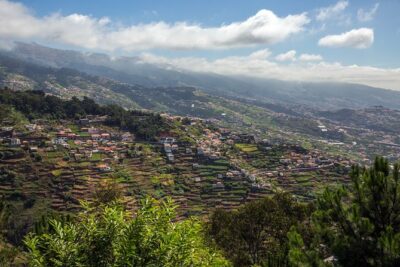
Schist towns cling to the mountainside here. This 7-hour adventure takes you through several schist villages around Lousã on a guided walk, with handy extras like walking sticks and included coffee or tea. What I like most is how the day is structured around short, focused village stops, so you’re not just staring at buildings—you’re moving through the real rhythm of these hillside places, one bend at a time. I also love the guide-led way this works, with names like Fatima and Sergio showing up for energetic, practical local storytelling.
One thing to plan for: you’ll be doing a strenuous hike with steep climbs, and the experience isn’t set up for people with mobility problems. If you’re unsure about your legs, you’ll want to take the pace seriously and use the provided sticks from the start.
In This Review
- Key highlights before you go
- From Coimbra to Lousã: the ride that sets the mood
- Castle of Lousã (Castelo de Arouce) and the river-pool viewpoint
- Aldeia do Xisto do Candal: slopes, chestnuts, and water lines
- Aldeia de Gondramaz: Miranda do Corvo’s stone village feel
- Aldeia do Talasnal: the iconic schist village stop
- Witchyard: the odd stop that rounds out the story
- How to handle the hike: steep climbs without burning out
- Price and value: what $156.62 buys you in real terms
- What to pack (so Talasnal feels fun, not scary)
- Who should book this Schist Villages adventure
- Should you book?
- FAQ
- What time does the tour start?
- How long is the tour?
- Is pickup available from hotels?
- Is lunch included?
- Are village admissions included?
- Are guides available in English?
- What kind of physical fitness is needed?
- Is this tour suitable for people with mobility problems?
- Is the tour private?
- What happens if the weather is bad?
Key highlights before you go
- Multiple schist villages in one day without feeling rushed between viewpoints
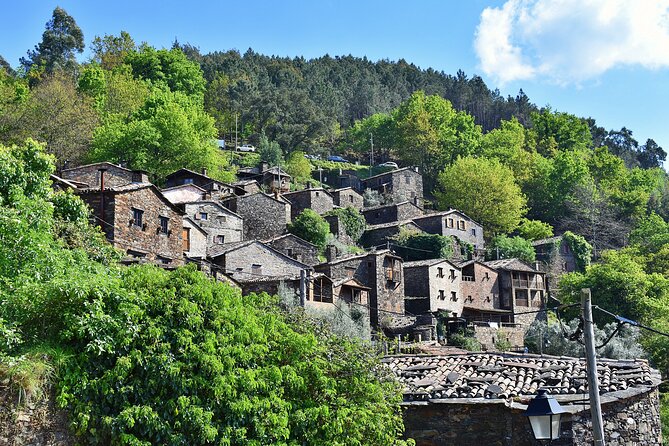
- Iconic Talasnal plus quieter villages with strong local character
- Walking sticks + guided pacing for uphill sections
- Coffee/tea included and lots of natural breaks for photos
- Photos provided by the guides so you’re not stuck behind your phone all day
From Coimbra to Lousã: the ride that sets the mood
The day starts in Coimbra at 9:00 am, with pickup available anywhere in the Coimbra or Lousã region (including hotels). This matters because the schist villages sit away from the city core. You’re not hunting for buses or losing time with transfers. Instead, you get a smooth handoff from town life into mountain life, with transportation handled for you.
The tour runs about 7 hours, and it ends back in Coimbra around 19:00. That timing is useful for planning the rest of your evening: you’ll still have a dinner window, but you won’t feel like you burned an entire day on a vehicle. Also, this is offered in English, and the day is guided from start to finish by qualified technical guides. That’s a big deal when you’re walking through villages where the details matter—street shapes, stonework, and why people built where they did.
You’ll also get coffee and/or tea along the way. It’s a small thing, but on a morning with hills and frequent photo stops, it helps keep your energy steady rather than fading halfway through.
One more practical note: this is “private” in the sense that only your group participates, which usually makes it easier to keep the walk paced to your needs.
You can also read our reviews of more walking tours in Coimbra


Castle of Lousã (Castelo de Arouce) and the river-pool viewpoint
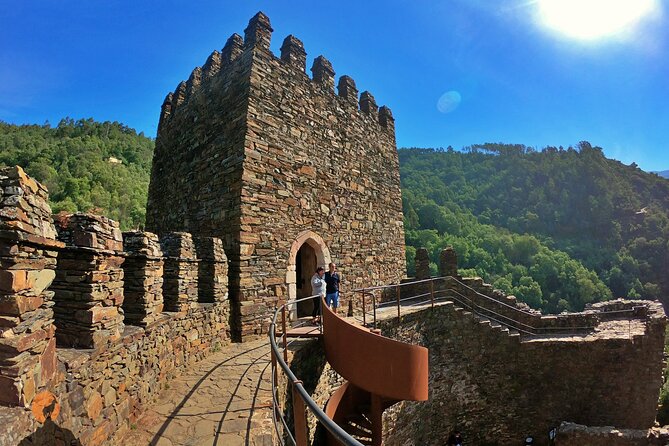
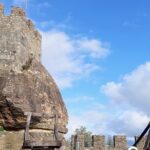
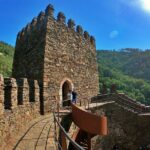
One of the first major stops is the Castelo de Arouce (also tied to Lousã), with views over the river pool of Sra da Piedade. A castle stop like this works well on a walking tour because it gives you a sense of “where you are” before you start threading your way through villages on steep slopes.
Expect this to be a photo-friendly moment. The point isn’t only the ruins or walls; it’s the way the area opens up when you gain a higher angle. If the weather is clear, you’ll be able to see how the villages cling to the hills. If the weather turns foggy (it happens), the view changes dramatically. Fog can hide distance, but it can also make the villages feel even more atmospheric, like the stone towns are emerging from the clouds.
Time is short here—about 30 minutes—so you’ll want to move with purpose: take a few photos, listen to the guide’s context, and then keep moving. This is not the kind of stop where you should expect long museum-style wandering. It’s a viewpoint-and-orientation moment.
The possible drawback is mostly physical: castle-area terrain often means extra steps and uneven ground. If you’re using the walking sticks, this is a good time to make sure you’ve got your technique down.
Aldeia do Xisto do Candal: slopes, chestnuts, and water lines
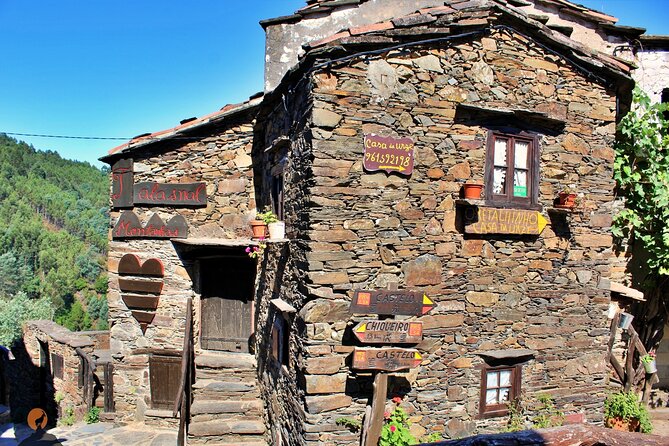
Aldeia do Candal is a schist village halfway up the slopes, known for chestnut trees and water lines. The practical win of choosing a stop like Candal is that it’s not only “pretty village photos.” You’re also seeing how daily life connects to the terrain—how water management and vegetation fit into where people settled.
You’ll get about 30 minutes here, and the admission ticket is free. That short window is helpful because it keeps you engaged: you’re not stuck scanning every doorway. You’ll likely do a quick walk along the village path, absorb the stone textures, and then step back for wider angles where the hillside setting becomes obvious.
One thing I’d watch for: chestnut trees and water features are seasonal. Even if you don’t see everything at its peak, the stone structures and hillside layout still communicate the core story. The guide’s explanations will help you see what you might otherwise overlook.
Candal also tends to be a good “warm-up” stop. By this point you’ve already had the morning drive and the castle viewpoint. Now you’re down in the village scale, closer to the life of the place.
If you’re sensitive to uphill walking, this is still an active stop, but it’s usually easier than the most famous, steeper sections later in the day.
Aldeia de Gondramaz: Miranda do Corvo’s stone village feel
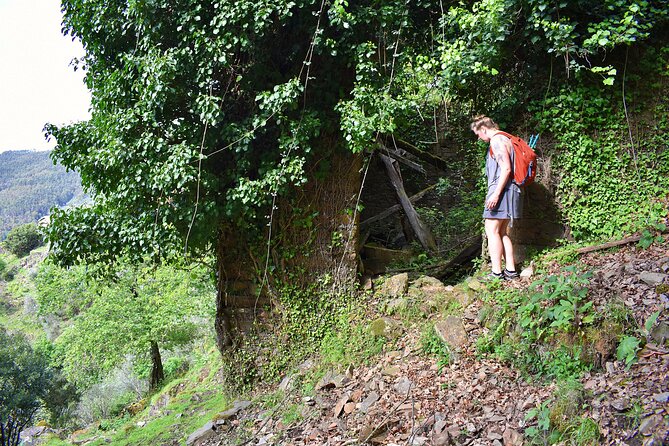
Next up is Aldeia de Gondramaz, a schist village linked to Miranda do Corvo. Again, your time here is about 30 minutes, with free admission.
What makes Gondramaz meaningful is the contrast you can spot when you pay attention to upkeep. In this region, you’ll often find a mix of lived-in homes and buildings that have aged with time. The guide context can help you understand how that shift happens—why some parts stay active while others fade.
There’s also the weather factor. I’ve seen conditions where heavy fog limited what was visible on the drive, and then the village itself looked completely different once the fog lifted. Even if you don’t get fog, the lesson is worth keeping: schist villages often feel more dramatic when light changes. So don’t rush through Gondramaz hoping for a single perfect view. Take a slower look around corners. The village bends can make the stone textures and village layout reveal themselves in stages.
Because your stop is only around half an hour, keep your phone charged but don’t use it to replace listening. The strongest photos here often come after you understand what the guide is pointing out.
Aldeia do Talasnal: the iconic schist village stop
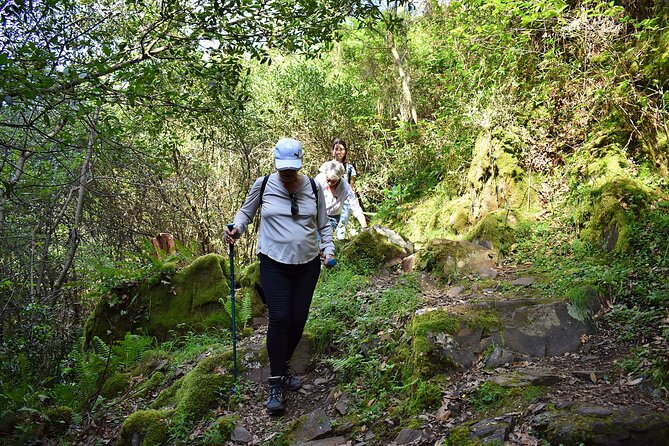
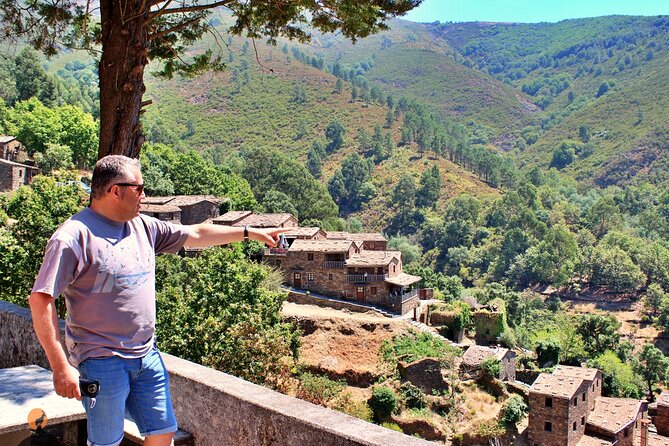
Aldeia do Talasnal is one of Portugal’s most iconic schist villages, and you’ll spend about 45 minutes there. That extra time is smart. Talasnal has more famous-photo appeal, and also more uphill movement built into the way you explore.
This is the stop where you’ll want good footwear. The hillside streets can be uneven, and even when the walk is short, the slope adds up. You also get walking sticks included, and I really recommend using them here, not only on the castle approach. They make steep sections feel less like a fight and more like a manageable climb.
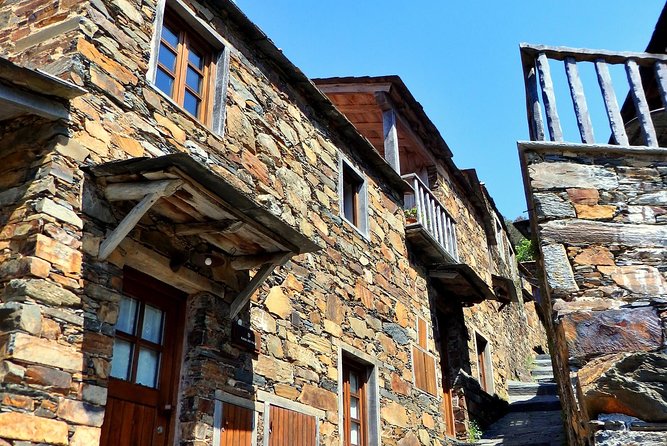
Talasnal is ideal for learning how these villages work visually. From one angle you see the steep stone houses; from another, you see the way the village steps down or levels off. Pay attention to the stonework itself, too. Schist isn’t just a material name—it shows up in how buildings fit the terrain.
Bathrooms can be easier to find on this kind of day than in some remote walks, and the overall route includes many restroom stops. Still, don’t plan to “wait until you’re desperate.” Use breaks strategically, especially before Talasnal’s more demanding sections.
The biggest caution: this is where your legs will feel the day. If you’re pacing well early on, you’ll enjoy Talasnal more, not less.



Witchyard: the odd stop that rounds out the story
The tour also includes a Witchyard stop before you head back toward Coimbra, with the overall arrival around 19:00. The name alone sounds quirky, and it’s the kind of place that can add variety when your day is otherwise all villages and stone streets.
You should expect it to be more than a roadside photo break—something included for interest and atmosphere as part of the route. Since the tour gives it its own stop, treat it like a meaningful pause: stretch, take a couple of photos, and listen for the guide’s context about what you’re looking at.
Because the details here aren’t spelled out in the tour notes, I won’t pretend there’s a specific must-see feature. What matters is the role it plays: it breaks up the rhythm, giving your body a rest and your eyes a new scene before the drive back.
How to handle the hike: steep climbs without burning out
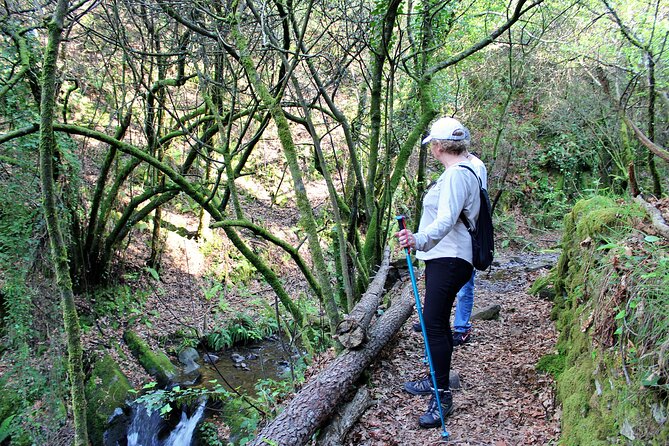
This experience includes walking, and it’s clearly built for people with at least moderate physical fitness. It also explicitly isn’t suitable for those with mobility problems. That means you should treat the day like an active hike with viewpoints, not like a slow stroll.
Good news: walking sticks are included, and guides are with you throughout. That combination is a practical advantage. You’re less likely to overdo it early, and you’ll have help if you need to adjust your pace.
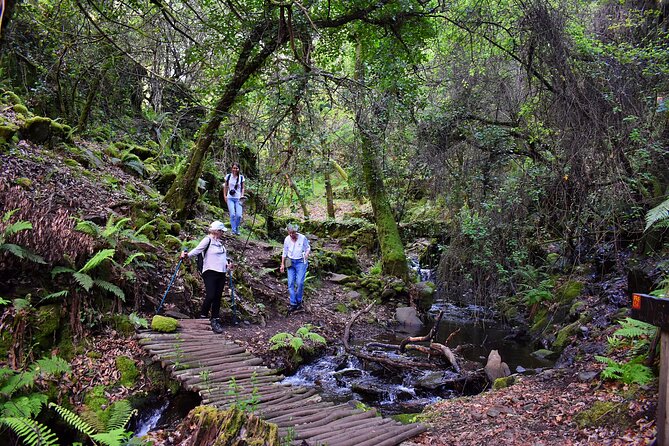
Here’s the approach that works best. Start steady in the first villages, then settle into a rhythm. If you feel your breathing spike, slow down and lengthen your stride. Use the sticks on steeper sections to offload knees.
Also plan around the short stop times. Because Candal and Gondramaz are about 30 minutes each, you might feel tempted to “rush to see everything.” Don’t. Look for the corners where the village layout becomes obvious. That’s where your photos come from, and where the time feels worth it.
Even in a day like this, rest exists in small moments. The route includes multiple opportunities to pause, and the guides will manage the timing so the day doesn’t become a nonstop scramble.
Price and value: what $156.62 buys you in real terms
At $156.62 per person for about 7 hours, this tour isn’t a budget “hop-on/hop-off” deal. It’s priced like an active, guided day with transportation and added gear.
Here’s what you’re paying for, in plain terms:
- Pickup and transport within the Coimbra and Lousã region
- Guides throughout, not just a short orientation
- Coffee/tea included, which helps you avoid spending time and energy hunting early
- Walking sticks included, which can be a big cost saver and a comfort upgrade
- Photos provided, so you can focus on enjoying rather than constantly shooting
- Personal accident and liability insurance
What’s not included: lunch. That’s the main “extra” cost you’ll need to handle. The upside is you can choose a restaurant in Lousã or plan a picnic, depending on your appetite and how your legs feel.
When I evaluate value for a hike like this, I look at the full package. Transportation and guidance reduce friction. The sticks reduce fatigue. The photo support reduces hassle. Those things add up, especially when you’re walking in a place where you might not want to navigate independently.
If you want a day that feels planned—transported, guided, and paced—this price is easier to justify than it looks at first glance.
What to pack (so Talasnal feels fun, not scary)
You can’t control the weather, and this experience requires good weather. So you should pack for comfort and flexibility.
At minimum, I’d bring:
- Comfortable walking shoes with grip for uneven stone and slopes
- A light layer, since higher villages can feel cooler
- Water (you’ll be moving for hours)
- Sun protection, because open viewpoints add exposure
If you’re sensitive to stairs and steep terrain, treat the walking sticks as mandatory, not optional. Even if you’re confident, using them can save your knees later.
And because your stops are designed around short visits, you’ll want to travel light. Small daypack. Keep essentials accessible. You’ll enjoy the day more when you’re not constantly stopping to dig for things.
Who should book this Schist Villages adventure
Book this if you want:
- Authentic hillside villages and stone streets you can walk through
- A guide-led day that explains what you’re seeing
- A serious but manageable hike (moderate fitness), with support like sticks
Skip it if:
- You have mobility limitations that make steep climbs difficult
- You expect a flat, easy walking tour
This is also a good fit for people who like structure. Short village stops plus a castle viewpoint plus an extra stop before returning means you’ll always know what’s next.
If you’re in Coimbra and want something beyond city sights, this gives you a real change of pace. You’ll trade museums for movement.
Should you book?
Yes—if you’re up for a steep, guided walking day and you want schist villages in a single outing. The value isn’t just the scenery. It’s the combination of transport, a guide with context, and practical support like walking sticks and included photos. That turns a potentially tiring hillside trek into a day you can actually enjoy.
If your priority is a relaxed, fully accessible stroll, then you should look for something gentler. This one is physical by design.
FAQ
What time does the tour start?
It starts at 9:00 am.
How long is the tour?
It lasts about 7 hours.
Is pickup available from hotels?
Yes. Pickup is available anywhere in the region of Coimbra or Lousã, including hotels.
Is lunch included?
No. Lunch is not included, but restaurants are available, and you can also picnic.
Are village admissions included?
Yes. The stops listed include admission ticket free.
Are guides available in English?
Yes, the experience is offered in English.
What kind of physical fitness is needed?
You should have moderate physical fitness. It includes a strenuous hike with steep climbs.
Is this tour suitable for people with mobility problems?
No. It’s not suitable for people with mobility problems.
Is the tour private?
Yes. Only your group will participate.
What happens if the weather is bad?
The experience requires good weather. If it’s canceled due to poor weather, you’ll be offered a different date or a full refund.