REVIEW · SESIMBRA
Arrábida: Setubal, Sesimbra Coasteering & Speedboat Tour
Book on GetYourGuide →Operated by WIND · Bookable on GetYourGuide
A fast speedboat drops you into Portugal’s wild coastline. This Arrábida Natural Park coasteering tour mixes cliff jumps, cave time, and swimming with a guide team like Rafael and Thiago who make it feel safe and fun. I especially like the variety: you’re not stuck doing one thing for four hours, and the water is crystal-clear blue between Sesimbra and Setúbal.
The best part is the balance of thrills and control: buoyancy aids plus individual protection gear, plus instructors trained for swiftwater conditions. One consideration: the route can shift with weather and logistics, so your jumps and cave stops may change day to day.
In This Review
- Key Things I’d Prioritize Before You Go
- Arrábida Natural Park Coasteering: The Fast Way to Feel the Coast
- Meeting Creiro’s Beach (and Getting Oriented Without Stress)
- Gear That Makes Coasteering Feel Like an Adventure (Not a Wrestling Match)
- Safety Briefing: How the Guides Keep the Day Fun
- The Speedboat Section: Why It’s More Than Just Transportation
- Climb, Swim, and Jump: How the Activity Actually Flows
- Portinho da Arrábida and Ribeiro do Cavalo: Caves and Secret Stops
- Wildlife and Geology Talk: Why the Biologist Pieces Matter
- Photos and Memories: How You’ll Likely Leave With Proof
- What to Expect From the Water Temperature and Wetsuit Timing
- Price and Value: Is $70 Worth It?
- Who This Tour Suits Best (and Who Should Skip It)
- Languages and Communication: You Won’t Be Left Guessing
- Booking Tips: Weather, Route Changes, and the Minimum Group Size
- Should You Book This Arrábida Coasteering and Speedboat Tour?
- FAQ
- How long is the Arrábida coasteering and speedboat tour?
- What’s included in the price?
- What does the tour involve?
- How high are the jumps?
- What should I bring?
- Are open-toed shoes allowed?
- What language will the instructor speak?
- What if the weather isn’t good?
Key Things I’d Prioritize Before You Go
- A speedboat start that gets you to the right stretch of coastline fast
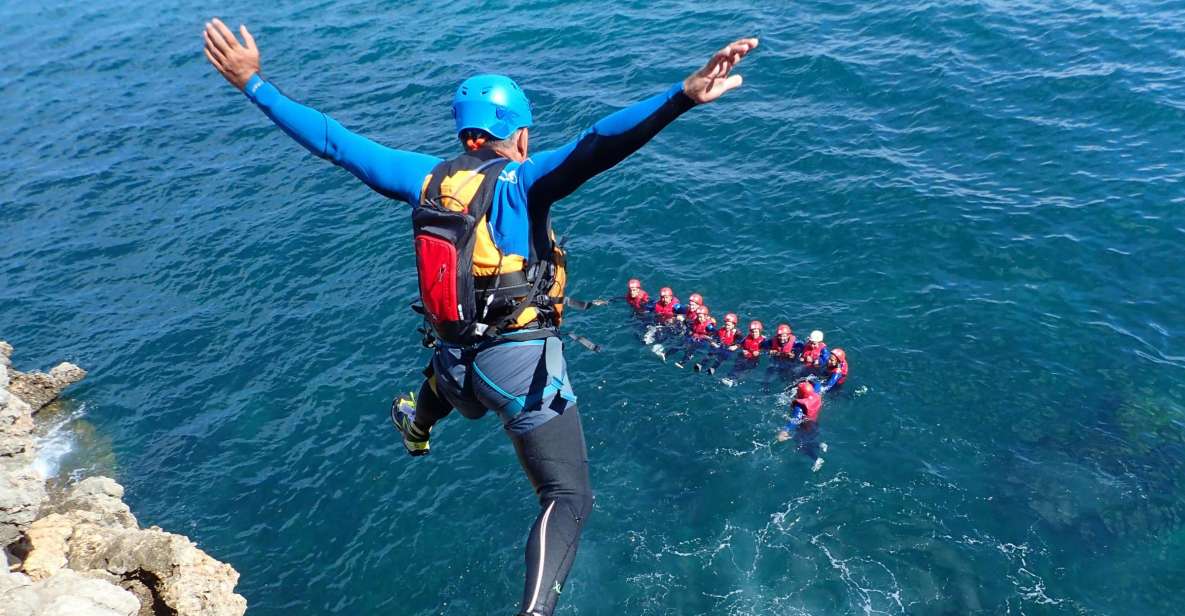
- More than a dozen jumps ranging from 2 to 8 meters, with options if you want them
- Certified swiftwater-style safety (Swiftwater Rescue Technician) and high standards through the NCC
- Caves and secret beaches like Portinho da Arrábida and Ribeiro do Cavalo
- Biology facts in plain language from local biologists about flora, fauna, and geology
Arrábida Natural Park Coasteering: The Fast Way to Feel the Coast
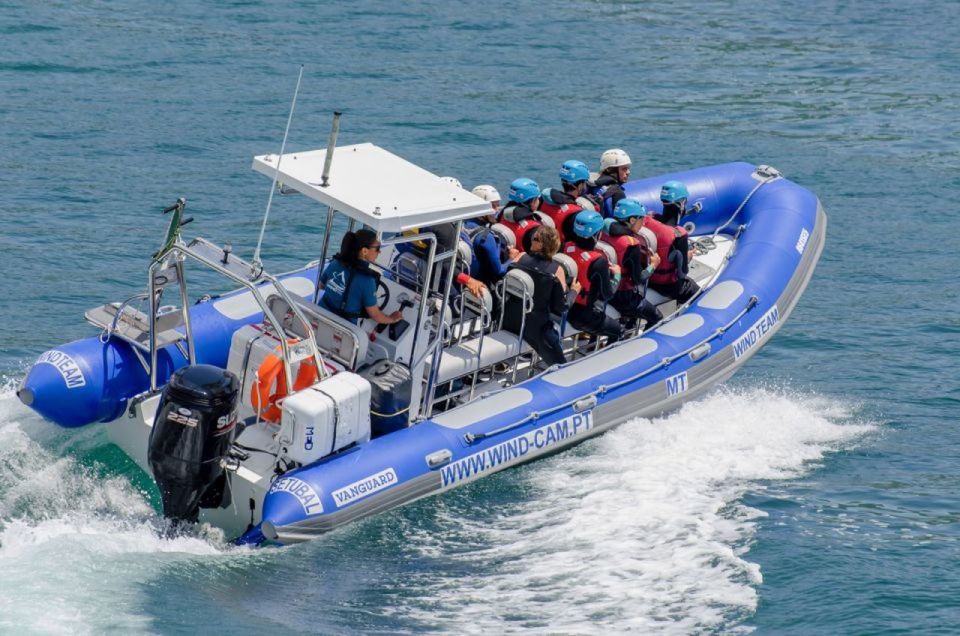
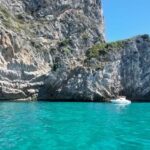
If you want ocean views in Portugal, sure—you can get them from a viewpoint. But this tour is built for the coast to come to you. You ride by speedboat through the intertidal coastal zone of Arrábida Natural Park, then you move along it yourself with climbing, swimming, and controlled jumps.
You’ll spend the day working with your hands and your legs, not just watching. That’s why it feels more satisfying than a typical shore excursion. And you’ll get that classic Arrábida vibe: rocky edges, pocket beaches, and water that looks unreal from the right angle.
You can also read our reviews of more tours and experiences in Sesimbra.
Meeting Creiro’s Beach (and Getting Oriented Without Stress)
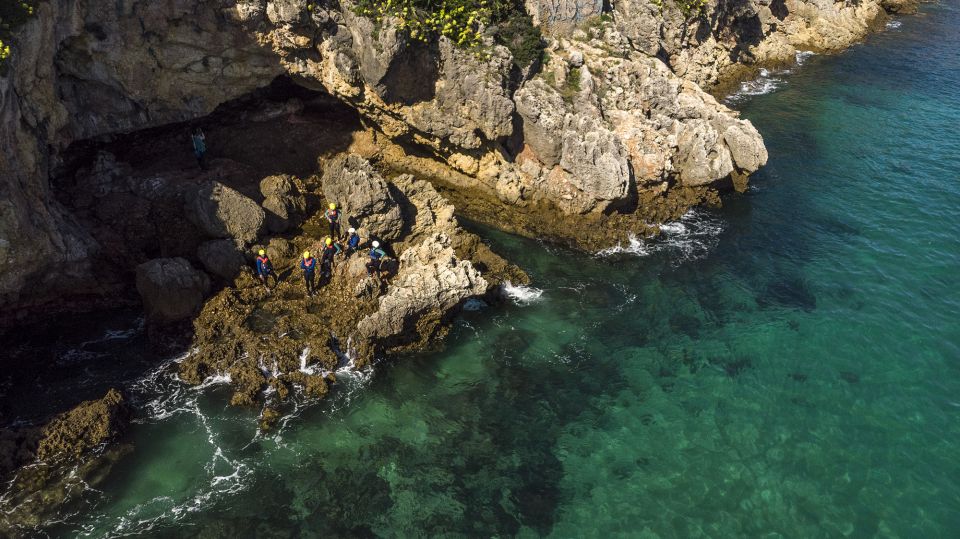
Your day starts near Creiro’s Beach. When you reach Creiro’s Beach, turn right, and you’ll find the group after Anicha Bar. It’s simple, but in peak season, getting there can take more time than you expect due to road limits.
Plan to arrive a bit early so you can get your wetsuit and gear setup without rushing. Once you’re there, the staff typically handles the equipment side for you—less chaos, more time in the water.
Gear That Makes Coasteering Feel Like an Adventure (Not a Wrestling Match)
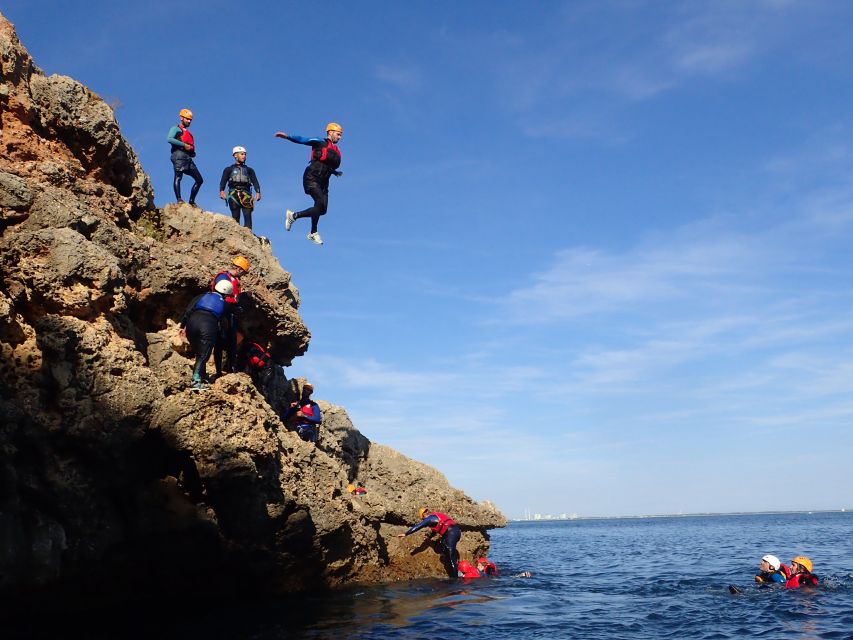
This is the kind of activity where the right gear matters. You’ll get:
- Neoprene isothermal wetsuit
- Helmet
- Life jacket / buoyancy aid
- Water and energy bars
On water days, neoprene can be the difference between comfortable movement and rushing your breathing. The helmet and life jacket mean you’re protecting the parts that really matter when you’re moving over rocks or going into the water.
What you should bring is equally important:
- Swimwear
- Towel
- Biodegradable sunscreen
- Water shoes (this is non-negotiable for traction)
- Hair tie
Open-toed shoes aren’t allowed. That’s not a fashion rule—it’s a safety rule for grip and foot protection.
Safety Briefing: How the Guides Keep the Day Fun
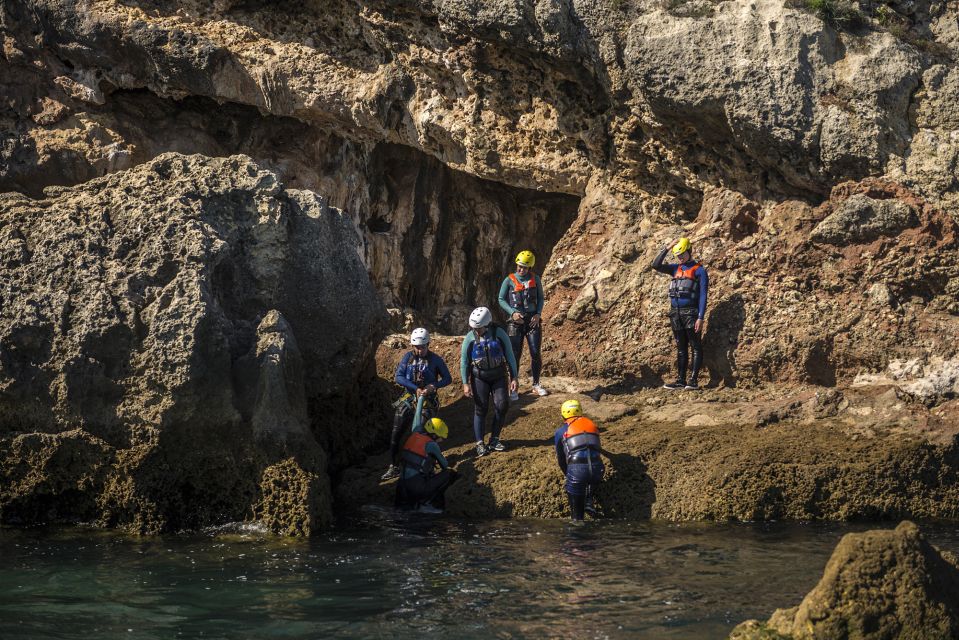
Before you move anywhere, you get a safety briefing and an intro to your coasteering gear. That’s where you learn how the group progresses along the coastline, how jumps work, and what you do if conditions change.
The instructors on this tour are Swiftwater Rescue Technician certified. The activity provider is also an active member of the National Coasteering Charter (NCC), which focuses on safe coasteering standards. In plain terms: they’re not improvising.
In the real-world experience of the guides on this tour—people like Rafael, Thiago, Filippa, Sandro, and Diogo—there’s a consistent theme: they adjust. If you’re not comfortable with a certain jump, you can often get alternatives. That helps the tour stay exciting without turning into a forced bravery contest.
The Speedboat Section: Why It’s More Than Just Transportation
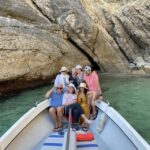
You’ll hop on a speedboat to reach the activity’s starting point and then return at the end. That boat ride does two things for you.
First, it keeps the day efficient. Coasteering in a natural area takes time, and the coast you want isn’t always a short walk from a parking spot.
Second, the boat ride sets the tone. You’re moving through the same intertidal zone where you’ll swim and scramble next. Seeing the route from the water helps you understand why the jumps and cave areas are where they are.
Also, you get that fun feeling of being out at sea quickly—salt air, cliffs sliding past, and then the moment when you’re geared up and actually in the bay.
Climb, Swim, and Jump: How the Activity Actually Flows
Once you start, you’ll use multiple techniques:
- low-technical rock climbing (manageable difficulty for most active adults)
- swimming along the coast
- jumping into the water
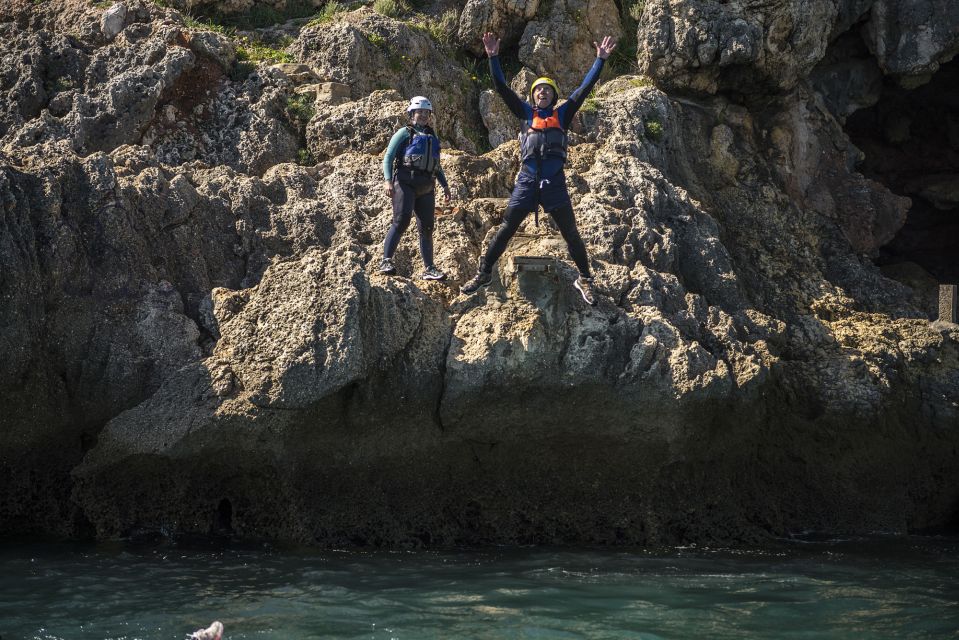
The tour includes more than a dozen jumps, generally between 2 and 8 meters. That range matters. A 2-meter jump still has that little adrenaline spike, but it’s a different psychological step from 8 meters. You’re not forced into the biggest number immediately.
What I like about this format is that it keeps your energy in motion. You’re constantly switching tasks: grab a hold, move along a rock face, float and adjust, then jump. If your legs get tired, you’ll likely switch to swimming or moving in shallower zones.
And because there are no artificial aids like steel cables, the progression depends on teamwork, timing, and your guide’s directions. The buoyancy aid gives you confidence, but you still feel like you’re moving through nature on your own terms.
Portinho da Arrábida and Ribeiro do Cavalo: Caves and Secret Stops
This is where Arrábida stops being a concept and becomes real.
You’ll explore mysterious caves and secret beaches, with named areas like Portinho da Arrábida and Ribeiro do Cavalo. Caves change the whole feel of a coastal day—cooler air, echoing water sounds, and light bouncing off wet rock surfaces. Even if you’re not a cave person, you usually leave liking at least one stretch because it’s different from open-water swimming.
The “secret beach” angle is also part of the value. You’re not just visiting the obvious sand strip everyone else can see. You’re moving through a coastal system shaped by tides—intertidal zones, rocky shelves, and water access that changes as conditions shift.
If conditions cause adjustments, cave access can be one of the parts that changes. That’s another reason the safety-first approach matters: they’ll swap stops rather than push you into something that’s not right that day.
Wildlife and Geology Talk: Why the Biologist Pieces Matter
Arrábida isn’t only pretty—it’s a living coast with plants, animals, and geology shaped by the sea. Local biologists help you learn more about wildlife, and you’ll also hear about fauna, flora, and geology as you travel through rocky and aquatic areas.
I like this part because it gives your jumps and swims meaning. Instead of just collecting adrenaline, you understand why certain spots look the way they do and what you might notice in the water or along the rocks.
You won’t get a lecture. You’ll get field explanations tied directly to the environment around you—good for people who want facts without boredom.
Photos and Memories: How You’ll Likely Leave With Proof
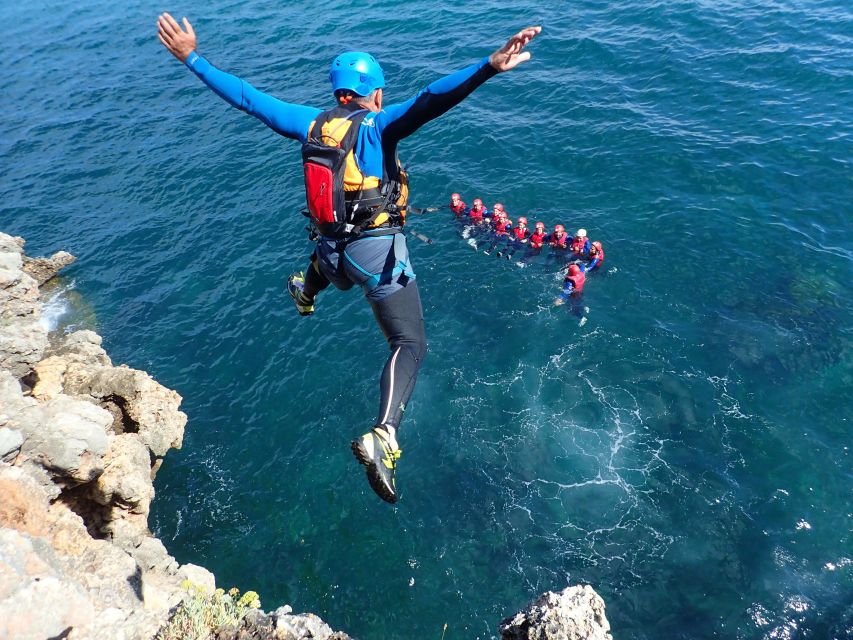
Many groups come away with more than memories. The tour experience includes capturing the action, and there’s mention of high-quality photos taken during the activity. In practice, that matters because you’ll be wearing a helmet and wetsuit—great for safety, not always great for selfies.
If you care about having jump photos or a record of the day, this is a nice bonus. Just remember that you’re the participant first; gear, breathing, and listening to the guide still come first.
What to Expect From the Water Temperature and Wetsuit Timing
This is a coastal activity in Portugal, but the water still has real temperature variation. The tour provides an isothermal neoprene wetsuit for a reason.
It won’t make you immune to cold, but it generally helps you move longer without feeling like your hands and legs are shutting down. You’ll still want to keep an eye on how you feel during the briefing and early steps—tell your guide if you run cold, panic easily in water, or want help pacing.
Also, because it’s coasteering, you’ll spend plenty of time in contact with wet rock and surf movement. Wetsuit comfort and helmet fit make a difference here.
Price and Value: Is $70 Worth It?
At $70 per person for about four hours, the price makes sense because you’re not paying only for the guide. You’re also getting:
- certified instruction
- speedboat transportation
- wetsuit, helmet, and life jacket
- water and energy bars
That’s a lot of included gear for one activity, plus a route that uses boat access to cover the right coastline. If you tried to DIY this, you’d still need safety planning, equipment, and local knowledge. Most of the cost is wrapped into making the day work safely and efficiently.
So yes, $70 is a fair value for what you get—especially if you want multiple jumps, caves, and climbing in one outing rather than a single highlight.
Who This Tour Suits Best (and Who Should Skip It)
This tour fits best if you’re:
- comfortable being active for a few hours
- okay with water-based scrambling and planned jumps
- willing to follow instructions quickly and move as a group
Not suitable for:
- children under 8
- pregnant women
- people with back problems
- people with mobility impairments
- people with heart problems
- visually impaired people
If any of those apply, don’t try to “tough it out.” The safety setup, jump heights, and swiftwater-trained standards are there because conditions can change, and this isn’t designed for workaround accommodations based on the provided info.
On the flip side, several people on this tour had a range of jumping comfort and still ended up happy, especially because guides can offer alternatives.
Languages and Communication: You Won’t Be Left Guessing
The tour instruction is offered in Spanish, English, French, and Portuguese. That matters because coasteering is a sport where small cues matter—body position, timing, and where to put your feet on slick rock.
If you’re traveling alone, this language setup also helps you feel confident when you arrive. And if you’re with friends who speak different languages, the guide team can keep the group running.
Booking Tips: Weather, Route Changes, and the Minimum Group Size
One reality check: the tour may change based on weather conditions or other safety and logistical concerns. That’s normal for a coastal activity where wind, visibility, and water conditions can shift.
There’s also a minimum group size of 2 people. If that minimum isn’t met, the tour will be rescheduled or you’ll be offered an alternative experience.
If you’re flexible, this can work out well. If your schedule is tight, try to book a time window with a backup option the same week.
Should You Book This Arrábida Coasteering and Speedboat Tour?
Book it if you want a hands-on, action-filled way to see Arrábida Natural Park—speedboat access, climbing, caves, and a bunch of jumps with professional safety standards.
Skip it if you have any listed medical or mobility concerns, or if you’d struggle with water-based movement and planned jumps. This is not a sit-and-splash activity.
If you do book, show up early, bring the right shoes, and treat the briefing like the warm-up for your confidence. You’ll get a day that’s part adventure, part coastline education, and mostly a whole lot of fun along Portugal’s rugged edge.
FAQ
How long is the Arrábida coasteering and speedboat tour?
It lasts about 4 hours.
What’s included in the price?
You get a certified instructor/guide, speedboat transportation, a neoprene isothermal wetsuit, helmet, and life jacket, plus water and energy bars.
What does the tour involve?
You’ll do coasteering through Arrábida Natural Park’s coastal intertidal areas, including rock climbing (low technical level), swimming, and jumping, with cave and secret beach exploration and a speedboat ride.
How high are the jumps?
The tour includes more than a dozen jumps between 2 and 8 meters.
What should I bring?
Bring swimwear, a towel, biodegradable sunscreen, water shoes, and a hair tie.
Are open-toed shoes allowed?
No. Open-toed shoes aren’t allowed.
What language will the instructor speak?
The guide can offer instruction in Spanish, English, French, and Portuguese.
What if the weather isn’t good?
The tour may change depending on weather conditions or other safety and logistics concerns, and it’s also subject to a minimum of 2 people to run (otherwise it’s rescheduled or an alternative is offered).