First surf lessons should feel simple. This Cascais/Carcavelos surf lesson keeps the start easy and the coaching focused on getting you standing up in Portugal’s ocean conditions. It runs about two hours, so you still have plenty of day left for beaches, seafood, and wandering.
I like how the lesson breaks things down before you hit the waves. You’ll get hands-on help with gear, wetsuit setup, and surfboard basics, plus stand-up technique tips that make the rest of the session feel doable. Another big plus is the instructor vibe: coaches like Felipe, Marco, and Thiago are known for patience and encouragement, especially for first-timers.
One thing to consider: ocean conditions can be unpredictable. If the waves are small, your session still moves forward, but you might end up with fewer big moments and timing can feel shorter than the 2 hours.
In This Review
- Key things to know before you go
- Where you surf: Cascais and Carcavelos’ practical ocean reality
- The lesson flow: from wetsuit and board handling to standing up
- Practice time: getting real waves (even when they’re not big)
- Group vs private: choosing the right coaching intensity
- The instructor factor: patient coaching that builds confidence
- Timing and wave size: the one thing you should plan around
- Price and value: what $42.33 gets you in the real world
- Meeting point at Carcavelos (MMGF+M5): easy start, then ocean time
- Comfort and basics: what you should know about facilities and valuables
- What to bring so the session feels smooth
- Who should book this surf lesson
- Should you book it?
- FAQ
- How long is the surf lesson?
- Is the surf lesson good for beginners?
- Is it offered in English?
- Can I choose a private surf lesson instead of a group lesson?
- Where do we meet for the lesson?
- What’s included in the price?
- Are lunch and food included?
- What’s the maximum group size?
- Do I need a certain fitness level?
- What if I’m intermediate and worried about the surf conditions?
Key things to know before you go
- Beginner-friendly, with intermediate support: you can fit in even if you’ve stood up before, but coaching focuses on fundamentals.
- Small group feel: up to 20 travelers, which usually means more attention and less waiting.
- Quick lesson window: about 2 hours (but conditions can shift how the time feels).
- Easy start at Carcavelos: meeting point is clearly located at MMGF+M5 Carcavelos.
- Stand-up technique first, then practice: you’re not just thrown in; you learn, then apply right away.
- Ask ahead if you’re intermediate: if you’re unsure about the day’s surf, you can check the day before.
Where you surf: Cascais and Carcavelos’ practical ocean reality
You’re aiming for the Cascais coast, but you’ll actually meet in the Carcavelos area, which is one of the best places to learn because it’s set up for surf culture and regular wave action. Think of it as a reliable launchpad: you get the ocean experience without having to base your entire trip around surfing logistics.
Carcavelos is also the kind of spot where the lesson can succeed even on a so-so day. Portugal’s Atlantic weather doesn’t always cooperate, and waves can be seasonal and changeable. That matters because you’re paying for learning time, not a guaranteed perfect swell.
A few more Cascais tours and experiences worth a look

The lesson flow: from wetsuit and board handling to standing up
This is built for beginners and intermediate surfers, but the real value is the teaching order. You start with the stuff that keeps people from feeling frantic.
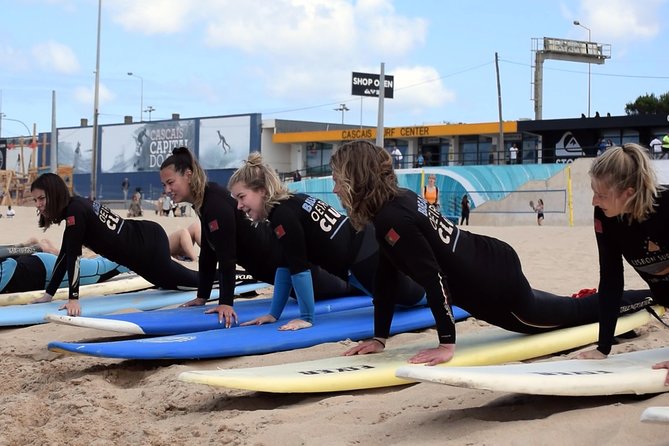
First, you’ll learn how to use your gear, including how your wetsuit and surfboard fit into the process. For first-timers, this is where confidence begins: you get shown how to handle the board, how to prepare yourself, and what to focus on once you’re in the water.
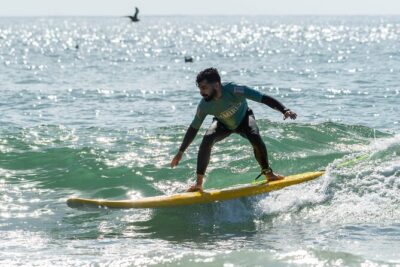
Then comes the stand-up coaching. The lesson explains the technique you need to get to your feet, before you spend the rest of the session practicing on actual waves. The practical approach is key here. You’re not memorizing theory. You’re getting a simple mental checklist, then trying it over and over until your body starts to cooperate.
Practice time: getting real waves (even when they’re not big)
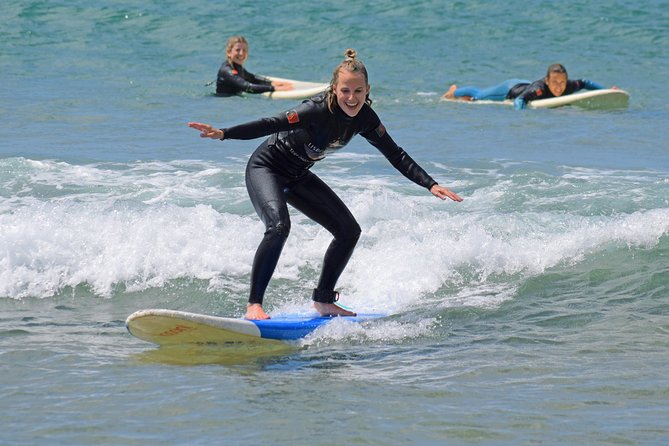
After the basics, the session shifts into fun, repeat practice. That’s the whole point of a short lesson: learn just enough to start riding, then spend your time on the ocean.
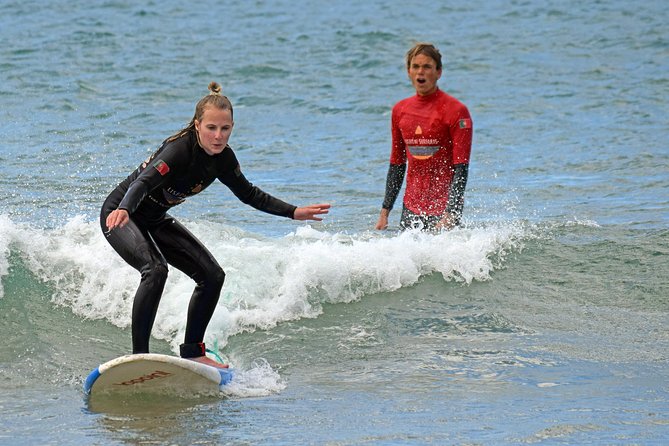
If you’re a beginner, you should expect a mix of tries. Some will click fast. Others take a few attempts. The instructors tend to stay hands-on, especially when waves are modest, because the goal is getting you standing and moving—not impressing anyone with a headline-worthy wipeout.
If you’re intermediate and you’re wondering whether the conditions will suit you, you can contact the team the day before. It’s a smart move. Surf lessons work best when you arrive with realistic expectations about the day’s wave behavior.
Group vs private: choosing the right coaching intensity
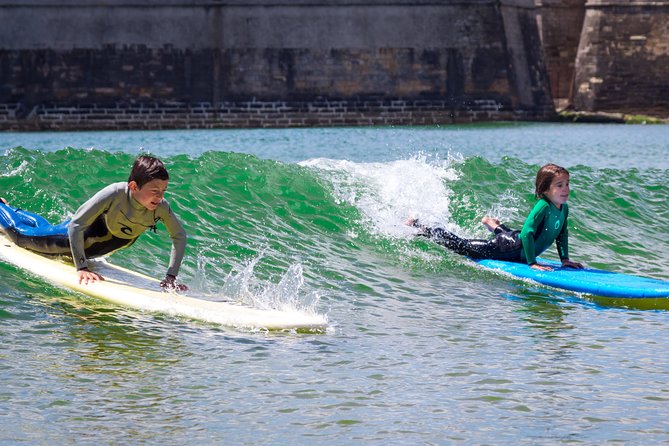
You can book this as a group lesson or a private lesson, and that choice affects your whole experience.
A group lesson is a great value if you’re okay learning alongside others and you don’t need constant individual corrections. With a maximum of 20 travelers, the group size is still small enough that you shouldn’t feel lost in the crowd.
A private lesson is the better fit if you want faster feedback or you already have a few skills but you want targeted adjustments. If you’re intermediate and unsure about conditions, private coaching can also help you make the best of the session you get.
The instructor factor: patient coaching that builds confidence
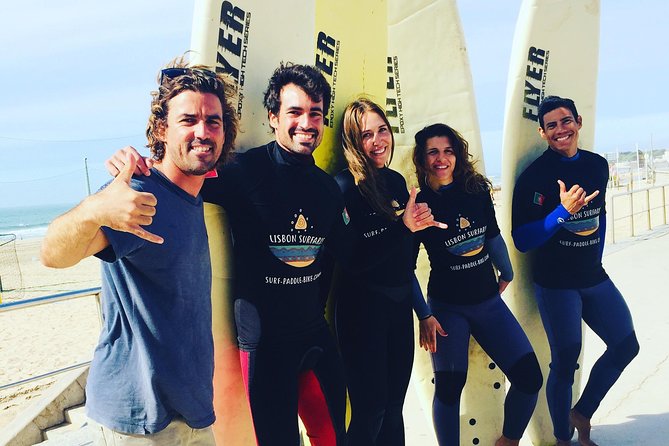
From what I’ve seen people say about this lesson, the coaching style is a major reason it scores extremely well. In particular, instructors including Felipe, Marco, and Thiago are credited with teaching in a way that reduces fear and keeps beginners relaxed.
That matters more than you’d think. Most first-timers don’t fail because they’re bad at surfing. They struggle because they’re tense. When you’re calm, you’re more likely to listen, reset between attempts, and try the stand-up technique without freezing up.
Also, small-group energy helps. One of the most common wins here is getting more individualized tips during practice, rather than waiting your turn while someone else gets coached.



Timing and wave size: the one thing you should plan around
The lesson is listed at about 2 hours, but ocean days have moods. One key consideration is that if waves are relatively flat, the session can feel shorter than expected. In a perfect world, your time would stay exactly consistent. In real life, instructors may adjust the plan to match what’s happening on the water.
How to handle it? Treat the 2 hours as an estimate, not a countdown timer. If you’re scheduling other plans the same day, build in a little buffer. The good news is that even when conditions are smaller, the lesson still focuses on learning and practice.
So yes, you might end up with short runs on small waves. But you’ll still come away with a clearer sense of how to manage the board, position yourself, and get to standing.
Price and value: what $42.33 gets you in the real world
At around $42.33 per person, this is priced like a practical activity, not a luxury surf camp. What makes it good value is what’s included: a surf lesson with a professional surf instructor.
You’re paying for coaching time and structured learning, not just access to the beach. For first-timers, that coaching saves you from trial-and-error that can waste the best parts of your day. For intermediate surfers, the benefit is quick technique feedback and a guided way to adapt to the conditions you get.
Also, the session length is part of the value. About two hours is long enough to learn and try, but short enough that you’re not stuck committing your whole afternoon to the ocean.
Meeting point at Carcavelos (MMGF+M5): easy start, then ocean time
The meeting spot is listed at MMGF+M5 Carcavelos, Portugal. It’s easy to locate, and the activity ends back at the same meeting point, which keeps day planning simple.
There’s also a note that it’s near public transportation. That’s useful if you don’t want to burn time parking or arranging a ride just for a two-hour block.
One practical detail from real surf-life: you may need to carry your surfboard a good distance along the boardwalk, depending on where you’re set up for the day. Bring the right mindset for that. It’s not a big hike, but it can feel like one if your arms aren’t thrilled.
Comfort and basics: what you should know about facilities and valuables
Let’s be honest: beach changing rooms are rarely spa-level. One drawback that pops up is that changing in/out spaces were described as small and dirty, and valuables weren’t locked away in a clear, secure way.
That doesn’t mean you can’t do the lesson. It just means you should plan like an experienced traveler:
- Bring only what you truly need for the session.
- Keep your most important items minimal and secured in your own control where possible.
- If you’re carrying valuables, treat this as an eye-on-it situation, not a leave-it-and-forget-it situation.
If you go in with that expectation, you’ll feel less stress and more time to focus on learning.
What to bring so the session feels smooth
The activity info doesn’t list an official packing checklist, so I’ll stick to the practical needs implied by the lesson. You’ll be in the ocean, so plan for water time and physical effort.
A smart move is to bring someone if you want photos and videos. More than one person recommended having a companion take pictures, because you’ll be busy (and busy people don’t always have two hands free for camera work).
If you’re a beginner, also prepare for the fact that waves can be small. That affects what kind of session you get: more practicing technique, less heroic riding. Either way, it’s still useful.
Who should book this surf lesson
This is a strong fit if:
- You’re a beginner who wants structure, not chaos.
- You can handle a moderate physical effort and want real wave practice in a short time.
- You want an English-speaking coach and clear, step-by-step guidance.
- You like the idea of a group lesson but still want enough attention to progress.
It may be less ideal if you need guaranteed big waves or if you’re scheduling with zero flexibility. Because conditions vary, you’ll get the best experience if you’re flexible and focus on learning.
Children are welcome too, with the rule that they must be accompanied by an adult.
Should you book it?
Yes, I think you should book this surf lesson if your goal is to get your technique foundations quickly and spend your energy on standing and trying waves. The combination of professional instruction, a beginner-to-intermediate fit, and a short lesson window makes it good value for the Cascais–Carcavelos area.
Skip it only if you’re the type who needs a perfectly sized swell on the calendar. If you’d rather chase a specific wave day, you might feel frustrated by the reality of Atlantic conditions. But if you can roll with small-wave learning and want coaching that helps you progress fast, this is a solid pick.
FAQ
How long is the surf lesson?
It runs for about 2 hours (approx.).
Is the surf lesson good for beginners?
Yes. It’s designed for beginners and also works for intermediate surfers.
Is it offered in English?
Yes, the lesson is offered in English.
Can I choose a private surf lesson instead of a group lesson?
Yes. You can choose between a group lesson or a private lesson based on what you prefer.
Where do we meet for the lesson?
The meeting point is listed at MMGF+M5 Carcavelos, Portugal.
What’s included in the price?
The price includes a surf lesson with a professional surf instructor.
Are lunch and food included?
No. Lunch and food and drinks are not included unless specified.
What’s the maximum group size?
The activity has a maximum of 20 travelers.
Do I need a certain fitness level?
Travelers should have a moderate physical fitness level.
What if I’m intermediate and worried about the surf conditions?
If you’re intermediate and have doubt about whether conditions will be nice for you, you can contact the provider the day before.