REVIEW · CASCAIS
Lisbon: Surf Lesson
Book on GetYourGuide →Operated by Lisbon Surfaris · Bookable on GetYourGuide
If you want the fastest route from Land Legs to ocean bravery, start here. This 2-hour surf lesson in Lisbon’s Carcavelos area teaches the basics for safe, fun surfing with hands-on coaching. I love how small the groups are (just 1 instructor for up to 5 people) and how you get practical feedback while you’re actually on the board. The only real drawback is the lesson is weather-dependent, so the team may shift you between Carcavelos or Guincho depending on conditions.
You meet your instructor right at Carcavelos Beach, next to Bar o Moinho, get geared up, and then you’re learning how to read the water, paddle efficiently, and stand at the right moment. From what I saw in instructor styles like Ivo, Patrick, Tiago, and PePe, the emphasis stays on clear explanations and keeping you close during practice. One consideration: Carcavelos can be busy, so you’ll want to arrive ready to focus, not just to watch.
This is a strong choice if you’re new to surfing and want a guided first experience rather than a “try it and hope” session. You also have options for shared or private lessons, which matters if you want more attention or a calmer pace.
In This Review
- Key Highlights You’ll Care About
- Carcavelos First: Why This Lesson Starts at Lisbon’s Surf Scene
- The 2-Hour Flow: What You’ll Do From Start to Finish
- Carcavelos vs Guincho: How Weather Shapes Where You Surf
- Your Instructor Makes the Difference: Small Groups, Real Feedback
- Gear and Comfort: Wetsuits, Boards, and Cold-Water Reality
- Safety and Wave Choice: What You Learn Beyond Standing Up
- Pricing and Value: Is $47 for 2 Hours Fair?
- How to Prepare: What to Bring and How to Show Up Ready
- Who This Surf Lesson Fits Best (and Who Should Skip It)
- After the Waves: What “Progress” Usually Feels Like
- Should You Book Lisbon Surfaris Surf Lesson?
- FAQ
- What’s the duration of the Lisbon surf lesson?
- Where do I meet the instructor?
- What’s included in the price?
- Do I need to bring my own wetsuit or surfboard?
- Is hotel pick-up included?
- What should I bring with me?
- Can I cancel and get a refund?
Key Highlights You’ll Care About
- Carcavelos meeting point: Lisbon Surfaris is right at Carcavelos Beach, next to Bar o Moinho.
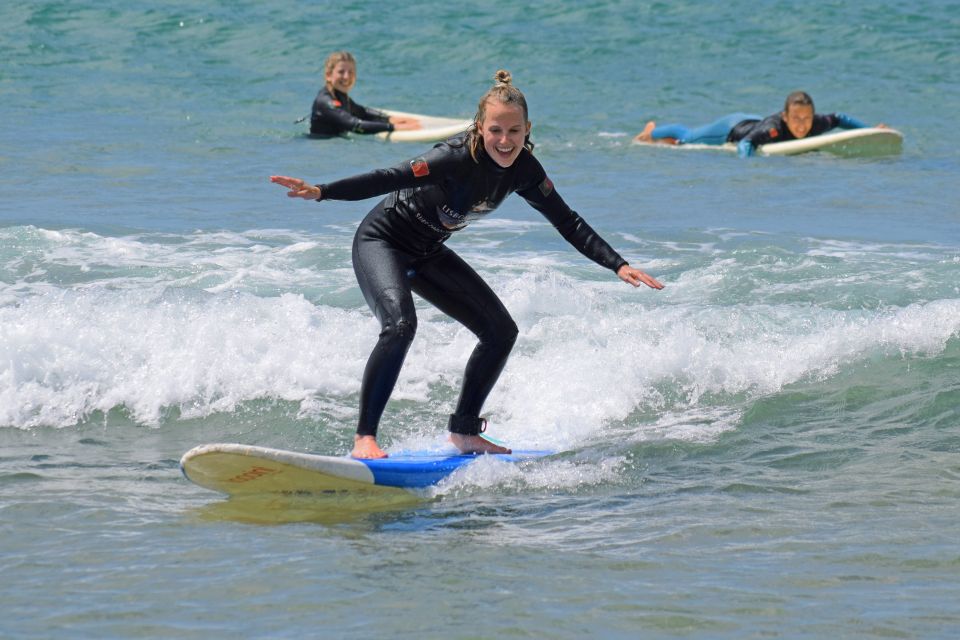
- Max 5 people per instructor: you get real coaching, not just a group lecture.
- Gear included: wetsuit and board are provided so you can travel light.
- Safety and ocean reading: you learn how to choose waves and spot what’s safe.
- Weather-based beach choice: you may head to Carcavelos or Guincho depending on the day.
Carcavelos First: Why This Lesson Starts at Lisbon’s Surf Scene
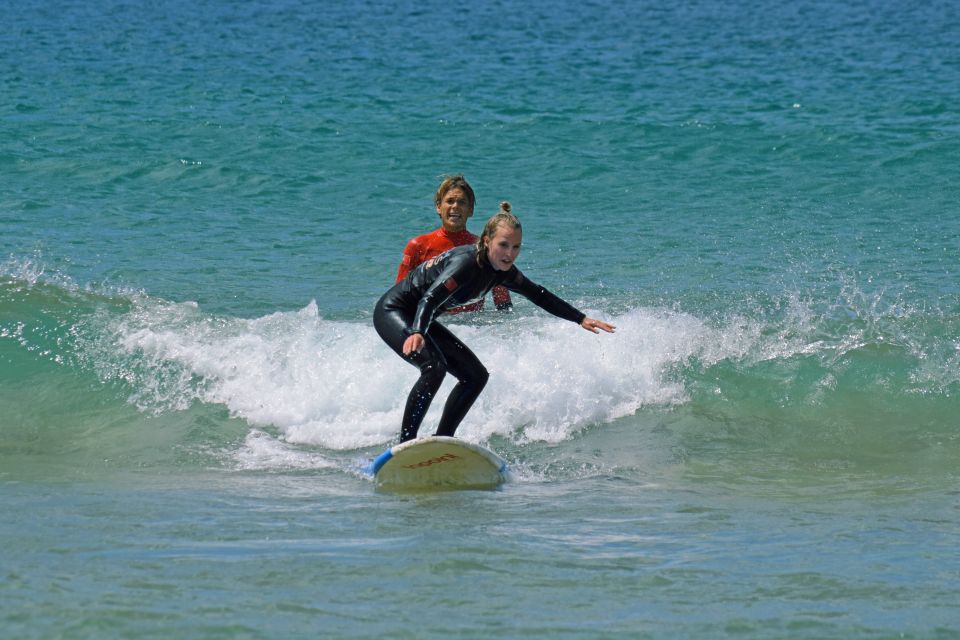
Carcavelos is one of those places where surfing feels built into the coastline. You’re not driving to a remote spot and hoping conditions work out. You’re starting in a real surf environment, with water time as the goal.
The meeting point makes that easy: Lisbon Surfaris is directly at Carcavelos Beach, right next to Bar o Moinho. That’s a big deal for value. Fewer logistics headaches means more time learning, and you spend less energy figuring out transport or timing.
Also, this lesson is designed for beginners. It’s not about showing off complicated tricks. It’s about learning the fundamentals in a structured way so you can do the safe parts well and have fun even if you’re not standing instantly.
A few more Cascais tours and experiences worth a look
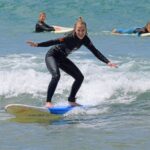

The 2-Hour Flow: What You’ll Do From Start to Finish
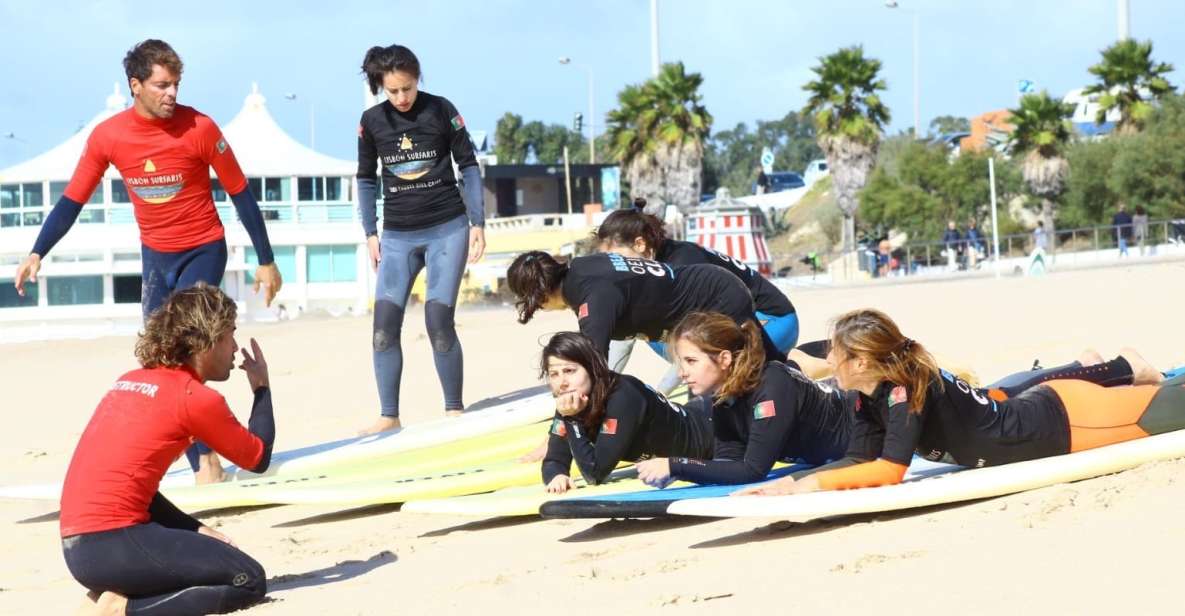
This is a tight, focused session. In 2 hours, you’re guided through the key sequence that helps beginners start catching waves faster.
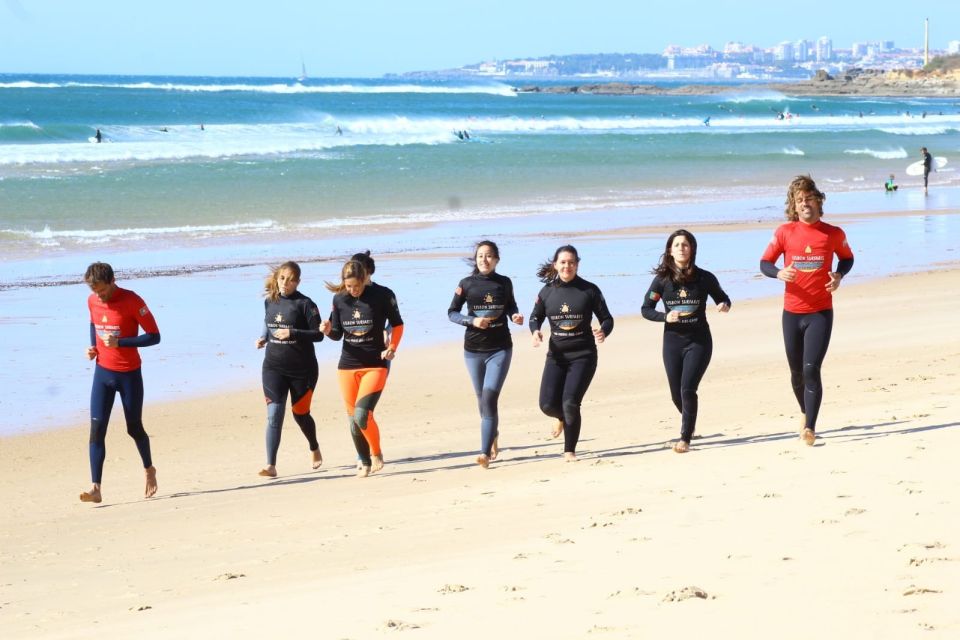
First, you meet your instructor at the surf school area at Carcavelos. Then you get your surfing equipment (including a wetsuit and board). Expect a quick orientation before you hit the water, because wetsuit fit matters and board handling comes next.
Next comes the core lesson: safety + ocean reading. You’ll learn the practical basics—how to understand what the ocean is doing that day, how to choose waves, and how to avoid the unsafe stuff. For a first lesson, this part is everything. It turns surfing from guesswork into something you can control with simple decisions.
After that, you work on the moves that actually get you from lying to riding. Beginners usually need help with paddling and the pop-up (standing up). You’ll practice the steps until they start to feel consistent.
Finally, you try to catch your first waves on the Lisbon ocean. Your “success” may look different day to day—some people stand on the board quickly, others need more attempts—but the structure is designed to give you repeated chances, not one quick try and done.
Carcavelos vs Guincho: How Weather Shapes Where You Surf
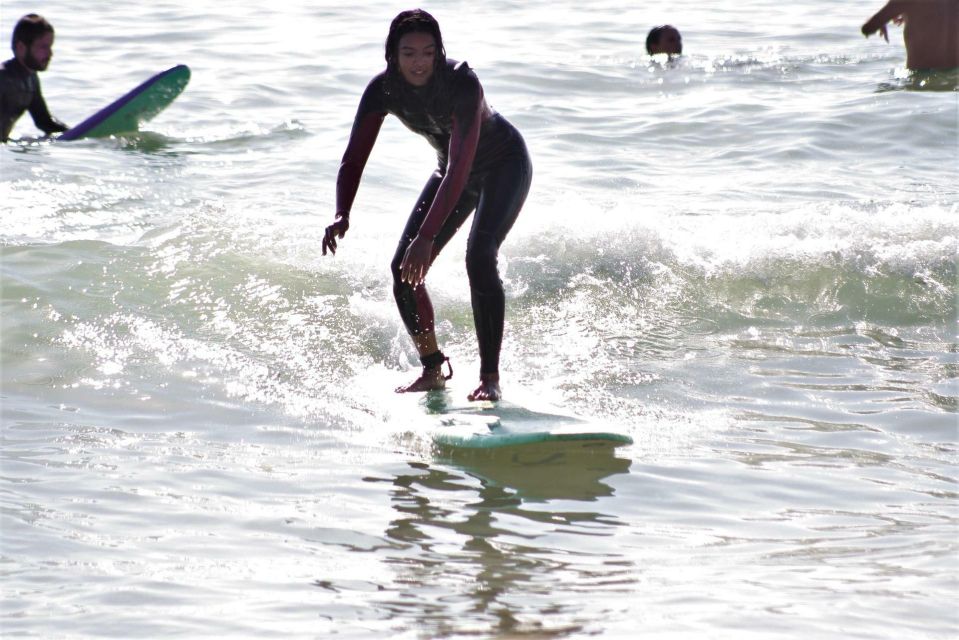
One detail that’s surprisingly important: you might surf at Carcavelos or Guincho. The team goes where the conditions are best on the day, based on what’s favorable.
Carcavelos is the more familiar starting area for the lesson. Guincho can feel more exposed and dramatic, and it’s often chosen when the team thinks the ocean will be better for what you’re trying to learn. Either way, the goal stays the same: you get coaching that matches the water in front of you.
Because this is weather-driven, you should plan to stay flexible. Don’t schedule a second activity that needs perfect timing right after the lesson ends. If conditions shift, so can the beach choice.
The upside is that you’re not stuck with whatever surf happens to be on the spot you arrived at. The plan is designed to maximize your learning and wave time.
Your Instructor Makes the Difference: Small Groups, Real Feedback
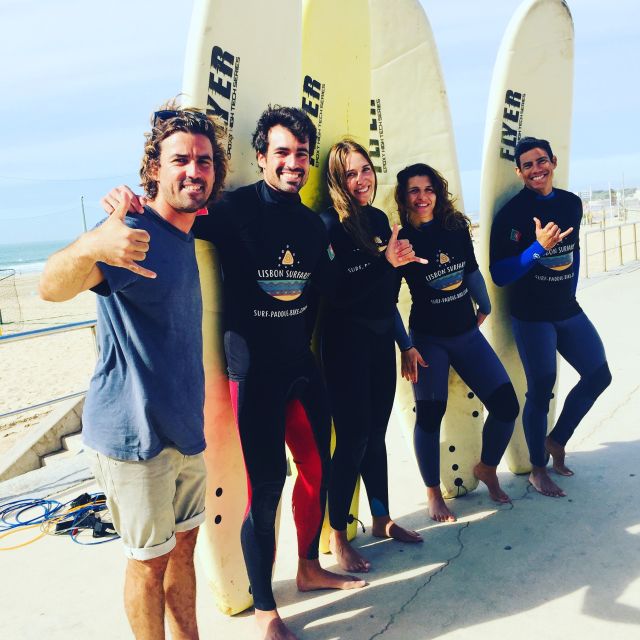
This is where the lesson really earns its rating. Your group is built as 1 instructor for a maximum of 5 people. That ratio is the reason people leave feeling like they improved instead of just being worn out.
In the feedback from instructors like Tiago, Patrick, Ivo, and PePe, the common theme is close attention. The coaching is not just “watch me.” It’s guidance while you’re trying the basics, so you can correct the exact thing that’s stopping you.
You’ll also benefit from instruction in multiple languages: Spanish, English, Portuguese, and French. That matters because clear surf instruction is technical by nature. If you don’t fully understand a cue, it takes longer to progress.
If you’re sensitive to crowds or prefer a more direct pace, the option for private or small group lessons is worth it. A private lesson can compress learning into fewer distractions, and it gives you more chances to ask questions on the spot.
Gear and Comfort: Wetsuits, Boards, and Cold-Water Reality
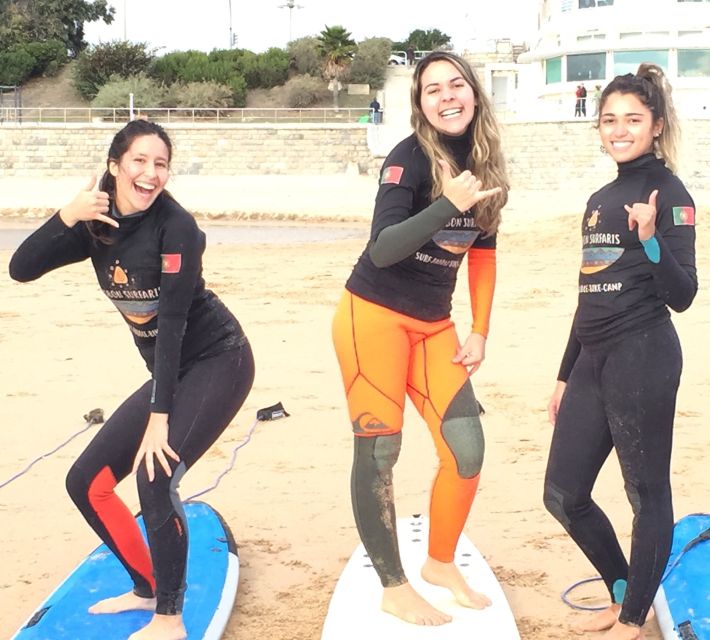
You don’t need to bring your own board or wetsuit. Surfing equipment is included, and that typically includes wetsuit sizing that works for different body types. In feedback you’ll see mention of wetsuits in different sizes and even varying thickness, which is a smart touch for Lisbon’s Atlantic conditions.
That comfort piece matters more than people expect. When you feel cold or uncomfortable, you rush, your paddling gets sloppy, and your attention drops right when you need it most. A properly fitted wetsuit helps you stay focused long enough to practice the pop-up and catching a wave.
You’ll also need to bring practical items: a towel, sunscreen, and an ID or passport. Sun and wind can be tricky near the water, and sunscreen is one of those simple things that prevents your lesson from becoming a painful reminder later.



Safety and Wave Choice: What You Learn Beyond Standing Up
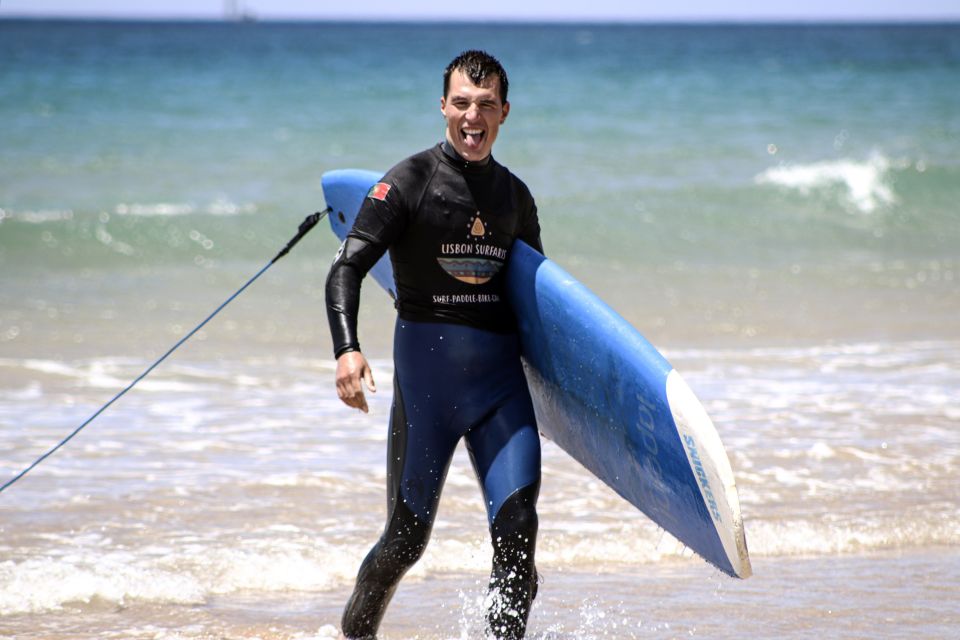
A lot of “beginner surf” experiences focus only on the moment you stand. This lesson focuses on the stuff that keeps you safe and helps you avoid wasting energy.
You’re taught how to choose a wave, including how to interpret conditions so you’re not pushing into trouble. You’ll also get safety instruction before you’re out there trying to ride. For first-timers, that confidence builds quickly.
You’ll also learn how to read the ocean in a way that matches beginner reality. That means learning what matters for safety and timing, not memorizing technical oceanography.
When you get the safety basics right, your brain stops panicking. Then you can focus on paddling rhythm and the pop-up. That’s the path from “I fell immediately” to “I got it for a second.”
Pricing and Value: Is $47 for 2 Hours Fair?
At $47 per person for a 2-hour beginner lesson, the value comes from three places:
1) Instructor time: the format is 1 instructor per up to 5 people. That’s real coaching, not a quick demo.
2) Gear + safety: you’re not paying extra for wetsuit/board, and the lesson includes insurance plus structured safety teaching.
3) Transport if needed: transportation to the beach is included if necessary, which helps you avoid local confusion costs.
The big cost you should expect is what’s not included: hotel pick-up and drop-off and food and drinks. So you’ll want to plan your own start location and bring water or eat before.
If you’re comparing this to DIY surfing, the difference is huge. One hour of guided instruction can save you from weeks of trial-and-error and help you avoid unsafe situations.
How to Prepare: What to Bring and How to Show Up Ready
To make your lesson smoother, show up with the simple essentials:
- Passport or ID card
- Towel
- Sunscreen
Also, wear something that dries fast. If you’re coming straight from sightseeing, don’t plan on doing a long clothing reset afterward. The wetsuit helps, but you still want to manage wet-to-dry comfort efficiently.
And if you can, arrive with a calm mindset. Carcavelos can be crowded in the area, and the lesson works best when you’re focused on your instructor’s cues and your next attempt.
Who This Surf Lesson Fits Best (and Who Should Skip It)
This is designed for beginners, and it’s a great way to start without guessing. It’s especially good if you want:
- Hands-on instruction
- Clear safety basics
- A realistic shot at catching your first waves
- Either a shared group or a more private, tailored session
It is not suitable for:
- Children under 6 years
- Pregnant women
- People with mobility impairments
If you’re unsure whether you fit the physical demands, it’s worth checking directly with the operator before booking.
After the Waves: What “Progress” Usually Feels Like
The best part of a beginner lesson is that it gives you proof. In the feedback, people describe getting up on the board, standing after a warm-up and safety briefing, and improving fast thanks to personal attention.
For you, “progress” might look like:
- Paddle timing getting smoother
- Pop-up feeling more repeatable
- Less hesitation when choosing a wave
- More confidence because you understand what the ocean is doing
Even if you don’t catch every wave you try, you’ll leave with a clearer map of what to do next. That’s the real value of instruction done right.
Should You Book Lisbon Surfaris Surf Lesson?
If you’re in Lisbon and you want to learn surfing in a structured, beginner-friendly way, I’d book it. The combination of small groups (max 5), included gear, safety-focused coaching, and a strong chance to catch waves within 2 hours makes it a solid use of vacation time.
You should reconsider if you need a perfectly predictable location, since you may go between Carcavelos and Guincho depending on conditions. And if you’re not comfortable with the basics of being in cold Atlantic water, plan accordingly.
Otherwise, this is a practical first step that can turn into a new hobby quickly.
FAQ
What’s the duration of the Lisbon surf lesson?
The lesson runs for 2 hours.
Where do I meet the instructor?
You meet at Lisbon Surfaris directly at Carcavelos Beach, next to Bar o Moinho.
What’s included in the price?
The price includes surfing equipment, an instructor, insurance, and transportation to the beach if necessary.
Do I need to bring my own wetsuit or surfboard?
No. Wetsuit and board are included as part of the equipment.
Is hotel pick-up included?
No. Hotel pick-up and drop-off are not included.
What should I bring with me?
Bring passport or ID card, a towel, and sunscreen.
Can I cancel and get a refund?
Yes. You can cancel up to 24 hours in advance for a full refund.