REVIEW · CASCAIS
Surf Experience in Cascais
Book on Viator →Operated by Salty Souls Surf School · Bookable on Viator
Catching a first wave feels unreal. This 2-hour Cascais surf experience by Salty Souls Surf School is interesting because you get a proper flow of warm-up, simple theory, then hands-on practice on the kinds of beaches that actually work for beginners. I like the small group size (max 10), which means you’re not shouting over a crowd, and I also like that they handle all the gear, including a wetsuit, so you can focus on learning. The main thing to consider: the plan depends on good surf weather, so you’ll want to stay flexible if conditions don’t cooperate.
If you’re learning from scratch (or trying to get unstuck), the teaching approach is built for progress fast. The vibe that comes through most clearly from instructors like Gustavo, Ricardo, and Antonio is patience—lots of it—and practical feedback that helps you actually ride instead of just standing there hoping the ocean is in a generous mood.
One more practical note: this is a short session, so you’ll have a few chances to catch waves, not an all-day grind. If you’re hoping for long water time only, you might find the 2 hours goes by quickly.
In This Review
- Key Points That Matter Before You Go
- Price and What You’re Really Paying For
- Meeting at Carcavelos: Getting Started Without Stress
- How the 2-Hour Lesson Actually Works
- Guincho Beach Stop: Finding Waves That Teach
- Praia de Carcavelos Stop: Where Beginners Catch On
- Small Group Surf: Why It Changes Everything
- The Instructor Factor: Gustavo, Ricardo, and Antonio
- Equipment Included: Save Your Energy for the Water
- Who This Surf Lesson Is Best For
- Value in the “Choose the Best Waves” Approach
- Practical Tips So You Get More Out of Your 2 Hours
- Should You Book This Cascais Surf Lesson?
- FAQ
- How long is the surf lesson in Cascais?
- Where does the lesson start and end?
- Is surfing equipment included?
- What skill level is this surf lesson for?
- How many people are in the group?
- What happens if the weather is poor?
Key Points That Matter Before You Go
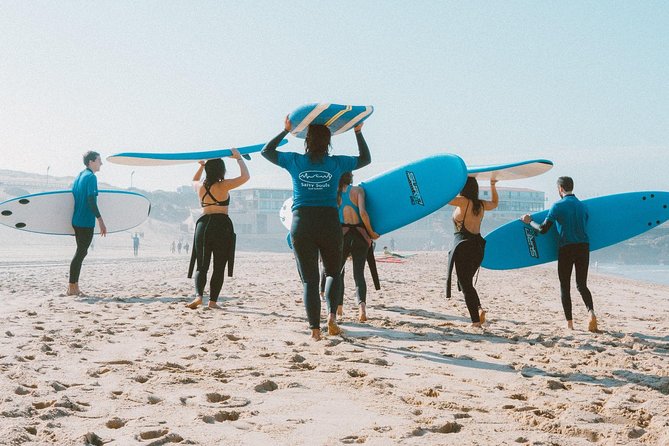
- Small groups (up to 10) make it easier to get corrected right when you need it
- All equipment included, plus a wetsuit, so you don’t haul surf basics around town
- Two beach stops help you get better wave options for the day
- Lesson structure (warm-up, theory, then practice) gives you a clear path from first try to improvement
- Beginner-friendly approach across ages and skill levels means you won’t feel out of place
- English instruction keeps the learning simple and direct
Price and What You’re Really Paying For
At $50.79 per person for about 2 hours, this isn’t a bargain you should ignore, and it isn’t a luxury splurge either. The value is in three places.
First, you’re paying for coaching time, not just a board rental. The lesson is organized into warm-up, theory, and practice, which is the difference between getting tossed onto a wave and actually learning what to do next.
Second, you’re paying for convenience: wetsuit and surf equipment are included. Surf gear can be pricey to source or time-consuming to rent, especially if you’re only staying a short time.
Third, you’re paying for the class size. With a maximum of 10, you’re more likely to get hands-on attention and quicker corrections. If you’ve ever felt invisible in a big group activity, you’ll appreciate what a smaller group changes.
Booking demand is also a clue. This kind of lesson is often booked about a month in advance on average, so if you’re traveling in high season or on a weekend, it’s smart to lock in your time early.
You can also read our reviews of more tours and experiences in Cascais.


Meeting at Carcavelos: Getting Started Without Stress
The activity starts at Carcavelos beach in Portugal and ends back at the same spot. That matters more than it sounds. You’re not dealing with a complicated end-of-tour pickup plan, and you can build the rest of your day around it.
The meeting area is described as near public transportation, which is helpful if you’re using buses or trains instead of driving. Surf lessons work best when you don’t show up already tired and flustered.
Also, the lesson uses a mobile ticket. That’s one less thing to worry about, especially if you’re bouncing between beaches, cafés, and viewpoints.
How the 2-Hour Lesson Actually Works
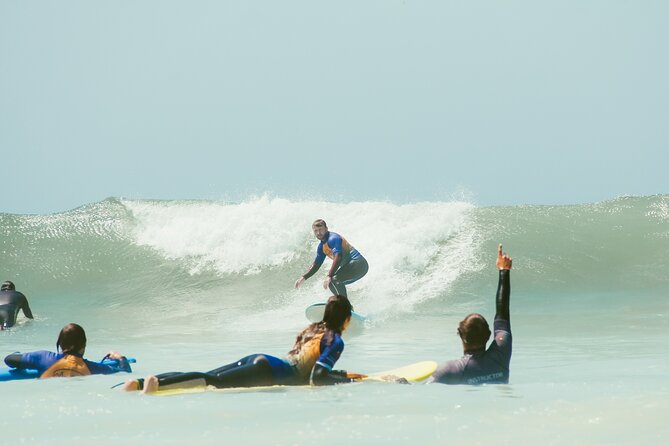
You’ll spend about 2 hours total, and the day is paced in a way that makes sense for first-timers. The flow is straightforward:
- Warm-up: get your body ready and help you feel less stiff the moment you hit the water
- Theory: learn the key basics so you know what you’re aiming for
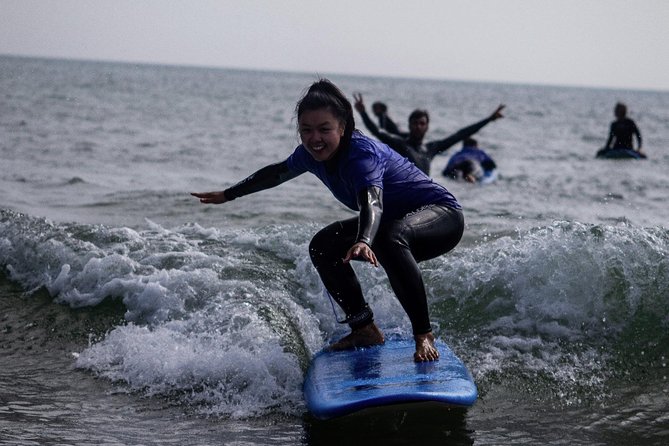
- Practice: put it all together with coaching while you’re actually on the board
This is the part that helps most people progress quickly. Surf is half technique, half timing. The theory isn’t there to lecture you; it’s there so when the instructor points out something on shore or in the water, it clicks fast.
Since the instructors mentioned in past sessions include teachers like Gustavo, Ricardo, and Antonio, and since their style gets described as patient and supportive, you can expect the corrections to be delivered in a way that feels calm—not harsh.
Guincho Beach Stop: Finding Waves That Teach
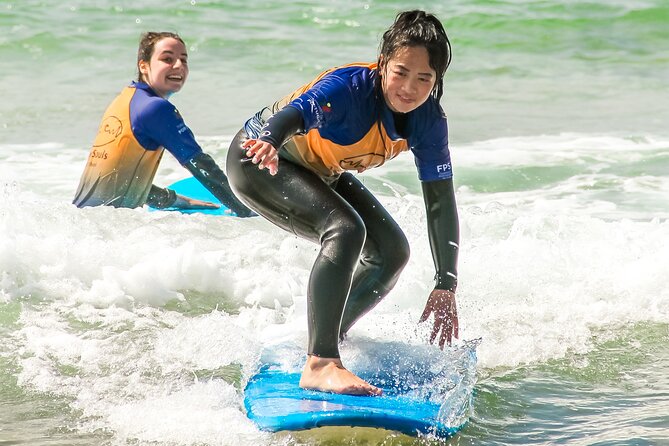
One of the stops is Guincho Beach. This is a coastline area that’s known for surf conditions, and in a lesson context it’s usually chosen for that reason: you want wave options that help beginners feel the motion without getting blasted into “not today” mode.
What this means for you: you’re not only “going to the beach.” You’re going to a spot where the instructor can look at the conditions and choose where the group should be.
A possible drawback? Guincho-style weather can change quickly along the coast. If wind or swell is less cooperative, you may not get the exact vibe you expected. The upside is that the lesson is designed to pick the best waves for the day, not force everyone into one stubborn plan.
Praia de Carcavelos Stop: Where Beginners Catch On
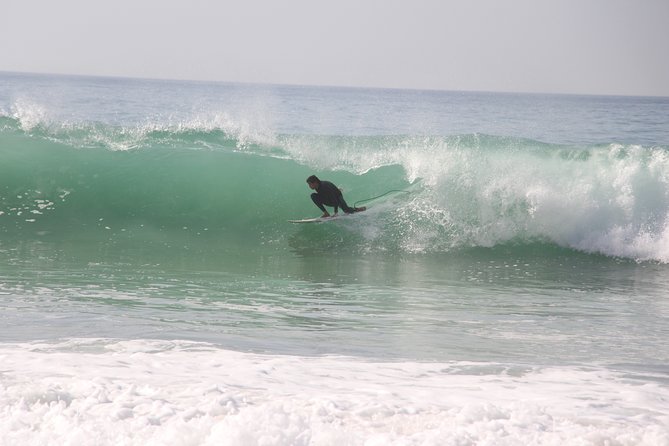
The second stop is Praia de Carcavelos. For many people, this is the beach stop that feels most immediately friendly for learning because it’s geared toward making the experience approachable.
This is where you’ll likely get more repeated practice—standing up, adjusting your stance, and figuring out how to read what the wave is doing. Instructors described in past sessions talk about getting people on the board repeatedly, which is exactly what you should aim for in your first lesson.
If you’re taking a child (or anyone nervous about water), Carcavelos is typically the kind of setting where learning feels controlled and supportive. The goal isn’t just to see what surf looks like; it’s to build confidence while keeping safety in mind.



Small Group Surf: Why It Changes Everything
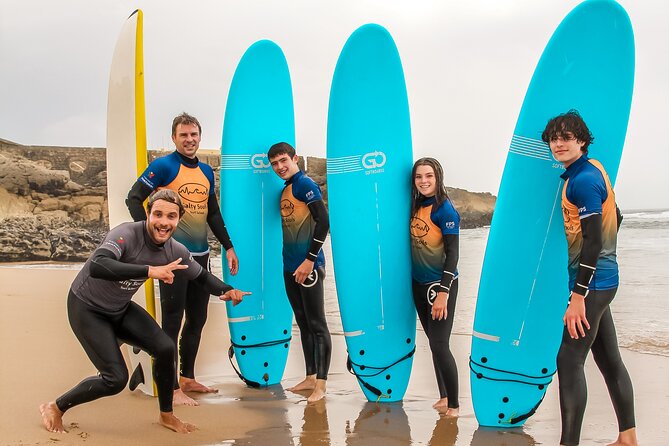
This is a maximum 10 travelers experience, and that’s a big deal. In smaller groups, instructors can watch what you’re doing during the moments that actually matter.
Instead of waiting your turn and hoping someone notices your feet are planted backward (it happens), you get corrections in time to apply them immediately. That’s why so many people end up feeling like they’re riding more consistently as the lesson goes on.
It also makes the whole experience more personal. You can ask questions, you’re not lost in the shuffle, and you can get reassurance if you’re freezing or intimidated. Surf can be weird at first. A supportive instructor makes it feel like a sport you can learn instead of a stunt you must survive.
The Instructor Factor: Gustavo, Ricardo, and Antonio
From what’s shared in prior lessons, the instructor style is consistent: friendly, welcoming, and practical. People specifically highlight Gustavo for being knowledgeable and patient, and mention Ricardo as part of the coaching team. Others talk about Antonio making the lesson feel easy going, with a focus on getting everyone up on the board at least a few times.
You should take that as a signal about teaching method. The best surf instructors don’t just tell you what to do—they adjust the lesson pace to match the group. If you’re a nervous beginner, you want that. If you’re an intermediate trying to refine technique, you also want it, because small fixes can matter fast.
Equipment Included: Save Your Energy for the Water
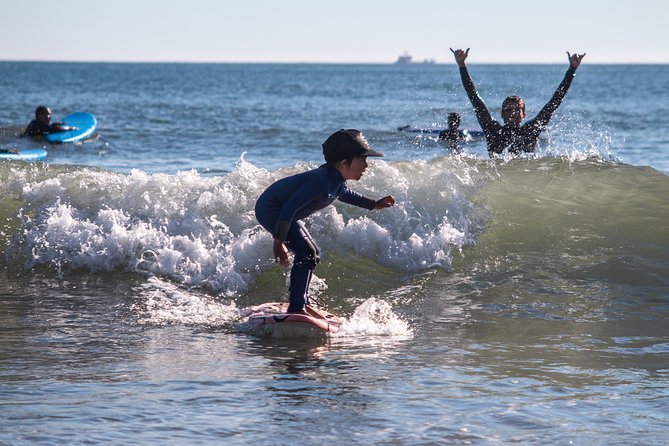
The lesson includes all surfing equipment, plus a wetsuit. This is one of those unglamorous details that makes the experience smoother in real life.
You don’t need to:
- find a rental shop
- compare sizes on a beach towel
- deal with cold water creeping in because you forgot something
Instead, you arrive, get geared up, and focus on learning. It’s also just less stuff to worry about while you’re already balancing sunscreen, water, and the excitement jitters.
Who This Surf Lesson Is Best For
This experience is described as suitable for all skill levels and ages, and the general guidance is that most travelers can participate. That broad fit is what makes it a good pick for mixed groups: adults, teens, and kids can share the same lesson environment.
Here’s who I’d especially recommend it for:
- First-timers who want a real lesson, not a board-and-hope situation
- Parents traveling with a child who needs a patient, structured approach
- Teen and adult learners who want a small group and direct coaching
- Anyone who’s short on time and wants progress in 2 hours, not half a day
If you have serious mobility limits or strong fear of open water, you might want to ask questions before booking—but the info you have here supports that the lesson is built to be inclusive for a wide range of people.
Value in the “Choose the Best Waves” Approach
The lesson includes the idea that they’ll pick the best waves for the day. That’s more valuable than it sounds.
Surf conditions can swing from calm and friendly to chaotic within hours. If the instruction is fixed to one plan regardless of conditions, beginners can get discouraged. If the instruction is condition-based, beginners are more likely to feel success—and success is what keeps you learning.
In other words: you’re not just paying to visit the ocean. You’re paying for instruction that adapts to reality.
Practical Tips So You Get More Out of Your 2 Hours
You’ll enjoy this more if you show up ready for quick immersion into learning mode. Since the session is compact, a few basics help:
- Wear swimwear that you’re comfortable leaving wet
- Bring sun protection, because coastal light in Portugal can surprise you
- Plan your day so you’re not rushing right after the lesson (changing and drying up takes a few minutes)
- If it’s your first time, expect to be tired and a little sore the next day
Also, mentally prepare for repetition. The best learning happens when you try, fail safely, then adjust. Surf is humbling. That’s part of the charm.
Should You Book This Cascais Surf Lesson?
If you want a beginner-friendly surf lesson that’s short, structured, and taught in a small group, I think this is an easy yes.
Book it if:
- you want gear included and a wetsuit without extra hassle
- you like the idea of a max 10 group for more attention
- you’re learning for the first time or want to improve quickly
- you’ll be okay with a plan that depends on surf conditions
Skip it only if:
- you’re hoping for a very long time on the water
- you can’t be flexible about weather-driven changes
For the typical visitor doing a Cascais coast day, this hits the sweet spot: real instruction, real ocean time, and a setup that helps you actually catch waves instead of just trying to get lucky.
FAQ
How long is the surf lesson in Cascais?
The experience lasts about 2 hours.
Where does the lesson start and end?
The meeting point is at Carcavelos beach, Portugal, and the activity ends back at the same meeting point.
Is surfing equipment included?
Yes. All surf equipment is provided, including a wetsuit.
What skill level is this surf lesson for?
It’s suitable for all skill levels, and it’s also described as appropriate for people of different ages.
How many people are in the group?
The lesson has a maximum of 10 travelers, which helps keep the instruction more personal.
What happens if the weather is poor?
This experience requires good weather. If it’s canceled due to poor weather, you’ll be offered a different date or a full refund.