REVIEW · SETUBAL DISTRICT
Half Day Megaliths Cromlech Tour from Evora by Archaeologists
Book on Viator →Operated by Iberian Heritage Tours · Bookable on Viator
Megaliths near Évora, explained by archaeologists. This half-day tour puts you in the cork-country around Almendres and frames the stones with real archaeology thinking, not guesswork. I love that the guides are archaeologists—Bianca and Gonzalo—so the talk stays tied to evidence and careful theories. I also like the easy pace and the small-group feel, with time to ask questions as you go.
The biggest thing to consider is physical comfort: the path to the Menir of Almendres is in poor condition, and muddy dirt paths can make it harder after rainy weather. If you have balance problems or reduced mobility, you may not be able to reach the menhir.
In This Review
- Key points you’ll care about
- Why this Almendres tour feels different than a typical day trip
- Meeting at the Roman Temple of Évora (and how pickup really works)
- Cromeleque dos Almendres: your first real view of Portugal’s Stonehenge label
- The Menir of Almendres path: short walk, real footing issues
- Walking the cork-country: why the drive is part of the story
- Centro Interpretativo dos Almendres: the stop that helps it all click
- What else you may see: more than one Neolithic monument
- Price and value: $78.44 is the “small-group archaeology” price tag
- Who should book (and who should think twice)
- Tips to make the tour smooth and enjoyable
- Should you book this half-day megalith tour from Évora?
- FAQ
- How long is the Half Day Megaliths Cromlech Tour?
- Where does the tour start and end?
- Is pickup available from hotels?
- What’s included in the tour price?
- What should I bring for the walk?
- Is the tour suitable for reduced mobility?
- Do they provide car seats for children?
- What language is the tour offered in?
- What happens if the weather is bad?
- How many people are on the tour?
- Is there free cancellation?
Key points you’ll care about
- Small group size (max 6 travelers) means more conversation and fewer rushed stops.
- Archaeologist-led guiding keeps the story grounded in what’s known and what’s still debated.
- Real countryside access through cork forests makes the drive part of the experience.
- Shoes matter because you’ll walk on dirt footpaths that can be muddy.
- Admission is included, and you’ll also have time at the interpretive center.
Why this Almendres tour feels different than a typical day trip
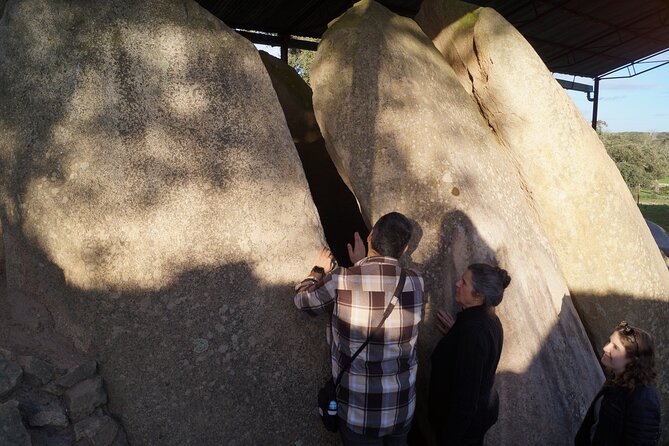
If you’ve only seen Portuguese megaliths in photos, this tour changes that fast. The stones are huge, but the real value is the way the guides connect their shape, position, and setting to Neolithic life in southern Portugal. You’re not just told to wonder—you’re taught how archaeologists think.
I especially liked how the guiding stays lively without turning into a script. Bianca and Gonzalo bring both energy and restraint, so you get context, then time to look, then more context when it helps. It’s also clear they enjoy teaching; that comes through in the way they answer questions and adjust their explanations to what you ask.
You can also read our reviews of more tours and experiences in Setubal District.



Meeting at the Roman Temple of Évora (and how pickup really works)
You start at the Roman Temple of Évora, right at Largo do Conde de Vila Flor. From there, the group drives toward the Almendres area. If you choose hotel pickup, your pickup time can be up to 30 minutes early depending on how many groups are running that day.
They’ll tell you what time to be ready at least 24 hours ahead, and your guide meets you outside your hotel. Transportation is comfortable for a half-day outing, and the tour runs in English, with support for visitors who ask questions.
One practical note: this is capped at 6 travelers, so even with pickup, you’re not stuck in a big bus situation.
Cromeleque dos Almendres: your first real view of Portugal’s Stonehenge label
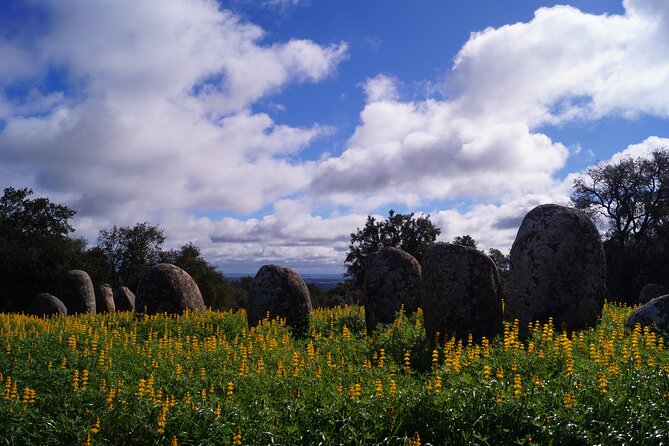
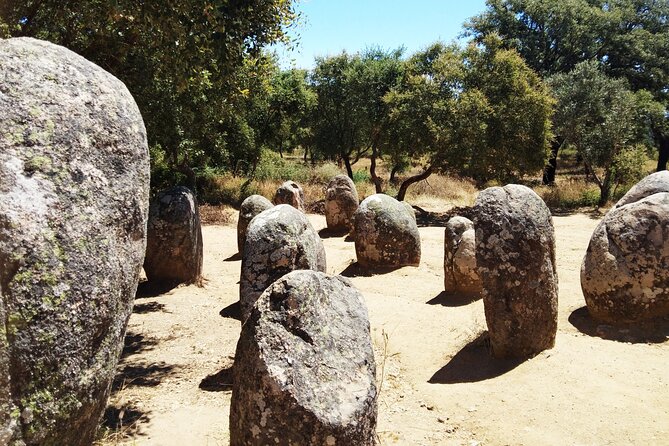
The heart of the visit is the megalith area around Almendres, known for its connections to other Neolithic stone monuments across Europe. You’ll head first to the path area for the standing stone, then move into the wider complex where the main structure sits.
At the Cromlech, the guides talk through what archaeologists can say with confidence and what still sits in the theory zone. Expect discussion of the monument’s significance in the Neolithic period, plus how these structures were rediscovered and protected over time. You’ll also get help reading the site—how the stones relate to each other and why location matters.
Even if you’ve studied Stonehenge myths before, the Almendres setting gives you a new angle. It’s the same human impulse—build, align, gather—but in a different climate, different culture, and with local stone and local patterns.
The Menir of Almendres path: short walk, real footing issues
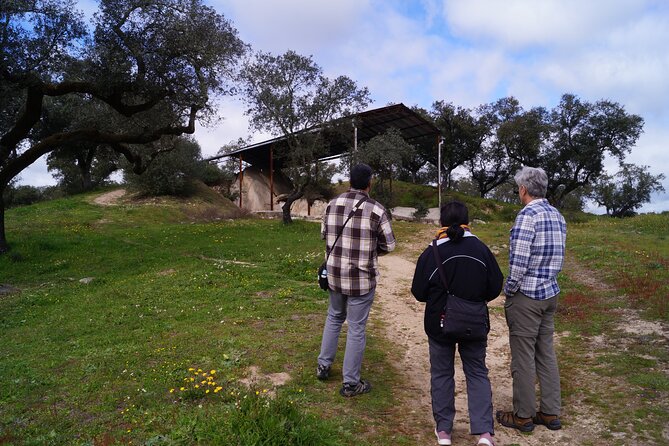
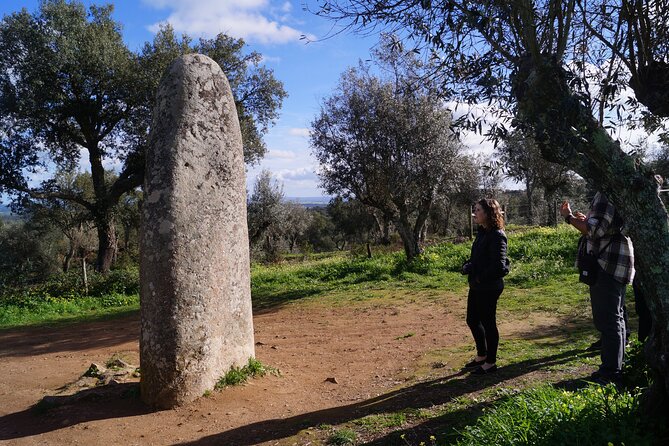
Before you reach the Cromlech, you visit a solitary standing stone at the Menir of Almendres. The route involves a short drive, then a 5–10 minute walk down a scenic path.
Here’s the catch: the path is described as in poor condition, so the tour notes that people with reduced mobility may not be able to reach the menhir. After rainy weather, the dirt footpaths may be muddy, so plan around traction. If you’re unsure, bring shoes with good grip and accept that the walk is part of the experience.
If the conditions are good, it’s a satisfying moment. A single standing stone hits differently than a circle: you’re closer to the feeling of the monument as a landmark in the open countryside.
Walking the cork-country: why the drive is part of the story

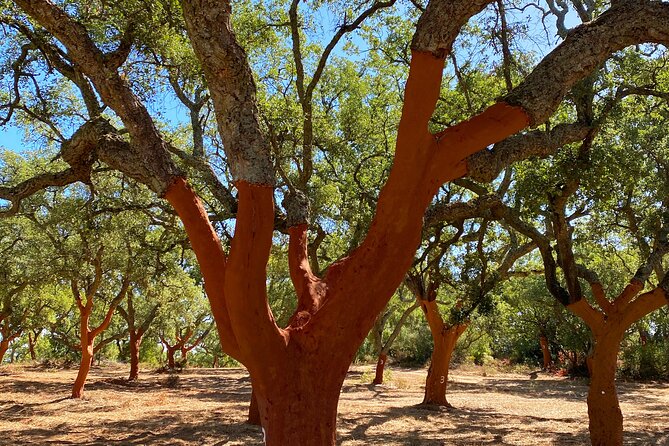
Between stops, you’ll drive through cork trees and rural lanes. The roads to these sites can be rough, and the tour moves slowly because of that. That slow pace is actually useful—you get time to look out the windows and soak in why these monuments sit where they do.
Several details add up here. You’re not just transported from one ticketed location to another. You’re seeing the working landscape of the region while the guides explain the prehistoric setting and the later history that shaped how these sites survived.
It’s also one of the reasons the tour feels “worth it,” even though it’s only a half day. You’re paying for access plus interpretation, not just standing near stones.



Centro Interpretativo dos Almendres: the stop that helps it all click
After the outdoor part, you head back toward the van and leave the Almendres complex slowly. Then you stop at the interpretive center, which functions like a place to reset and absorb what you’ve just seen.
You’ll have some free time to browse the center and gift shop. Even if you don’t spend long inside, this is a smart break in the schedule. It gives your brain a chance to connect the site walkthrough with the bigger picture—theories, conservation, and what archaeologists infer from the evidence.
If you like tours where the information builds step by step, this kind of center stop makes the ending feel useful, not rushed.
What else you may see: more than one Neolithic monument
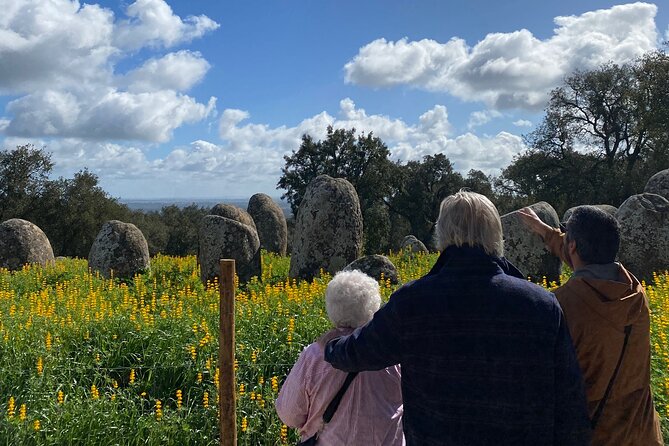
This tour is described as a megalith and cromlech experience, and in practice you should expect multiple Neolithic stone sites in the Almendres area. The experience includes the standing stone visit and the cromlech, and it also comes with context for other local monumental tombs mentioned as part of the outing.
So if you’re hoping for variety—standing stone, stone circles, and a tomb structure—you’re likely to get that here. The guides are trained to explain how archaeologists interpret differences between these monument types, rather than treating them as one same thing.
Price and value: $78.44 is the “small-group archaeology” price tag
At $78.44 per person, you’re not paying for a budget bus ride. You’re paying for four main value drivers:
- Guided access to the monuments (entrance included)
- Archaeologist-led interpretation from Bianca and Gonzalo
- Small group size (max 6), which affects how much time you get to ask questions
- Pickup option if you’re staying in Évora
You also get a tour that’s designed to cover a lot in a short time window. It runs about 2 to 4 hours including driving time, so it fits well if you want something more focused than a full-day itinerary.
If you enjoy monuments but hate vague explanations, this is usually a good match. The guides won’t just point and move on; they explain why the stones are where they are and what we can safely infer.
Who should book (and who should think twice)
This tour suits you if you want prehistoric context from people who study the region and can answer questions in real detail. I’d also call it a great fit if you prefer smaller groups and practical logistics, because you’re capped at six travelers and the pace stays manageable.
It may be less ideal if:
- You have balance problems or concerns about uneven ground
- You have limited mobility and need guaranteed access to the menhir path (the tour warns this path is in poor condition)
- You dislike walking on dirt paths that can get muddy
On the plus side, they do keep the effort reasonable. The walk segments are short, and the tour is built for a half-day flow, not an all-day hike.
Tips to make the tour smooth and enjoyable
Start with footwear. Even on dry days, you’ll be on dirt footpaths. After rain, those paths may be muddy, so choose sneakers or hiking shoes with traction.
Second, plan for a question-friendly experience. The guides are there to explain theory, evidence, and what’s unknown. If you’re the type who likes to ask Why this shape? Why here? How do they know?, you’ll get plenty of chances.
Third, consider timing. One review suggested going in the morning to beat the heat, which makes sense for an outdoor half-day in a sunny region.
Should you book this half-day megalith tour from Évora?
I think you should book it if your trip to Évora includes time for at least one “real-megaliths” experience and you want more than a photo stop. This tour is built around interpretation by archaeologists, a small-group cap, and the bonus of cork-country driving between sites.
Skip it or go in carefully if mobility is a concern. The menhir path is specifically noted as being in poor condition, and muddy conditions can make the walk less comfortable.
If those factors work for you, this is one of the most satisfying half-days you can do around Évora—because the stones feel bigger once someone explains how humans built and used them, and why the mystery still matters.
FAQ
How long is the Half Day Megaliths Cromlech Tour?
It runs about 2 to 4 hours, and the duration includes drive time.
Where does the tour start and end?
It starts at the Roman Temple of Évora (Largo do Conde de Vila Flor) and ends back at the same meeting point.
Is pickup available from hotels?
Yes. Pickup time can vary, and if you choose hotel pickup, it may be up to 30 minutes before the tour start. You’ll be told what time to be ready at least 24 hours before.
What’s included in the tour price?
Entrance to all monuments visited and guided tours to each site, plus some free time during the visit.
What should I bring for the walk?
Wear appropriate footwear such as sneakers or hiking shoes. The routes involve walking along dirt paths that can be muddy after rainy weather.
Is the tour suitable for reduced mobility?
The tour notes that the path to the Menir of Almendres is in poor condition and some people with reduced mobility may not be able to reach it. It is also described as not recommended for travelers with balance problems.
Do they provide car seats for children?
No. Car seats for infants and children are not provided, so you’ll need to bring your own.
What language is the tour offered in?
The tour is offered in English.
What happens if the weather is bad?
The tour requires good weather. If canceled due to poor weather, you’ll be offered a different date or a full refund.
How many people are on the tour?
The maximum group size is 6 travelers.
Is there free cancellation?
Yes, you can cancel up to 24 hours in advance for a full refund.