REVIEW · SETUBAL DISTRICT
Évora: Private walking tour with tickets to main monuments
Book on Viator →Operated by Évora Cultural Experience · Bookable on Viator
Évora is history you can walk. This private 2.5-hour tour strings together Roman ruins, Renaissance power, and some seriously memorable monuments, all starting in the heart of town at Praça do Giraldo. You’ll also get the kind of guiding that helps you connect dates and empires to real streets and stonework, including the aqueduct finish that many people treat as a quick photo stop.
I especially like how the tour builds from place to place. The Cathedral stop includes time with the cloisters and roof, so you’re not just looking at the outside. And the Chapel of Bones is handled with context, so it lands as cultural history first, not just a shock moment.
One thing to think about: you’re covering a lot in about 2.5 hours, so plan on steady walking over old-city streets and stairs. If you like long pauses, you might want to slow down on your own after the tour ends.
In This Review
- Key things I’d watch for on this Évora private walking tour
- Where the tour starts: Praça do Giraldo and the square’s heavy gravity
- Alentejo crafts on a commerce street: souvenirs that actually look local
- Se Catedral de Évora: the Gothic giant with cloisters and a rooftop payoff
- Templo Romano de Évora (Templo de Diana): Roman power you can still read
- Pateo de São Miguel: a small fortified space with royal-level significance
- The 1556 Mannerist fountain and Igreja da Graça: art that signals power
- Chapel of Bones: macabre, but explained like culture
- Igreja de São Francisco and the Dom Manuel complex: churches that acted like stages
- Ruinas Fingidas: romantic ruins and a photo moment that makes sense
- Muralhas de Évora and Aqueduto da Água de Prata: defense walls to the 1537 water story
- Price and value: what $105.26 buys you in real-world terms
- Who this Évora tour is best for
- Should you book this private walking tour?
- FAQ
- How long is the Évora private walking tour?
- Is this tour private?
- What language is the tour offered in?
- What entrance tickets are included?
- Are meals included?
- Where does the tour start?
- Is a mobile ticket provided?
- What fitness level is needed?
- Is free cancellation available?
Key things I’d watch for on this Évora private walking tour
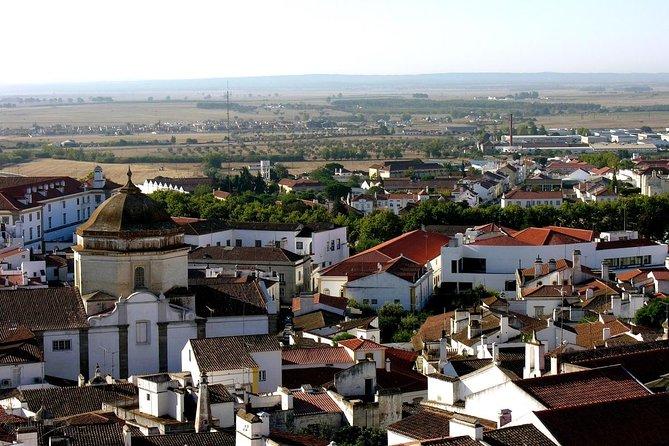
- Praça do Giraldo: the tour anchors you in the square that shaped Évora’s politics and daily life
- Cathedral entry + roof view: tickets cover the Cathedral, cloisters, and the panoramic rooftop access
- Chapel of Bones tickets included: real bones, 17th-century setting, and stories that explain why it exists
- Hidden-feeling stops: Pateo de São Miguel is a small, tucked-away alcove that many people miss
- Renaissance and Mannerist details: the Água de Prata aqueduct and the 1556 Mannerist fountain are more than pretty backdrops
- A guided story arc: from Inquisition-era intolerance to centuries of architecture, defense walls, and maritime-era symbolism
Where the tour starts: Praça do Giraldo and the square’s heavy gravity
Most Évora visits feel like wandering until you learn where the city’s “center of gravity” sits. Here, you begin at Praça do Giraldo Fountain (Praça do Giraldo 7). It’s not just a pretty starting point. The square functioned as the social and economic hub of this UNESCO World Heritage city since well before Portugal’s later national identity took shape.
A good private guide matters on tours like this because Évora can look like a pile of famous buildings. The difference is that you’ll get historical framing that connects local events to Portugal and even wider universal history. And yes, that can mean your brain starts clicking into place as you move from one street to the next.
This is also where the tour doesn’t shy away from the darker side of the story. The stop for the Homenagem às vítimas da Inquisição em Portugal places you near where many victims were burned alive. If you prefer your travel history light and easy, this part can feel intense—but it’s important context for understanding why religious power shaped daily life for centuries in Portugal.
You can also read our reviews of more tours and experiences in Setubal District.



Alentejo crafts on a commerce street: souvenirs that actually look local
Right after the main square history, you’ll pass through Évora’s traditional commerce street. This is where the city’s craft culture shows up in a way that feels tied to the region, not mass-market tourism.
You’ll get time to browse Alentejo-style goods, including cork objects, pottery, painted furniture, chocalhos (rattles), and Capotes (traditional Alentejo cloaks). Even if you don’t buy anything, it helps you recognize what locals might carry through their own routines. This stop also breaks up the walking so the monuments don’t blur together.
Se Catedral de Évora: the Gothic giant with cloisters and a rooftop payoff
The Cathedral of Évora (Se Catedral de Évora) is the kind of monument you understand better with a guide than alone. The tour includes admission to the Cathedral itself, the cloisters, and the roof—so you get multiple “layers” of the same building.
The Cathedral is described as the largest Portuguese Gothic cathedral, built along lines inspired by Notre Dame de Paris. That matters because it explains why the style feels both familiar (Gothic grandeur) and distinctly Portuguese (how it evolved on local ground and under local priorities).
What I like about adding the cloisters and rooftop access is simple: you get to change your perspective. From the roof, you finally see Évora as a whole rather than a sequence of stops. From inside, you’re meant to notice references and messages tied to earlier belief systems—some of which you might not expect to find within a Catholic temple. That contrast is part of Évora’s charm: cultures keep talking to each other through stone.
Practical note: if you’re the type who likes photos, plan for the rooftop view at the stop’s end so you don’t feel rushed. If you’re not into heights, you can still enjoy the Cathedral spaces, but roof access is one of the big included reasons this tour feels like a value.
Templo Romano de Évora (Templo de Diana): Roman power you can still read
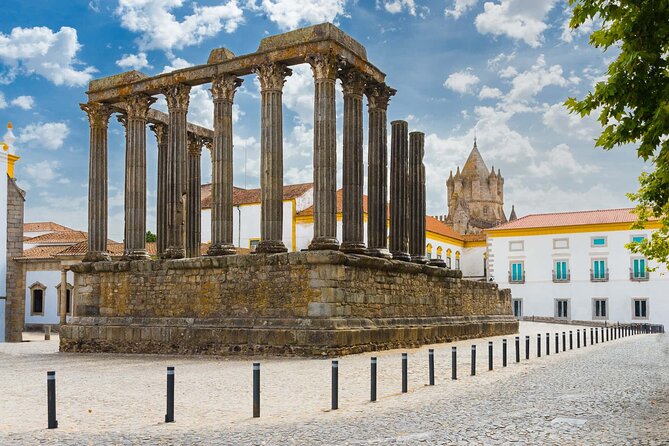
Then you shift time periods again, to the Templo Romano de Évora, also known as the Temple of Diana. The tour frames this as a monument with about 2,000 years of history and one of the best-preserved and oldest Roman temples from the empire.
This stop works well because it anchors you in the idea that Évora didn’t begin with the medieval period. Roman presence established physical and symbolic power that later civilizations built upon. The tour also ties the monument to stories about an ancient city connected to Julius Caesar, which helps explain why people associate Évora with empire-era origins, not just Portugal’s later rise.
Even if Roman ruins aren’t your favorite, this is an easy stop to enjoy because it doesn’t require a museum mindset. You’re reading the city through shapes, age, and survival—how the past stands in the middle of modern streets.
Pateo de São Miguel: a small fortified space with royal-level significance
Pateo de São Miguel is one of those stops that feels “surprisingly quiet.” It’s described as one of the most beautiful places in Évora and also relatively little visited, likely because it’s a bit hidden.
You’ll hear why it matters: it was the most fortified place in the old city, tied to the city governor and even royal lodging when kings were in Évora. It’s also described as the origin point of the religious and military order of the Knights of Évora, which later gave rise to the Order of Avis—starting the second dynasty of Portuguese kings.
So when you’re standing there, you’re not just looking at a pretty corner. You’re standing in a space that mattered for defense, authority, and the chain of institutions that helped shape Portuguese monarchy.
If you love architecture details, this stop can satisfy you more than some of the bigger, more obvious sites. It’s the kind of place where your guide’s storytelling makes you notice small transitions in stone, corners, and sightlines.
You can also read our reviews of more walking tours in Setubal District
The 1556 Mannerist fountain and Igreja da Graça: art that signals power
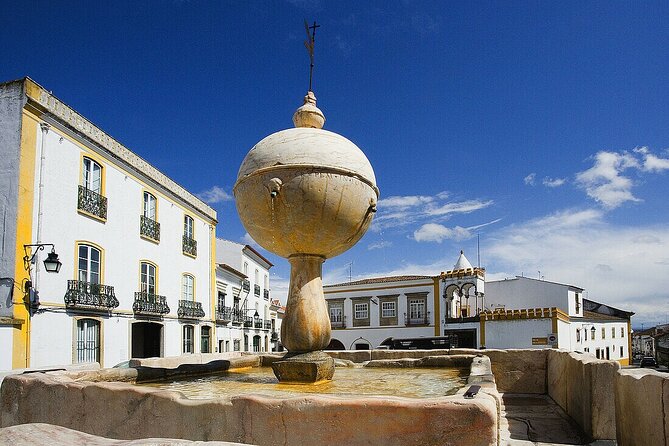
After the fortified alcove, you’ll come to a fountain presented as an early example of Mannerist art in Portugal. It was inaugurated in 1556, and the tour frames it as part of the city’s urban architecture and a sign of government power and progress.
The name behind that story is Cardinal D. Henrique, a major patron of Évora and also described here as the last king of the Avis dynasty. In other words, this isn’t just “pretty street art.” It’s a public statement in stone and water timing.
Next up is Igreja da Graça, a Renaissance architecture highlight that includes elements inspired by Mannerism. The guide connects the building’s facade and the famous boys of Graça story—details that can be easy to miss when you’re reading only the exterior.
This section of the tour is a reminder that Évora’s Renaissance wasn’t only about palaces and cathedrals. It was also about public identity, carved religious meaning, and the way a city announces who’s in charge.
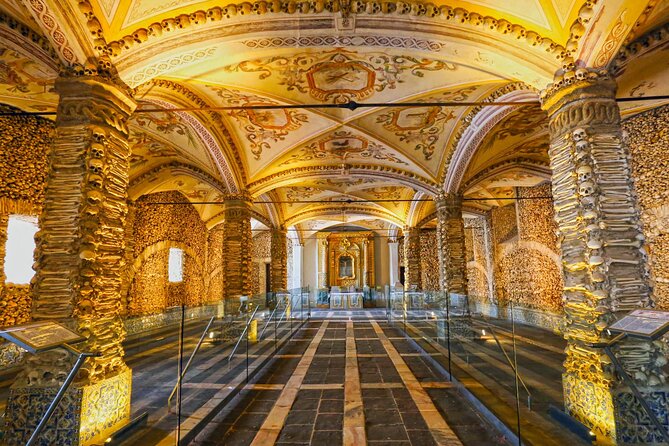
Chapel of Bones: macabre, but explained like culture
The Chapel of Bones (Capela dos Ossos) is the one stop many people come to for shock value. The tour does a better job: it gives you the framework so you understand why it exists and what it meant in its time.
You’ll enter a 17th-century chapel where the walls are covered with real human bones belonging to thousands of people who lived in Évora. And yes, there are famous lines associated with the bone church experience, but what you really get from this tour is the explanation behind the symbolism and the way the city turned death into a structured message.
One practical plus: admission tickets are included, so you don’t waste time negotiating entry. Another plus is pacing. The tour gives you enough time to look closely rather than zip past, and it’s the sort of stop where a good guide helps you avoid the “creepy only” trap. When it’s done well, it feels more thoughtful than sensational.
Igreja de São Francisco and the Dom Manuel complex: churches that acted like stages
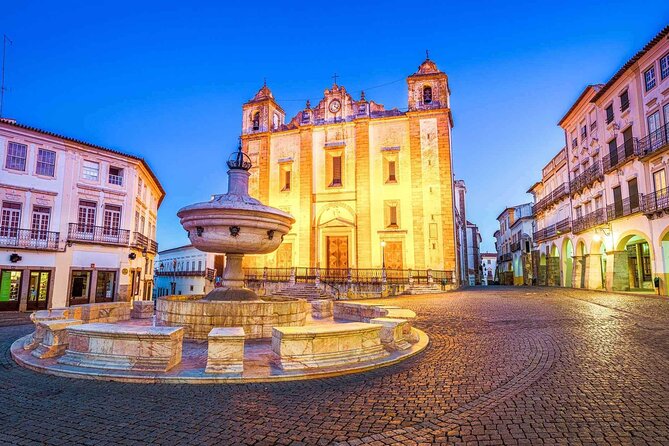
Then the tour moves into Igreja de São Francisco, known in the 16th century as the golden convent. The building is described as innovative for its time, built on an older Franciscan convent from the 14th century.
What makes this stop feel more than architectural sightseeing is the way the tour connects the church to real historical events. It’s framed as a royal church where royal weddings and baptisms took place, events described here as changing the course of Portuguese history and even the wider world.
From there, you’ll hear about Palacio de Dom Manuel. Today, only the Ladies’ Gallery remains, and it’s described as one of the most beautiful and romantic parts of the 16th-century complex associated with the golden convent. It’s a useful contrast: you’re not only seeing sacred space. You’re also seeing how power moved through domestic or semi-private areas tied to royalty.
Ruinas Fingidas: romantic ruins and a photo moment that makes sense
Next comes Ruinas Fingidas, a poetic setup using elements and ruins from a palace setting from the 16th century. The tour frames it as a romantic scene connected to late 19th-century romanticism.
This is one of those places where the guide’s job is part interpretation and part timing. If you want a good photo, the suggestion is to ask your guide to show you where to stand for the best picture angle. It’s a nice change from heavy history and gives your eyes a breather.
Even if you’re not chasing romantic art references, Ruinas Fingidas gives you a moment to “feel” Évora’s storytelling tradition—how cities like this preserve mood, not just dates.
Muralhas de Évora and Aqueduto da Água de Prata: defense walls to the 1537 water story
To close, the tour brings you to Évora’s impressive defensive walls. You’ll learn how the fortifications stretch across eras: Roman walls from the 3rd-4th centuries, followed by Visigoths and Muslims who were in the city from the 8th to the 12th century. Then come medieval walls from the 14th century, bastioned defense structures from the 17th century, and reinforcement in the early 19th century to sustain French troops during Napoleonic invasions.
This is a great “big picture” stop. It helps you stop thinking of Évora as one era and start seeing it as a place repeatedly rebuilt to survive new political realities.
And then you finish at Aqueduto da Água de Prata, the aqueduct of the Silver Waters. This is presented as the most iconic Portuguese civil work of the Renaissance. It opened in 1537 and stretches about 18 km. One of the best parts of the way the tour presents it is how the arches interact with houses built between them, turning infrastructure into an urban statement.
This ending works because it ties the earlier tour ideas together: power, planning, and the human need to control resources. By the time you reach the aqueduct, you’ve already walked through cathedrals, royal space, and defense walls. So the aqueduct feels like the logical next chapter, not a random add-on.
Price and value: what $105.26 buys you in real-world terms
At $105.26 per person for about 2 hours 30 minutes, this is not an impulse-price activity. It’s priced like a private walking tour with included entry tickets to two major attractions: the Cathedral and the Chapel of Bones.
That inclusion matters. These are two of the most in-demand sights in Évora, and the tour specifies that the Cathedral ticket covers not just the main church but also the cloisters and the roof. If you ever planned to do Évora on your own, you’d typically be buying separate tickets and then piecing together the story line yourself.
Also, private format helps here because the route is tight. You’re not losing time waiting for a bus or coordinating with strangers. And based on guide names that keep appearing in customer feedback—people like John, João, Paulo, and Elsa—you can expect a more personal pace with time for questions.
In plain terms: this tour is strongest if you want to get your bearings fast and understand what you’re looking at while you’re looking at it.
Who this Évora tour is best for
This is a strong match if you:
- want a guided introduction to Évora’s top monuments without building a full research plan
- like architecture, art details, and how political power shows up in buildings
- prefer a private pace where you can ask questions and keep moving at a comfortable speed
It’s also a good pick for first-time Évora visitors who only have a couple hours and don’t want to guess what to prioritize. And if you’re coming with family or a mixed-interest group, the private format gives the guide room to adjust the storytelling focus, which multiple guide names in customer notes suggest is a common strength.
Should you book this private walking tour?
Yes, if you want the clearest fast track to Évora’s big story. The included tickets alone (Cathedral roof access plus the Chapel of Bones) make it easier to justify, and the way the tour links Roman, medieval, Renaissance, and Inquisition-era themes helps the city feel like one connected place, not disconnected landmarks.
If you dislike guided history or you’re hoping for a slow stroll with long breaks, you may find the pace ambitious. But if you like walking with purpose and leaving with names, dates, and meaning tied to specific corners of town, this one is a very solid bet.
FAQ
How long is the Évora private walking tour?
It runs about 2 hours 30 minutes (approx.).
Is this tour private?
Yes. It is a private tour/activity, and only your group participates.
What language is the tour offered in?
The tour is offered in English.
What entrance tickets are included?
Entrance tickets are included for the Chapel of Bones and the Cathedral.
Are meals included?
No, meals are not included.
Where does the tour start?
The meeting point is the Giraldo Square Fountain, Praça do Giraldo 7, 7000-508 Évora, Portugal.
Is a mobile ticket provided?
Yes. A mobile ticket is included.
What fitness level is needed?
The tour is marked for travelers with a moderate physical fitness level.
Is free cancellation available?
Yes. You can cancel for a full refund up to 24 hours in advance of the experience start time.