REVIEW · PONTA DELGADA
Full Day Guided Tour to Furnas with Lunch Included
Book on Viator →Operated by Azores Magic Tours · Bookable on Viator
Furnas feels like a living science lab. This full-day guided loop pairs eight-person group time with the island’s best heat-and-water stops: caldeiras, boiling pits, tea plantations, Terra Nostra, and crater viewpoints. I especially like the relaxed pace—no frantic sprint between pullouts—and the fact that you’re dropped back at your hotel. One thing to consider: you’ll likely smell sulfur at several stops, and it can cling to clothes and swimwear.
The itinerary is built for people who want more than a drive-by. You get hotel pickup, English guiding, and a lunch that fits the area’s underground-cooking tradition. The day also mixes big natural sights with small-town texture, like Vila Franca do Campo, so you don’t just bounce between steaming rocks.
If you’re the type who hates crowds or wants room to actually walk and look, the group size is your friend. If you want zero outdoor time, plan for short walks and standing at viewpoints—this tour is hands-on, not couch-on-the-bus.
In This Review
- Key Things This Furnas Day Tour Does Really Well
- A Guided Route That Actually Makes Furnas Make Sense
- Hotel Pickup to Start Easy (and Stay That Way)
- Lagoa das Furnas: Stew Boilers, Lake Views, and How the Day Starts
- Porto Formoso Tea Factory and Plantations: A Sweet Change of Pace
- Caldeira das Furnas: Boilers, Fumaroles, and Mineral Water Tasting
- Terra Nostra Garden and Pico do Ferro: A Crater You Can Read
- Vila Franca do Campo: The Town Side of São Miguel
- Lagoa das Furnas Again: Cozido das Furnas in the Real Setting
- Caldeira das Furnas Finish: Sulfuric Sludge, Water Sources, and the Winter/Warmth Mood
- Miradouro de Santa Iria: North Coast Views and Tea Country
- What’s Included, What Costs Extra, and How to Decide
- Who This Tour Fits Best (and Who Might Want a Different Option)
- Should You Book This Furnas Tour?
- FAQ
- How long is the Full Day Guided Tour to Furnas?
- What time does the tour start?
- What’s the group size limit?
- Is lunch included?
- What entrances and activities are included?
- What is not included in the tour price?
- Do I get picked up from my hotel?
- Are tickets mobile?
- Is the tour in English?
- Does the tour run in poor weather?
Key Things This Furnas Day Tour Does Really Well
- Small group (max 8): easier conversations with your guide and more time at viewpoints
- Hotel pickup and drop-off: you avoid the hassle of figuring out logistics on the island
- Cozido and caldeiras in context: you see where the food happens, then where the geothermal magic works
- Tea factory stop: you get more than a photo—there’s a cup of tea and plantation time
- Two crater viewpoints: Pico do Ferro and Santa Iria help you understand what you’re seeing
- Lunch included with local style: a practical add-on that usually costs extra on other tours
A Guided Route That Actually Makes Furnas Make Sense
Furnas is geothermal São Miguel at full volume. The trick is understanding what you’re looking at—boilers, fumaroles, warm water, and the way the area feeds both daily life and local traditions. This tour’s value is that it doesn’t treat the caldeiras as a one-stop photo op. You get the story, the setting, and the timing.
The pace also feels intentional. You’re not stuck in a long drive with constant “next stop, next stop.” Instead, the stops are spaced so you can see, take a breath, and ask questions without yelling over engine noise. With a maximum of eight travelers, you tend to get real guidance rather than being one more face in a big bus.
Price-wise, $91.65 for roughly eight hours with pickup, lunch, water, and multiple paid entrances adds up quickly if you’d otherwise pay for transit and tickets. The optional add-on—Thermal Baths at Terra Nostra—costs extra, but you’re not forced into it.
You can also read our reviews of more guided tours in Ponta Delgada
Hotel Pickup to Start Easy (and Stay That Way)
You start at 9:00 am, with pickup offered from your hotel, accommodation, or an agreed pickup spot. That matters in the Azores. Distances are real, and “meet at a bus stop” plans can turn into stress. Here, your transportation is handled, and you end back at your lodging.
The tour uses a mobile ticket, and you get confirmation within 48 hours of booking (subject to availability). If you’re traveling with limited flexibility, that hotel-based start is a big deal.
You’ll also be traveling with an English-speaking guide. If you’re comfortable with English and you want clear explanations while you’re standing right next to the steam, this setup is ideal.
Lagoa das Furnas: Stew Boilers, Lake Views, and How the Day Starts
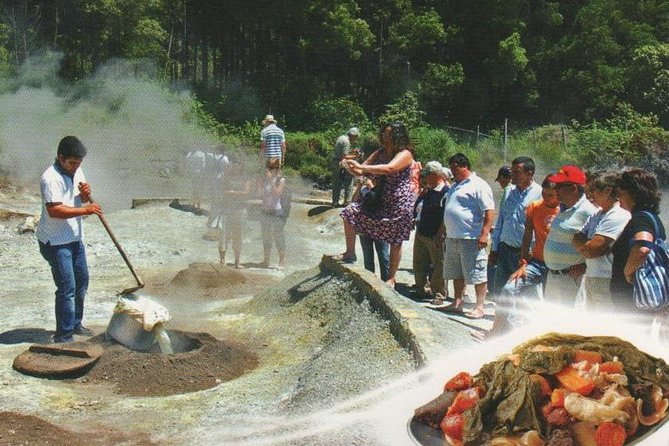
The first stop is Lagoa das Furnas, and it’s timed to give you that early “wait, this is still working?” feeling. You’ll see the stew process—how the area’s geothermal activity connects to local food—with a look at the lake and the boilers that power it.
Why this stop is worth starting with: it sets the mental map. Once you understand that Furnas cooks food using heated geothermal spots, later stops stop feeling random. You’re seeing one system repeat—heat rises, water circulates, and locals use it in everyday life.
You’ll spend about 30 minutes here, with an admission ticket included. It’s enough time to orient yourself and take in the lake setting without rushing.
Porto Formoso Tea Factory and Plantations: A Sweet Change of Pace
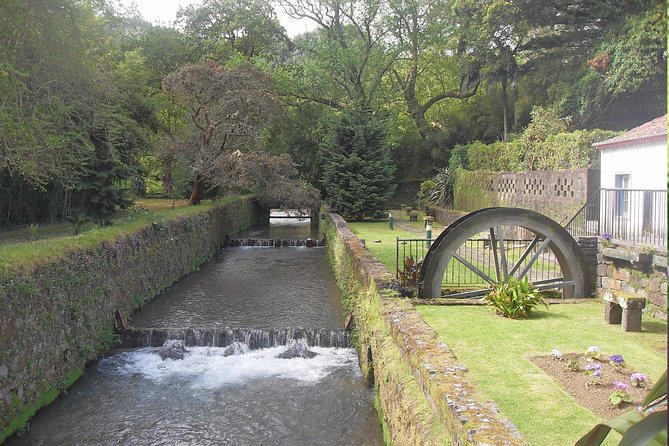
Then the tour shifts gears to Porto Formoso, where you visit the tea factory and plantations. You’ll also get a cup of tea as part of the experience.
This stop is a smart counterweight to the sulfur-heavy caldeiras. Tea grows in the island’s cool, misty conditions, and the guide can connect it back to São Miguel’s climate and land use. If you like food and farming stories, this is one of the more memorable “regular human” stops of the day.
Plan for about 45 minutes. Admission here is listed as free, and you can use the time to slow down before the geothermal intensity ramps up again.
Caldeira das Furnas: Boilers, Fumaroles, and Mineral Water Tasting
Next up is Caldeira das Furnas, one of the headline experiences. You’ll visit the boilers and fumaroles, and you’ll taste the mineral waters.
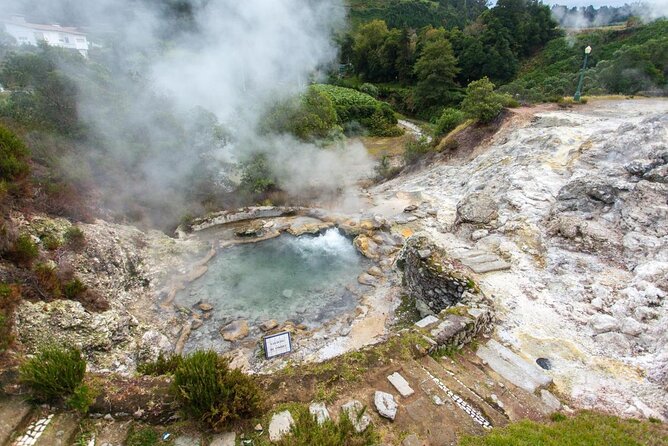
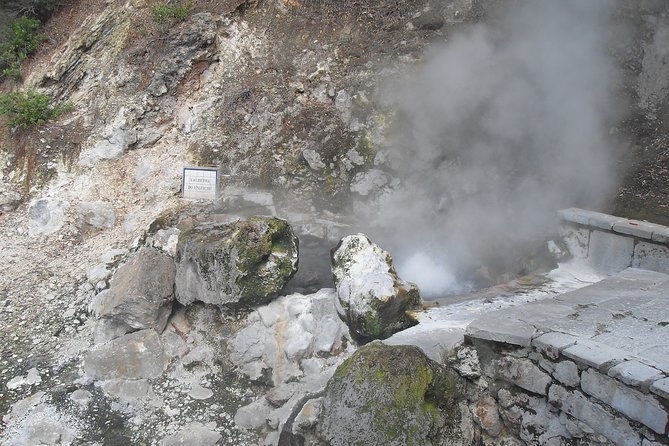
This is where Furnas stops being just pretty steam and starts being physical. Fumaroles are active vents, and the ground feels different—warmer, sometimes a bit steamy, often with a strong scent. The guide’s explanations help you understand why different springs and waters act differently here.
You’ll have about 30 minutes, with admission included. Quick note for your comfort: if you’re sensitive to smells, bring a mask or just keep a light sense of humor. The sulfur is part of the atmosphere, not a mistake.
A few more Ponta Delgada tours and experiences worth a look

Terra Nostra Garden and Pico do Ferro: A Crater You Can Read
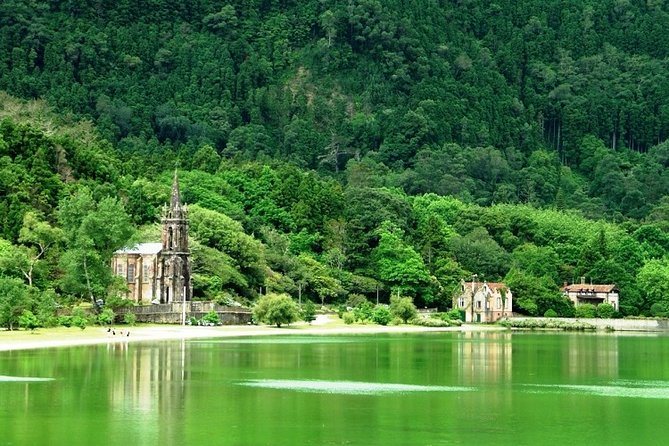
At Terra Nostra Park, you get the garden side of Furnas. The area has had a garden in the Furnas Valley for over 200 years, and it connects directly to the region’s water system. The guide-style explanation matters here: from the top of Pico do Ferro, you’ll realize the “valley” is actually a large crater—about seven kilometers in diameter—and it represents the last remains of an apparently long-extinct volcano.
This is also where the health-history context comes in. Furnas gained popularity toward the late 1700s because mineral waters were used to treat things like rheumatism and obesity. The area has many small springs and streams, each with different properties—so the health stories aren’t random folklore. They’re tied to how geothermal water behaves.
Your time at Terra Nostra is about one hour, and the garden admission is not included in the tour price.
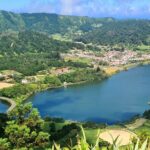
Then you move to Miradouro Pico do Ferro (around 570 meters altitude). This is the “okay, I get it now” viewpoint. You’ll look out across Vale das Furnas, with Lagoa das Furnas to the right and the valley opening to the left. It also gives you a wider view of surrounding mountains and the area’s walking routes (part of the municipality of Povoação’s walking list).
You’ll spend about 20 minutes here, with admission included. If you love views but hate long, steep hikes, this is a great compromise.
Vila Franca do Campo: The Town Side of São Miguel
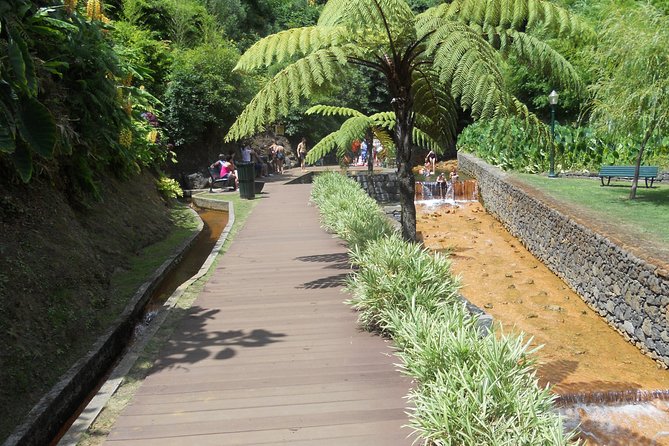
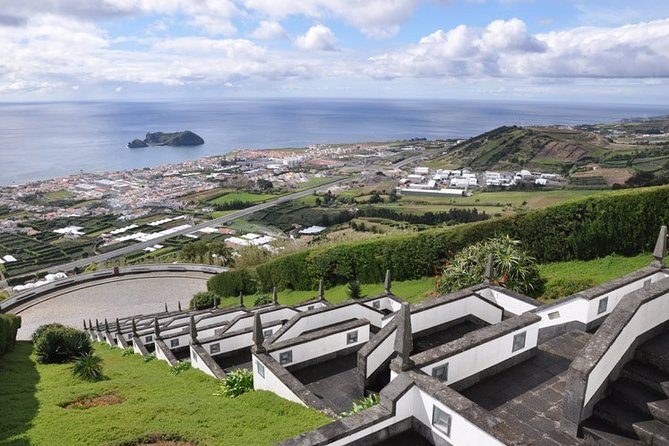
After all the geothermal drama, you’ll get Vila Franca do Campo, the island’s first capital, created in 1444. The town’s name connects to Vila Franca de Xira on the continent, because its founder, Vaz Botelho, came from there.
Then history turns darker: a major earthquake in 1522 buried much of the locality and caused thousands of deaths. The tour gives you the sense of a place that kept changing—capital status, then decline, then recovery.
You’ll have about 30 minutes. Admission is listed as free. This is a good spot for a short stroll, a photo of church architecture, and a calm break before you return to the Furnas cooking heart of the day.
Lagoa das Furnas Again: Cozido das Furnas in the Real Setting
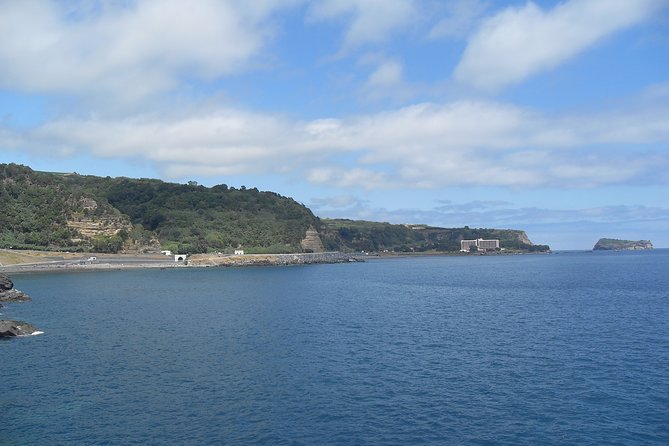
Yes, you visit Lagoa das Furnas twice—and that actually works. The second stop is focused on the tradition of Cozido das Furnas, where meats and vegetables are cooked in holes in the fumarole area and under the ground.
You spend about one hour here with admission included. By now, the earlier boilers and geothermal explanation make the food tradition feel practical, not magical.
If you’re a “food plus place” traveler, this is one of the best ways to experience the Azores without turning it into a staged meal. You’re seeing the cooking method’s environment as part of the story.
Caldeira das Furnas Finish: Sulfuric Sludge, Water Sources, and the Winter/Warmth Mood
Later in the day, you return to Caldeira das Furnas for another 30 minutes with admission included. This portion emphasizes the broader geothermal features: sulfuric sludge, many water sources (some hot, others temperate, some colder, and some gasified) rising side by side.
It’s also where you hear how medicinal uses have been connected to the region—medicinal sludge is generally used for respiratory tract disorders (especially allergic background issues), plus some circulatory, stomach, and nervous system-related conditions. Even if you don’t plan on using any treatments, it gives you a better reason for why Furnas became a health destination.
There’s also the daily-life angle: in summer you can taste corn cooked in the boilers; in winter, the area still has a special feel. Either way, it’s a “Mother Nature does her thing” kind of stop.
Miradouro de Santa Iria: North Coast Views and Tea Country
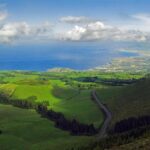
The last major viewpoint is Miradouro de Santa Iria, close to Porto Formoso on the outskirts of Ribeira Grande. From here, you can take in the north coast’s green character with the Atlantic blue beyond it, plus you’ll see how tea plantations shape the slopes.
There’s also a historical note: the viewpoint area is linked to the Battle of Ladeira da Velha on August 3, 1831, involving troops led by D. Pedro IV and D. Miguel, tied to events that ended the Civil War (between 1832 and 1834).
You spend about 30 minutes here, with admission included. It’s a great way to end the day: geothermal heat, then a cooler, wider coastal finish.
What’s Included, What Costs Extra, and How to Decide
Included in the price:
- Lunch (local style)
- Water
- Entrance at the tea factory
- Pickup and drop-off at your hotel
- Entrance to Lagoa das Furnas
Not included:
- Thermal Baths at Terra Nostra (optional) at €18.00 per person
- Airport pickup (if you need it) at €25.00 per booking
Here’s the practical value: lunch + water + multiple admissions + hotel pickup means you’re buying a complete day plan, not piecing it together. The optional Terra Nostra thermal baths are worth considering if you enjoy soaking. If you do, plan for scent transfer: sulfur can stick. Bring an old swimsuit you don’t mind smelling a little like science class for a day or two.
Who This Tour Fits Best (and Who Might Want a Different Option)
This tour fits best if you:
- Want an easy, guided day focused on east São Miguel geothermal sights and local food
- Like learning as you look—story helps you understand what caldeiras and crater viewpoints mean
- Prefer small-group pacing over big-bus rushing
You might want a different option if you:
- Can’t handle strong sulfur smells (many stops include active geothermal areas)
- Want more time in one place and less movement between viewpoints and towns
- Want pure beach time—this day is about furnas, tea, and viewpoints, not sunbathing
Should You Book This Furnas Tour?
If you’re visiting São Miguel and you want Furnas to feel like a real place—not just a stop—you’ll probably love this tour. The combination of small group size, hotel pickup, lunch included, and a route that explains the geothermal system makes it good value for a single full day.
Book it if you can handle outdoor time, you’re okay with sulfur smells, and you want the comfort of leaving driving to someone local. Skip it (or consider a custom plan) if your travel style is very “slow and only one area,” because the day covers a lot—even though the pacing stays relaxed.
One final practical note: the experience requires good weather. If conditions are rough, you may be offered a different date or a full refund.
Overall, this is a smart way to see Furnas properly, especially if it’s your first trip to São Miguel and you want the key sights connected by a clear story.
FAQ
How long is the Full Day Guided Tour to Furnas?
The tour runs for about 8 hours (approximately).
What time does the tour start?
The start time is 9:00 am.
What’s the group size limit?
The tour has a maximum of 8 travelers.
Is lunch included?
Yes. Lunch is included, along with water.
What entrances and activities are included?
Entrance at the tea factory is included, and entrance to Lagoa das Furnas is included.
What is not included in the tour price?
Thermal Baths at Terra Nostra are optional and cost €18.00 per person. Airport pickup is also not included and costs €25.00 per booking.
Do I get picked up from my hotel?
Yes, pickup is offered from your hotel or accommodations (or anywhere you match for pickup).
Are tickets mobile?
Yes. You receive a mobile ticket.
Is the tour in English?
Yes, the tour is offered in English.
Does the tour run in poor weather?
The experience requires good weather. If it’s canceled due to poor weather, you’ll be offered a different date or a full refund.