REVIEW · FARO
FOUR SENSES: The Immersive Experience in the Dark – Faro
Book on GetYourGuide →Operated by FOUR SENSES · Bookable on GetYourGuide
Total darkness can be scary in theory. But this Faro experience turns it into learning you can feel in your body. I love how the four-senses rooms make you slow down and pay attention, and I love the stories from guides like Carlos and Ricardo that give meaning to every puzzle. One possible drawback: you’re in the dark for about an hour, and it may feel mentally demanding if you’re claustrophobic or easily stressed.
This isn’t a show you watch from the outside. You move through a structured circuit with a blind guide and cane, and the rules are strict so your senses stay the main characters. In a small group capped at 6, it’s designed to be personal, not crowded, which is great for most people.
In This Review
- Key things to know before you go
- Why Faro in the Dark Makes Sense
- Rules That Protect the Experience (and Your Focus)
- Your First Minutes: Orientation, Then Control by Your Senses
- The Circuit: How Each Room Feels Like a New World
- Touch: When Your Hands Become Your Map
- Smell: Aromas That Tell You Where You Are
- Hearing: The World Moves Even When You Can’t See It
- Taste: A Sense Often Forgotten Until It’s Gone
- Cane Navigation and Real-Life Scenarios: The Stories Behind the Sense Test
- The End in the Dark: Free Drink, Q&A, and a Group Photo
- Who This Faro Experience Fits Best (and Who Should Skip It)
- Price in Context: Is $30 Good Value?
- Tips to Make Your Hour Go Smoothly
- Should You Book FOUR SENSES in Faro?
- FAQ
- How long is the FOUR SENSES experience in Faro?
- What’s included with the ticket?
- Are cameras and phones allowed during the experience?
- Is there an age limit for children?
- Is it suitable for pregnant women or claustrophobia?
- What languages are offered and how big are the groups?
Key things to know before you go
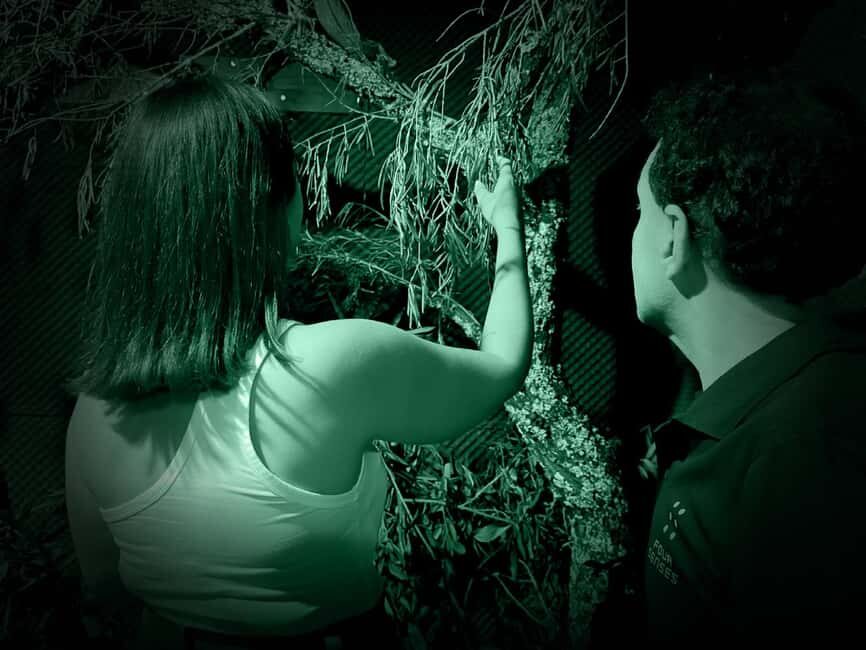
- Total dark circuit: the experience centers on what you sense without sight, using your hands, ears, nose, and taste cues.
- Small group size (max 6): you’ll likely get more attention than in big-group attractions.
- Cane + blind guide: you’ll practice real navigation habits used in daily life, with steady support.
- Themed scenarios and puzzles: you’re not just feeling around; you’ll interact and solve simple challenges.
- Free drink at the end, still in the dark: you get a breather plus Q&A time with your guide.
- No phones, cameras, or light devices: the rules protect the darkness for everyone.
Why Faro in the Dark Makes Sense
Faro is a good base for a sensory reset. The old-city vibe plus seaside air helps you arrive calm, then the tour strips away the one sense you rely on most.
The “what” is straightforward: you walk through iconic city spaces while sight is removed, and the other senses take over. The “why it matters” is the bigger story. After this, you tend to notice how often daily life is built for sight first, and how inclusive design can be as simple as sound cues, textures, and guidance.
You’re also learning from people who live with low vision every day. That’s what turns the hour from a gimmick into something you remember.
You can also read our reviews of more tours and experiences in Faro.



Rules That Protect the Experience (and Your Focus)
This is one of those activities where the instructions aren’t there to spoil your fun. They’re there to keep the darkness real for you and for everyone else.
Plan on arriving about 15 minutes early. Being late can mean you lose your ticket, and nobody wants to rush into darkness without a proper start.
You can’t bring cameras or any electronic devices, including cellphones and smartwatches. You also can’t use anything that emits light inside the circuit, so leave even “low light” distractions at home. Lockers are available at reception for personal items, and you’ll want to use them so you’re not juggling bags.
Two more practical notes:
- No bare feet. Wear comfortable, closed-toe shoes.
- No outside food or drink during the circuit. You’ll get the included drink at the end.
Your First Minutes: Orientation, Then Control by Your Senses
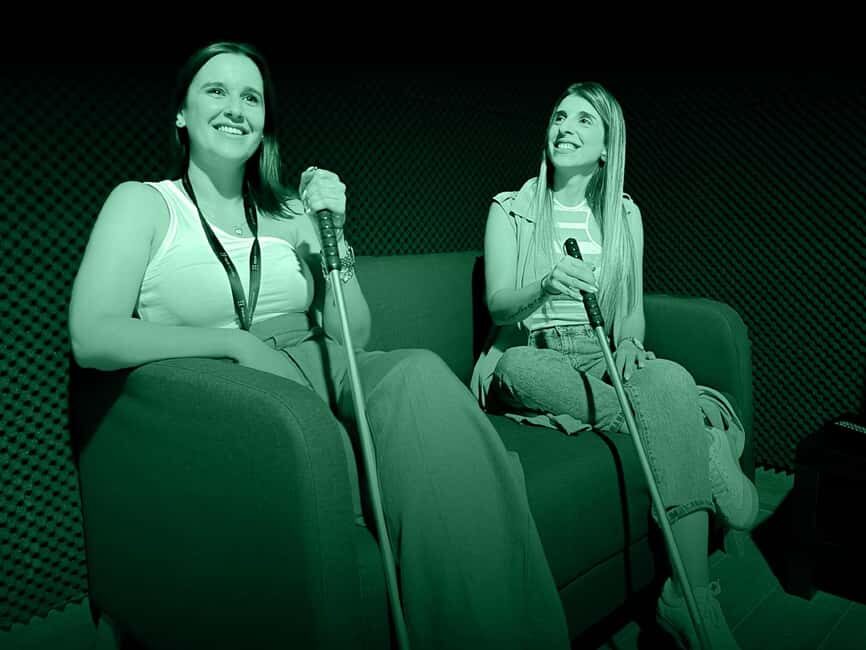
The tour starts by getting you ready for the rules, the layout, and what your body will need to do. In the dark, the first few minutes set the tone. If you’re anxious, that’s where the guide’s calm voice matters most.
You’ll go through the circuit with a blind guide and a cane. Even if you’ve used a cane before, you’ll still have to adjust to unfamiliar textures, sounds, and distances. The guide helps you make sense of what’s around you, step by step.
This is also where the human part begins. Guides are visually impaired, and they share context and real-life stories, not just directions. Names you may hear in the group include Carlos and Ricardo, and they explain how acceptance and independence show up in daily routines.
The Circuit: How Each Room Feels Like a New World
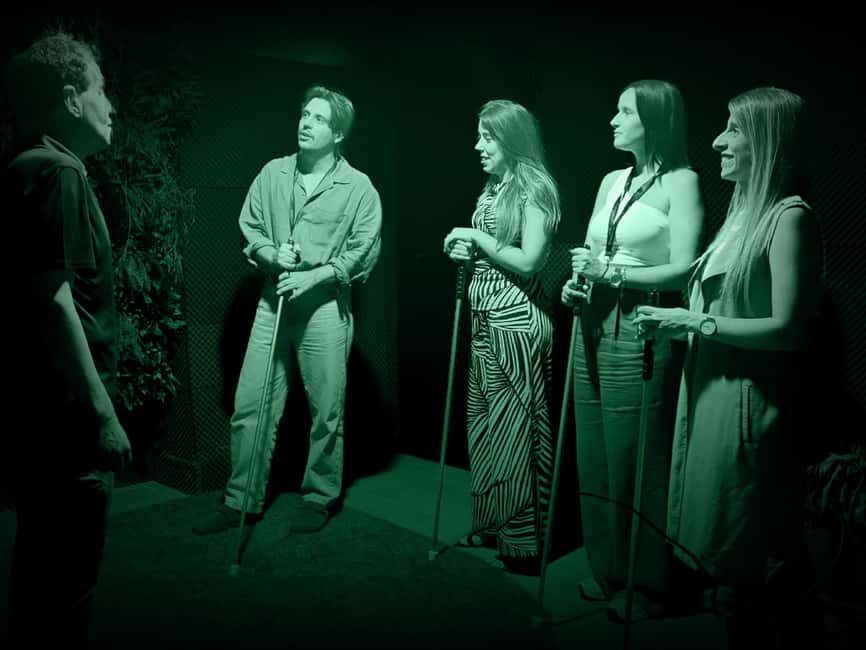
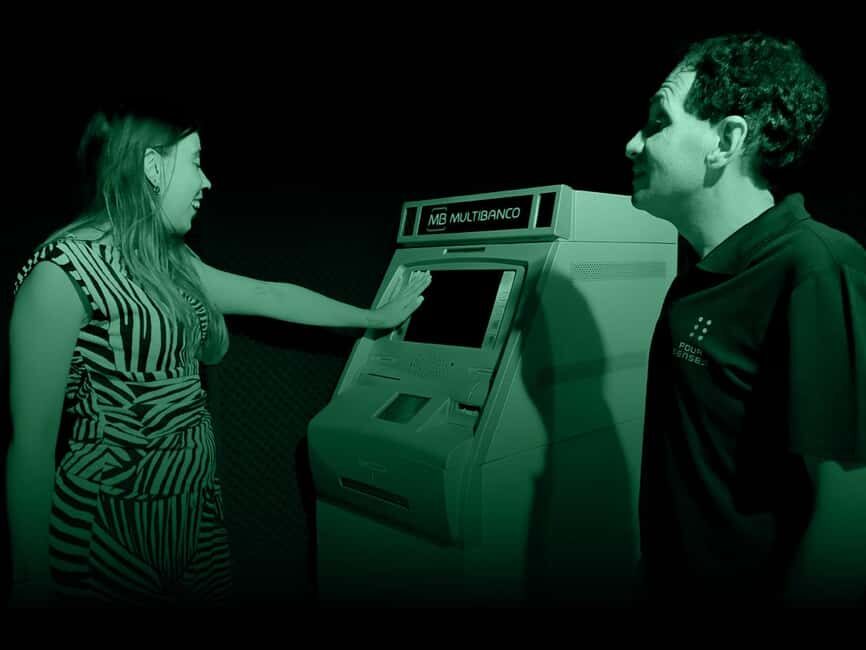
The main event is the walk through themed spaces where sight is removed and interaction becomes the point. You’ll encounter scenarios built to stimulate touch, smell, hearing, and taste, with puzzles and sensory tasks designed to keep you engaged.
Touch: When Your Hands Become Your Map
Touch isn’t just for feeling things randomly. The rooms are set up so textures give information. You’ll notice how surfaces change, how objects are placed, and how your body learns to “read” the environment through pressure, shape, and resistance.
A small but important detail: this kind of touch-based navigation helps you understand how a blind person can move confidently without sight. You start to realize that confidence comes from repeated orientation, not luck.





Smell: Aromas That Tell You Where You Are
Smell is the sensory shortcut you didn’t know you needed. The experience includes scented elements where you’re encouraged to identify aromas as part of the learning.
One of the most practical lessons is how smell can replace visual expectations. You might recognize a scent before you can form a mental image of the place.
Hearing: The World Moves Even When You Can’t See It
Sound in the dark isn’t just background. You’ll use it to track space, understand distance, and follow the guide’s cues.
Guides also share stories and explanations verbally, which keeps you connected to meaning rather than just sensory effects. When hearing leads, the whole experience feels more like communication and less like “guessing.”
Taste: A Sense Often Forgotten Until It’s Gone
Taste comes in during the circuit, connected to sensory challenges. While the exact elements can vary by room, the goal stays consistent: you’re learning how blind daily life uses all available inputs, not one primary sense.
And yes, after a while you may feel mentally drained. That’s normal. Your brain is doing extra work, and it’s easy to over-focus.
Cane Navigation and Real-Life Scenarios: The Stories Behind the Sense Test
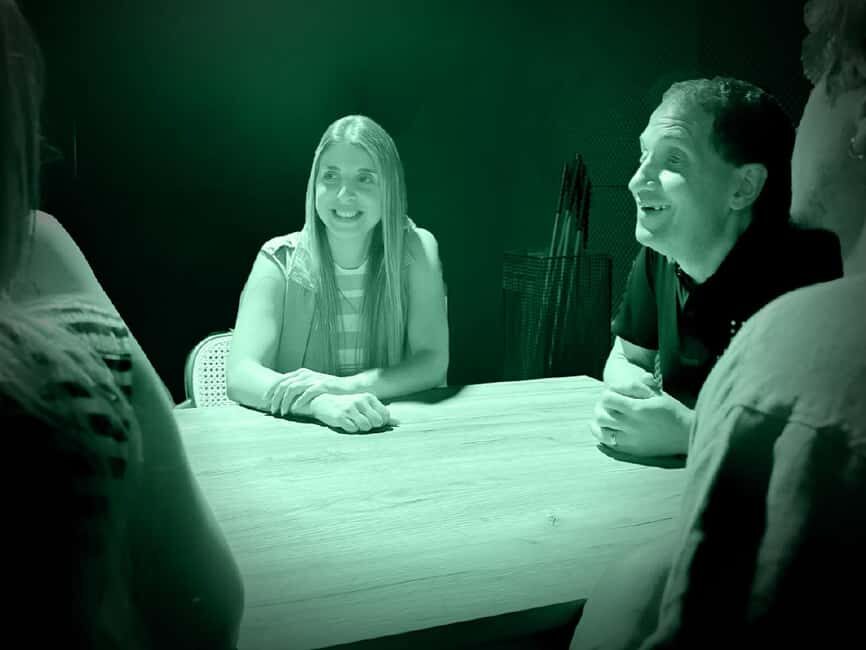
The tour isn’t only sensory play. It’s structured around realistic routines and the practical habits involved in moving through everyday life.
You’ll follow a cane-support approach that teaches you how to probe space safely. The guide’s role is to help you avoid panic and turn uncertainty into manageable choices: where to place your feet, how to slow down, how to trust verbal cues.
This is also where you’ll get the most emotion. In the guides’ stories, you hear what daily navigation looks like beyond the hour-long “activity.” Guides you might meet include Carlos and Ricardo, and there are also mentions of hosts like Andreia welcoming groups at the start.
The point isn’t to make you feel guilty. It’s to make you aware. After you’ve felt how hard it is to orient without sight, you start paying attention to how other people experience the same street differently. That shift is what people mean when they say the experience changes how they see themselves and others.
The End in the Dark: Free Drink, Q&A, and a Group Photo
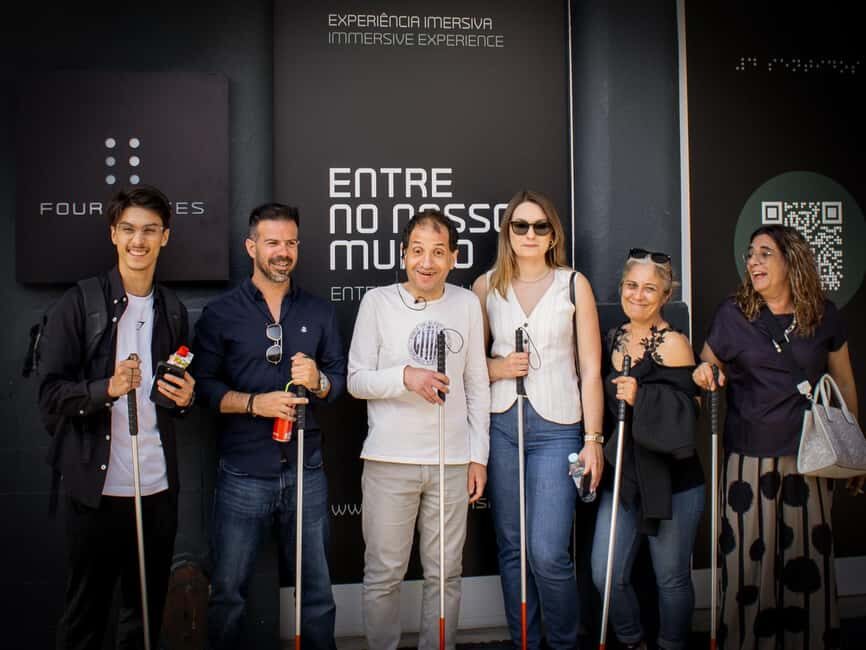
When you finish the circuit, you don’t rush out. You stay in the dark for a drink by the sea with your group. That’s a smart choice because it gives your mind a moment to land.
This is your chance to ask questions and talk to your guide. Guides often use this time for open, human dialogue, and the explanations can turn sensory moments into something you understand deeply.
A final group photo happens after the tour. Since cameras aren’t allowed during the circuit, this gives you a clear memory of the experience without breaking the darkness rules.
One consideration to keep in mind: if you book solo, the conversation may feel a little uneven when questions run out. It’s not a deal-breaker, but if you want more back-and-forth, going with at least one friend can make the end feel warmer.
Who This Faro Experience Fits Best (and Who Should Skip It)
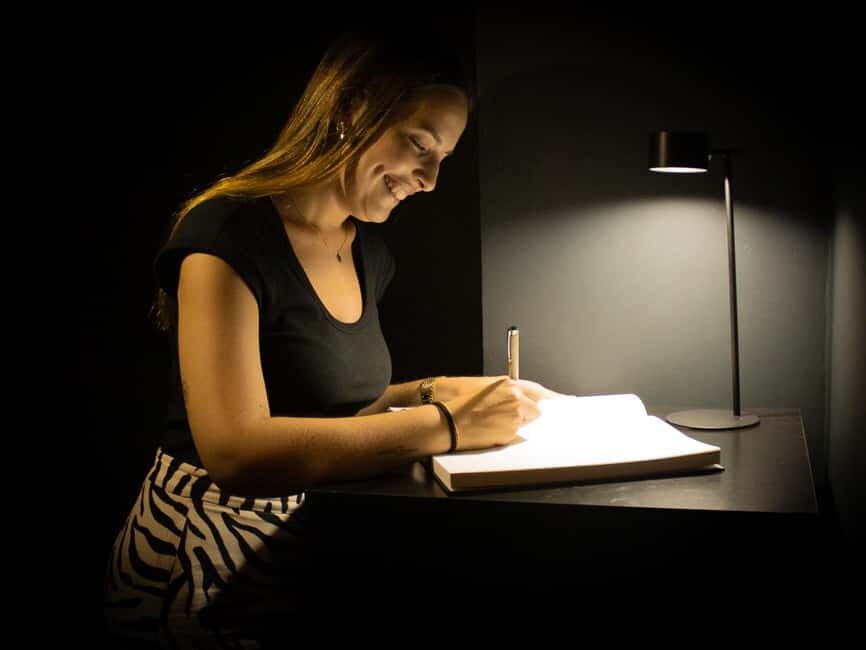
This is perfect for people who like hands-on learning and meaningful challenges. It works well for families or groups, especially if everyone is comfortable with a shared sensory “reset.”
Here’s what the experience is generally a good match for:
- Families with kids old enough to follow instructions and stay calm in the dark
- Groups of friends looking for something different from the usual Faro beach and seafood routine
- Anyone curious about how blind people navigate daily life using multiple senses
And here’s who should be careful or avoid it:
- Children under 6: not suitable
- Kids 6 to 12: must be accompanied by an adult
- Pregnant women: not recommended
- People with claustrophobia: not suitable
- People with low level of fitness: not suitable
If you’re unsure, trust your instincts about how you handle darkness and tight-feeling spaces. The tour is built to change your perspective, but it still requires comfort in a controlled environment.
Price in Context: Is $30 Good Value?
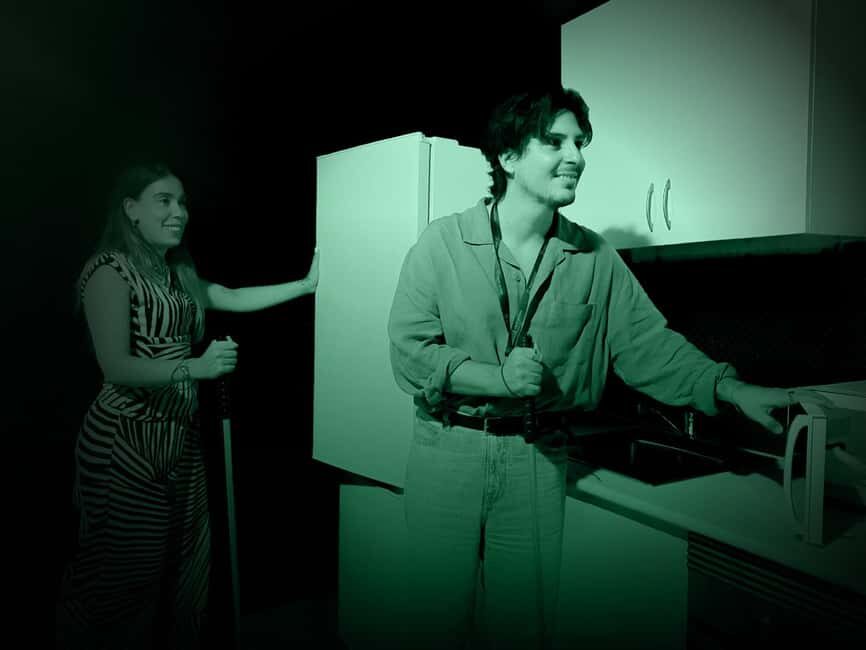
At about $30 per person and roughly 45 to 60 minutes inside the experience (about 1 hour total), the price lands in a sweet spot for a special activity in Faro.
What you’re paying for isn’t just “a walk in the dark.” You’re paying for:
- Small group attention (max 6 participants)
- Expert guides who live the reality, not actors
- Multi-sensory room design and a structured circuit
- A free drink included at the end
- A group photo to capture the moment without compromising the dark
In other words, this is closer to an educational guided experience than a standard ticket attraction. The emotional impact is part of the value, and the guides’ stories make it feel earned, not staged.
Tips to Make Your Hour Go Smoothly
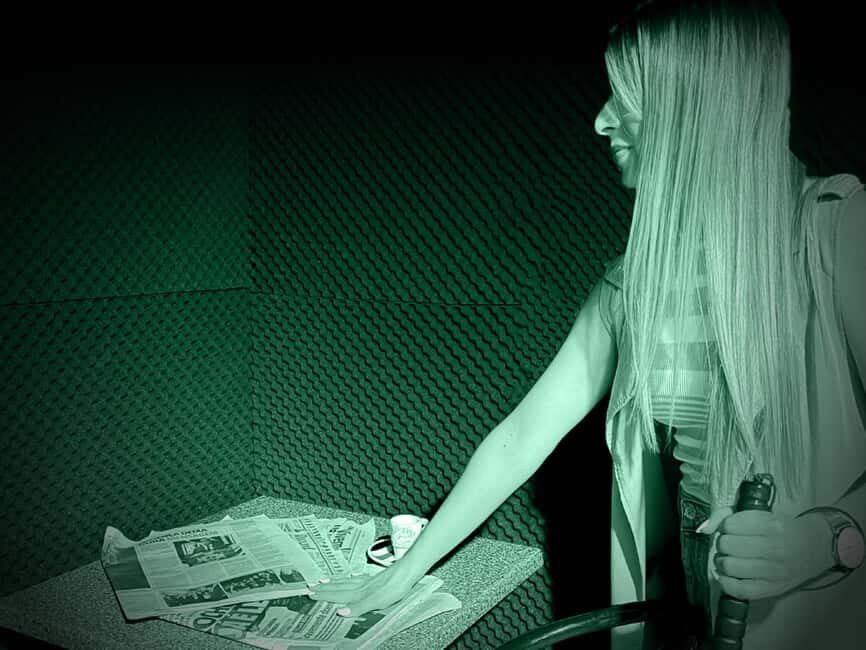
If you want this to feel empowering instead of stressful, a few prep choices help a lot.
- Arrive early and take your time at reception. You don’t want your start to feel rushed.
- Wear closed-toe shoes. Comfort matters because you’ll rely on feet placement and stability.
- Leave all electronics at home. The rules are strict for a reason, and you don’t want to lose time finding out last-minute.
- If you tend to get anxious in the dark, go in with a plan: focus on sounds, textures, and the guide’s voice rather than trying to “picture” the space.
- Consider booking with a friend if you’re solo. The Q&A at the end can be more satisfying with more people to bounce questions off.
Also, mentally adjust for being drained afterward. The experience challenges your brain’s default settings. That’s normal, and it’s usually the sign your senses were truly engaged.
Should You Book FOUR SENSES in Faro?
Book it if you want a Faro activity that teaches through experience, not just information. The four-sense rooms, the cane navigation with a blind guide, and the chance to talk with guides after the walk are the reasons this works. The small group size makes the hour feel personal rather than rushed.
Skip it if you know the dark environment will spike anxiety, or if you fall into the clearly listed categories like claustrophobia or pregnancy. Also, if low mobility is a concern, check your comfort level before you commit.
If your goal is a meaningful, human experience in the Algarve that goes beyond typical sightseeing, FOUR SENSES is an easy yes. It’s the kind of tour that makes you pay attention on the way in—and keeps that attention with you long after you leave.
FAQ
How long is the FOUR SENSES experience in Faro?
The immersive circuit lasts about 45 to 60 minutes, and the overall duration is listed as 1 hour.
What’s included with the ticket?
The ticket includes the immersive experience, a free drink included in the circuit, and a group photo at the end of the visit.
Are cameras and phones allowed during the experience?
No. Cameras, cellphones, smartwatches, and any electronic device that emits light are not allowed during the circuit.
Is there an age limit for children?
It’s not for kids under 6. Children aged 6 to 12 must be accompanied by an adult.
Is it suitable for pregnant women or claustrophobia?
No. The experience is listed as not suitable for pregnant women and not suitable for people with claustrophobia.
What languages are offered and how big are the groups?
The guides/instructors speak French, Spanish, Portuguese, and English, and the group size is limited to 6 participants.