REVIEW · LAGOS
Dolphin and Whale Watching in Lagos
Book on Viator →Operated by Lagos Grotto Trips · Bookable on Viator
Cetaceans off Lagos can show up fast. This boat outing takes you out over the Atlantic near the Algarve coast to look for dolphins and other species in their natural world. You cruise on a comfortable rigid inflatable boat, and you’re guided to the best viewing areas rather than just going in circles.
I especially like the hands-on guide searching. The team aims for spots where sightings are more likely, and they tend to keep your time focused once animals appear. I also like the small-group feel (max 18), which makes it easier to hear instructions and move your eyes fast when a fin breaks the surface.
One thing to consider: wildlife sightings aren’t guaranteed. If the animals aren’t around, you may spend more time scanning open water and get shorter looks than you hoped.
In This Review
- Key things to know before you go
- Why the Atlantic off Lagos is a great place to look for dolphins
- The RIB ride: fast, close to the water, and worth dressing for
- The 11:30 am start and how it shapes your whole day
- What you actually do at sea: scanning, repositioning, and quick moments
- How the guide helps you spot dolphins and whales fast
- Comfort and safety on the water: what “moderate fitness” really means
- Dealing with the one big unknown: wildlife sightings
- What the best sightings tend to feel like
- Price and value: what you’re paying for (and what you’re not)
- Tips that make a dolphin and whale watch trip smoother
- Who should book this tour (and who should skip it)
- Entering Lagos: getting to Passeio dos Descobrimentos
- Should you book dolphin and whale watching in Lagos?
- FAQ
- What time does the Lagos dolphin and whale watching tour start?
- Where is the meeting point?
- What boat will you ride on?
- Are the tours offered in English?
- What marine animals might you see?
- Is dolphin and whale watching guaranteed?
- How many people are on the tour?
- Is the activity suitable for children?
- What fitness level do you need?
Key things to know before you go
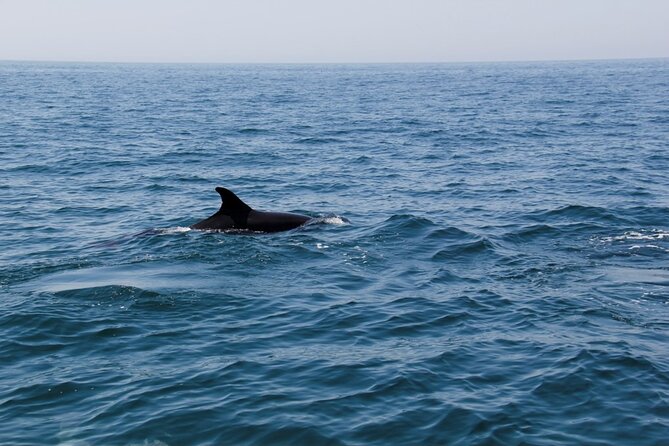
- RIB boat experience: You’re on a rigid inflatable (RIB), built for speed and stability over the Atlantic chop.
- English-speaking guidance: The experience is offered in English, with a guide who helps you read the sea for signs of cetaceans.
- Typical species you may see: Common dolphin, bottlenose dolphin, harbor porpoise, and Risso’s (whale) are among those mentioned for the area.
- A guide-led search, not a fixed show: You go to where the sea life is likely to be, and plans can shift depending on sightings.
- Late morning start: The 11:30 am timing gives you room for a slow morning and an unhurried start to the day.
- Moderate fitness needed: You should be able to handle time on the water and movement on a boat deck.
Why the Atlantic off Lagos is a great place to look for dolphins
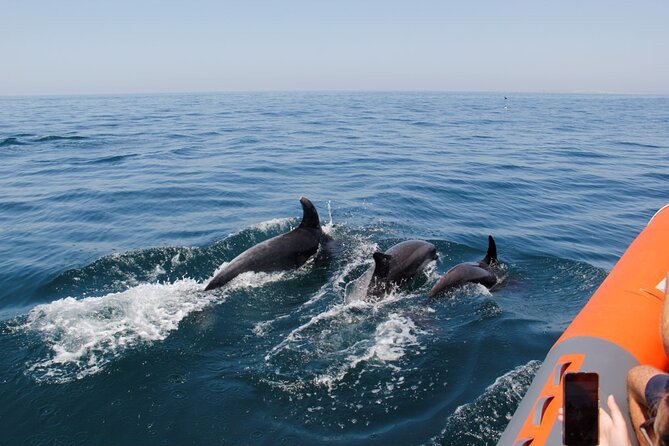
Lagos sits right where the Atlantic meets the Algarve coast, and that mix of coastline and open water is exactly what cetaceans use. This tour heads outside the Algarve line, where the feeding and movement patterns that dolphins and other species follow are more likely to show up.
You’re not just chasing a view from shore. Once you’re on the water, you get a wider perspective and more angles, which matters because dolphins rarely arrive like clockwork. They can surface briefly, then disappear, so the boat’s mobility helps you stay in the game.
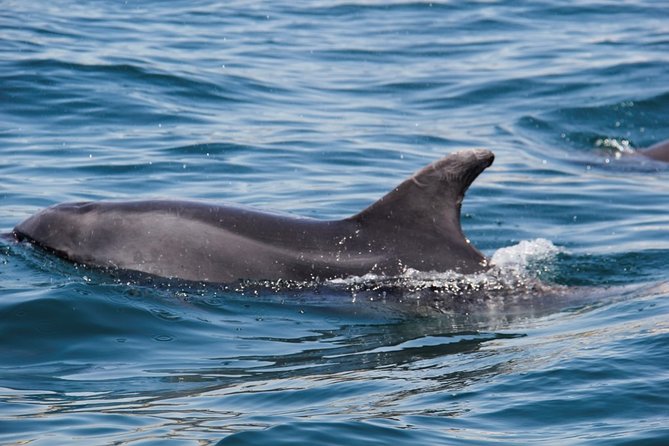
Also, the species list for this region is encouraging. You might spot common dolphins, bottlenose dolphins, harbor porpoises, and Risso’s dolphins/whale-type sightings are among the “can usually be seen” options mentioned for this area. That variety is a big part of the fun, because each species tends to move and behave a bit differently.
You can also read our reviews of more tours and experiences in Lagos.
The RIB ride: fast, close to the water, and worth dressing for
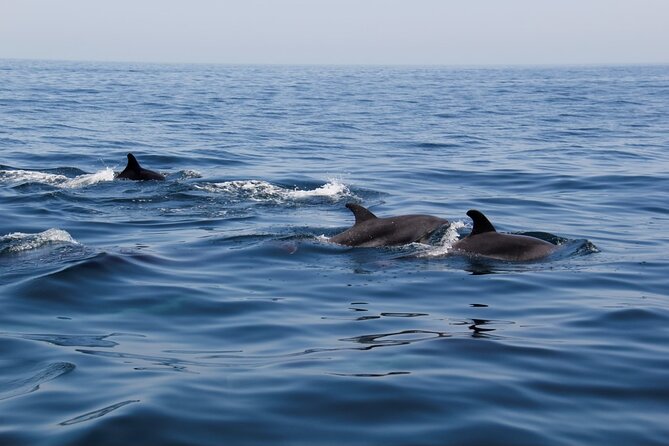
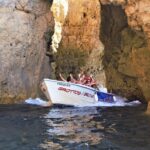
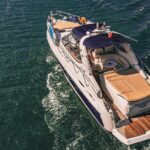
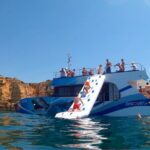
You’ll ride in a rigid inflatable boat, described as a new RIB called Aftermath. In plain terms, expect a boat that feels more “out on the ocean” than a slow sightseeing craft. If you’re used to calm harbor cruises, this one can feel more intense once you’re underway.
That’s not automatically a bad thing. A RIB can reach the right spots quickly, and it helps you cover water where dolphins might be moving. It also tends to keep you closer to the action, which is great for spotting fins early and getting photos before everyone is scrambling.
Still, keep your expectations realistic about comfort. One traveler noted the speedboat ride felt a little scary for them, even though the dolphins made up for it. So if you’re sensitive to motion or you don’t like speed on water, plan accordingly.
Dress like you’ll get sea spray. Even when the day is clear, the boat motion and mist can catch you. Bring layers you can manage, not heavy bulky stuff that becomes annoying once you’re standing and craning your neck.
The 11:30 am start and how it shapes your whole day
This tour begins at 11:30 am and lasts about 1 hour 30 minutes. The late morning start is a smart choice for travelers who don’t want to burn their vacation energy before noon. You get enough time for a slow breakfast, a walk around Lagos, or just taking your time with your hotel checkout.
It also helps if you’re traveling with family or anyone who prefers not to feel rushed. Your morning can stay flexible, and then you focus on one clear activity: the boat outing and the search for cetaceans.
Practical tip: use the calm time before departure to prep your photo setup. Once you’re out on the water, you’ll want to move quickly, so having your phone/camera ready in a pocket you can access without fuss is a small detail that pays off.
What you actually do at sea: scanning, repositioning, and quick moments
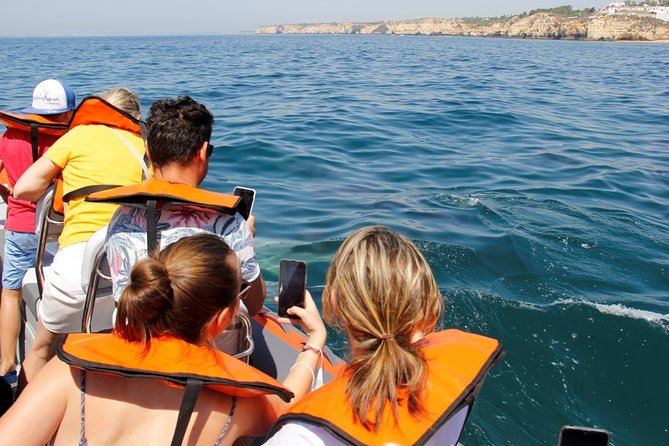
Here’s the key idea: you’re not watching a performance. You’re watching the ocean, and it changes minute by minute. Your guide takes you to spots where cetaceans have a better chance of being around, but the animals still decide when they show up.
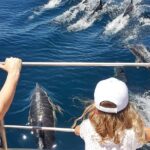
The typical experience is a cruising search near the Algarve coast, just outside the Algarve line. The boat goes out into the Atlantic, then you scan for signs: surfacing movement, quick breaks at the surface, and body shapes that appear for a second before they vanish again.
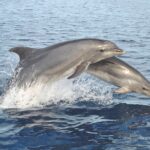
Dolphins are popular for a reason. They’re often curious and playful, and they can be easy to enjoy even in short sightings. When the action starts, it’s usually not a long steady stream like a movie. It’s more like a set of brief appearances—then repositioning—then another look.
One balanced takeaway from real experiences: sometimes the team gets lucky quickly and gives you time to enjoy the sighting. Other times, the dolphins may not arrive as expected, and the crew may move to another location to keep searching. That’s the nature of wildlife watching, and it affects how long you get to watch once you find them.
How the guide helps you spot dolphins and whales fast
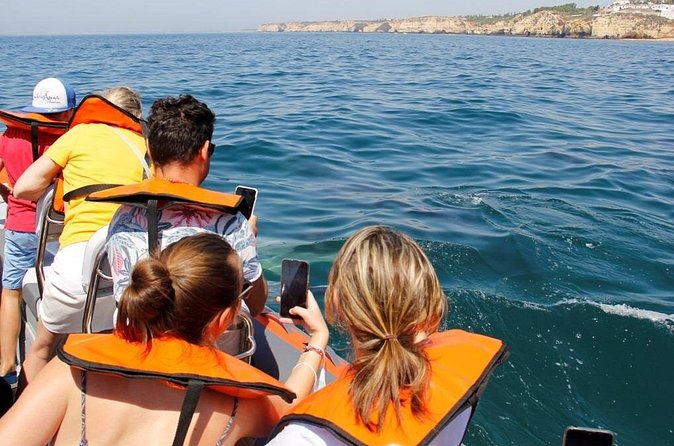
A big value here is that you’re not working blind. The tour is led by experienced guides who know the best spots to watch for marine life. That matters because spotting cetaceans is mostly a skill: knowing where to look, how to interpret movement, and when to keep scanning even if nothing seems obvious.
A helpful detail is that you’ll be looking for multiple kinds of cetaceans, not just dolphins. The tour mentions common dolphin, bottlenose dolphin, harbor porpoise, and Risso’s, and that variety means your eyes need to stay flexible. Sometimes you’ll catch dolphins first, other times the signs might be different.
One practical tip I like to follow on these trips is simple: look everywhere, not just in front of the boat. Dolphins can surface on either side and pop up behind you too. A good guide-led search helps you avoid missing those surprise appearances.
Also, when a sighting happens, you don’t want to be the person fumbling for the camera. Keep your readiness up. Once the guide calls something out, you’ll have only a short window before the animals move away.
You can also read our reviews of more dolphin watching tours in Lagos
Comfort and safety on the water: what “moderate fitness” really means
The experience calls for moderate physical fitness. That’s a polite way of saying you should be comfortable standing and shifting your weight on a moving deck. It also means you should be okay with being on open water for the length of the trip.
This matters most if you’re bringing anyone who gets uncomfortable on boats. If you have mobility issues, severe seasickness, or you’re not steady on your feet, this may not be the right fit.
It’s also not recommended for children under 4 years old. Even if a small child seems fine on land, the combination of wind, motion, and time outdoors can be a lot.
I’d also pay attention to clothing and balance. Wear shoes with grip. Avoid flip-flops. You want the kind of traction that keeps you stable when the boat hits waves.
Dealing with the one big unknown: wildlife sightings
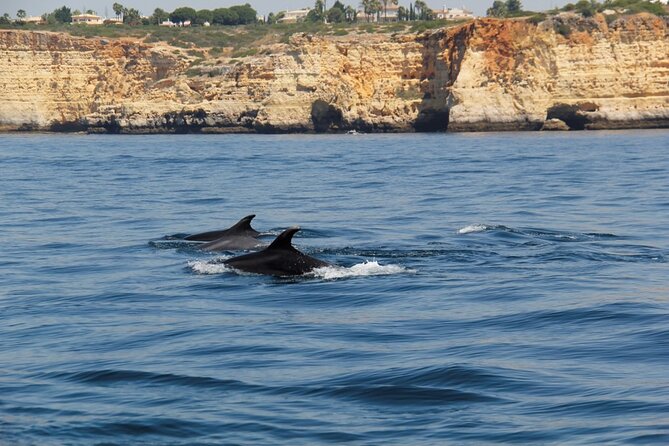
Wildlife watching has one built-in reality: you can do everything right and still not see the animals you want. Even with a guide who knows the best spots, cetaceans are free-ranging and can change their behavior quickly.
So what happens in the real world? Sometimes you get great sightings quickly and the crew helps you stay with the animals long enough to enjoy them. Other times, the animals don’t show up, and you end up searching longer with fewer sightings.
That variability is the trade-off for being on a real ocean expedition instead of a managed attraction. I’d rather be honest with you about that now, because dolphin watching works best when you treat it like a chance to observe nature, not a guaranteed guarantee.
If you go with a flexible mindset, you’ll still enjoy the experience. Even short sightings can be memorable when you’re prepared and fully focused on the sea.
What the best sightings tend to feel like
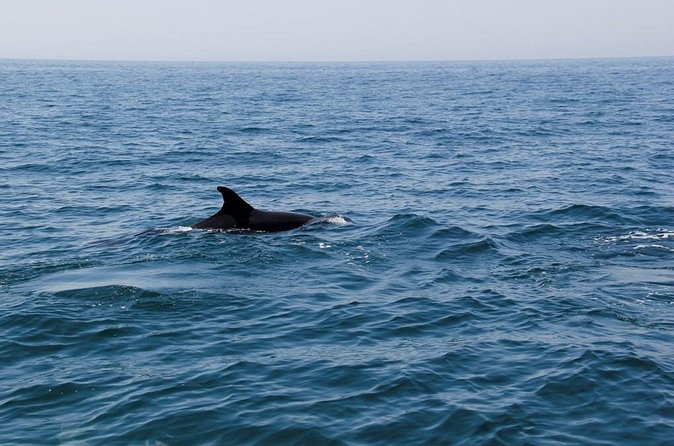
When it goes well, the tour becomes a sprint of excitement in a good way. You’ll see movement, then someone spots a fin, then the boat’s focus shifts—eyes up, camera ready, patience for the next surfacing.
Dolphins are often playful and fast. That can mean you get repeated sightings rather than one long view. The energy of the moment is part of why this kind of tour earns such strong ratings.
One traveler described a situation where the team waited until dolphins were seen even as time was running out. That’s exactly the kind of service I appreciate: practical decisions to give you your best chance once the animals appear.
And for families, it can be a great activity because there’s always something to watch: the boat, the coastline, the horizon, and then the sudden flash of marine life.
Price and value: what you’re paying for (and what you’re not)
You’re paying for a few things that go beyond “getting on a boat.” You’re paying for the boat itself (a RIB designed for moving on the Atlantic), plus the guide’s effort to find likely viewing areas, plus the small-group setting up to 18 people.
You’re also paying for time on the water out where the chances improve. If you only stayed in Lagos harbor or watched from the shore, you’d miss the broader search range that this trip offers.
Now, the part to be clear about: the value depends on whether you get sightings during your window. Because the ocean decides when wildlife appears, you could have a shorter or lighter experience than hoped. That’s not a scam. It’s the nature of the product.
If you want a high chance of seeing cetaceans, the best move is to go in with realistic expectations, pick a clear weather day, and plan to enjoy the cruise even if your first spotting takes time.
Tips that make a dolphin and whale watch trip smoother
You’ll enjoy this trip more if you make your life easier on the boat.
- Keep your phone or camera ready in a place you can reach quickly. Surfacing moments can be brief.
- Wear a layer you can remove. Wind and spray can shift your comfort fast.
- If you’re prone to motion sickness, plan ahead. This is open water and a RIB ride can feel quicker than you expect.
- Don’t lock your gaze on one direction. Make a habit of scanning both sides and the horizon.
- Bring a light towel or wipes if you want to deal with spray. It’s a small comfort at the end.
A funny-but-true mindset: if you see nothing for a while, keep looking. The moment you stop scanning is often the moment a fin pops up.
Who should book this tour (and who should skip it)
This is a good fit if you want an active, outdoors ocean experience near Lagos and you enjoy the idea of wildlife spotting with a guide. The small group size helps you feel like you’re part of the search instead of just sitting on a big boat with noise and distractions.
It also suits couples and families who want a single focused outing that lasts about 1 hour 30 minutes and doesn’t eat the entire day. The late morning start is especially friendly for travelers who don’t want an early alarm.
Skip it if you know you can’t handle open-water boat motion, or if your group includes a child under 4. Also skip if you’re expecting a guaranteed whale sighting. This is watching nature in the wild, and the timing belongs to the animals.
Entering Lagos: getting to Passeio dos Descobrimentos
The meeting point is Passeio dos Descobrimentos 10, 8600-315 Lagos, Portugal. The good news is it’s near public transportation, so you can plan to arrive without needing a private car.
Because the trip starts at 11:30 am, give yourself a little buffer to locate the exact pickup spot and settle in before the boat leaves. It’s the kind of activity where being a few minutes late can throw your timing off, since the crew needs to depart promptly when conditions allow.
After the cruise, the activity ends back at the meeting point. So you can keep your plans simple afterward: a meal in Lagos, a walk along the waterfront, or a relaxed afternoon.
Should you book dolphin and whale watching in Lagos?
Yes, if you’re excited by real wildlife watching and you like the idea of an Atlantic RIB cruise with a guide-led search. This experience is the right choice when you want a short, focused outing with small-group attention and a strong chance of cetacean sightings.
I’d book it if you can handle the one unknown part of wildlife tours: the ocean doesn’t promise the exact animals on a schedule. If you go with flexible expectations and you’re ready to scan the water, the experience can be unforgettable.
If you want a guaranteed, always-easy sightseeing product, this might frustrate you. But if your goal is nature on its own terms, this is a solid way to spend your time in Lagos. You’ll be out where the action is, with the right boat and the right kind of guidance to help you notice it.
FAQ
What time does the Lagos dolphin and whale watching tour start?
The start time is 11:30 am, with an activity length of about 1 hour 30 minutes.
Where is the meeting point?
You meet at Passeio dos Descobrimentos 10, 8600-315 Lagos, Portugal.
What boat will you ride on?
You ride in a rigid inflatable boat (RIB). The tour description mentions a new RIB named Aftermath.
Are the tours offered in English?
Yes, the tour is offered in English.
What marine animals might you see?
The tour notes that species you can usually see include common dolphin, bottlenose dolphin, harbor porpoise, and Risso.
Is dolphin and whale watching guaranteed?
No. It’s wildlife watching in their natural habitat, so sightings can vary depending on conditions and animal movement.
How many people are on the tour?
The group has a maximum of 18 travelers.
Is the activity suitable for children?
It is not recommended for children under 4 years old.
What fitness level do you need?
Travelers should have a moderate physical fitness level, since you’ll be on a boat and spending time out on the water.