REVIEW · ANGRA DO HEROISMO
ARCHEOLOGY TOUR (Full Day Private Tour)
Book on Viator →Operated by Azores Expeditions · Bookable on Viator
Stone-age stories start at 9:00. On Terceira, I love the way Juca ties megalithic sites to what’s actually visible on the ground, and I love that this is genuinely private with pickup and drop-off from your Angra do Heroísmo address. The trade-off: you’ll do small hikes on uneven terrain, so bring good shoes and expect weather-based discomfort if the day turns wet.
This full-day tour runs about 6 to 9 hours, in English, and it’s built around a stress-free plan. You get transport by air-conditioned minivan, plus a specialist guide and photo help, so you’re not stuck figuring out timing, parking, or how to reach less-visited places.
What makes it interesting is the focus on Terceira’s pre-colonial clues—along with the honest way the guide talks about what’s known and what’s still uncertain. That makes the day feel more like fieldwork you can question than a lecture you have to accept.
In This Review
- Key highlights you’ll care about
- Why Terceira’s archaeology feels different from typical tours
- Meet Juca: the storyteller plus the field-minded guide
- The day’s rhythm: 9:00 start, 6 to 9 hours, and weather reality
- Stop 1: Grota do Medo megalithic complex and the Roman columbarium
- Grota do Medo: megaliths you can actually see as a system
- A Roman connection: Columbarium romano
- Passagem das bestas (Relheiras do Cabrito): cars ruts and animal passage
- A practical note on this first stop
- Beyond Grota do Medo: caves, carvings, ritual places, and photo stops
- The photo advantage: a photographer guide changes the whole vibe
- Price and value: what $242.17 really buys you
- Who this tour fits best (and who might want something else)
- Things to plan for: shoes, food, and how long you’re out
- Should you book? My honest take
- FAQ
- FAQ
- How long is the full-day private archaeology tour?
- Is pickup included, and where does pickup happen?
- What’s included in the price?
- What isn’t included?
- Is this tour private or shared with other groups?
- Is there walking or hiking involved?
- Can I cancel and get a full refund?
Key highlights you’ll care about
- Pre-colonial Terceira focus rather than generic island stops
- In-situ access to archaeological features (you see them where they are, not just in a photo)
- Juca as both storyteller and field guide, plus real-time Q&A energy
- On-the-ground photo support through a photographer guide and practical tips
- Small hikes with flexibility, so the day can adjust if you need to skip a tougher segment
- Hotel pickup and drop-off from Angra do Heroísmo to keep the day low-stress
Why Terceira’s archaeology feels different from typical tours
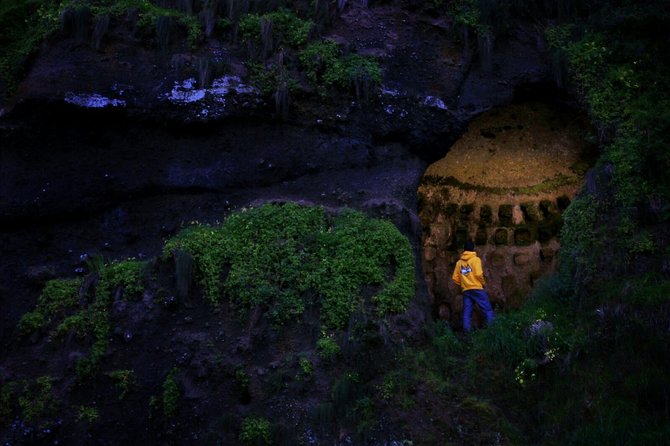
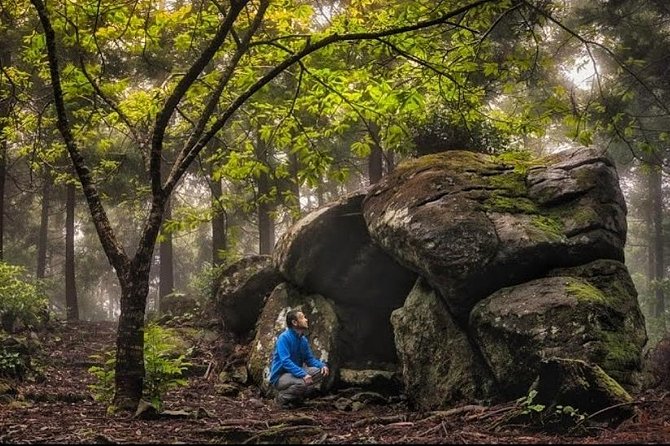
This tour works because it treats archaeology like a place-based puzzle. You’re not just hearing about the past. You’re standing in the setting where the clues were left behind—stone alignments, carved surfaces, and site layouts that make sense only when you see their surroundings.
I also like how the tour emphasizes what can be supported by evidence. In a lot of “ancient mysteries” tours, certainty is the product. Here, you get explanations that separate observation from interpretation, so you can decide what fits best as you move from stop to stop.
And because it’s private, the pacing doesn’t feel forced. If you want extra time staring at a feature, you can usually get it. If you need to move along faster, the guide can keep the rhythm.
You can also read our reviews of more private tours in Angra do Heroismo

Meet Juca: the storyteller plus the field-minded guide
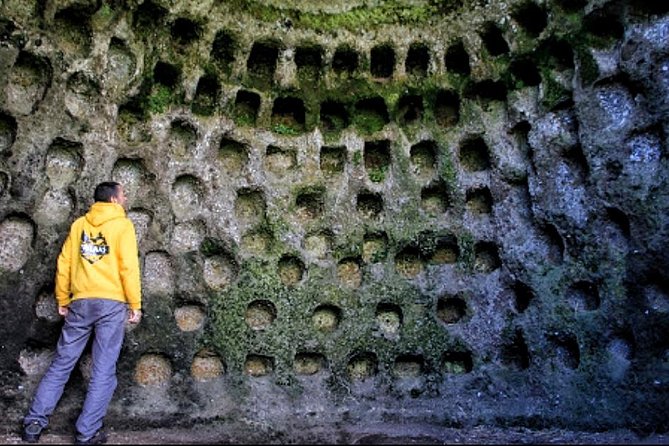
The biggest reason people rave about this experience is the way Juca teaches. He doesn’t just recite facts. He tells the story like you’re walking through a case file, pointing out how different structures might have functioned and what evidence suggests.
A detail I’d actually plan around: the tour pace supports questions. Multiple guests describe the experience as if you can ask the director real-time—meaning you’re encouraged to talk, not just listen. That’s a big deal if you’re the type who notices things and wants context.
Juca also brings a geology and archaeology angle. That matters on a volcanic island like Terceira, where rock type, water flow, and cave formation can shape what humans were able to do. You’ll get explanations that connect the stone itself to the places people used—caves, shelters, and water-related features.
And yes, he’s comfortable discussing uncertainty. One theme that comes through clearly in the feedback is that he won’t bully you into a single conclusion. He offers the best-supported ideas, then lets you weigh what you’re seeing.
The day’s rhythm: 9:00 start, 6 to 9 hours, and weather reality
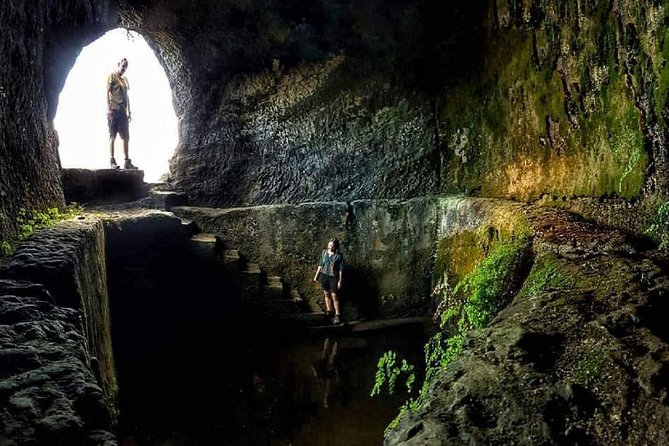
The meeting time is 9:00 am, and the day typically lands somewhere between 6 and 9 hours. That’s long enough to feel like a real expedition, but short enough that you’re not spending your entire vacation in transit.
The tour operates in all weather conditions, which is great for reliability, but it also means you should dress for changeable Azorean conditions. Think waterproof layers, a hat or hood for wind/rain, and quick-dry socks if you tend to get cold.
You’ll do small hikes and some uneven ground. One guest noted there can be climbing over walls and moving off paths through woods, plus steep or muddy inclines. If you’re traveling with someone who has mobility limits, this is the part to treat seriously and plan around.
The good news: this is a private tour, so if you need to skip a segment, the day can often be adjusted on the fly. That flexibility shows up in the reviews and it’s exactly the kind of benefit you feel when you’re not stuck in a big group schedule.
Stop 1: Grota do Medo megalithic complex and the Roman columbarium
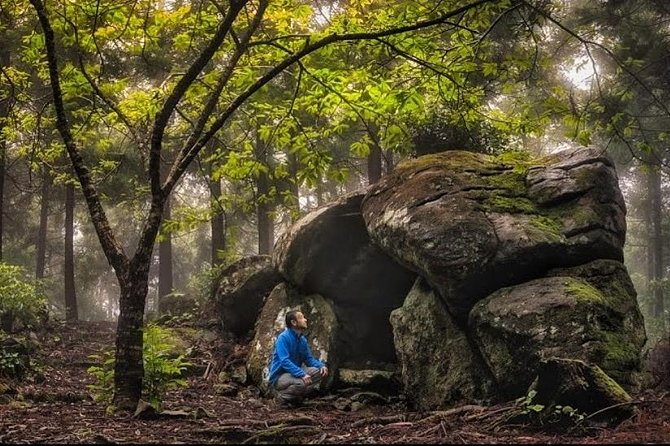
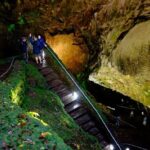
The heart of the itinerary starts at Complexo Megalítico da Grota do Medo, paired with a few distinct archaeological features that help you compare eras and site functions.
Here’s what you’ll focus on at this first stop:
Grota do Medo: megaliths you can actually see as a system
You’ll spend about 20 minutes, and admission is included. This is one of those places where a quick explanation isn’t enough. The value is in how the site layout gives you a chance to look at patterns: how stone structures relate to the ground around them, and why that placement matters.
A few more Angra do Heroismo tours and experiences worth a look


A Roman connection: Columbarium romano
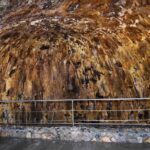
Next up is the Columbarium romano. The word tells you the theme: a space tied to funerary practice. What I like about seeing it right after the megalithic elements is the way it forces you to notice differences in purpose and design. You’re not stuck in a single time period.
Passagem das bestas (Relheiras do Cabrito): cars ruts and animal passage
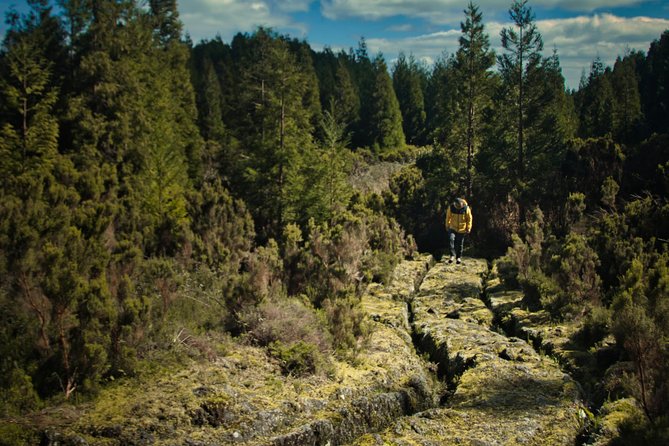
Then comes Passagem das bestas (Relheiras do Cabrito)—often discussed in the same breath as cars ruts. These are the grooves and track-like features associated with repeated movement.
Even if you’re not an expert, seeing them in context helps you understand why these features get so much attention. They’re tangible proof of repeated use, which is part of what makes archaeology so compelling here: humans weren’t just leaving art. They were using routes, tools, and built spaces day after day.
A practical note on this first stop
Because admission is included for this segment, you don’t need to hunt for tickets in the morning. That’s a small thing, but it can save a lot of stress on a day that already includes walking and changing weather.
Beyond Grota do Medo: caves, carvings, ritual places, and photo stops
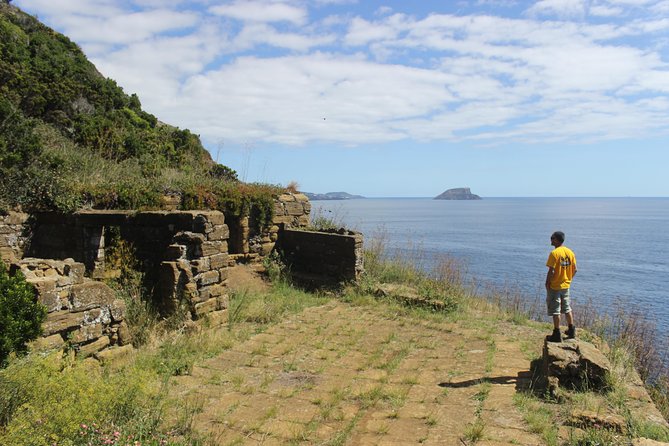
After the main opening, your day tends to expand into other archaeological and natural highlights across Terceira. Exact routes can vary based on timing and conditions, but the consistent theme is off-the-beaten-path access—places that feel harder to reach without local expertise.
From what you can expect, here are the kinds of features you may encounter:
- Caves and stone shelters, including areas associated with long-ago habitation or ceremonial use
- Mortuary or funerary spaces, including a “mortuary cave” style stop described in the feedback
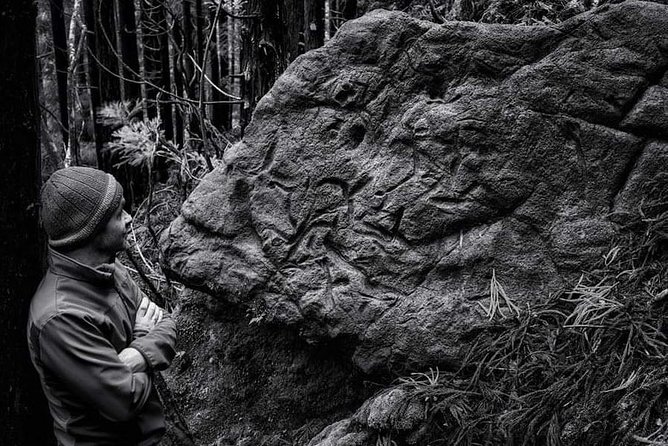
- Carvings and petroglyph-like markings, where you can see what people etched into rock
- Water-gathering features, like systems that suggest how communities managed essential resources
- Additional scenic viewpoints and short nature pauses when timing allows
One of the most useful lessons from the guide style is that timing matters. Guests describe how the guide structured the day so more tourist-heavy spots happened later, when crowds were smaller. In practice, that means better photos, calmer walking, and more time to talk with the guide.
Also, don’t be surprised if you notice how often the day becomes about “look closely” moments. Juca’s guidance often shifts your attention to details—stone textures, placement, and the logic of how features connect.
The photo advantage: a photographer guide changes the whole vibe
This tour includes a professional photographer guide. You don’t need to bring a tripod or have a photography plan, but you’ll get something just as important: encouragement and practical direction.
More than one guest specifically highlighted that Juca timed photo moments well and shared tips. That matters because caves, shaded woods, and wet stone all create lighting challenges. A guide who knows where to stand and when to pause can turn a mediocre snapshot into something you’ll actually keep.
If you’re someone who avoids photos because you hate posing, this is where the private format helps. You’re usually not fighting for camera angles, and the guide can work with your pace.
Price and value: what $242.17 really buys you
The price is $242.17 per person, and at first glance it’s not cheap. But here’s where the value shows up in real travel terms.
You’re paying for four big things at once:
- A private specialist guide for the day
- A photographer guide included in the experience
- Hotel pickup and drop-off in an air-conditioned minivan
- Admission included for the first major archaeological stop
For many visitors, the “hidden cost” is time and logistics. Without a local guide, you’d spend effort figuring out which sites you can access, how to get there, and what to look for once you arrive. This tour packages that work into a single paid day.
Is it worth it if you only want a scenic drive with a couple photo stops? Probably not. But if you want pre-colonial archaeology, in-situ explanations, and a day that feels like it was designed for your questions, the price starts to make sense fast.
Who this tour fits best (and who might want something else)
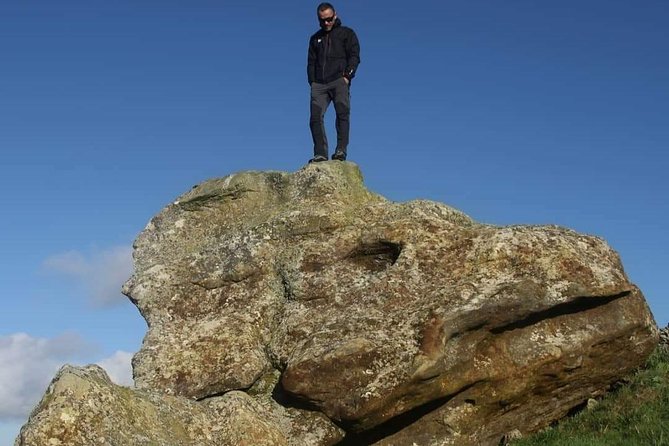
This tour is ideal if you:
- Care about pre-colonial Terceira and want evidence-based explanations
- Like walking and don’t mind short hikes
- Want a guide who can answer questions and adjust pacing
- Travel with kids who can handle learning through stories and stops
The family feedback is one of the strongest parts of the overall experience. Guests describe taking teens and younger children, with the guide staying patient and adjusting when needed. If your kids enjoy mysteries, “how did this work?” questions, and nature walks, the day can land as a highlight.
On the other hand, if you need a fully flat, minimal-walking tour, this may not be the best match. The terrain can include muddy inclines and off-path moments, even though the hikes are described as small.
Things to plan for: shoes, food, and how long you’re out
A few practical points will make your day smoother:
1) Wear proper footwear
You’ll be on uneven ground with some steep or muddy sections. Even if the hikes sound short, slick rocks and wet trails can slow you down.
2) Bring a light layer and rain gear
The tour runs in all weather conditions, so you should assume you’ll get at least a misty moment.
3) Plan for food outside the included price
Food and drinks are not included. The upside: you can pick a lunch style that works for your appetite and budget. If you want a “one stop” lunch plan, you can ask the guide what fits the route that day.
4) Stay flexible about the route
The guide style described in the feedback isn’t rigid. If someone skips part of a walk, the itinerary may shift toward scenic spots or other points of interest.
Should you book? My honest take
Book it if your main goal is understanding Terceira through archaeology on the ground, not just ticking off a list of viewpoints. The combination of a specialist guide, private access, and photo support makes it feel like a high-effort day without the usual stress of organizing transport and tickets.
Skip or rethink it if you’re counting on a super-easy walking day, or if you’re only interested in sites that are fully inside standard visitor areas. This experience assumes you’ll be comfortable moving through outdoor terrain.
If you do book, treat it like a field day: wear good shoes, bring layers, and come with questions. You’ll get more than a drive around the island—you’ll get a story you can test with your own eyes.
FAQ
FAQ
How long is the full-day private archaeology tour?
It runs about 6 to 9 hours (approx.), starting at 9:00 am.
Is pickup included, and where does pickup happen?
Yes. Hotel pickup and drop-off are included. Pickup can be arranged from your hotel name/address in Angra do Heroísmo or from local accommodation (you’ll need to provide details by email or a Google link). If you’re arriving by airport, you must share your flight number and time.
What’s included in the price?
You get a professional guide, a professional photographer guide, hotel pickup and drop-off, a private tour (only your group), and transport by air-conditioned minivan. Admission ticket for the Grota do Medo complex stop is included.
What isn’t included?
Food and drinks are not included, and all fees and taxes are not included. The entry fees for Algar do Carvão and gruta do Natal are specifically listed as not included.
Is this tour private or shared with other groups?
It’s private. Only your group participates.
Is there walking or hiking involved?
Yes. The tour includes small hikes and requires moderate physical fitness. It’s operated in all weather conditions, so dress appropriately for rain, mud, and uneven ground.
Can I cancel and get a full refund?
Yes. Free cancellation is allowed up to 24 hours in advance for a full refund. If you cancel less than 24 hours before the start time, the amount paid is not refunded.