REVIEW · PORTIMAO
2-Hour Surf Lesson in Alentejo
Book on Viator →Operated by SurfMilfontes · Bookable on Viator
Two hours, Atlantic waves, and real progress. What makes this Alentejo surf lesson interesting is the tight structure: theory first, then a long stretch of water time, plus a small group that actually gets coached. I also like that the staff includes recognized instructors (Portuguese Surfing Federation accreditation) and keeps the pace matched to your level, even if you’re brand-new.
My favorite part is the hands-on attention—this isn’t “figure it out on your own” surfing. Instructors like Antonio, Miguel, and Eric are named in feedback for clear explanations right before you hit the waves. One possible drawback: the session runs only if weather cooperates, so expect that you might need a reschedule if conditions aren’t right.
In This Review
- Key highlights that matter before you go
- Alentejo surf lessons near Vila Nova de Milfontes: why it’s a smart choice
- Price and value: what $60.49 really includes
- The 2-hour flow: theory, warm-up, then 90 minutes to practice
- Small-group coaching: getting corrected, not just entertained
- Snorkel time on a surf lesson: learning includes underwater fun
- What’s included in the lesson (and what you should bring)
- Meeting at Praia do Malhão: how to plan your arrival
- Safety and credentials: why insurance and FPS accreditation matter
- Who this surf lesson is best for
- Weather reality: your lesson depends on conditions
- How to get the most out of your 2 hours
- Should you book this 2-hour surf lesson in Alentejo?
- FAQ
- Where does the surf lesson start?
- How long is the lesson?
- Is the lesson offered in English?
- How many people are in the group?
- What equipment is included?
- Is snorkeling included?
- Do I need previous surfing experience?
- Are instructors accredited?
- What happens if the weather is bad?
Key highlights that matter before you go
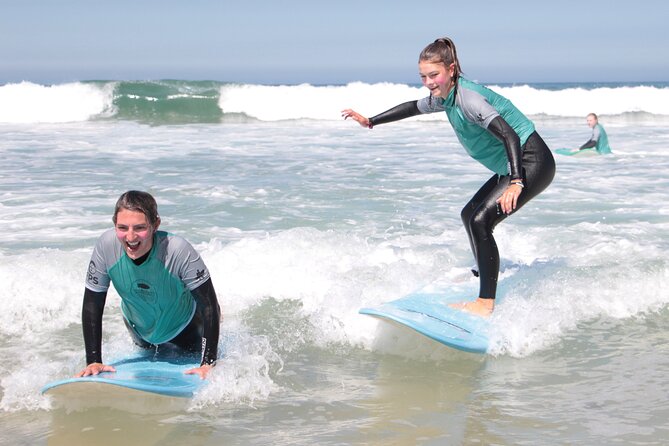
- 90 minutes in the water after a short theory + warm-up block means you spend more time surfing than listening.
- Up to 10 people total, with splitting by level so you’re not stuck watching others.
- Snorkel gear is included, so you get a chance at underwater sights, not just wipeouts.
- Everything important is included: board, wetsuit, leash, plus accident/indemnity insurance.
- You get a performance evaluation, so you leave knowing what to work on next.
Alentejo surf lessons near Vila Nova de Milfontes: why it’s a smart choice
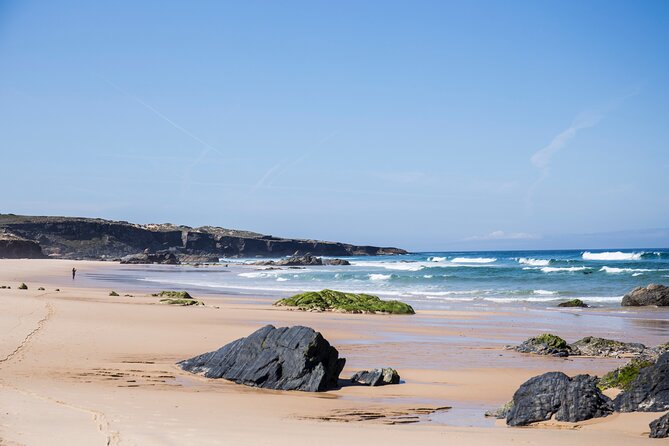
You’ll find this surf lesson based around Praia do Malhão, in the Vila Nova de Milfontes area (Alentejo coast). Even if the listing location is shown as Portimão, the action is at the beach meeting point in Milfontes—so you’re aiming at that classic Portuguese Atlantic feel with a clear focus: learn to surf with instruction, gear, and a plan.
This kind of lesson is ideal when you want quick momentum. Two hours sounds short, but the format is built to compress the basics, get you comfortable in the water, and then give you repeated attempts while an instructor watches and corrects you.
It also feels more approachable because the group is capped. Small group coaching matters in surfing: timing, stance, and how you paddle are hard to learn from vague directions. Here, the coaching style is direct, with explanations before you go in.
A few more Portimao tours and experiences worth a look
Price and value: what $60.49 really includes
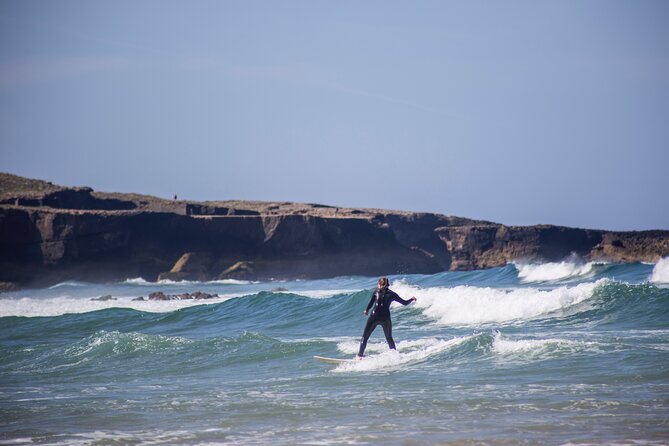
At $60.49 per person for about two hours, the price makes sense only because the essentials are bundled. You’re not paying extra for the board, wetsuit, or leash—those are included in the lesson package.
You’re also getting more “real teaching” than you might in a cheaper, gear-only rental setup, because the lesson includes individual performance evaluation and instruction from instructors accredited by the Portuguese Surfing Federation. On top of that, there’s personal accident and indemnity insurance included.
And if you need help getting to the beach, transportation is included if necessary. So the value isn’t just the equipment—it’s the structure, the coaching, and the safety layer that helps you focus on learning rather than logistics.
The 2-hour flow: theory, warm-up, then 90 minutes to practice
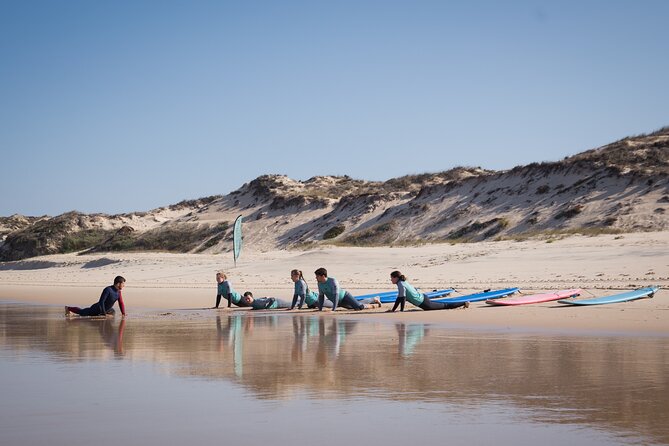
The lesson runs for around two hours with a clear rhythm:
First comes a theoretical part of about 20–30 minutes. This is where you learn the basics that keep your session safer and more productive—how the instructor wants you to handle your board, what to listen for on the beach, and what to do once you’re in the water.
Then you get a warm-up before your main push. After that, you get about 90 minutes of practice in the water. That matters because surfing improves through repetition. Even one good wave teaches you a lot, but you only get that if you’re trying again and again with corrections in real time.
Finally, the activity ends back at the meeting point, so you aren’t dealing with a long “end at some random place” scramble.
Small-group coaching: getting corrected, not just entertained
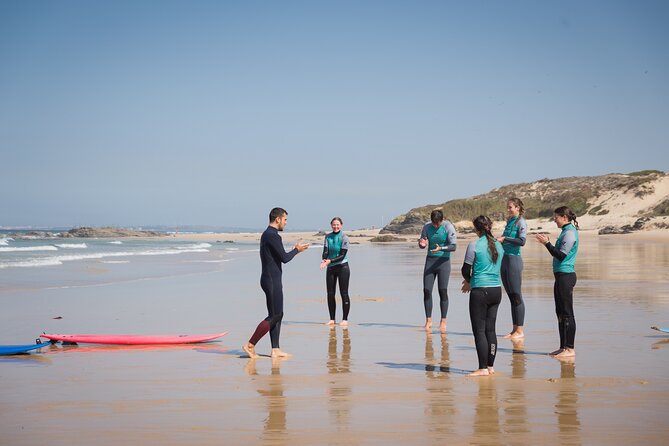
This has a max group size of 10 travelers, and the lesson is designed for coaching flow. A key detail: you’re not necessarily taught as one big group the whole time. Based on how the school runs sessions, they may split students into smaller subgroups by surf-skill level so you get instruction that matches where you are.
That approach is a huge help for beginners. When everyone starts on the same wave of confusion, coaching can get diluted fast. With smaller subgroups, you get more direct feedback—what to fix first, what to practice next, and how to adjust your position for the waves you’re actually riding.
In the feedback, instructors such as Antonio, Miguel, and Eric are praised for explaining things clearly before going into the water. That clear pre-brief is practical: it helps you know what you’re working on when you’re wearing a wetsuit and trying not to overthink paddling.
Snorkel time on a surf lesson: learning includes underwater fun
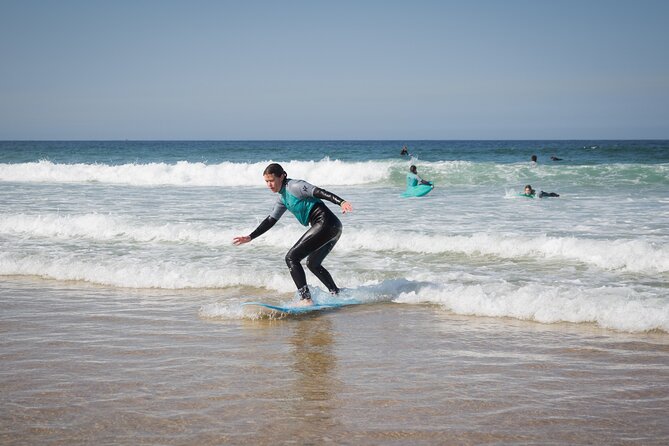
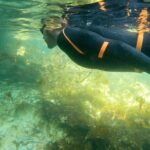
This lesson isn’t only about standing up and falling down. You’ll also use snorkel equipment for underwater sights.
That changes the vibe in a good way. Instead of only grinding toward one skill, you get a quick break from the mental load of riding waves. It can also help you get comfortable in the water environment—especially if the ocean feels intimidating at first.
It’s a fun add-on, but it’s also practical. Being calmer and more comfortable in the water makes everything else easier: paddling, timing, and responding to the instructor’s directions.
A few more Portimao tours and experiences worth a look


What’s included in the lesson (and what you should bring)
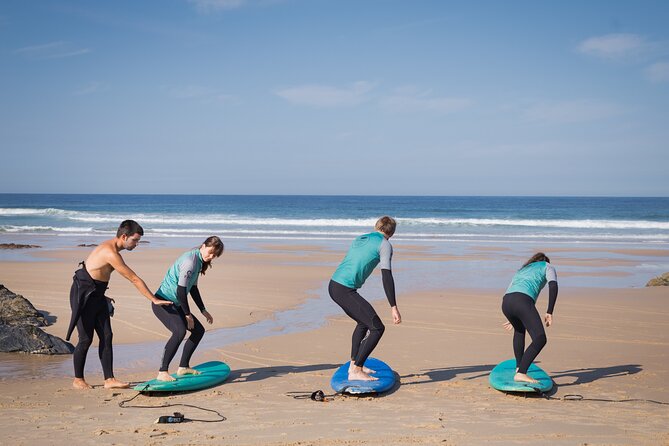
Everything you need for the session is provided. Each lesson includes:
- Surfboard
- Wetsuit and leash
- Personal accident and indemnity insurance
- Transportation to the beach if necessary
- Individual performance evaluation
- Instructors accredited by the Portuguese Surfing Federation (FPS)
The one consistent piece of advice is simple: pack light. The gear is handled for you, so you’re really just planning for the day—clothes to change into, sun protection, and anything you need to stay comfortable before and after.
If you’re new to surfing, don’t overpack. You’ll feel better when your bag isn’t heavy and you’re not hunting for items during transitions. Also, service animals are allowed, which can matter if you’re traveling with a support animal.
Meeting at Praia do Malhão: how to plan your arrival
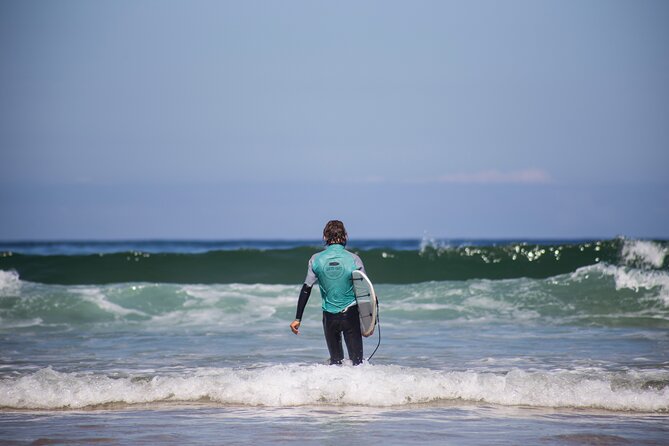
You’ll meet at Praia do Malhão, 7645-221 Vila Nova de Milfontes, Portugal, and the lesson ends back at that meeting point.
Because the lesson starts with theory and warm-up, arrive with enough buffer to get settled. Don’t show up drenched in stress. Five to ten minutes of breathing room helps you listen well during the first 20–30 minutes, which is when you’ll get the rules and the key techniques.
The operating window is listed as daily from 7:00 AM to 6:30 PM, with availability extending through 2026. That’s helpful if you’re juggling beach time and travel schedules in the region.
Also, you’ll get a mobile ticket, which makes it easier to manage day-of plans. Just be sure your phone battery is healthy.
Safety and credentials: why insurance and FPS accreditation matter
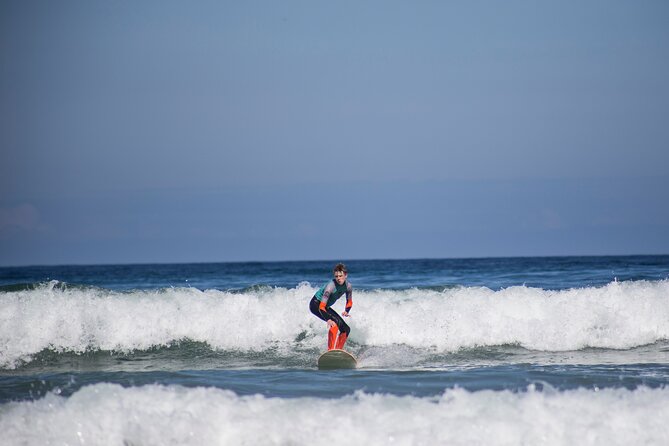
Surf can be safe when the lesson is run well, and this one includes layers that make it easier to relax. The instructors are accredited by the Portuguese Surfing Federation (FPS), which is a good sign of professional standards and proper training expectations.
There’s also personal accident and indemnity insurance included. That doesn’t mean you’ll get hurt, but it does mean the operator is set up to handle the realities of a sport that involves water, boards, and learning curves.
And since you get individual performance evaluation, the instructors aren’t just guiding group energy. They’re watching what your body is doing and giving corrections based on what you’re actually able to do at that moment.
Who this surf lesson is best for
This lesson is built for flexibility. It’s suitable for beginners and different experience levels, with a pace matched to your ability and experience.
If you’re a total beginner, you’ll likely appreciate the structured start: short theory, warm-up, then lots of time to try with an instructor watching. You also get a realistic taste of the sport—enough to feel capable, not just confused.
If you already surf a bit, you may still like the performance evaluation and the way instructors can correct technique while you’re actually practicing.
It’s also a solid option if you like learning socially. The vibe is group-based, and the tone in feedback is that it’s fun, challenging, and filled with laughter. Surf school energy can make a big difference when you’re learning something new under pressure.
Weather reality: your lesson depends on conditions
This experience requires good weather. If conditions aren’t right, the session can be canceled due to poor weather, and you’ll be offered a different date or a full refund.
That’s not a dealbreaker. It’s normal for water sports. Just build flexibility into your schedule when you can, especially if you’re planning this as one of only a couple big beach activities.
How to get the most out of your 2 hours
Two hours can feel short, so your goal should be quality tries, not rushing. Here are a few practical things that will help you make the most of it:
- Listen closely during the first 20–30 minutes. The instructor’s instructions usually set up what you practice next.
- When you’re in the water, respond quickly to feedback. Small changes can matter fast in surfing.
- Don’t fight your limits. This lesson is designed to help you learn within your current physical and psychological comfort zone, then expand it gradually.
- Expect to leave tired. Learning to surf takes effort even when you’re doing everything “right.” That exhaustion is part of the payoff.
Should you book this 2-hour surf lesson in Alentejo?
I’d book it if you want a structured introduction to surfing, with included gear, FPS-accredited instructors, and real in-water practice time. The small group cap (10) and the practice-to-instruction ratio are the big reasons it’s a strong value.
I’d skip it or plan extra flexibility if you’re set on a super tight schedule, because weather conditions can affect whether the lesson runs that day. Also, if you hate any cold-water time at all, be honest with yourself before you go.
If you’re traveling to the Milfontes area and want a hands-on activity that’s actually built for learning, this one is a smart bet.
FAQ
Where does the surf lesson start?
The meeting point is Praia do Malhão, 7645-221 Vila Nova de Milfontes, Portugal.
How long is the lesson?
The lesson is about 2 hours.
Is the lesson offered in English?
Yes, the lesson is offered in English.
How many people are in the group?
The activity has a maximum of 10 travelers.
What equipment is included?
The lesson includes the surfboard, wetsuit, and leash.
Is snorkeling included?
Yes, snorkel equipment is included so you can make use of underwater sights.
Do I need previous surfing experience?
Most travelers can participate, and the lesson pace is suitable for your surfing ability and experience.
Are instructors accredited?
Yes, instructors are accredited by the Portuguese Surfing Federation (FPS).
What happens if the weather is bad?
This experience requires good weather. If it’s canceled due to poor weather, you’ll be offered a different date or a full refund.