REVIEW · SINTRA
Tour Sintra Palaces & Mountain
Book on Viator →Operated by Talentedstreet · Bookable on Viator
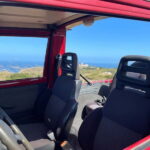
Sintra has a way of pulling you uphill. This private tuk tuk-style day combines palace legends and mountain viewpoints with ocean breaks, so you get big sights without wasting hours figuring out routes. I especially love the flexible timing (you choose what to step into), and I love having a guide who points out details like Sintra’s famous twin-chimney skyline and the garden logic at Pena. One thing to watch: this is a private tour and monument tickets aren’t included, so the value depends on whether you plan to use most of the options.
You’ll also see the parts that make Sintra feel like a storybook rather than a checklist: Palácio Nacional de Sintra from the outside, Casa Biester with its panorama, and ruined Castle of the Moors perched above the trees. The best part is how the guide strings it all together—so even the short stops at Cabo da Roca and Cascais feel connected instead of rushed. The trade-off is that Sintra’s hills can be steep, so you’ll want to be comfortable with uphill travel and some walking once you’re there.
In This Review
- Key Highlights to Look For
- Where the Day Starts: Centro Histórico and Volta do Duche
- Palácio Nacional de Sintra: The Twin Chimneys and Azulejos Clue
- Casa Biester and the Panorama Break Before the Big Climb
- Castelo dos Mouros: The Ruins View That’s Worth the Time
- Pena Palace and the Romantic Park: Choose Your Level of Time
- Quinta da Regaleira: Secrets, Symbolism, and a Walk You’ll Remember
- Francis Cook’s Romantic Gardens: Why This Part Feels Different
- Cabo da Roca: The Western Edge, No Waiting
- Azenhas do Mar: A Natural Pool and Cliffside Houses
- Boca do Inferno: Quick Views, Big Name
- Cascais and the Coastal Circuit: Finishing with a Sea Town Vibe
- Price and Logistics: Is Private Tuk Tuk Worth It?
- Which Guides Make the Difference on This Route
- Who This Tour Suits Best
- Should You Book This Tour?
- FAQ
- What’s included in the tour price?
- Are entrance tickets included for Pena Palace, Castelo dos Mouros, and the gardens?
- How long is the tour?
- Do you get pickup in Sintra?
- Is this a private tour?
- Is the tour offered in English?
- Are service animals allowed?
Key Highlights to Look For

- Private transport for your group so you’re not stuck waiting on other people’s pace
- Optional palace/garden visits let you tailor the day to your energy level
- Mountain viewpoints without the hassle of figuring out the steep logistics yourself
- Atlantic coast stops built into the route (Cabo da Roca, Azenhas do Mar, Boca do Inferno)
- Guides who add real local color using names you might actually remember (like Paulo, Jose, Catia, Nuno)
Where the Day Starts: Centro Histórico and Volta do Duche
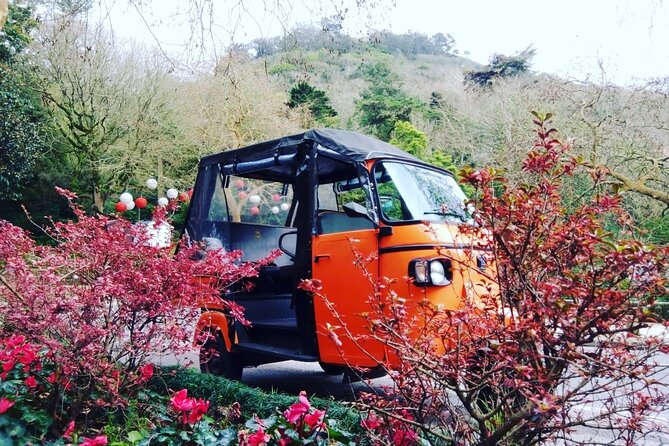
Your tour begins in Sintra’s Centro Histórico, right where the town feels most like a working, lived-in place (not just a theme park). From there, you’ll head along the Volta do Duche route, which sets the tone: Sintra is compact, but it climbs hard, and the best views come from moving upward.
Even before you reach the famous palaces, this leg matters. It’s when you get your bearings—street layout, where the viewpoints sit, and how the mountain road snakes through town. If you like travel days that teach you how a place works, this start helps a lot.
You can also read our reviews of more tours and experiences in Sintra.

Palácio Nacional de Sintra: The Twin Chimneys and Azulejos Clue
One of the first cultural beats is a pass by Palácio Nacional de Sintra (also called Palácio da Vila). You may not enter on every variation of the tour, but seeing it from the right angle helps you understand why it’s such a signature stop in Sintra.
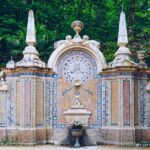
The standout features are the big paired chimneys that crown the kitchen—often treated like Sintra’s visual ex-libris—and the fact that the palace mixes multiple architectural styles over time (medieval, Gothic, Manueline, Renaissance, and Romantic). You’ll also hear how it contains the largest collection of mudéjar azulejos in Portugal, which is one of those details you’ll appreciate more if a guide points it out while you’re still nearby.
If you’re deciding whether to buy palace tickets later, use this moment as a “mental preview.” You’ll know what to look for when you’re standing in the gardens and courtyards farther out.
Casa Biester and the Panorama Break Before the Big Climb
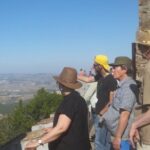
Next comes a stop near Casa Biester at the start of the Serra de Sintra. This is a short pause, but it’s a smart one: you’ll get one of Sintra’s best panoramas while your legs are still fresh.
You’ll also learn a fun pop-culture connection: Casa Biester appeared in the film A Nona Porta starring Johnny Depp. That kind of bridge between everyday scenery and cinematic storytelling is exactly the sort of thing that makes a guided tour feel worth it—especially when you’re trying to understand why certain viewpoints are famous.
This isn’t the main event, but it is a good checkpoint. If the morning weather is clear, you’ll want to soak in these views because later stops depend more on time and your willingness to keep walking.
Castelo dos Mouros: The Ruins View That’s Worth the Time
Castelo dos Mouros is one of the stops that balances effort with reward. It’s optional in the way of the tour structure: you can take time in the gardens for about 30 minutes on foot, and you’ll choose whether you want to go further.
What you’re looking at is a ruined castle spread between lush forested slopes of the Serra de Sintra. The big payoff is the long vista—Sintra reaching toward the sea. It’s also where the deep timeline clicks: the site traces back to early Moorish occupation on the peninsula, reaching back to the 8th century.
The practical consideration is simple: this is a ruin with steps and uneven ground. If you don’t love climbing around, you can still enjoy it from the right viewpoints and keep your walk shorter.
Pena Palace and the Romantic Park: Choose Your Level of Time
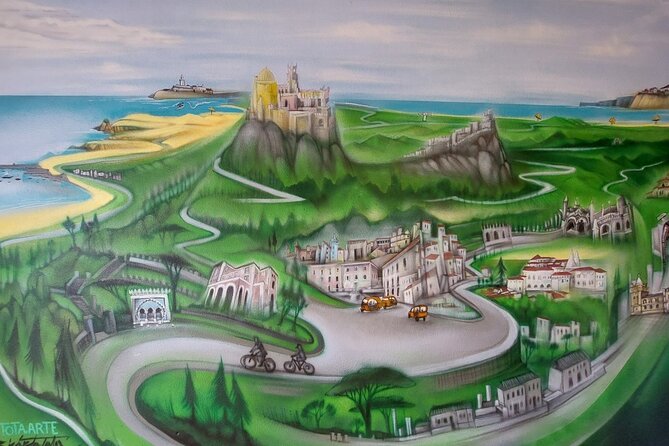
Pena Palace is the star for many people, but the real value is that you can match your visit to your day. You can opt in for Pena Palace and its park, or pass if you’d rather save time for the coast and other gardens.
When you do go, you’re stepping into a landmark of 19th-century Romanticism. Pena is often described as the first Romantic palace in Europe, built around 30 years before Ludwig II’s Neuschwanstein. In practice, what you’ll feel is theatrical design set into a wild hillside—built to look like it belongs to the rock and mist.
The park is the other major reason to spend time here. It’s not just a walk-through. You’ll find paths, gardens, bridges, grutas (caves), garden benches, pergolas, fountains, and plant collections with camellias, rhododendrons, and rare rose varieties. If you enjoy gardens that follow a route and reveal things step by step, Pena’s park structure makes your time feel efficient.
If you’re tight on energy, you can still get the core experience by choosing fewer stops inside the park and focusing on viewpoints. But if you have the time, don’t rush it—Pena’s setting is one of those places where stopping every so often gives you the real payoff.




Quinta da Regaleira: Secrets, Symbolism, and a Walk You’ll Remember
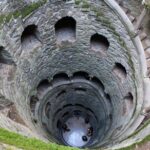
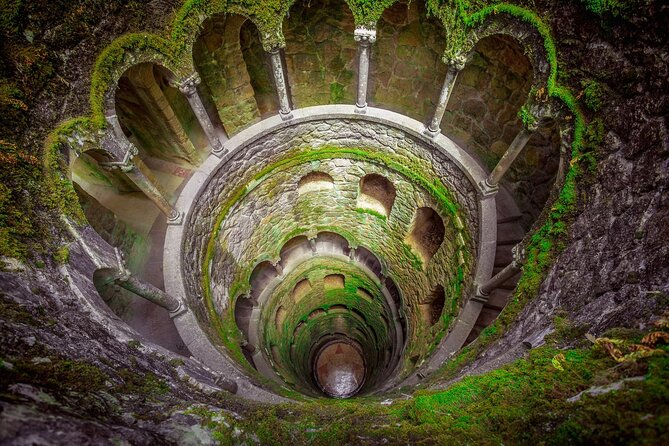
Quinta da Regaleira is another optional stop, and it’s the one that tends to turn into a longer, personal experience. The palace and garden complex is tied to its old owner, António Augusto Carvalho Monteiro—often linked to the nickname Monteiro dos Milhões.
This place was shaped by the Italian architect Luigi Manini. The grounds spread across about 4 hectares, with gardens, lakes, grutas, and other enigmatic constructions. What makes Regaleira special in a guided tour is the interpretive angle: the guide can connect the “alchemical” feel and the symbolic meaning that people associate with groups like Freemasons, Templars, and the Rosicrucians. Even if you don’t take the symbolism literally, the idea helps you notice patterns in what you see.
If Pena is about spectacle and scale, Regaleira is about feeling and movement. The garden paths, the spiritual mood, and the choreography of arriving at structures at different angles make it a great stop if you like to wander with purpose rather than race to photos.
Francis Cook’s Romantic Gardens: Why This Part Feels Different
Within the Regaleira experience, one of the most noticeable qualities is the mix of exotic vegetation and staged scenery. Francis Cook, an English millionaire, is tied to the romantic gardens and the palace’s outlook as part of the 1800s eclectic spirit.
What you’ll notice on the ground is how the gardens organize the world—trees and plants coming from different regions, grouped by geographic areas. Even if you don’t know botanical names, you’ll feel the difference in the way the landscape changes as you walk from zone to zone. There’s also a big front lawn near the palace where you can pause and let your body catch up after the hills.
If you’re traveling with kids or anyone who wants breaks, this “sit-down and look” space is a practical win.
Cabo da Roca: The Western Edge, No Waiting
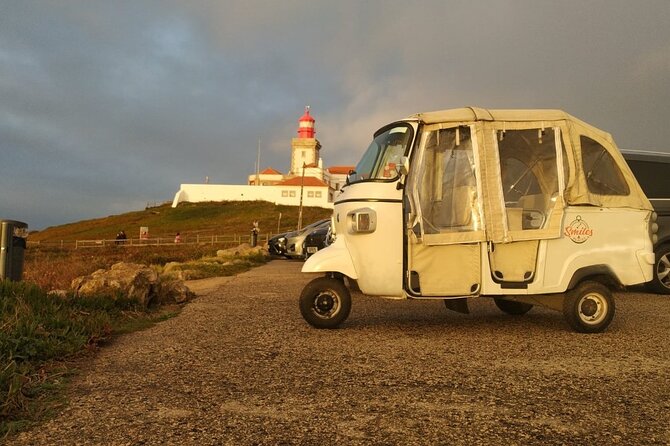
After Sintra’s mountain stops, the tour pivots toward the coast with a stop at Cabo da Roca. This is brief—about 30 minutes—but it’s timed well, because the ocean air resets the day.
Cabo da Roca is the westernmost point of Continental Portugal and continental Europe. Translation: the cliffs feel like the end of a story. Even in a quick stop, you’ll have enough time to see the horizon lines and take in the scale of the Atlantic.
Because you’re on a cliff edge, this is a spot where weather matters. If it’s windy, keep your eye on footing and hold onto hats.
Azenhas do Mar: A Natural Pool and Cliffside Houses
Next up is Azenhas do Mar, another 30-minute scenic stop. The key feature here is the tiny seaside cove and natural rock pool formed at low tide—water can get trapped in a sheltered area during the ebb.
This is the kind of place that photographs beautifully, but it’s also just nice to stand and listen to wave rhythms against the rocks. The coastline setup—ocean, cliffs, and the small cluster of houses—makes the view feel built by nature.
If you want to keep the day moving, use this stop as a look-and-breathe break rather than a long exploration.
Boca do Inferno: Quick Views, Big Name
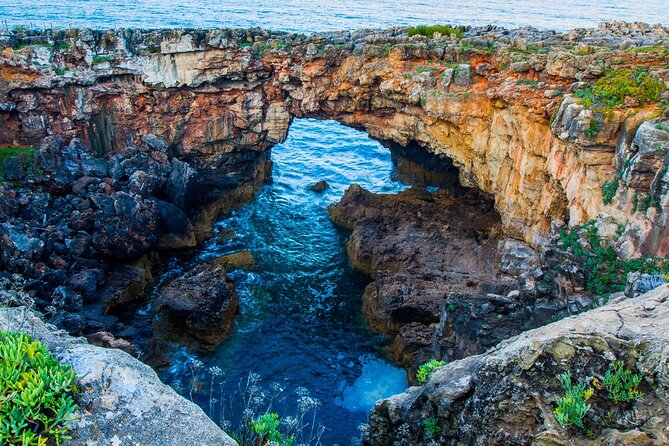
Boca do Inferno is short—about 15 minutes—and it’s worth treating it like a viewpoint stop. The name comes from the intense impact of waves, and you’ll see why when conditions line up.
You’re at the Costa da Guia, west of Cascais. In a longer itinerary, this place would be easy to overskip. Here, the quick timing works because it gives you variety without stealing time from the palaces.
Wear shoes with grip. The rocks can be slick, and the point is to enjoy the drama safely.
Cascais and the Coastal Circuit: Finishing with a Sea Town Vibe
The day finishes with time in Cascais, about 1 hour 30 minutes. Cascais started as a fishing village, then grew as a port-of-call in the 14th century for ships heading toward Lisbon. So while it looks like a coastal getaway, it has a practical maritime backbone.
You’ll go through Guincho and pass by the Marina of Cascais before reaching the historic center. Even if you’re not shopping, it’s a good way to end: sea air, calmer walking than the mountain climbs, and enough time to grab a drink or a light meal.
This final section is also where you can judge whether you want to come back. If Cascais feels like your kind of place, you’ll know the next step is easy.
Price and Logistics: Is Private Tuk Tuk Worth It?
At $145.18 per group (up to 2), this tour is priced for convenience, time savings, and guided storytelling—not for being the cheapest way to reach sites.
Here’s how I’d think about value:
- If you plan to visit multiple optional areas (Castelo dos Mouros, Pena, Regaleira) and you want private transport, the cost starts to make sense.
- If you only want the bare minimum—one palace entrance and a quick ride—then it can feel pricey compared with other low-cost transport options.
The best guidance I can give is this: treat the price as paying for access + interpretation + routing. You’re not just buying movement; you’re buying time that’s managed for you.
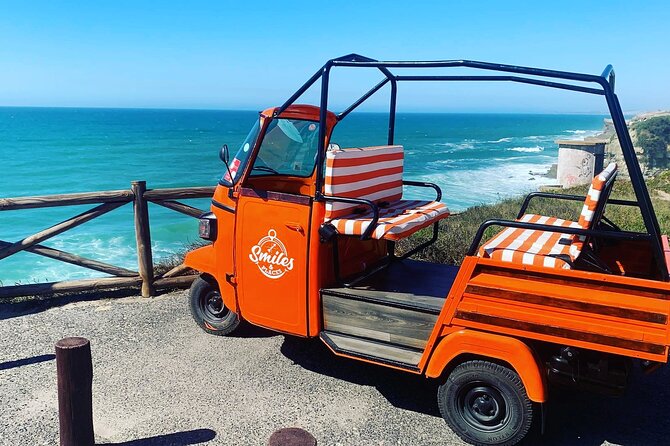
One more practical note based on real experiences: if you’re relying on tuk tuk coordination, have your confirmation info ready and keep a phone available for communication. In one case, the ride wasn’t waiting exactly as expected, and the group had to find their way back to the welcome center before heading uphill.
Also, note the general reality of Sintra: steep hills mean tuk tuks may struggle a bit. That doesn’t ruin the trip, but it affects comfort and timing—so keep expectations realistic.
Which Guides Make the Difference on This Route
The strongest part of this kind of tour is the guide, because these places are layered and easy to misunderstand if you’re only reading signage.
In the experience you have a real chance to get stand-out guides. Names you might encounter include Paulo jahlè Durão, Jose, Catia, David, Nuno, Roger, and Rita. The difference shows up in small things: helping you access the right parts of the attraction, explaining what to look for, and even recommending a specific place to eat.
For example, one recommended meal was at Restaurante Dom Pipas Sintra. That’s the kind of tip you can’t easily predict without someone who knows the area and knows what timing looks like.
If you care about local stories—like film connections at Casa Biester or the symbolism around Regaleira—this is the route where a good guide genuinely changes your day.
Who This Tour Suits Best
This is a strong match if you want:
- A private group experience where the day can flex around you
- More than one viewpoint and one-or-two “deep” garden stops
- Guided narrative tying Sintra’s mountain palaces to the Atlantic coast
It may not be ideal if you want the absolute cheapest route or if you prefer to self-plan each monument. In that case, you may be happier using public buses and hiring a driver for specific moments.
It’s also worth considering if anyone in your group gets tired on uphill walking. The tour includes walking time at certain garden areas, so pack for comfort.
Should You Book This Tour?
I’d book it if your priority is a well-run day with a guide helping you choose what’s worth your limited time. The pairing of Sintra mountain highlights with coast stops like Cabo da Roca and Cascais is the main reason this tour feels like more than just another palace ticket day.
I’d skip or at least rethink if you’re only interested in one or two major entrances and you’re hunting for the lowest-cost option. This route shines when you actually use the flexibility—choose the stops, enjoy the views, and let your guide steer the time.
If you’re a first-timer, go. Sintra is easier when someone else handles the route and interpretation.
FAQ
What’s included in the tour price?
Private transportation is included. Monument tickets and parking fees are not included.
Are entrance tickets included for Pena Palace, Castelo dos Mouros, and the gardens?
No. Tickets for monuments are not included. For Castelo dos Mouros, gardens are described as free for about 30 minutes, but admission tickets for gardens or gardens and palace options at other sites are not included.
How long is the tour?
The duration is listed as 6 to 8 hours (approx.).
Do you get pickup in Sintra?
Yes. Pickup is offered, with the pickup meeting point described as the entrada do centro histórico de Sintra.
Is this a private tour?
Yes. It’s private, and only your group participates.
Is the tour offered in English?
Yes, it is offered in English.
Are service animals allowed?
Yes, service animals are allowed.
If you want, tell me your travel month and how much you want to prioritize Pena vs. Regaleira, and I’ll suggest a smart “choose-your-stops” plan for a smoother day.