REVIEW · FUNCHAL
Old Funchal Walking Tour
Book on Viator →Operated by Madeiran Heritage · Bookable on Viator
Old Funchal gets easier fast. In just about 2 hours, this Old Funchal Walking Tour strings together major landmarks, a real market stop, and a final wine tasting so you can orient quickly without sprinting around. I love that the group stays small (max 10), which makes questions easy and the pace calm. I also like that key entrances are handled for you, so you spend time looking instead of hunting tickets. One drawback to plan for: the meeting point can be confusing if you head to the front of the church, and Funchal’s streets can feel hilly even on a short walk.
This is a good pick for first-time visitors because it hits the parts of town you’ll want later for your own exploring: Praça do Colombo, the cathedral area, the gardens, and that Old Town street-art vibe. You also get flexibility with start times and a mobile ticket, which is handy when your phone battery is having a bad day. And yes, it has that small-group feel you want on vacation, with guides who may be students or local heritage staff (English is offered, and multi-lingual guides operate).
In This Review
- Key Points Before You Go
- Getting Started at the Jesuits Complex Without Stress
- Price and Value: Why This One Costs Less Than You’d Expect
- Colegio dos Jesuitas: A 16th-Century Anchor for Modern Funchal
- Iglesia de São João Evangelista: Baroque and Mannerist Details You’ll Actually Notice
- Mercado dos Lavradores: Your Best Shortcut to Real Madeira Life
- Zona Velha and Arte de Portas Abertas: Old Streets With a New Accent
- Praça do Colombo and the Regional Assembly: A Public-Square Break
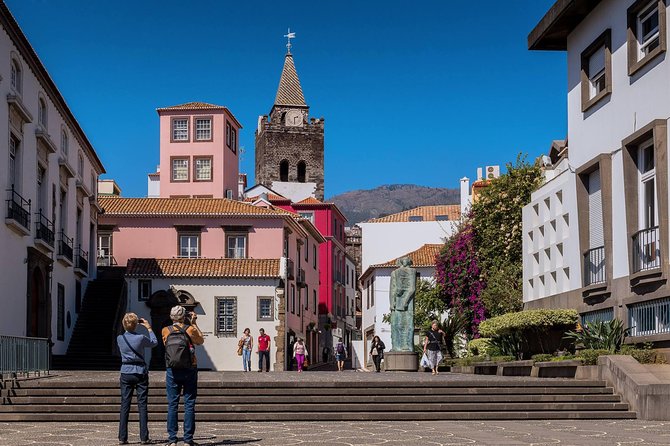
- Funchal Cathedral and João Gonçalves Zarco: Two Stops That Explain the Big Picture
- Jardim Municipal and the Traditional Wine Lodge: A Breather Before the Finish
- Loja Gaudeamus and Wine Tasting: Your Practical Payoff
- Who This Old Funchal Walking Tour Fits Best
- Should You Book the Old Funchal Walking Tour?
- FAQ
- How long is the Old Funchal Walking Tour?
- Is the tour offered in English?
- How big is the group?
- Are tickets and entrances included?
- Where do I meet for the tour?
- What if the weather is poor?
Key Points Before You Go
- Small group (up to 10) keeps the walk relaxed and lets you ask real questions.
- Ticketed access for several big sights means less waiting and smoother timing.
- Mercado dos Lavradores gives you the daily-life Madeira vibe, not just monuments.
- Zona Velha street art (Arte de Portas Abertas) adds a modern layer to the old streets.
- Wine tasting stop at the end gives you a tasty payoff for your walking effort.
- Funds support students through books and meals, adding a feel-good side to the day.
Getting Started at the Jesuits Complex Without Stress
Your walk begins at the Jesuits’ College of Funchal area. The address is listed for R. dos Ferreiros Estrada (São Martinho, 9000-082 Funchal), but the real-world trick is that people often expect a meeting point at the big front of the church square. Don’t assume. The correct place is typically a side entrance connected to the University of Madeira building.
If you’re facing the church and you see the municipal building off to your left, you’ll want to turn right at the corner rather than walking past the church or going up to the main entrance. If you arrive early, take a minute to re-check where the reception desk is. A quick phone call can save you from standing around looking lost, which in Old Town is practically a local sport.
The walk ends back at the same meeting point, which is a big deal on a schedule. You won’t be stuck trying to route yourself home after the wine part of the program.
You can also read our reviews of more walking tours in Funchal

Price and Value: Why This One Costs Less Than You’d Expect
The price is $19.83 per person for an experience that runs about 2 hours. That sounds almost too reasonable until you notice what’s included. You’re paying for a driver/guide plus a tour escort/host, and several stops include admission tickets rather than asking you to buy everything separately.
That matters because the expensive part of a sightseeing day is usually time and logistics. Here, you get guided flow between sites, plus entry covered for places like the Jesuits-related sights and the cathedral. You also get a market visit where the entry is free, which keeps your day balanced: culture, religion, daily life, and then a fun edible finish.
There’s also the feel-good factor. People highlight that the tour supports students, including help for student books and meals. If you like making your trip slightly more than just photos, that’s a real plus.
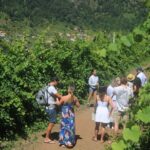
Finally, the small group size (max 10) is part of the value. Big group tours can feel like transportation. This one feels more like a careful stroll with someone who can point out what you’ll miss on your own.
Colegio dos Jesuitas: A 16th-Century Anchor for Modern Funchal
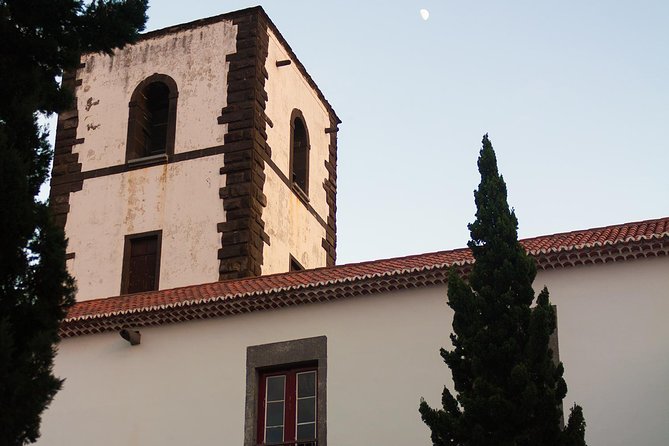
One of the first stops is the Colegio dos Jesuitas do Funchal. This traces back to the 1500s and connects to King Sebastian of Portugal. That’s not just trivia. It helps you understand why so much of Funchal’s Old Town story circles around religious institutions and Portuguese power structures.
Even if you’re not a “history museum” person, the guided framing makes the buildings make sense. You’ll see how the Jesuit presence shaped the area’s identity, and you’ll get a cleaner sense of the timeline behind later parts of the city.
One practical note: because multiple stops are around the same cluster of buildings and churches, the walking is mostly about moving between viewpoints and entrances. You’re not crossing the island in two hours. Still, wear comfortable shoes. Funchal has slopes, and even short stretches can feel steep when you’re stopping often for photos.
Iglesia de São João Evangelista: Baroque and Mannerist Details You’ll Actually Notice
Later on, you’ll return for the Iglesia de Sao Joao Evangelista do Colegio do Funchal, with admission included. This is described as a must-see for interior details, and that reputation isn’t just marketing. The guide helps you focus on the kind of baroque and mannerist art pieces that can otherwise blur together when you’re rushing.
If you’ve ever walked into an ornate church and thought, I don’t know what I’m looking at, this is the fix. A good guide points out the visual storytelling—where your eyes should go first and why particular details matter. Depending on the guide, you may hear different emphasis on art, religious meaning, or Madeira’s broader cultural connections.
Guides you might meet on this kind of tour include English-speaking leaders such as Sarah, Elena, Dulce, Agnes, Pedro, and Oceane. The key is that you’ll get interpretation, not just dates.
Mercado dos Lavradores: Your Best Shortcut to Real Madeira Life
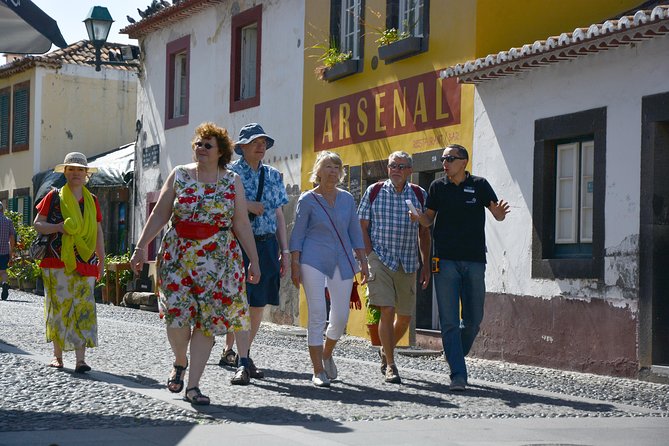
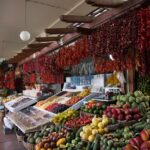
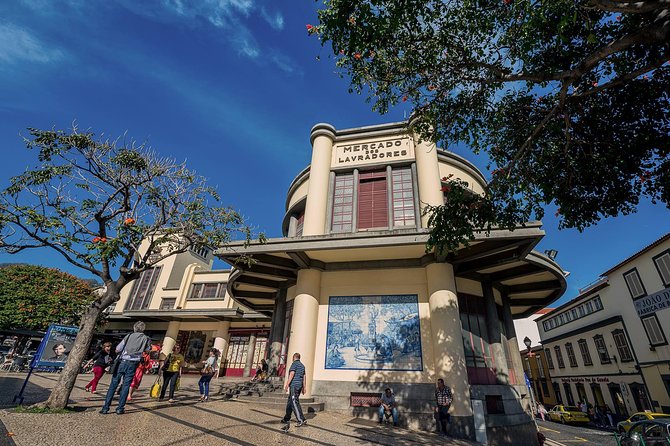
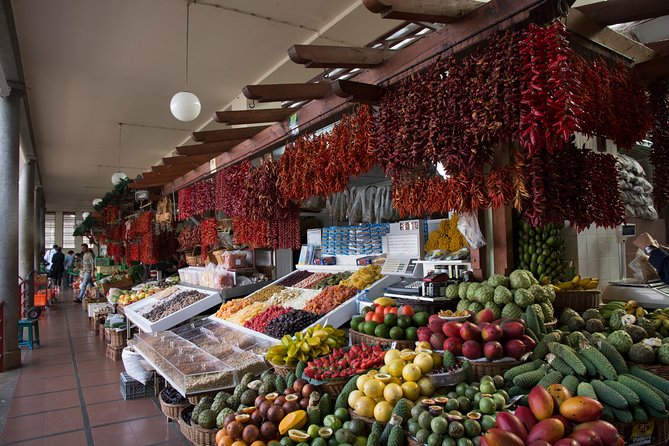
Next comes the Mercado dos Lavradores, the farmers’ market-style hub for fruit, vegetables, flowers, and fish. This stop is free in terms of admission, and it’s one of the strongest ways to understand Funchal beyond the postcard lanes.
The building itself is part of the story. It opened on 24 November 1940 and features tile panels with regional themes. There’s a design by Edmundo Tavares, and tile work credited to João Rodrigues—so while you’re looking at stalls, you’re also seeing a snapshot of how Madeira wanted to present itself in the mid-20th century.
What you should do here is simple: slow down. Let your senses catch up. Market tours can become a quick glance-and-go, but this one is timed like a pause in the day, not a sprint. It’s also a great reset if the earlier church stops have you mentally overloaded.
If you’re planning to eat in Funchal later, this is where you’ll start building instincts about what looks fresh and where the local rhythm is.






Zona Velha and Arte de Portas Abertas: Old Streets With a New Accent
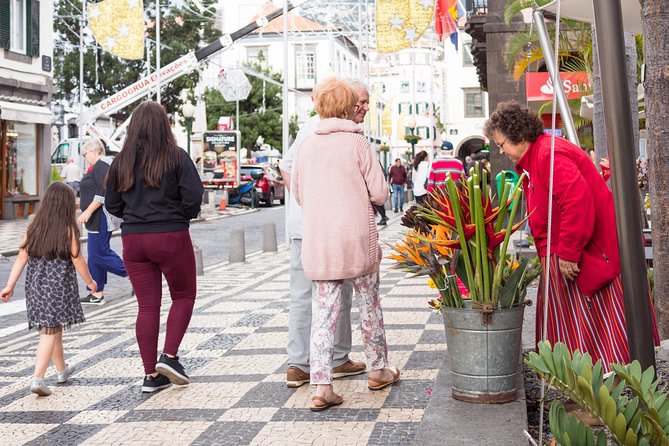
Zona Velha is where Old Town starts to feel like it belongs to artists and storytellers as much as to pilgrims and merchants. The area is known for nightlife and art, and the program specifically references Arte de Portas Abertas—an urban art project that transformed streets through work by local and foreign artists.
This part is free, which is great because it keeps costs predictable while still delivering something memorable. It’s also a good visual change from stone and tiles. You’ll walk past doors, street details, and painted surfaces that make you look up and sideways instead of straight ahead.
Practical tip: bring your phone camera mindset, but also keep your eyes moving. Street art can be easy to miss when you’re only filming. If you let the guide point out what to look for, you’ll leave with more than a random photo.
Praça do Colombo and the Regional Assembly: A Public-Square Break
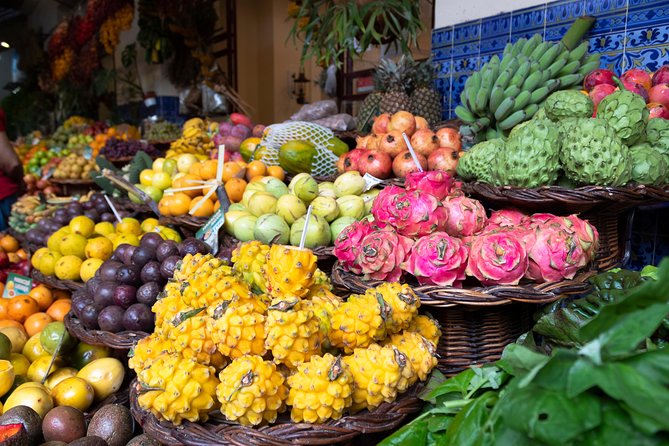
At Praça do Colombo, you’ll stop at the Assembleia Regional Da Madeira. Admission is included here, and the setting matters: it’s a key public-square area, the kind of place locals use as a reference point.
This stop works as a palate cleanser between the religious and artistic elements. After churches, you get a different kind of architecture and civic space. It also sets you up for the next big landmark cluster.
If you’re the type who likes to understand how a place organizes itself, squares like this tell you where people gather, where conversations happen, and where the city’s “center of gravity” sits.
Funchal Cathedral and João Gonçalves Zarco: Two Stops That Explain the Big Picture
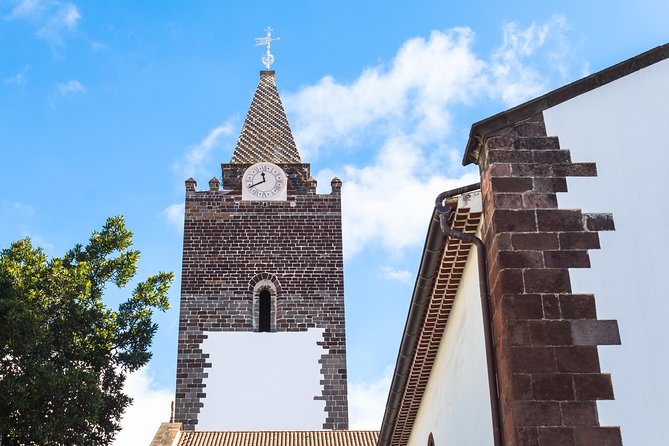
Funchal Cathedral is next, with admission included. The building dates from the 16th century and served as the seat of one of the largest diocese claims in the world. Even if you don’t remember all the religious math, the guided context helps you see why the cathedral mattered for influence and administration.
After the cathedral, you’ll also see the Estatua Joao Goncalves Zarco, one of the three navigators tied to the rediscovery of the island. This is a short stop, but it helps tie Madeira’s story back to its Portuguese exploration era. It’s the kind of monument that can look generic until someone connects it to the larger narrative you’ve been hearing the whole walk.
One smart move: when you hit these landmark points, stop for a moment just to look around. Old Town street layouts make more sense when you see where the squares and sightlines connect.
Jardim Municipal and the Traditional Wine Lodge: A Breather Before the Finish
The Jardim Municipal do Funchal stop is your break in greenery and a chance to reset. Admission is included at this point, and the garden fits the route well because it gives you a different texture—less stone, more open air.
From there, the tour includes a traditional Wine Lodge stop before continuing toward the Jesuits Church area. Even if you’re not a wine fan, this is still a cultural stop. Madeira’s wine culture is part of how the island built its economy and reputation, and seeing where that story shows up in the city makes the cathedral and market pieces feel connected.
If your legs are feeling it, this is when you’ll be glad the pace is designed for a real walking day, not a speed run. You won’t feel rushed between stops.
Loja Gaudeamus and Wine Tasting: Your Practical Payoff
The tour ends with a stop at Loja Gaudeamus with a wine tasting. This is your final payoff and it’s timed nicely after you’ve seen enough of the city that the taste feels like part of the story, not an afterthought.
Wine tastings can be hit-or-miss on tours, but here it’s built into the walking route with actual sightseeing context before it. So you’re not just consuming. You’re closing the loop on what you’ve been learning: Madeira’s Portuguese-era threads, its market traditions, and how wine became one of the island’s calling cards.
Practical advice: if you plan to keep exploring after the tour, take it slow. Wine tastings are fun, but you’ll likely want your next stop to be easy to reach. Since the tour returns you to the meeting point, you can plan your next move without worrying about getting across town.
Who This Old Funchal Walking Tour Fits Best
This is a strong choice if you want:
- A first-day orientation in Funchal Old Town
- A gentle-but-focused history walk mixing churches, civic sites, and daily life
- A small group experience where you can actually ask questions
- A market stop and a wine tasting without turning it into a long food tour
It’s also a good fit for history buffs and people who like cultural details. The walking distance is described as comfortable for most travelers, but that doesn’t mean it’s flat. Plan on hilly streets, especially in Old Town.
If you’re traveling with a tight schedule, the 2-hour duration is a sweet spot. If you’ve got all day, you’ll still enjoy it because it gives you a map in your head for the rest of the trip.
Should You Book the Old Funchal Walking Tour?
Yes, I think it’s worth booking—especially if you’re in Funchal for the first time and want to see more than the obvious street corners. The price-to-content ratio is strong because guided interpretation is paired with ticketed entrances at multiple sights and a market stop that’s free to enter.
I’d book this tour if you:
- Want an easy way to get oriented fast
- Like a mix of religion, civic life, and street culture
- Prefer small groups (max 10) over big coach crowds
- Want a Madeira wine tasting at the end
I’d hesitate only if you hate stairs and slopes or if you’re likely to arrive at the wrong start location. The meeting point confusion is real, and it can turn a smooth tour into a minor scramble. If you double-check the side entrance/reception area near the University of Madeira connection, you’ll avoid most of the stress.
If the weather looks iffy, keep your backup plan in mind too. This experience requires good weather, and if it gets canceled due to poor conditions, you’ll be offered a different date or a full refund.
FAQ
How long is the Old Funchal Walking Tour?
It lasts about 2 hours.
Is the tour offered in English?
Yes. English is listed as an available language, and the tour may run with a multi-lingual guide.
How big is the group?
The tour has a maximum group size of 10 travelers.
Are tickets and entrances included?
Admission tickets are included for several stops, while other stops like the Mercado dos Lavradores and Zona Velha are free.
Where do I meet for the tour?
The start is at the Jesuits’ College of Funchal area, and the tour ends back at the same meeting point. The exact meeting location can be easy to miss if you go to the main front of the church square, so look for the side entrance/reception area connected to the University of Madeira.
What if the weather is poor?
This experience requires good weather. If it’s canceled due to poor weather, you’ll be offered a different date or a full refund.