REVIEW · PORTO
Porto Half Day Private Tuk Tuk Tour
Book on Viator →Operated by Portuk · Bookable on Viator
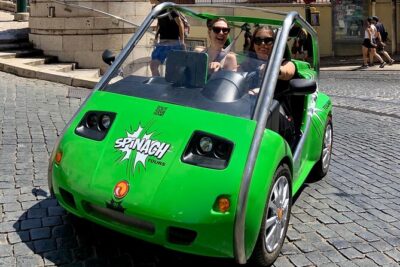
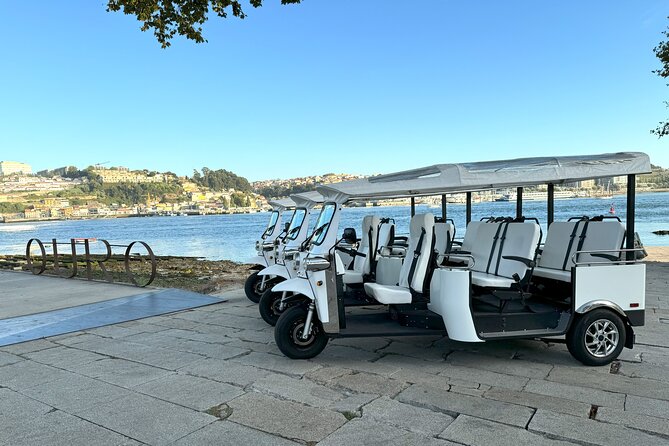
Porto on three wheels is a smart move. This private tuk-tuk half day pairs an on-board guide with quick, efficient stops so you can get your bearings fast—and the ride format is perfect for Porto’s steep streets. I especially like the chance to focus on what you care about, plus the fact that wine tasting is part of the experience. In the best-guided versions of this tour, guides like Ana and Gabi keep things upbeat, answer questions in English, and adjust the pacing to your group.
One thing to keep in mind: the tour is about speed and coverage, so if the city gets jammed (Porto is Portugal’s version of traffic chaos), you can end up with a rushed feel instead of relaxed sightseeing. Also, the tuk-tuk canopy can block views at times, and in a few cases people reported late starts or a loss of full privacy.
In This Review
- Key Things to Know Before You Go
- Porto on a Tuk-Tuk: Why This Works So Well
- Meeting at Rua de Augusto Rosa and How the Timing Feels
- Serra do Pilar and Dom Luís I Bridge: The River-View Payoff
- Igreja de São Francisco: When Porto’s Gold Takes Over
- Palácio da Bolsa and Infante Square: Porto’s Trading Power
- Jardins do Palácio de Cristal: The Best Half-Day Reset
- Mercado Ferreira Borges and the Iron-Architecture Story
- Igreja dos Carmelitas and Cordoaria Garden: Small Stops, Good Texture
- Torre dos Clérigos and Igreja do Carmo: Porto’s Signature Drama
- Fonte dos Leões, Antiga Cadeia da Relação, and Livraria Lello
- Fonte dos Leões
- Antiga Cadeia da Relação (Portuguese Centre for Photography)
- Livraria Lello
- Wine Tasting: The Value Add (If It’s Timed Well)
- Price and Logistics: Is $83.48 Per Person Good Value?
- How to Choose the Right Day (and the Right Questions to Ask)
- Should You Book This Porto Half Day Private Tuk Tuk Tour?
- FAQ
- How long is the Porto Half Day Private Tuk Tuk Tour?
- Where is the meeting point, and do you return there?
- Is the tour private?
- What language is the tour offered in?
- Is wine tasting included?
- Are admission tickets included for Livraria Lello or Torre dos Clérigos?
- Which stops are free to enter?
- What happens if the weather is bad?
- Who can participate, and can children join?
- Is free cancellation available?
Key Things to Know Before You Go
- You’ll cover Porto and Gaia efficiently: the route is built around major viewpoints and a bridge crossing without long walking.
- Serra do Pilar’s terrace is a highlight: the circular monastery complex gives you sweeping river views.
- You get the golden interior story: the tour includes the gilded, Baroque-style church experience.
- Some big-name stops cost extra: Livraria Lello and certain churches/towers often aren’t included.
- Your guide can steer the pace: some guides tailor stops and questions to your interests.
- Rain can change plans: it’s weather-dependent, so build flexibility into your day.
Porto on a Tuk-Tuk: Why This Works So Well
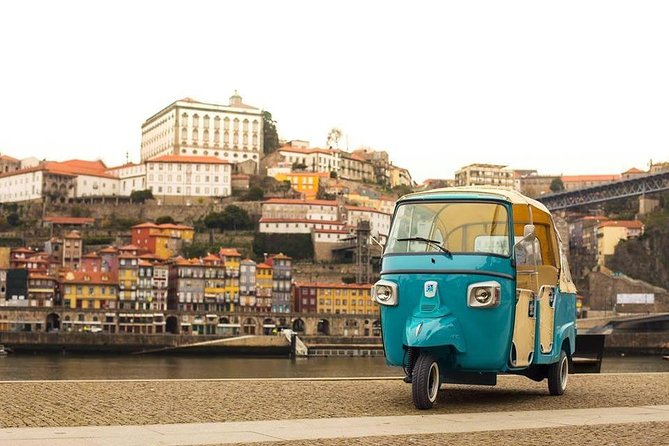
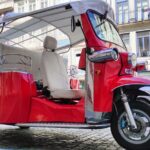
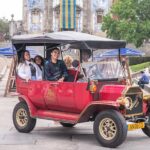
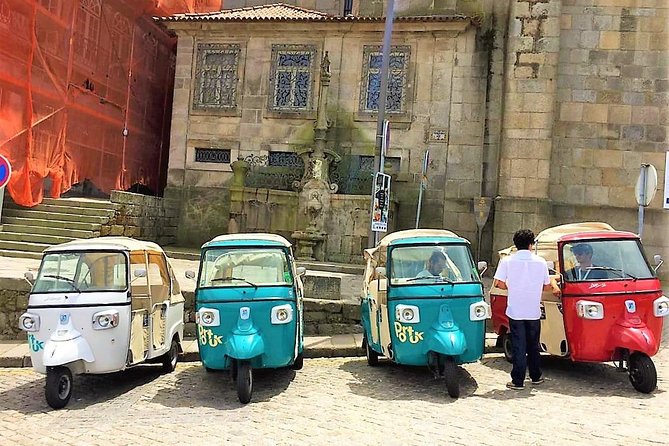
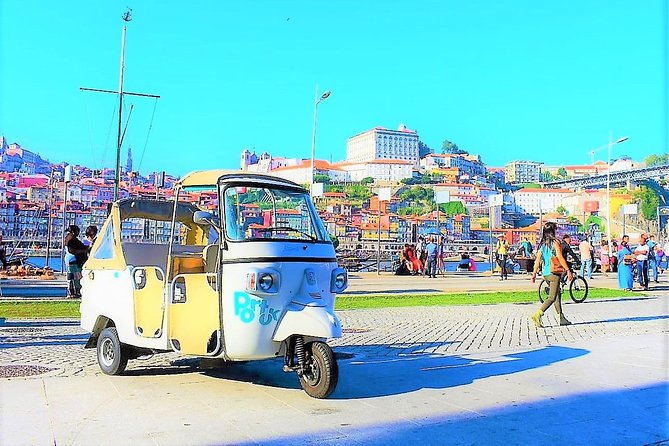
Porto is beautiful, but it’s also hilly. That’s the whole deal. A tuk-tuk isn’t just a novelty—it’s a practical tool for moving between neighborhoods without burning your legs on steep stairs and long detours.
What makes this tour feel worth it is the way it compresses key sights into a half day. You get guided context, then short photo breaks at the places that actually matter. And because it’s private, the guide can react to your pace—slow for photos, quicker for scenery, more time when you ask about a specific church facade or a historic square.
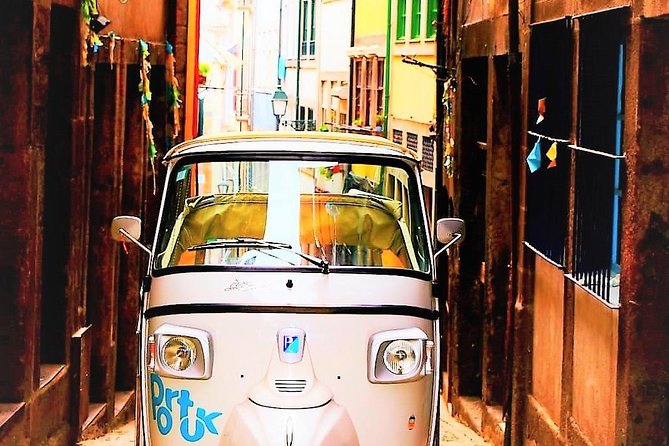
The format also helps with comfort. You’re not crawling along in traffic on foot or stuck behind slow-moving buses. The tuk-tuk can thread through narrower streets and drop you close to lookouts.
You can also read our reviews of more private tours in Porto

Meeting at Rua de Augusto Rosa and How the Timing Feels
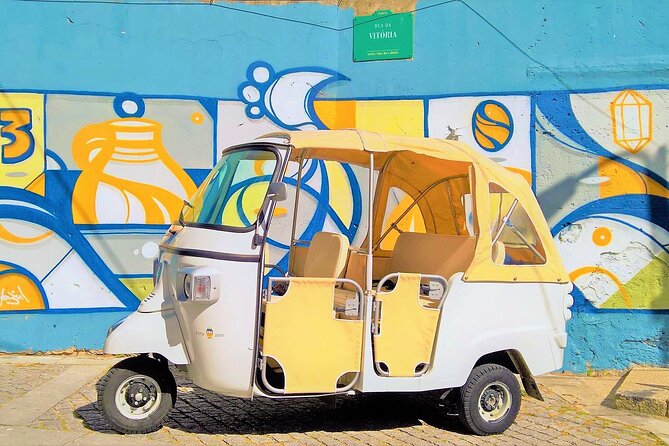
Your tour starts and ends back at R. de Augusto Rosa 180, right in central Porto. The overall duration is about 3 hours 30 minutes, so think of it as a “big highlights” sampler, not a deep-study course.
In an ideal run, the time feels well distributed: a mix of viewpoints, a couple of major interiors (or at least exterior emphasis), and one or two longer scenic stops. In less ideal situations—typically due to traffic, delays, or routing constraints—the tour can compress and start to feel like you’re “passing through” rather than learning.
My practical tip: plan a lighter second half of your day. Even when the tour is excellent, you’ll still want time to linger at a favorite stop afterward—especially if you fall for the river views or the more ornate churches.
Serra do Pilar and Dom Luís I Bridge: The River-View Payoff
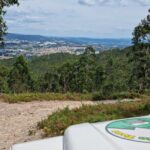
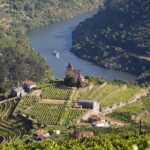
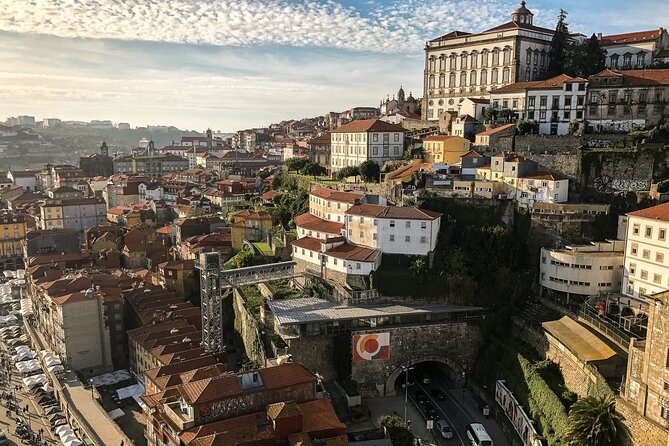
If you want one moment that makes Porto click, it’s the panorama you get after the climb to Mosteiro da Serra do Pilar.
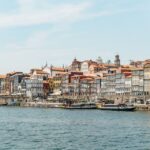
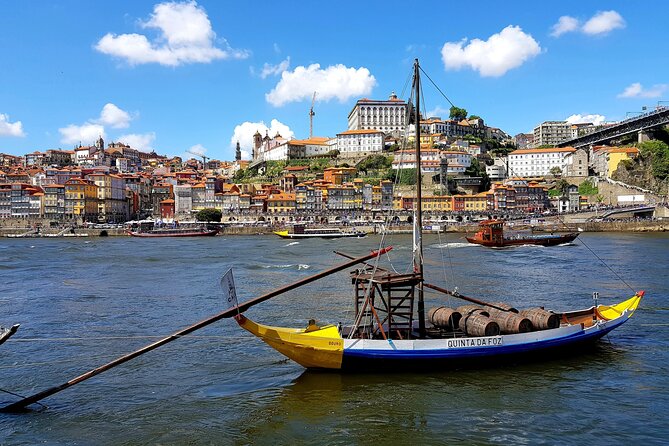
This UNESCO-listed monastery complex is known for its circular church plan, its dome-and-balcony design, and a circular cloister with 36 Ionic columns—a rare circular cloister layout in Portugal. From the grand terrace, the view stretches across the entire riverside zone of Porto and Gaia. You’ll see the historic center, with emphasis on the Cathedral area and Dom Luís I bridge, plus the Fontainhas district and the São João bridge from the other direction.
You typically get around 15 minutes here (and entry to the terrace is free). It’s short, but it’s timed well: you arrive when the view matters and you can step out for photos without losing your whole half day.
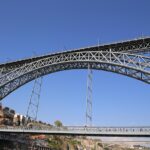
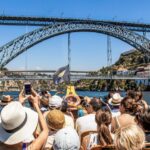
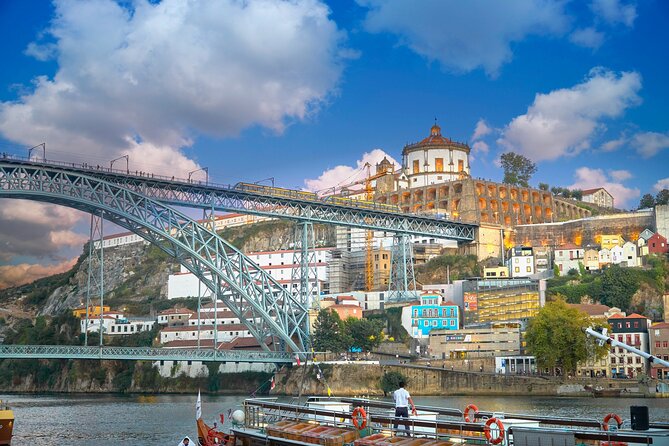
Then comes the bridge itself. The Dom Luís I bridge (inaugurated in 1886) is engineered history: built by Teófilo Seyrig, a disciple of Eiffel, and made from two overlapping iron decks. The span is huge for its age, and today the upper deck carries the Porto Metro, connecting the Cathedral area with parts of Vila Nova de Gaia.
This bridge stop is where you understand Porto as a city of movement—people, goods, and daily life crossing the river for centuries.
Igreja de São Francisco: When Porto’s Gold Takes Over
One of the most striking stops is Igreja de São Francisco, the Gothic church tied to a Baroque-era interior makeover. Construction began in the 1300s, but what people remember is the ornate gilded interior from the 17th and 18th centuries.
The church is famous enough that it’s often described through the famous reaction of Count Raczynsky—he called it the Church of Gold because the carved gilded woodwork and visual richness left him stunned.
Two specific details are worth looking for:
- The Tree of Jesse motif.
- The catacombs, which are part of the church’s layered story.
This is one of those stops where a short amount of guided context makes a big difference. Without explanation, you can still enjoy the visuals. With explanation, you understand why the decoration feels so intentionally dramatic.
Palácio da Bolsa and Infante Square: Porto’s Trading Power
Next up is one of Porto’s most important civic monuments: Palácio da Bolsa (the Stock Exchange Palace).
It’s neoclassical in design, built in 1842, and associated with the Commercial Association of Porto. Even if you only have a short window, this stop is valuable because it shows a different side of Porto—less about churches and more about the city’s historical wealth and influence.
The major highlight is the Arabian Room, famous for its ornate styling. Even if your time is limited, it’s exactly the kind of “wait, I didn’t expect this in Porto” moment you want on a highlights tour.
Nearby, you’ll pause at the square where a garden sits beneath an underground car park, plus a Monument to Infante D. Henrique. The monument construction started in 1894, finished in 1900, and reflects Portugal’s navigation-and-faith narrative.
If you like the idea of linking monuments to the city’s real economic story, this pairing makes sense: Bolsa for commerce, the monument for the seafaring mythos that fueled it.

Jardins do Palácio de Cristal: The Best Half-Day Reset
After the architectural intensity, you get a breather at Jardins do Palácio de Cristal.
This is one of Porto’s most loved garden escapes: lawns threaded with paths, fountains, sculptures, and big mature plantings like magnolias, camellias, cypress, and olive trees. The gardens are designed like a mosaic of smaller spaces, so the place feels like it unfolds as you walk.
Most importantly, you’ll get city-and-river views again here, with the Douro and the bridge lines in your sightline.
You get about 20 minutes, and it’s enough to reset your eyes. Don’t try to do too much. Use it as a pause between monuments, then head back out ready for the next cluster of churches and classic Porto streets.
Mercado Ferreira Borges and the Iron-Architecture Story
Another “Porto detail” stop is the former market space built in 1885. The iron architecture is the key: this is a classic example of Porto’s industrial design sensibility, even when the city looks like pure old-world charm from street level.
The venue has since been repurposed as an entertainment area. It’s a great stop if you like seeing how old structures survive by changing their job, not by being frozen in time.
This is also a good moment to ask your guide a question—something simple like how the city shifted from trade to modern uses. A strong guide will connect the dots.
Igreja dos Carmelitas and Cordoaria Garden: Small Stops, Good Texture
Not every stop is a headline monument, and that’s okay. The value of a good tuk-tuk route is variety.
You’ll visit Igreja dos Carmelitas, a 17th-century church with a classical facade dating from the 1850s. The project is attributed to Nicolau Nasoni, and the interior features Porto rococo style. This stop is often quick and mostly exterior-friendly in a half-day plan, but it adds architectural texture.
Then there’s Jardim de João Chagas, better known as Cordoaria Garden. The rope-making story is the hook here—rope makers stayed in the area for about 200 years, and the garden name connects to that craft past. There are statues of notable figures and a sculpture set from 2001, plus the specific work titled O rapto de Ganímedes.
Even if you’re not a garden person, these stops help Porto feel like a lived-in city rather than just a checklist of postcards.
Torre dos Clérigos and Igreja do Carmo: Porto’s Signature Drama
Now we hit two places that make Porto recognizable on photos.
First: Torre dos Clérigos. It’s a Baroque church tower that’s visible from many points around the city and is one of Porto’s most characteristic silhouettes. The tower stop is listed as not included for admission, so if you want to climb, plan for that ticket decision.
Then: Igreja do Carmo. This 18th-century church is known for its Porto rococo architecture and interior carvings. A distinctive detail is the side facade covered with azulejo tiles (decorative tilework) in 1912, with drawings by Silvestre Silvestri. The tile drawings connect to devotional themes honoring Nossa Senhora (Our Lady).
If you’re someone who loves small visual specifics, this is a strong stop. The guide’s explanations can help you notice the differences in style and placement, instead of just seeing a pretty wall of tiles.
Fonte dos Leões, Antiga Cadeia da Relação, and Livraria Lello
This final stretch blends symbolism, photography, and book-lovers’ obsession.
Fonte dos Leões
The Fountain of the Lions is a 19th-century fountain built by a French company. It’s described as a copy in most parts of a fountain from Leicester, England, cast by the French foundry Val d’Osne. It’s a quick stop, but it’s the kind of quirky detail that makes Porto feel connected to wider Europe.
Antiga Cadeia da Relação (Portuguese Centre for Photography)
Then comes a powerful contrast: the old prison complex now known as the Portuguese Centre for Photography. The building dates back to 1582, rebuilt in 1767 in neo-classical style. One striking feature is the geometric sequence of windows—103 in total—and the building has four facades.
The prison story matters here because you can feel the change from confinement to creativity. This is also where the guided context really helps. You’re not just looking at a stone structure; you’re seeing how Porto repurposed its own hard chapters.
Livraria Lello
Finally: Livraria Lello, the famous Art Nouveau facade with neo-Gothic details. The library building opened in 1906, and the inside design includes painted plaster that imitates wood, plus a major staircase and a stained-glass skylight with the library monogram and the motto Decus in Labore.
Admission here is not included, so if you want to go in, treat that as a separate plan slot in your mind—even though it fits well at the end of this half-day route.
This is also the stop where time management matters most. It’s popular, and if you’re rushed, you’ll spend more time queueing than looking.
Wine Tasting: The Value Add (If It’s Timed Well)
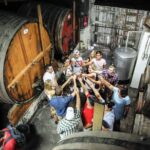
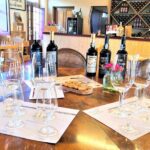
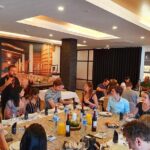
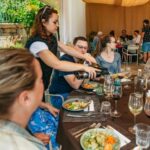
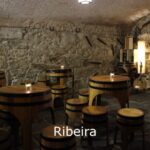
Wine tasting is listed as included. In a good half-day tour, it works as a mid-to-late-day rhythm check: you’ve walked or stood enough to earn a pause, and you get a chance to connect Porto’s sights to Porto’s flavor.
Because the tour is weather- and traffic-dependent, the tasting can sometimes feel rushed if the route runs late. So if wine is a big priority, I’d ask your guide early on how they plan to fit it in and whether you can adjust timing for it.
Price and Logistics: Is $83.48 Per Person Good Value?
At about $83.48 per person for roughly 3½ hours, this is not a bargain-basement option. But it can still be good value if you’re:
- short on time and want the big names plus river viewpoints,
- traveling with a group that appreciates guidance (rather than solo wandering),
- interested in structure: driver/guide, commentary, and wine tasting.
Where the price can feel less justified is when timing goes sideways. If your tour starts late, feels rushed, or skips key components, the cost-to-experience ratio drops quickly.
Also, tuk-tuk tours are inherently more variable than bus tours. Porto traffic and narrow streets mean the itinerary’s “shape” can change. Your best defense is mindset: treat it as a flexible guided ride, not an immutable schedule.
How to Choose the Right Day (and the Right Questions to Ask)
This tour is marked as requiring good weather. If you’re visiting in a rainy week, keep expectations realistic. Even with a canopy, rain can make outdoor stops less enjoyable.
Before you roll, ask your guide two simple questions:
- What’s the order you recommend today to protect the river viewpoints?
- Where do you want to spend extra time if we run short?
This turns the half-day from a checklist into your own day.
And for comfort, bring a small photo plan. Porto photos often take a few tries: one for the skyline, one for a bridge angle, one for a facade detail. You’ll get more great pictures if you’re ready to move quickly when the view is right.
Should You Book This Porto Half Day Private Tuk Tuk Tour?
Book it if you want a fast, guided orientation to Porto and Gaia—especially if you’d rather spend your energy learning the city’s stories than battling steep hills. The combination of Serra do Pilar terrace views, Dom Luís I bridge, the gold interior of São Francisco, and the Bolsa setting makes a strong highlights blend for the time.
Skip—or at least reconsider—if you’re very sensitive to schedule drift, want long unhurried museum-style visits, or strongly dislike the idea of a canopy affecting sightlines. Also, if privacy is a must, confirm with the provider that your tuk-tuk will be dedicated to your group the whole time.
If you go in with the right expectations—efficient, guide-led, and view-focused—you’ll likely come away feeling like Porto got explained clearly and shown quickly.
FAQ
How long is the Porto Half Day Private Tuk Tuk Tour?
It’s about 3 hours 30 minutes.
Where is the meeting point, and do you return there?
The tour meets at R. de Augusto Rosa 180, 4000-528 Porto, and it ends back at the meeting point.
Is the tour private?
It is described as private, with only your group participating.
What language is the tour offered in?
The tour is offered in English.
Is wine tasting included?
Yes, wine tasting is included.
Are admission tickets included for Livraria Lello or Torre dos Clérigos?
Livraria Lello and Torre dos Clérigos are listed as not included. The same goes for Igreja do Carmo.
Which stops are free to enter?
Some stops are listed as free admission, including Serra do Pilar and Jardins do Palácio de Cristal, and several church or exterior stops.
What happens if the weather is bad?
The experience requires good weather, and if it’s canceled due to poor weather you’ll be offered a different date or a full refund.
Who can participate, and can children join?
Most travelers can participate. Children must be accompanied by an adult. Service animals are allowed.
Is free cancellation available?
Yes. You can cancel up to 24 hours in advance for a full refund.