REVIEW · EVORA DISTRICT
Marble Tour in Vila Viçosa
Book on Viator →Operated by Rota do Marmore do Anticlinal de Estremoz · Bookable on Viator
If marble could talk, it would start in Vila Viçosa. This 2-to-3 hour stop in the Évora District takes you from stone geology to the finished products—and you’ll see the real machinery behind the craft, not just pretty samples.
What I like most is how the tour connects the dots: you start with the marble’s journey in the Nucleus DE Pedreiras DE Marmore, then move into a workshop where manual carving and transformation come to life.
One practical consideration: you’ll need your own vehicle to get between the meeting point and the different sites, so plan a bit of driving instead of expecting a do-it-all pickup.
In This Review
- Key highlights you won’t want to miss
- Why Vila Viçosa marble makes sense in a short tour
- Starting at Rota do Mármore: what your visit is built around
- Nucleus DE Pedreiras DE Marmore: geology plus the working reality
- Workshop workbenches: where manual marble transformation shows its personality
- Industrial milling workshop: the mechanized side of marble production
- The guide factor: English delivery that stays practical
- Price and value: is $30.25 worth it?
- Logistics you need to plan: car, footwear, and timing
- Who this tour fits best (and who might prefer something else)
- Should you book the Marble Tour in Vila Viçosa?
- FAQ
- How long is the Marble Tour in Vila Viçosa?
- How much does the Marble Tour cost?
- Is the tour offered in English?
- What is the maximum group size?
- Do I get hotel pickup or hotel drop-off?
- Do I need my own vehicle?
- Is food included in the tour price?
- What if it’s canceled due to weather or I need to cancel?
- Where do I meet for the tour?
Key highlights you won’t want to miss
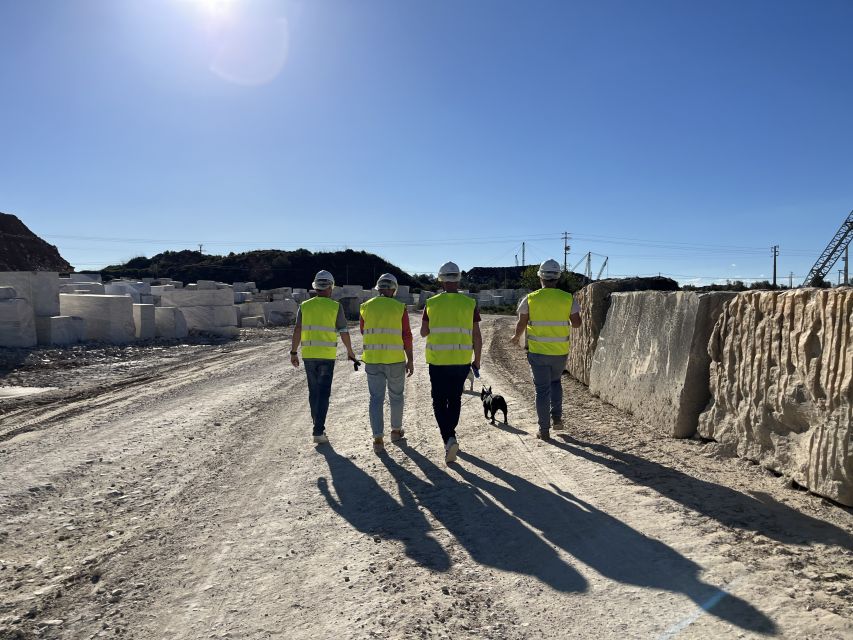
- Nucleus DE Pedreiras DE Marmore presentation with extraction processes, hazards, and the machinery used
- Hands-on contrast between manual artisan work and mechanized industrial processing
- Real-world safety talk about dangers workers deal with in both settings
- English-led guidance with a professional but informal local tone
- Small group size (maximum 10 people), so questions actually get answered
- Quarry-to-product walkthrough that follows the full chain from stone to final result
Why Vila Viçosa marble makes sense in a short tour
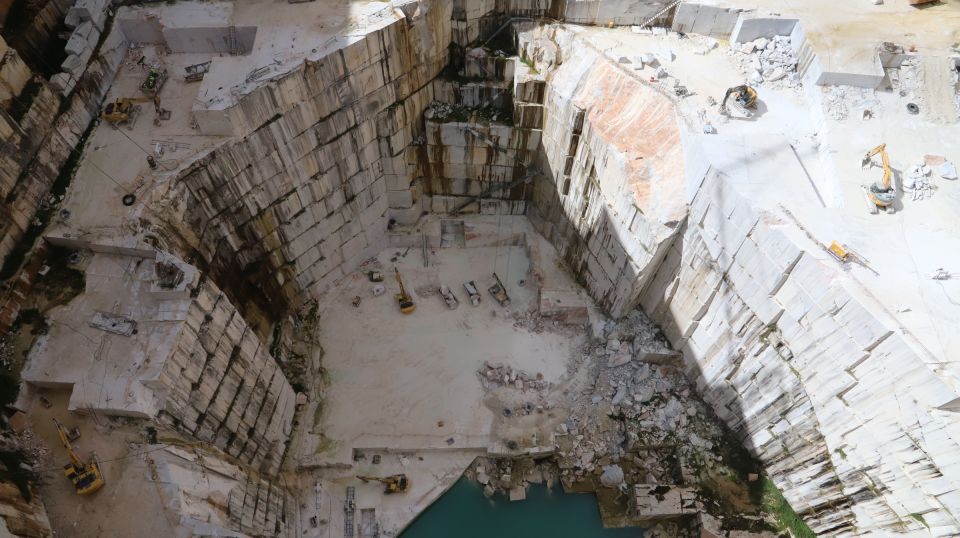
Marble is one of those materials you recognize instantly, but it’s easy to forget how much work and risk sits between a mountain and a countertop. This tour tackles that gap fast, in a focused chunk of time. You’re not stuck in a long museum lecture; you’re guided through how marble is extracted, handled, and transformed.
I also like that the route is tied to a specific marble setting in the region around the Anticlinal de Estremoz. That matters because you’re not getting generic talk about marble everywhere—you’re getting the local process and the local tools. The vibe is practical: watch what happens, then understand why it’s done that way.
If you’re short on time but want something more meaningful than a quick photo stop, this fits really well.
You can also read our reviews of more tours and experiences in Evora District.

Starting at Rota do Mármore: what your visit is built around
You meet at Rota do Mármore, Av. Duques de Bragança 4, 7160-209 Vila Viçosa. The activity starts there and ends back at the same place, which makes planning easier if you’re pairing this with other stops in Vila Viçosa or the surrounding Alentejo area.
The tour runs in English and keeps things simple: a professional yet informal local guide leads the session. From what’s described in the guide experiences, the best part isn’t just that the guide talks well—it’s that they connect geology and process. You’ll hear why certain marble looks the way it does, then you’ll see how that stone becomes something useful.
Also, the group size is capped at 10 people, so it doesn’t feel crowded or rushed. That’s a big deal for this kind of tour, because questions come up naturally when you’re watching machines and processes.
Nucleus DE Pedreiras DE Marmore: geology plus the working reality
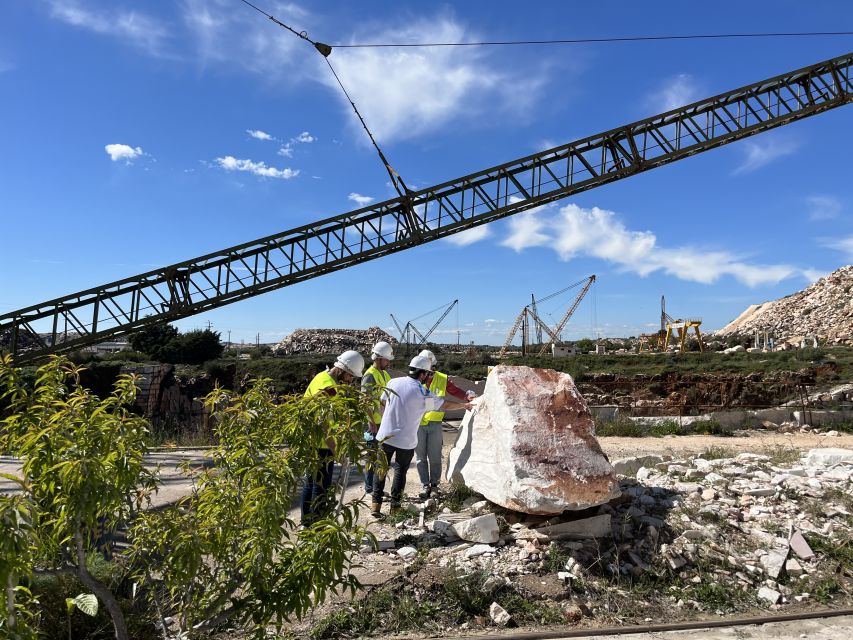
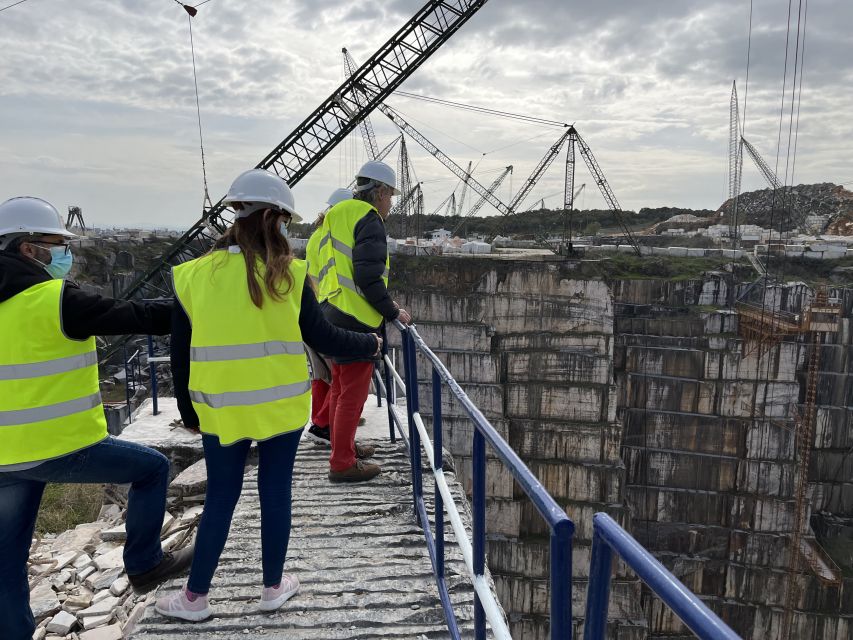
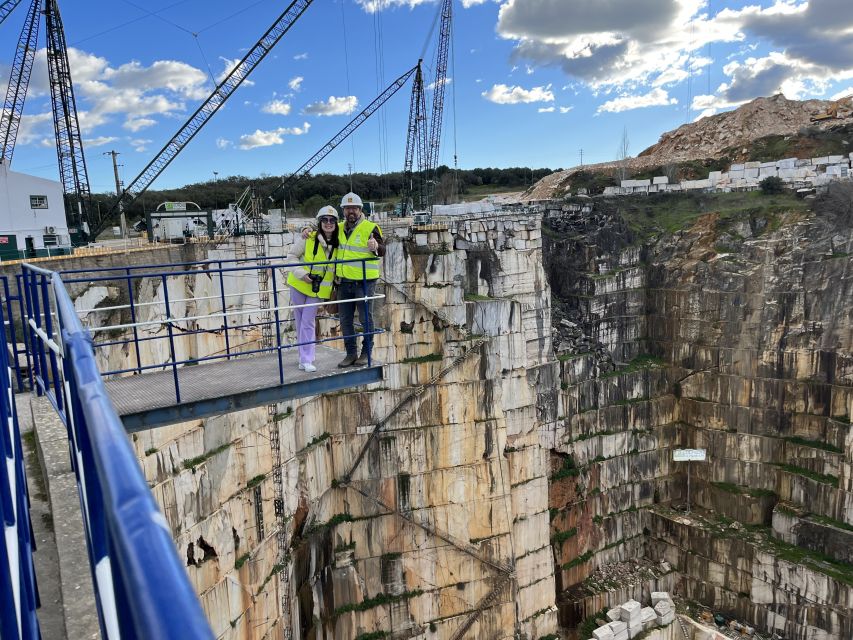
Your first stop is in Vila Viçosa at the Nucleus DE Pedreiras DE Marmore of the region. This is the part where you get your bearings and learn the “why” behind what you’ll see later.
Here’s what the presentation covers:
- passage and presentation of various stones
- the processes of extraction of the marble
- existing hazards workers face
- the machinery used
- economic and artistic aspects of marble
For me, this is the value anchor of the whole experience. If you only visited a workshop, marble might feel like pure craft. If you only visited a quarry, it might feel like brute industry. This opening gives you the context that links both worlds—craft and construction—into one story.
One note: the tour description makes it clear you may need your own vehicle to travel between the spot of encounter and the sites where the stones are shown. So I’d treat the “meeting point” as your hub, not as the place where you’ll see everything without moving.
Workshop workbenches: where manual marble transformation shows its personality
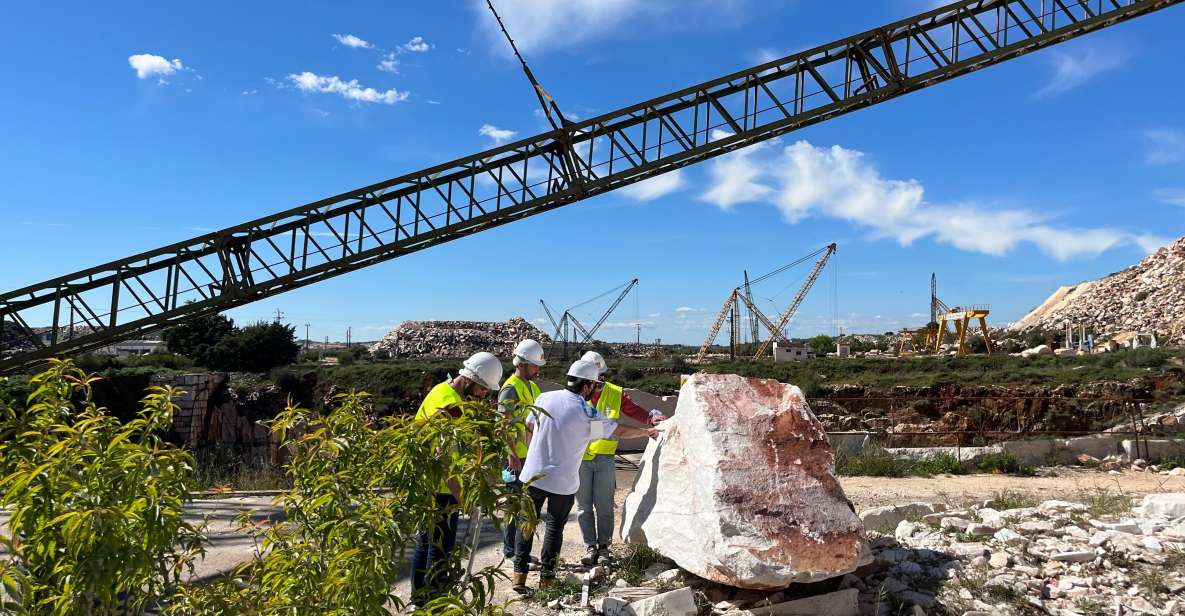
After the quarry-side context, the tour shifts to a workshop where artisanal and manual transformation of marble is demonstrated. This is where you see how the same stone can become totally different outcomes depending on technique.
You’ll get a guided look at:
- the techniques used
- the dangers existing in that workshop environment
- the machinery involved (even in a manual-focused setting)
- the final work
- personal stories from the master workshop
I really like workshops like this when I’m traveling, because you get more than visuals—you get decision-making. A guide can point out the kinds of problems artisans avoid, the reason certain tools matter, and how experience shapes the final look. And the fact that the workshop includes the hazards and safety discussion keeps it grounded. This is production work, not a hobby demonstration.
In the English-led sessions I reviewed, guides such as João and Juaquina were praised for enthusiasm and for explaining marble geology before taking people to quarry and polishing/cutting work. That combination is exactly what you want here: the craft makes more sense when you already understand what the stone is doing under the surface.
Industrial milling workshop: the mechanized side of marble production
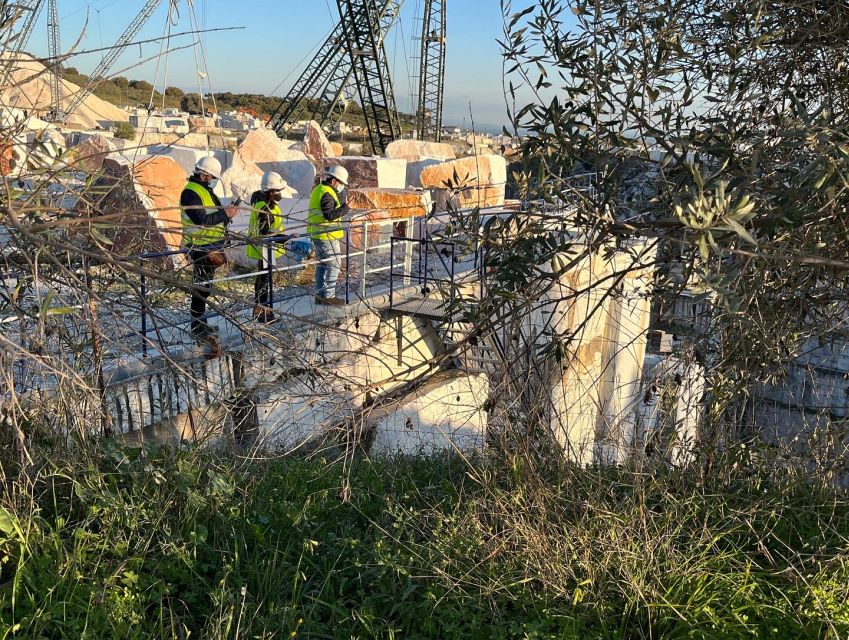
Next comes a marble milling / industrial processing workshop. If the artisan workshop shows the human touch, this segment shows the scale and speed of mechanized work.
This part is presented as mechanized industrial processing, and you’ll be shown:
- the different machines used
- existing hazards
- examples of final products
- the entire operational context of a milling
Even if you’ve never worked with stone, you can usually tell in minutes what changes when processes become industrial: steadier throughput, repeated stages, and specialized equipment for shaping and finishing. The tour’s approach helps you connect the machine to the result. Instead of just seeing a big machine, you learn what job it performs and why it matters.
Also, because the tour keeps returning to hazards and how work is done safely, the industrial part doesn’t feel like an abstract factory tour. It feels like a real factory floor explained for non-workers.
The guide factor: English delivery that stays practical
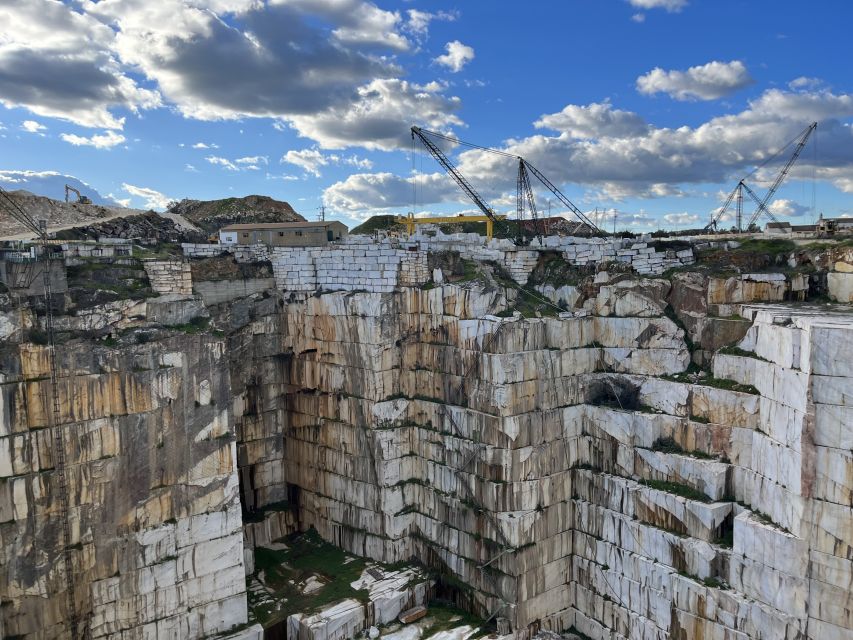
This tour is led by a local guide who’s described as professional but informal. That’s a sweet spot. You get clarity without sounding like a textbook, and you’re more likely to ask follow-up questions.
In the guide notes people shared, the English delivery stood out for being good and entertaining, with enthusiastic explanations of marble geology and process. Juaquina was specifically praised for explaining the geology and then moving into quarry/cutting/polishing. João was praised for attention and knowledge, which reinforces that the guides are a core part of the value.
Why you should care: in a tour like this, facts are only half the story. The other half is how you translate a technical process into something you can picture—especially when you’re watching machinery and stone work at the same time.
Price and value: is $30.25 worth it?
At $30.25 per person, this tour is priced as an accessible, process-focused experience. You’re not paying for a fancy venue—you’re paying for guided access to multiple parts of the marble production chain, plus instruction in English.
What makes it good value is the range of what you see in a short time:
- a regional nucleus presentation (extraction, hazards, machinery, and stone types)
- a workshop for manual transformation
- an industrial milling processing segment (machines, hazards, product examples)
Add in the small group size and you get more attention per person than you would in a big bus tour. If you’re the kind of traveler who likes understanding how things are made—rather than just where to take photos—this price point fits nicely.
Logistics you need to plan: car, footwear, and timing
This experience is straightforward, but it has a few must-know details.
Bring closed footwear. The tour requires it, which usually makes sense when you’re walking around workshop and processing areas.
Bring your own vehicle. The tour states that you need your own vehicle for transportation between the spot of encounter and the stones (the sites to visit). There’s no hotel pickup or hotel drop-off, either. So treat this like a self-driven, guided experience: you’ll drive between points, the guide will handle the explanations once you’re there.
Duration is listed as about 2 hours and also described as 2 to 3 hours total. I’d plan for the longer end if you like to ask questions or take time reading the presentation areas.
Finally, it’s weather dependent. If conditions aren’t good, you may be offered another date or a full refund, so don’t treat it like an guaranteed outdoor event no matter what.
Who this tour fits best (and who might prefer something else)
This tour is a strong fit for you if you:
- want to understand the full path from stone to finished product
- like hands-on process explanations, including the safety side of industrial work
- enjoy small-group tours where you can actually talk with the guide
- are traveling through the Évora District and want an experience that feels tied to local production
It might be less ideal if you:
- don’t want to drive between sites (because you’ll need your own vehicle)
- hate the idea of workshops and industrial areas, even if the tour is educational and guided
- want a long, slow cultural walking experience with minimal standing or movement
The tour calls for moderate physical fitness. That usually means you should expect some walking and standing around workshop areas.
Should you book the Marble Tour in Vila Viçosa?
I think you should book this tour if you’re curious about how marble becomes product—and you want explanations that make the process click quickly. The mix of extraction context, a manual artisan workshop, and an industrial milling presentation gives you a full picture without eating your day.
If you’re traveling with limited flexibility on driving, or you’re hoping for hotel pickup and drop-off, this probably won’t feel as convenient. But if you’re okay with using your own car and wearing closed shoes, this is one of the more practical ways to connect Vila Viçosa to the marble industry in just a couple hours.
FAQ
How long is the Marble Tour in Vila Viçosa?
It runs about 2 to 3 hours.
How much does the Marble Tour cost?
The price is $30.25 per person.
Is the tour offered in English?
Yes, the tour is offered in English.
What is the maximum group size?
The group is limited to a maximum of 10 people.
Do I get hotel pickup or hotel drop-off?
No. Hotel pickup and hotel drop-off are not included, and the tour ends back at the meeting point.
Do I need my own vehicle?
Yes. You need your own vehicle to travel between the meeting point and the places to visit.
Is food included in the tour price?
Food and drinks are not included, unless otherwise specified.
What if it’s canceled due to weather or I need to cancel?
Good weather is required. If it’s canceled due to poor weather, you’ll be offered a different date or a full refund. You can also cancel for a full refund up to 24 hours in advance.
Where do I meet for the tour?
You meet at Rota do Mármore, Av. Duques de Bragança 4, 7160-209 Vila Viçosa, Portugal.