REVIEW · ALVOR
Lagoa: Dolphins Expedition with biologist guide on board
Book on GetYourGuide →Operated by Capitão Nemo · Bookable on GetYourGuide
Wild dolphins in the Atlantic never get old. This 3-hour Lagoa trip mixes responsible dolphin watching with real marine-science talk from a biologist on board, so you’re not just chasing sightings.
What I love most is the small-boat feel (they cap the ride at 16) and the way the captain and guides adjust the route based on where dolphins are, not on a fixed script.
Second, I like that you get practical, plain-language guidance in multiple languages. On board, crews like Pedro and Ana (and the rest of the team) focus on behavior and conservation, and they also keep things moving with a short safety briefing before you go out.
The main drawback is simple: it’s the open sea. Weather and port rules can affect visibility, and if safety conditions aren’t met, the outing can be cancelled or rescheduled.
In This Review
- Key Things That Make This Dolphin Trip Worth It
- Lagoa Dolphin Watching: What the Experience Really Feels Like
- Your Starting Point at Capitão Nemo in Parchal
- Safety Briefing and Life Jackets: Quick, Clear, and Not Overdone
- The Atlantic Search: How the Crew Finds Dolphins (and Why It’s More Than Luck)
- Dolphins Up Close, Without the Wrong Kind of Close
- Beyond Dolphins: The Bonus Wildlife Factor
- What the 3-Hour Timeline Means for Your Day Plan
- Price and Value: Is $82 a Fair Deal?
- Who This Tour Fits Best (and Who Might Want a Different Day)
- What to Pack So You Stay Comfortable During the Atlantic Wind
- A Responsible, Licensed Operation You Can Trust
- Should You Book Lagoa’s Dolphins Expedition?
- FAQ
- Where does the tour start and where do I park?
- How long is the dolphin expedition?
- Will I see dolphins for sure?
- What sea animals might I see besides dolphins?
- Who is on board with you?
- What languages are available for the tour?
- What should I bring for comfort on the boat?
- What’s not allowed during the trip?
- What facilities are available at the meeting point?
- Is the tour refundable if conditions aren’t safe?
Key Things That Make This Dolphin Trip Worth It
- Biologist-led insights: you hear why dolphins behave the way they do, not just facts read off a poster
- Ethics you can see in action: licensed, trained, and following a strict code of conduct for cetaceans
- Route changes with dolphin activity: the search is guided by where pods show up, so it stays “live”
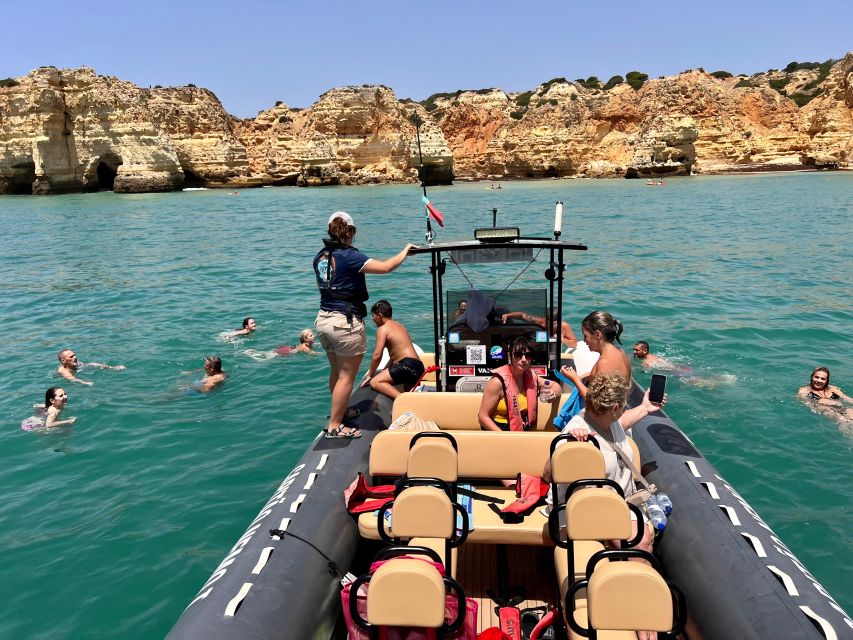
- Small group on a purpose-built rescue boat: capacity for 20, limited to 16 for a more family-friendly setup
- A high sighting record, still wild: they cite 98% dolphin sighting success, but animals stay unpredictable
- Bring-your-own layers: offshore wind can cool things fast, even when the coast feels fine
Lagoa Dolphin Watching: What the Experience Really Feels Like
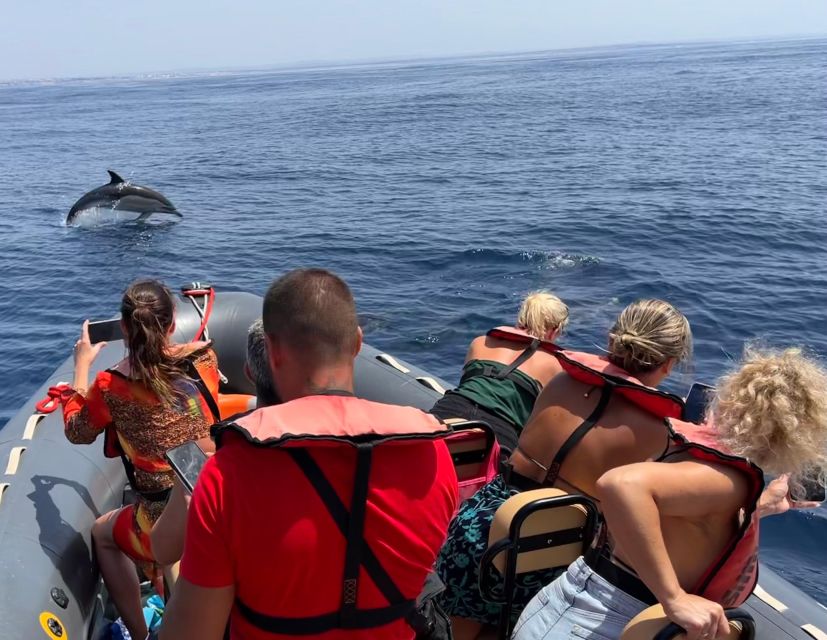
This is the kind of tour that hits two goals at once. You get the magic of spotting dolphins in their natural habitat, and you get a guided explanation of what you’re seeing, why it matters, and how to watch with minimal impact. That combination is the reason this trip earns strong marks again and again.
The boat ride is also part of the deal. You start at Capitão Nemo Algarve in Parchal (Lagoa area), do a quick safety briefing, then head out to the open water for an Atlantic safari. The duration is about 3 hours total, but the exact time on the water can vary depending on where dolphins are and how the sea and local port conditions shape the day.
One more thing I appreciate: they’re blunt about reality. Wild dolphins can’t be summoned. Sometimes pods are distant, less active, or spread out. Still, their track record for seeing dolphins is strong, and the crew keeps searching through the outing rather than treating the trip like a lottery you abandon early.
You can also read our reviews of more tours and experiences in Alvor.
Your Starting Point at Capitão Nemo in Parchal
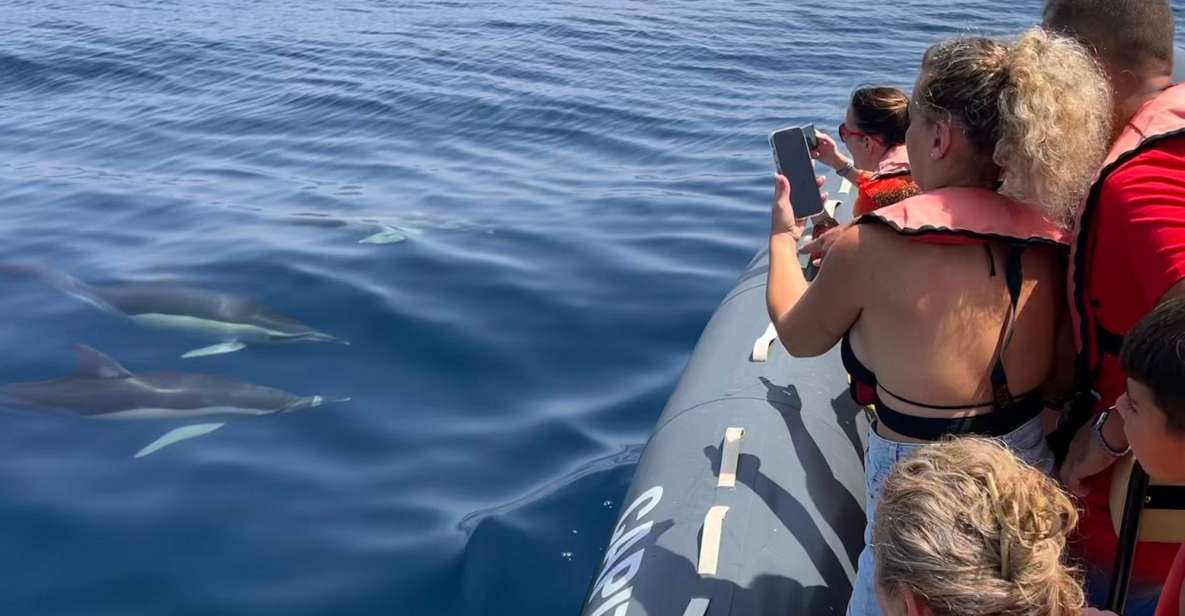
Most people underestimate how much the start matters on boat tours. Here, you’ll meet at Capitão Nemo Algarve. There’s free car parking at the meeting point, and there’s a WC toilet on the pier area, which is genuinely useful when you’re dealing with families, kids, and timing.
Directions are straightforward: after crossing the railway line, continue ahead and you’ll find a car park on the right. If it’s busy, there’s also parking by a cobbled street on the left, but it can fill up. From there, you walk about 30 meters to the boarding pier, directly in front of the restaurant and swimming pool.
The key practical tip: wait for a crew member and don’t go down to the boat yourself. It’s for security, but it also helps the flow so everyone boards calmly.
Safety Briefing and Life Jackets: Quick, Clear, and Not Overdone
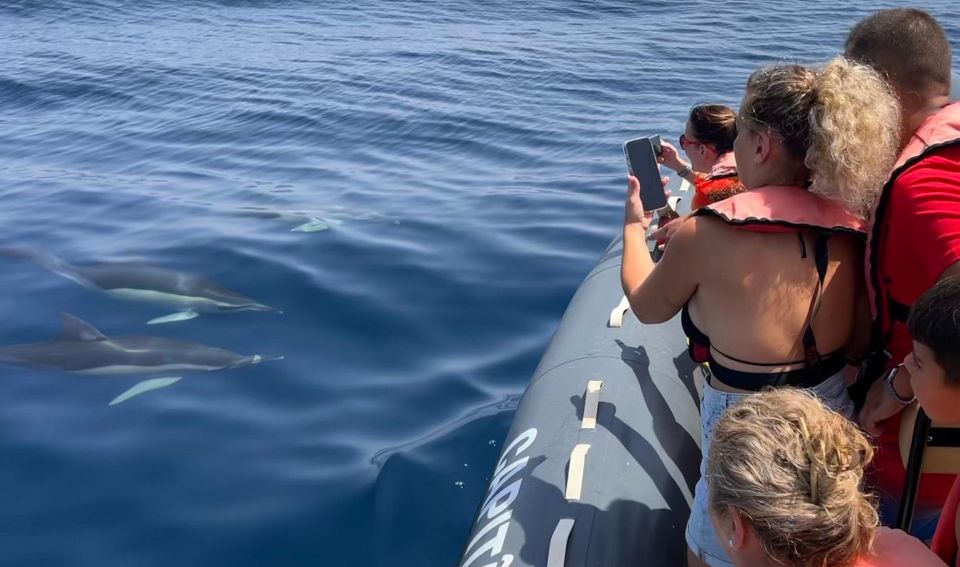
Before you go out, there’s a short safety briefing (about 10 minutes). You’ll be given life jackets and you’ll hear what the crew expects during the ride. This matters because the tour is intentionally active: you’re out on open water, scanning for animals, and moving your attention constantly between sea surface, horizons, and the crew’s spotting signals.
The boat itself is a brand-new typical rescue boat adapted for tourism. It’s designed to be unsinkable thanks to air chambers, and capacity is planned around safety. They also cap it at 16 people, even though it can hold up to 20, which helps with comfort and sightlines.
The Atlantic Search: How the Crew Finds Dolphins (and Why It’s More Than Luck)
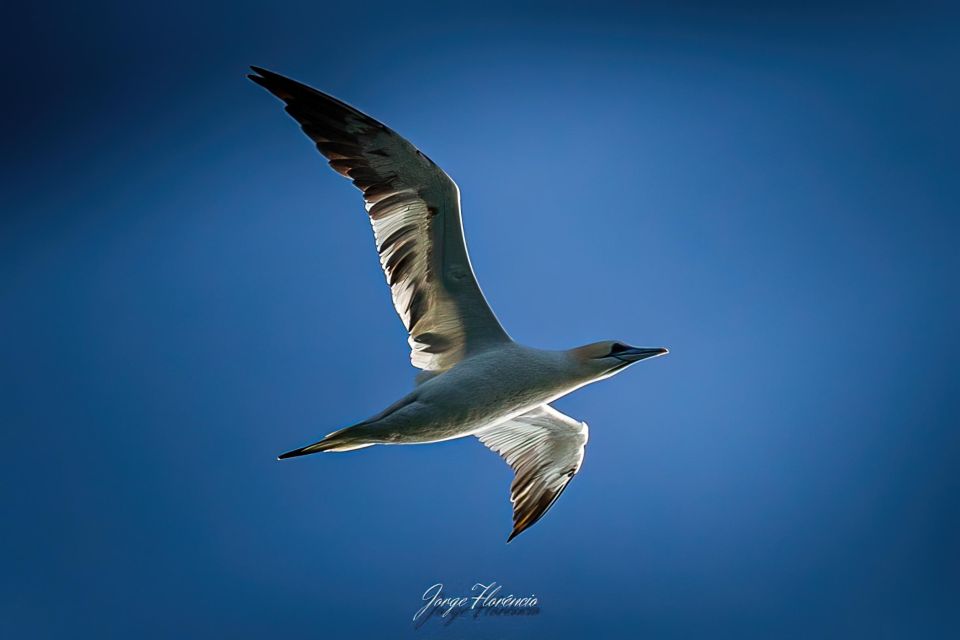
Once you’re offshore, the tour becomes a guided search. The captain and biologists look for sightings and adjust the route based on dolphin whereabouts. That’s a big deal for you because it turns the experience into an intelligent hunt rather than a one-time stop.
The species you’re most likely to see are Common Dolphin (Delphinus delphis) and Bottlenose Dolphin (Tursiops truncatus). But Algarve waters support more life than just dolphins, so your “could see” list is meaningful:
- seabirds
- jellyfish
- occasional sharks, whales, or turtles
This is also where the biologist guide adds real value. You don’t just spot animals. You learn how to interpret behavior—what different actions may mean, how pods move, and how to read the environment around them.
I also like that they set expectations about sea conditions. Visibility and dolphin behavior depend on weather, waves, and how far pods are from your boat. Some days dolphins are energetic and close; other days they’re there, but you have to work for it with patience and good spotting.
And yes, that patience is built into the experience. In multiple situations, the outing can start slowly, and then the crew keeps pushing the search until the end.
Dolphins Up Close, Without the Wrong Kind of Close
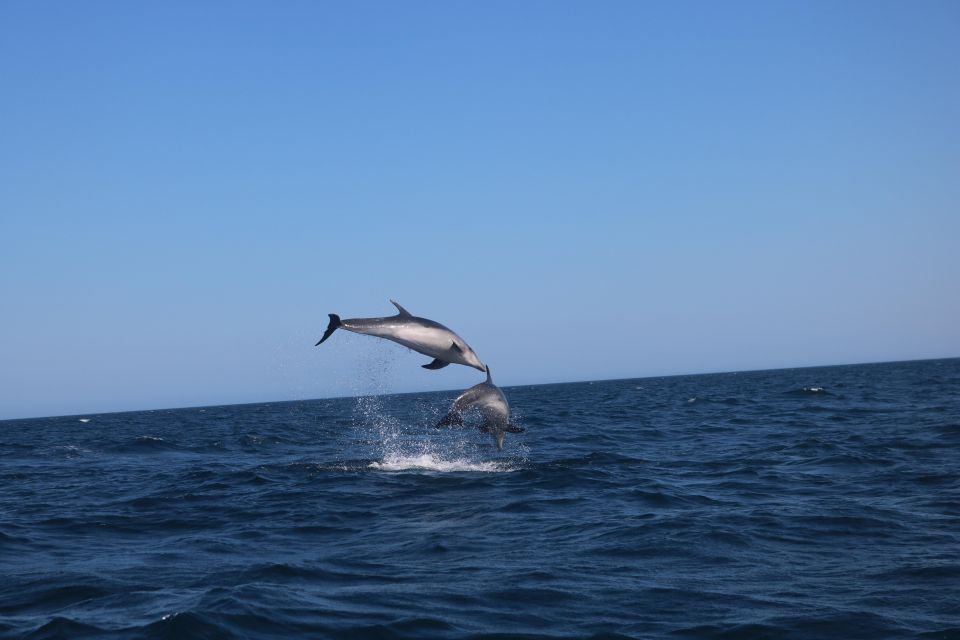
What separates responsible dolphin watching from the “swim up and bother them” model is the rules you follow and the behavior the crew enforces. This tour is set up around minimal impact and a strict code of conduct, with local legislation followed on the day of operation.
They’re fully licensed (AOC/27/2023) and trained for responsible cetacean observation, which means the team isn’t improvising ethics after the fact. It’s part of how they operate.
That translates to what you shouldn’t do:
- don’t feed animals
- don’t touch marine life
- no smoking on board
- no large luggage or bags
For you, the practical result is that the best moments come from watching correctly, not chasing. When you respect distance and focus your attention, you’re more likely to see natural behavior rather than stress reactions.
Beyond Dolphins: The Bonus Wildlife Factor
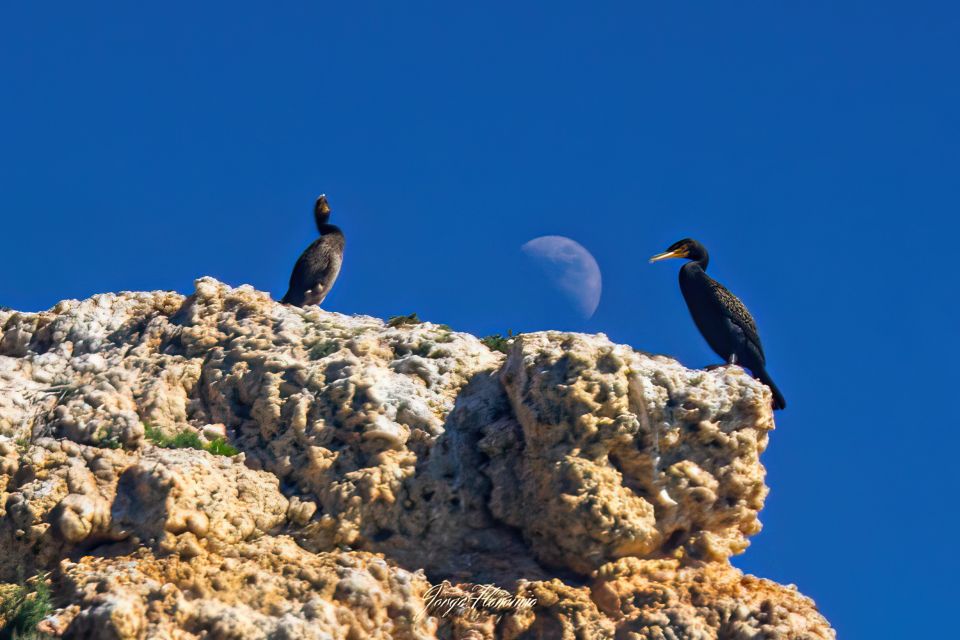
The tour is “Dolphins Expedition,” but the best Atlantic trips often add surprises. This one is built for that reality. On some days, you might see multiple pods, and you may also catch other marine life sightings.
Even the range of possibilities is useful because it helps you mentally prep for different outcomes:
- dolphins could show in several groups, not just one
- other large animals like whales or sharks are occasional, not guaranteed
- turtles can appear depending on where the captain searches
On days with weather tricks like fog or wind, you might see less clearly at first, then better later. Pack for the temperature swing and you’ll enjoy the hunt more, instead of getting grumpy when conditions change.
What the 3-Hour Timeline Means for Your Day Plan
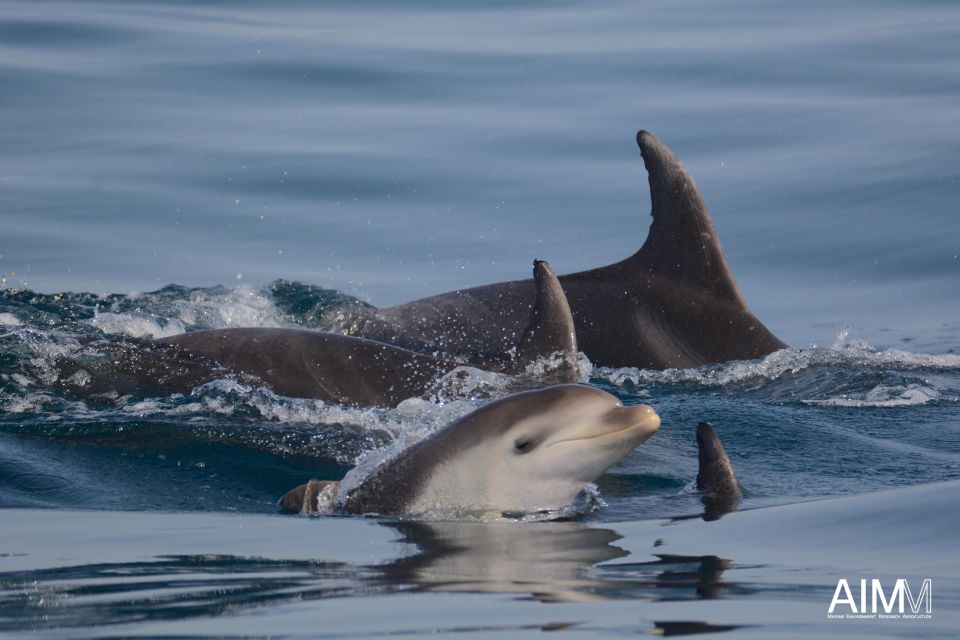
You’re looking at about 3 hours total. You get a short start with safety briefing, then about 2.5 hours of active guided time out on the water, with the route changing to match wildlife sightings. The return to Capitão Nemo Algarve brings you back at the end of the search.
That timing is ideal if you want something focused but not exhausting. It fits well as a half-day activity when you’re based in or near Lagoa, Portimão, or the central Algarve. It’s also a smart pick for travelers who want a clear “on-the-water” experience rather than a long day with lots of driving.
Price and Value: Is $82 a Fair Deal?
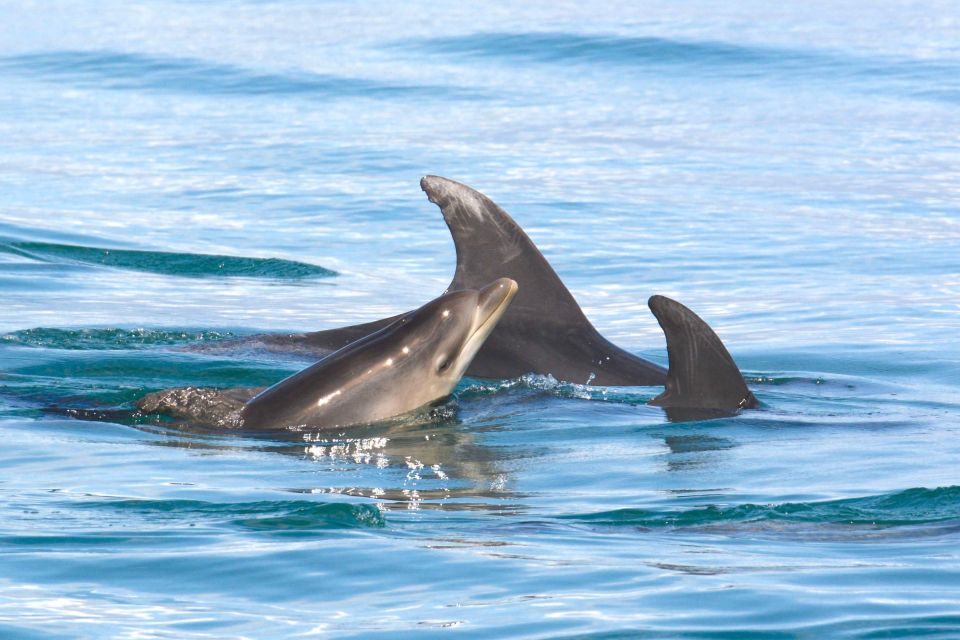
At $82 per person for roughly 3 hours on the water, the value is strongest when you care about three things: responsible wildlife watching, expert interpretation, and a comfort/safety setup that doesn’t feel cramped.
You’re paying for:
- a biologist on board, not just a general guide
- an experienced captain searching actively for sightings
- insurance and life jackets included
- bottled water included
- multi-language guiding (English, Portuguese, Spanish, French)
- a small-group structure (16 instead of a full-capacity crowd)
If you’re comparing cheaper tours that don’t include a specialist guide or that operate with looser ethics, this is where the money makes sense. If your top goal is simply to see dolphins with the minimum possible cost, this may feel a bit higher than the cheapest options. But for most people who choose this type of outing, $82 is an even trade for education plus higher-quality attention on the water.
Who This Tour Fits Best (and Who Might Want a Different Day)
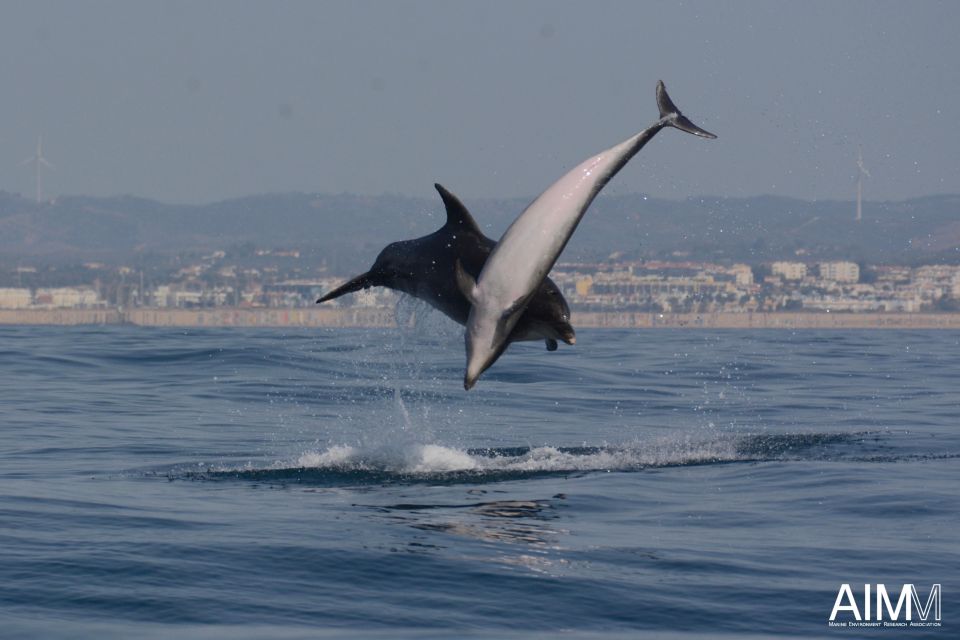
This trip works best for:
- nature lovers who want to understand what they’re seeing
- families who appreciate a structured, safety-first boat tour
- travelers who speak different languages (the crew supports English, Portuguese, Spanish, French)
- people who like being outdoors and scanning for wildlife with a guide
It’s also a good fit if you’re the type who can handle unpredictability. The ocean is not a theme park. The experience is the search as much as the final moment.
It may not fit if:
- you’re pregnant
- you have back problems
- you’re traveling with babies under 1 year
The reason is straightforward: it’s an open-sea boat experience, and offshore conditions can vary.
What to Pack So You Stay Comfortable During the Atlantic Wind
Offshore weather can be different from the coast. Even on good days, wind and spray can cool you quickly, especially once you’re out scanning for animals.
Bring:
- windbreaker
- sunglasses
- sun hat
- swimwear and towel
- sunscreen
- a jacket or warm layer
- comfortable clothes
- binoculars
- a waterproof bag
A simple rule: dress like the sea will be cooler than you think. You’ll enjoy the spotting more when you’re not fighting chills.
A Responsible, Licensed Operation You Can Trust
The ethics here aren’t vague. The tour emphasizes a responsible cetacean observation model, with licensing and training behind the approach. They follow local rules and a code of conduct designed to protect dolphin wellbeing and keep the ecosystem intact.
That’s why the tour works for people who care about wildlife. You’re not just hoping dolphins appear. You’re participating in a model that tries to watch in a way that doesn’t turn the animals into attractions.
Should You Book Lagoa’s Dolphins Expedition?
I’d book this if you want wild Atlantic dolphin watching with real scientific context, and you’re okay with the truth that sea conditions and animal behavior decide what happens. The small group size, the biologist on board, and the ethical framework are the big reasons to choose it over a basic boat ride.
Skip it (or look at alternatives) if you:
- need a very predictable, no-variation schedule
- have any of the listed restrictions like pregnancy or back problems
- don’t want to deal with wind and shifting conditions at sea
If your travel style is curious, outdoorsy, and respectful of wildlife, this is a strong Algarve experience. The “wow” moment arrives when a pod surfaces and you understand what you’re seeing in real time. When the sea gives you that chance, it’s the kind of memory that sticks.
FAQ
Where does the tour start and where do I park?
The tour meets at Capitão Nemo Algarve in Parchal (Lagoa area). There’s free car parking at the meeting point. If that lot is full, you can use the cobbled street parking nearby, though it may be busier.
How long is the dolphin expedition?
The total duration is about 3 hours, depending on the distance and the location of the dolphin groups that day.
Will I see dolphins for sure?
No one can guarantee dolphins because they’re wild and not controllable. The operator cites a 98% success rate in sightings, and the crew searches actively during the outing.
What sea animals might I see besides dolphins?
Besides Common Dolphin and Bottlenose Dolphin, you might also see seabirds and jellyfish. Occasionally, the crew says you may spot sharks, whales, or turtles, depending on where the sightings happen that day.
Who is on board with you?
You’ll have an experienced captain plus biologist guidance on board, along with tour guide support.
What languages are available for the tour?
The tour guide is available in English, Portuguese, Spanish, and French.
What should I bring for comfort on the boat?
Bring a windbreaker, sunglasses, sun hat, sunscreen, comfortable clothes, a jacket or warm layer, swimwear and a towel, binoculars, and a waterproof bag.
What’s not allowed during the trip?
Smoking is not allowed. You should not bring large bags or luggage. Also, don’t feed animals or touch marine life.
What facilities are available at the meeting point?
There is a WC toilet at the boarding pier. Bottled water is included on the tour.
Is the tour refundable if conditions aren’t safe?
The tour offers free cancellation up to 24 hours in advance for a full refund. The day’s departure is also conditioned by sea state and port restrictions, and if safety conditions aren’t assured, it will be cancelled and rescheduled or refunded.