REVIEW · SINTRA
Know Sintra through the eyes of a local archeologist private tour
Book on Viator →Operated by Mr. Local Tours · Bookable on Viator
Sintra can feel like a theme park fast, so this is a smarter way in. This private archaeology-focused tour trades crowds for real site context, from Moorish-Castle ruins to hilltop chapel views. I especially like the local archaeologist angle and the way the day moves at a human pace with snacks. One thing to consider: you’ll do a short forest walk on uneven ground, and some stops are ruined sites, so it’s more about atmosphere and meaning than smooth sightseeing.
Logistics are also simple for a short trip. Pickup is offered near Sintra Train Station, and you return to the meeting point after about 3 to 4 hours of stops, transfers, and explanations in English. If you want a Sintra day that feels personal and hands-on rather than checklist-y, this format fits.
In This Review
- Key things I’d plan for on this private Sintra archaeology tour
- How the tour starts in Sintra (and why the pickup matters)
- Castelo dos Mouros gates: the ruined medieval village and an open-air museum
- What you really learn at Castelo dos Mouros (and what you can ask on the spot)
- Santuario da Peninha: a quieter chapel story with hilltop views over Lisbon Bay
- Why the Peninha stop feels worth the time
- Penedo de Adrenunes: Stonehenge vibes without the usual certainty
- The small hike that changes the whole day
- Snacking, transfers, and that private-guide attention
- Price and value: what $113.84 per person really covers
- Where this tour fits best in your Sintra plans
- Quick practical advice before you go
- Should you book this local archaeologist Sintra tour?
- FAQ
- How long is the private tour?
- What does the tour cost per person?
- Is pickup included?
- Is the tour private?
- Are entrance tickets required for the stops?
- Is cancellation free if plans change?
Key things I’d plan for on this private Sintra archaeology tour
- Archaeology-led interpretation at multiple ruined sites, not just photo stops
- Free entry listed for each stop, so your money goes toward the guide and time
- Classic car or electric Jeep transfers, adding comfort on a steep day
- A smaller, off-the-crowd route that prioritizes local-known viewpoints
- Snacks included, useful for a 3–4 hour day with walking
How the tour starts in Sintra (and why the pickup matters)
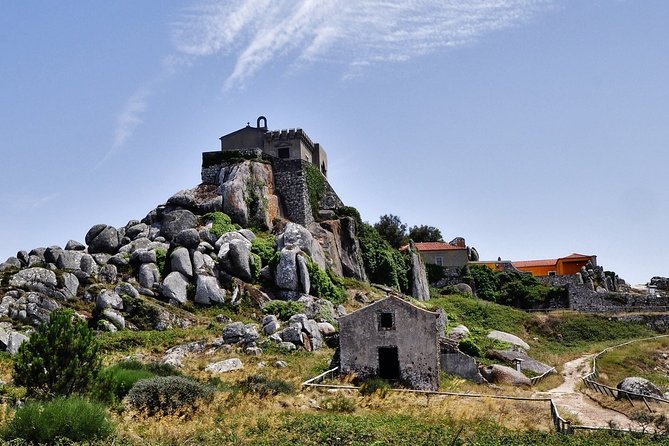
I like tours that respect how Sintra is actually laid out: steep hills, scattered ruins, and parking that can turn a nice day into logistics work. Here, you get pickup offered (including from Sintra Train Station), so you’re not timing buses or stressing over transfers before you even start seeing sites.
You’ll meet at Queijadas da Sapa, Volta do Duche 12 in Sintra. From there, your local archaeologist guide takes the lead, and the experience stays private—just your group. That private setup is a big deal because the guide can match explanations to what you care about, whether that’s Portugal’s religious history, ancient settlement ideas, or how archaeologists interpret ruins.
Also: it’s listed as in English, and the guide’s job is to explain context you’d otherwise miss. You can expect clear storytelling rather than a quick lecture while everyone checks their phones.
You can also read our reviews of more private tours in Sintra


Castelo dos Mouros gates: the ruined medieval village and an open-air museum
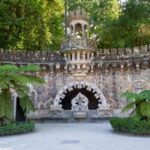
Your day kicks off at Castelo dos Mouros, with the first stop built around a ruined medieval village right at the gates of the Moorish castle area. The setting is dramatic: old stone structures, broken edges, and the feeling that the landscape has layers. You’re not just looking at ruins—you’re learning how archaeologists read them.
The highlight here is an archaeological excavation area connected to the guide’s own work back in 2012. Today, it’s treated like an open-air museum, with older structures, graves that seem to pop out of the ground, and a museum space holding artifacts found during that excavation. The time you spend is about 45 minutes, which is long enough to absorb the story without feeling trapped in a single spot.
Practical note: because this is an archaeological setting, parts can be uneven and exposed. If you like to take photos, bring a steady plan—this is the kind of site where the best shots come from a few careful angles, not constant walking.
What you really learn at Castelo dos Mouros (and what you can ask on the spot)
What makes this stop work is the way the guide connects the visible ruins to the deeper questions archaeologists ask: who built, who lived, what changed over time, and what the ground can still tell you even after centuries.
At Castelo dos Mouros, you get a rare mix: a “village” atmosphere plus excavation-based explanation plus artifact context in a small museum. It’s not just history as dates; it’s history as evidence. And since it’s a private tour, you can ask the follow-up questions that usually get cut off on group tours—like why certain ruins survive where they do, or how archaeologists decide what features matter.
Entry is listed as free for this stop, so you can spend your budget on the guide’s time and expertise rather than on admissions.
Santuario da Peninha: a quieter chapel story with hilltop views over Lisbon Bay
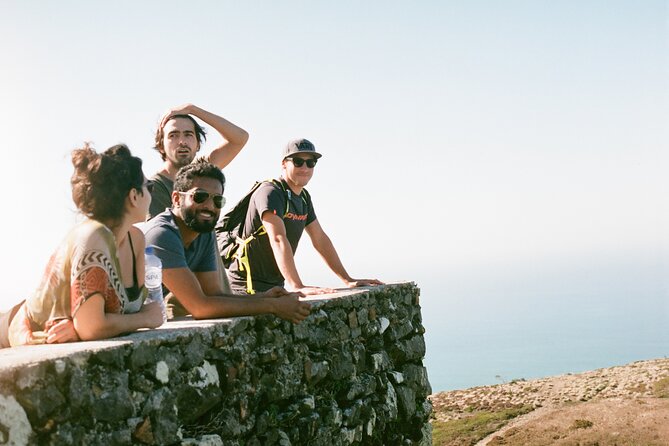
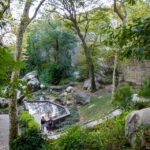
Next comes Santuario da Peninha in the middle of the Sintra forest. The vibe changes right away. Instead of castle walls and medieval village remains, you move into a hilltop pilgrimage setting—an old chapel associated with a pilgrimage tradition and a miracle story.
This stop is about 30 minutes, which is ideal for a hilltop: enough time to walk around, take in the ruins, and listen to the story, but not so much that you melt in the heat or lose the group’s momentum. Another ruined building shows up here too, with foundations described as built on the foundation of Portugal itself—an intriguing blend of place, belief, and physical remains that a guide can interpret in a grounded way.
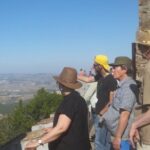
Then there’s the best part for many people: the feeling of getting away from the crowds. This is described as a local-known spot, and the view is one of the strongest in the Lisbon Bay area. You don’t just see the scenery—you learn where you are in relation to the broader region, and why this kind of hilltop site made sense historically.
Entry is listed as free for this stop as well, so you’re paying mainly for access to the interpretation and the calmer route.
Why the Peninha stop feels worth the time
I like Peninha because it turns Sintra from a collection of monuments into a sense of how people once navigated meaning through place. A miracle or pilgrimage tradition might sound abstract until you stand where it happened and see the hilltop position for yourself.
Also, the guide keeps you moving toward viewpoints that don’t rely on mass-tourist timing. If you’re the type who likes photos but hates the shuffle, this stop is built for you.
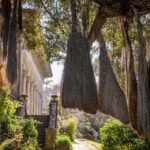
The forest also means the air can feel cooler and different than town streets. Just plan for uneven ground near ruins and chapel remains.



Penedo de Adrenunes: Stonehenge vibes without the usual certainty
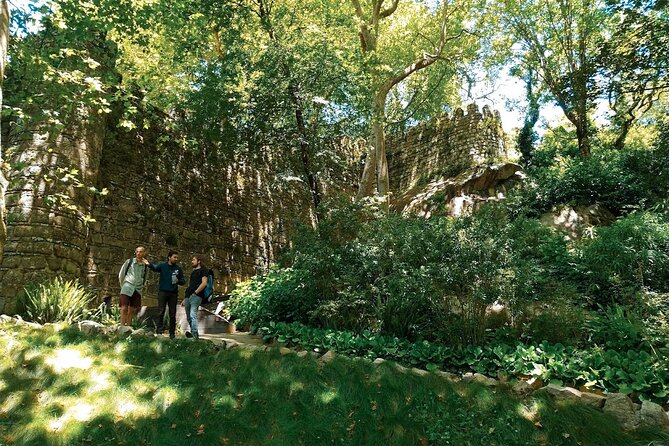
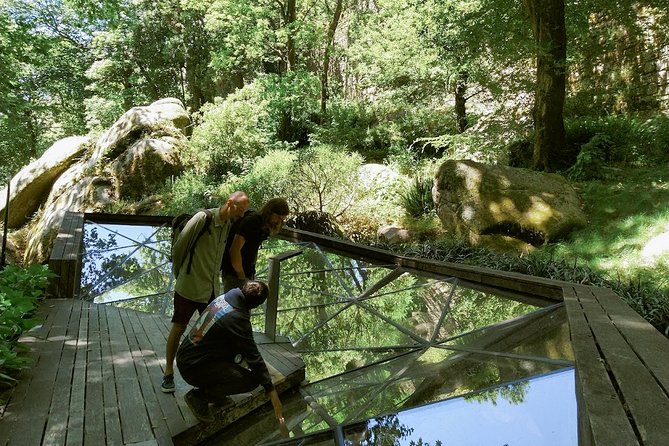
The third stop is Penedo de Adrenunes, reached after a short walk—about 15 minutes—deeper into the Sintra forest. This is where the tour leans into “mystery meets evidence.”
The site is on a hilltop facing toward the westernmost point of continental Europe, and it’s described as having Stonehenge vibes. Here’s the key nuance: archaeological artifacts have not been found at the site, but it’s believed the area may have been used by ancestors around 5,000 years ago. That is archaeologist talk in plain terms—no overclaiming, just careful interpretation based on what people infer from the site’s form and location.
You’ll spend about 45 minutes here. It’s a great pause after Peninha’s pilgrimage setting, because this time the guide can talk about how archaeologists handle uncertainty: what counts as evidence, what counts as hypothesis, and how landscapes can still suggest human intention even when objects don’t survive.
Expect a viewpoint-focused experience with some walking on forest paths. Wear shoes you’d trust on dirt and rocks, and don’t plan this stop if you’re dealing with mobility limits.
The small hike that changes the whole day
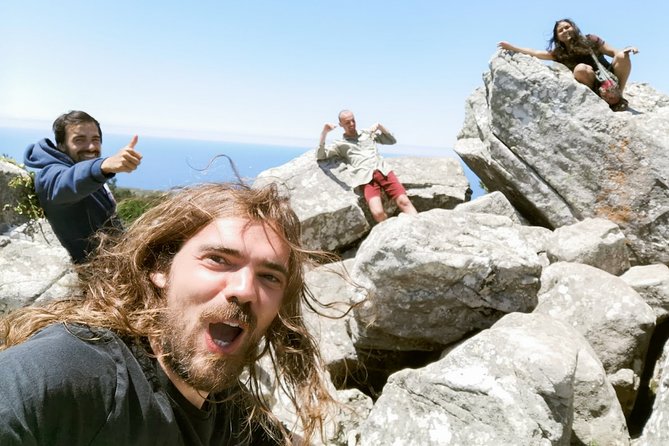
The forest walk is short, but it’s an important detail. It’s often the difference between seeing Sintra from roads and feeling Sintra as a place people moved through.
It also tends to help families and mixed-interest groups. One reason the tour works well for different ages is that not every stop requires a deep lecture. You can look, listen, ask questions, then move on.
And since this is a private tour, the guide can adjust pacing to your group’s needs if something is taking longer than expected at a viewpoint.
Snacking, transfers, and that private-guide attention
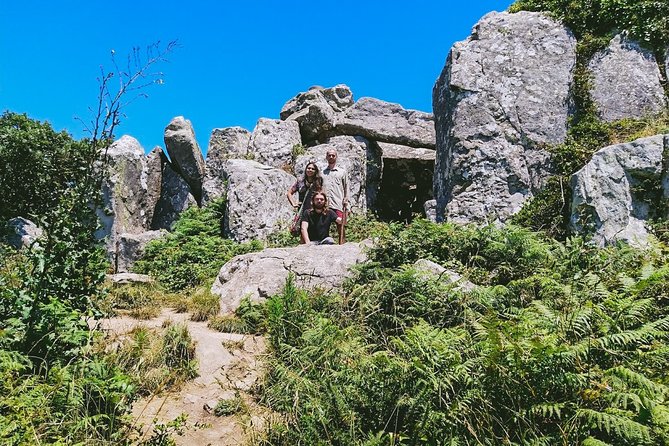
A lot of Sintra tours feel rushed because they’re trying to cram in famous sites. This one is short by design and uses snacks included to keep energy steady between stops. That sounds minor, but it matters when you’re walking in the forest and moving between hilltops.
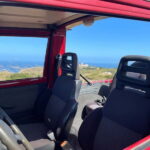
Transfers are provided by classic car or electric Jeep, which adds a nice comfort buffer. Sintra roads and slopes can be tiring, and you’ll likely appreciate not having to figure out parking or public transport once your day starts.
The private format is the other big value driver. Your guide can tailor the topics. In the experience details you shared, there’s also mention that the guide adapts the tour when sites are closed for maintenance, and that they may add route stops based on what you show interest in. That flexibility is hard to get on fixed group itineraries.
Finally, a few guides on this route are known for speaking excellent English and explaining how ruins connect to Portugal’s cultural shifts—religious history, ancient civilizations, and how archaeologists interpret remains without exaggerating.
Price and value: what $113.84 per person really covers
At $113.84 per person for about 3–4 hours, you’re not paying for entrance fees—you’re paying for specialist guidance plus door-to-door comfort and transfers.
The price includes several “day-saving” components:
- pickup offered (so you start without logistics stress)
- private tour time with full attention
- snacks during the day
- transfers by classic car or electric Jeep
Since entry at each stop is listed as free, your spend isn’t tied to ticket costs that can vary. Instead, your money supports interpretation and time on-site, which is exactly where a local archaeologist adds value.
One more detail that helps value: the tour is often booked about 23 days in advance, which usually means it’s in demand. If you’re traveling in peak season or on a tight schedule, booking earlier can help you lock in a time that fits your day.
Where this tour fits best in your Sintra plans
This is a strong choice if you want:
- archaeology and local context, not just famous sights
- fewer crowd surges and more quiet viewpoint time
- a day that feels small even though Sintra is big
It’s also a good match for families, as long as everyone can handle short walks and uneven terrain near ruins. The tour is listed as “most travelers can participate,” which suggests the activity is designed to be broadly doable, but you should still be realistic about the forest section.
If you only want major palaces and dramatic interiors, this might not replace a palace-heavy Sintra day. Think of it as the day that teaches you what Sintra means beneath the monuments.
Quick practical advice before you go
- Bring comfortable shoes for forest paths and uneven ruins.
- Bring a light layer. Hills and shaded forest areas can feel cooler than you expect.
- If you care about a specific theme—religion, early settlement, Roman influence, or archaeology technique—tell your guide at the start. A private format works best when you guide the conversation.
- Use the free-entry nature of the stops to your advantage: plan on spending time reading the context and listening, not just taking quick photos.
Should you book this local archaeologist Sintra tour?
Book it if you want a Sintra experience with real interpretation, not just movement from one postcard to the next. The combination of archaeology-led storytelling, free-entry ruin sites, and comfortable transfers makes this one of the more practical ways to “understand Sintra” in a short window.
Skip it if you want fully restored sites, minimal walking, or a day focused mainly on interiors and museums with modern exhibits. This tour is about ruins, evidence, viewpoints, and the stories that connect them.
If that sounds like your kind of day, you’ll likely leave with a clearer sense of Sintra’s layers—and a bunch of details you won’t get from the standard route.
FAQ
How long is the private tour?
It runs about 3 to 4 hours.
What does the tour cost per person?
The price is $113.84 per person.
Is pickup included?
Pickup is offered, and you’ll start near Sintra Train Station as part of the arrangement.
Is the tour private?
Yes. It’s a private tour/activity, and only your group participates.
Are entrance tickets required for the stops?
The stops listed in the plan have admission listed as free.
Is cancellation free if plans change?
Yes. Free cancellation is offered up to 24 hours in advance for a full refund.