REVIEW · PORTO
From Porto: Fátima and Coimbra Full Day Tour
Book on Viator →Operated by Living Tours · Bookable on Viator
Fátima and Coimbra in one long day. This full-day tour links Portugal’s biggest Marian pilgrimage site with a university city built on learning, all with a guide steering the story and a comfortable air-conditioned minibus getting you there. You’ll also get free time in Fátima for quiet exploring or personal devotion, not just a rushed sightseeing sprint.
What I like most is how much the apparitions are explained with context (Lucia, Francisco, and Jacinta, and what Cova da Iria meant) and how the day keeps you moving without turning it into a nonstop march. The possible drawback: it’s a 10-hour day, so you’ll want to enjoy the pace and accept that Coimbra gets less time than you might hope on a first visit.
In This Review
- Key points at a glance
- Why this Porto-to-Fátima-and-Coimbra day trip works
- The 7:30am start and the minibus comfort factor
- Stop one on the road: your guided intro to Fátima
- Fátima town: beyond the sanctuary gates
- Sanctuary of Our Lady of Fátima: Cova da Iria in real life
- The chapel built in 1919
- Aljustrel and the shepherds’ homes (what you actually get to see)
- Coimbra: the university city walk and University Courtyard time
- How guides shape the day (and why small groups matter)
- Timing, pace, and using your free time well
- Price and value: is $83.48 actually fair?
- Who this tour suits best
- Should you book this Fátima and Coimbra day trip from Porto?
- FAQ
- How long is the Porto to Fátima and Coimbra tour?
- What time does the tour start from Porto?
- Where is the meeting point?
- What’s included in the tour price?
- Is lunch included?
- Are there ticket or entrance costs?
- What languages is the tour offered in?
- How big are the groups?
- Is there free time in Fátima?
- Can I cancel for a refund?
- FAQ
- Where does the tour end?
- Is there a ticket you can use on your phone?
- Do children need an adult?
- Is there a walking tour in Porto included?
- What should I wear for this day trip?
Key points at a glance
- Early departure means more peaceful Fátima time before crowds build.
- Guided sanctuary storytelling ties the 1917 apparitions to the places you’re standing in.
- Homes of the shepherd children are included, with time to absorb what you’re seeing.
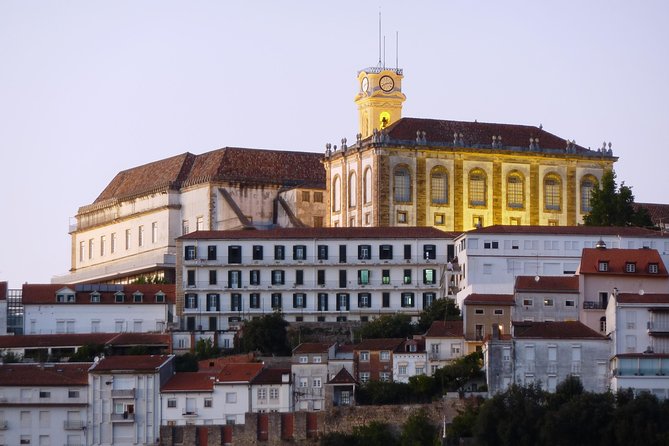
- Coimbra includes the University Courtyard plus a guided historic-centre walk.
- Group size tops out at 27, which helps questions and keeps things friendly.
- You get free time in Fátima, so you control how spiritual or historical you want the visit to be.
Why this Porto-to-Fátima-and-Coimbra day trip works
This tour clicks because it changes gears. In the morning you’re in Fátima, where the landscape is more than scenery; it’s part of a belief story tied to 1917 and recognized later by the Catholic Church. Then, by the afternoon, the focus shifts to Coimbra, where the energy is academic—streets and squares shaped by centuries of students.
You also get the benefit of having a guide connect the dots while you travel. Driving time isn’t wasted when the guide uses it to set context, explain local background, and answer questions. In several guide profiles shared for this tour, names like Felipe, Tiago, José, Pedro, and André come up for clear explanations and a friendly, organized tone.
The biggest value for your day is simple: you see two major destinations without having to plan buses, tickets, or routing yourself.
A few more Porto tours and experiences worth a look

The 7:30am start and the minibus comfort factor
Pickup is at Calçada de Vandoma, 4000 Porto, with a 7:30am start, and you return to the same meeting point. You’re traveling about 10 hours total (approx.), which means the schedule matters. Leaving early helps because Fátima’s sanctuary is a place you’ll experience better when you’re not battling peak crowds.
The tour uses a comfortable, air-conditioned minibus, and that matters for a long drive day. It also helps the group feel more together. A max capacity of 27 is big enough to run smoothly, but small enough for interaction, especially if your guide is the type who actually looks at people and keeps the group on track.
If you’re someone who gets cranky without breaks, you’ll want a guide who manages the rhythm well. Many people highlight how guides break up walking with practical pauses, so you’re not just “transported” from point to point.
Stop one on the road: your guided intro to Fátima
The ride from Porto to Fátima is roughly 1 hour 30 minutes. This is usually when your guide sets the stage for the day, so when you arrive, you’re not just reading signs—you understand what you’re looking at.
A big part of the tour’s appeal is that it doesn’t treat Fátima as a single monument. It’s a chain of locations tied to the shepherd children, the sanctuary property, and later chapel building. If your guide shows a short bus video or shares extra background on the way, it can be a nice way to keep everyone engaged during the drive. (One commonly mentioned example from past departures is a video related to Portuguese crafts and industry, which can make the ride feel less like dead time.)
Fátima town: beyond the sanctuary gates
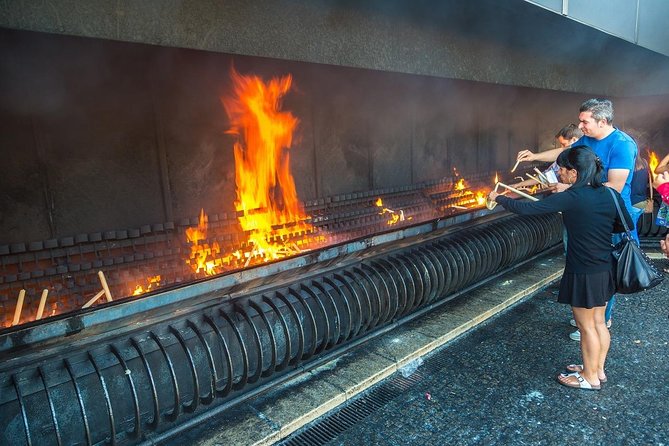
You’ll spend about 2 hours in Fátima, and this is where the tour becomes more than a pilgrimage checklist. The aim is to show that Fátima isn’t only about 1917—it has layers. You’ll hear about the area’s older settlement roots, including development during the Arabian occupation, and the way the town’s name and identity evolved over time.
There’s also the kind of legend that locals love to tell: the story linking Gonçalo Hermingues, a Templar knight often referred to in connection with the Reconquest, and a figure known as Oureana. You don’t have to be religious to find this part worthwhile; it gives you a cultural frame for why modern Fátima matters so much to Portugal.
Then the story turns to what changed everything: the apparitions in the early 20th century. This is when Fátima grows into a major Cult of the Virgin Mary center, eventually recognized world-wide by the Catholic Church. That historical timeline helps you understand why the town is built the way it is, and why the sanctuary feels like a living hub rather than a museum.
Practical tip: since you’ll later be walking around the sanctuary precinct, it helps to start in town with your questions ready. Ask your guide early about what’s next so the names (Lucia, Francisco, Jacinta) stick.
Sanctuary of Our Lady of Fátima: Cova da Iria in real life
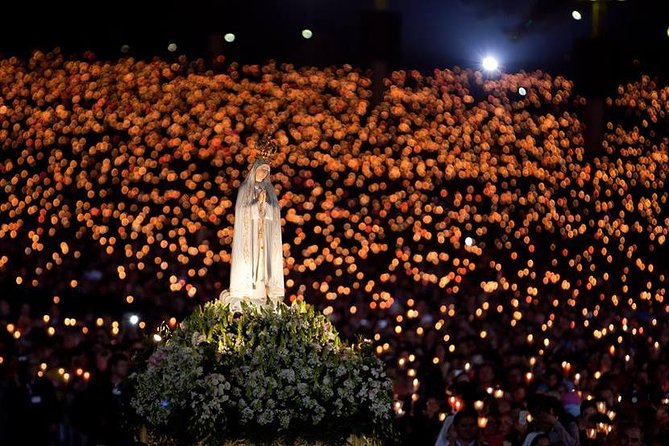
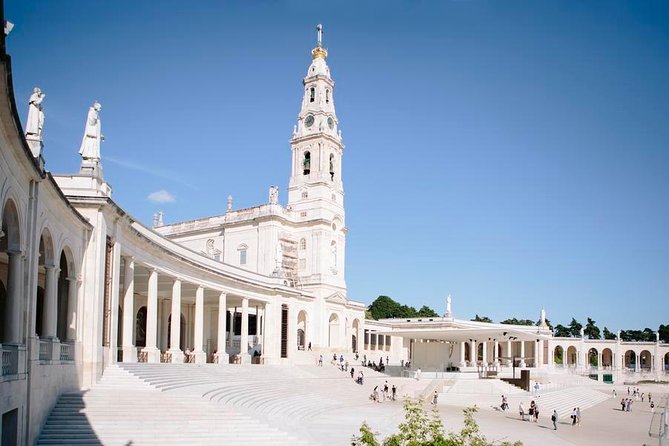
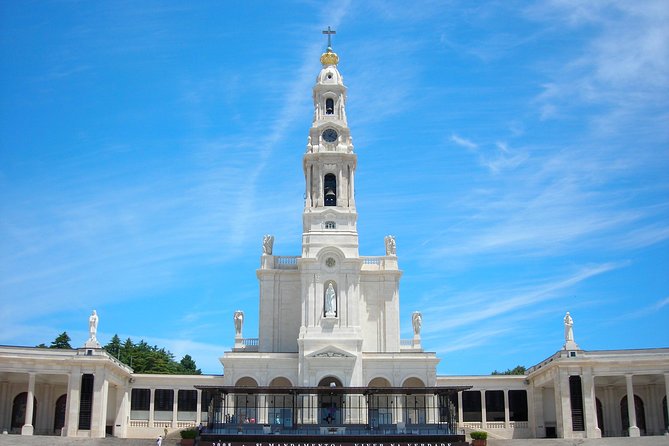
One of the main stops is the Sanctuary of Our Lady of Fátima, roughly 1 hour on-site (plus time you control during your free period later). This is one of the largest Marian centers in the world, so even a “short” visit feels like a lot.
Here’s what you’ll learn that makes the place make sense: the apparitions in 1917 were linked to three shepherd children—Lucia, Francisco, and Jacinta—and the events were recognized in 1930. You’ll also hear that the original setting was a rural property called Cova da Iria, belonging to Lucia’s parents, later donated for the shrine.
And you’ll get a sense of the geography of the story. The tour notes that five of the six apparitions took place at Cova da Iria. Standing in the sanctuary area, this kind of detail helps you map what happened to where you’re walking now.


The chapel built in 1919
Inside the precinct, there’s special focus on the chapel in the heart of the current sanctuary area. It’s described as being built by local people in 1919 after a request made by Our Lady during one of the apparitions.
If you’re visiting for history, this helps you see how quickly belief became built form. If you’re visiting for faith, it gives the visit more weight, because the chapel’s existence is tied to the immediate response of the local community.
Aljustrel and the shepherds’ homes (what you actually get to see)
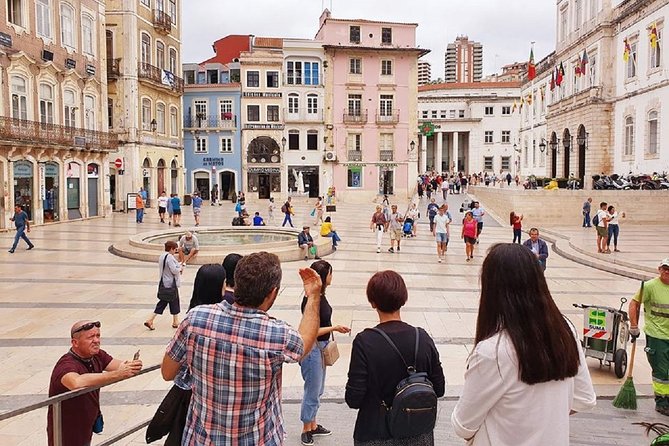
A guided visit is included to the homes of the three shepherd children: Francisco, Jacinta, and Lúcia, with entrance included. This is one of the most powerful parts of the day because you move from “big religious site” scale to “small life details.”
You’ll also learn that the children were born in Aljustrel, about 2 km from the sanctuary. Even if you only see the homes themselves (not the whole neighborhood), that distance matters. It explains why the sanctuary doesn’t feel like it popped out of nowhere. It feels connected to a real village and real daily life.
In many guide styles that show up for this tour, the emphasis is on making the story understandable, not only repeating names. Guides like Rafael and Victor are mentioned for combining friendly guidance with enough background to keep the day coherent. You’ll likely get an explanation that makes the shepherds feel human—children with a place, not just “figures in a timeline.”
Practical tip: these home visits can mean a little walking and standing, so wear shoes you trust for uneven ground.
Coimbra: the university city walk and University Courtyard time
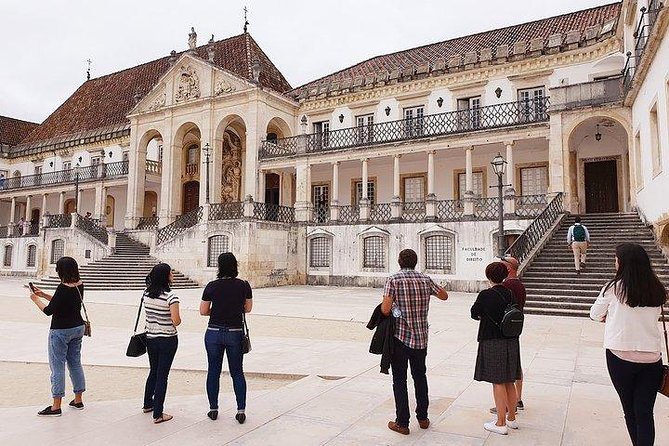
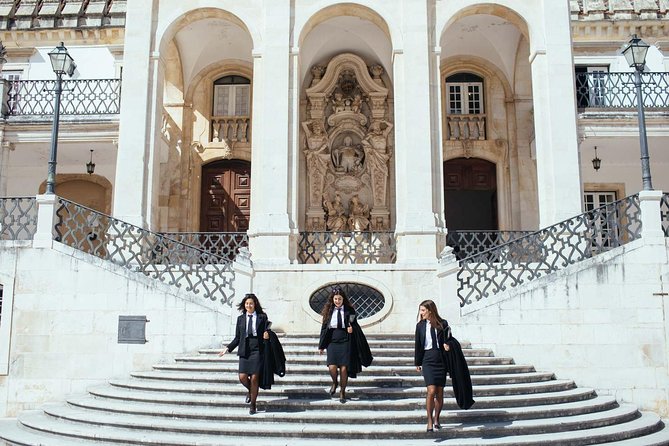
After Fátima, you’ll head to Coimbra. The scheduled time is about 1 hour 30 minutes, and you’ll also get a walking tour through the historic centre, including the University Courtyard.
Coimbra’s main theme is academia, and that’s exactly why it works as a contrast to Fátima. Instead of prophecy and pilgrimage, you’re in a city where centuries of students helped build the culture around learning. Your guide should help you see why the streets and public spaces feel centered on study, scholarship, and tradition.
You’ll also be able to stroll the picturesque streets on your own, using that time to find viewpoints and slow down. Still, this is the part where you should be honest with yourself: the day is packed, and some people feel Coimbra could use more time for deeper sights like the libraries and museums.
If you’re a first-timer in Coimbra, take the University Courtyard as your “anchor moment.” Then use the remaining minutes to walk at a relaxed pace and absorb the atmosphere.
How guides shape the day (and why small groups matter)
This tour lives or dies by the guide. The strongest departures are the ones where your guide does more than explain. They keep things organized, manage timing, and answer questions without making you feel rushed.
Names that repeatedly come up for strong day leadership include Felipe, Tiago, Helder Paiva, Margaridia, and José Luis. Across those profiles, the recurring strengths are:
- clear historical explanations
- good pacing with rest breaks
- a calm, friendly tone that keeps the group together
There’s also a comfort factor: some people join expecting a huge bus crowd, and end up with a much smaller group. A smaller group makes it easier to hear your guide and easier to ask questions if something feels confusing.
One caution, based on occasional mixed feedback: if your guide’s English feels light or if you’re expecting lots of direct guiding at each spot, you might need to speak up. Ask questions early. If you’re not feeling “guided,” it’s fair to ask for clarification right away so you can get value from the time.
Timing, pace, and using your free time well
The itinerary is built so you get both structure and a personal window. The tour includes free time at the Fátima Sanctuary for personal devotion or exploration, and this is where you can control your experience.
Here’s how to use that freedom without losing time:
- If you’re spiritual: focus on the sanctuary precinct and slow your pace. Take in the chapel area and the spaces around the shrines.
- If you’re history-minded: spend your free time reconnecting what your guide said earlier to what you’re seeing now (names, dates, and the relationship between Cova da Iria and the modern sanctuary).
- If you just want a breather: step away from the densest areas and find a quieter corner for photos and a reset.
Keep in mind you’ll also have walking time tied to the shepherd home visits and the Coimbra city walk. This is not an “only sit on the bus” tour. It’s a full day with steps, especially if you linger after explanation moments.
Weather can also change the feel of the day. If it rains (it happens), you’ll appreciate guides who adjust pacing and keep you from feeling stuck in bad conditions.
Price and value: is $83.48 actually fair?
At $83.48 per person, this tour is priced like a classic day trip: transportation, guide, and key entrances are included, plus guided time in both cities.
For value, the big items are:
- round-trip minibus transportation from Porto
- a professional guide with in-depth destination knowledge
- included access for the shepherds’ homes
- guided walking time in Coimbra including the University Courtyard
- free time in Fátima, which is rare in rushed day trips
What’s not included is also important for budgeting. There’s no lunch and no food and drinks included unless specified. Plan to bring snacks or budget for a meal stop on your own.
If you’re comparing options, the question to ask is simple: are you paying to save planning and transportation stress? If you’d rather show up, listen, and walk the key parts with guidance, this price makes sense for a single-day format.
Who this tour suits best
This day trip fits best if you want:
- one guided day that covers two major cities
- structured context for Fátima’s apparitions and the shepherds’ story
- a university-city contrast with Coimbra’s historic walk
You’ll also like it if you enjoy meeting people in a small-group setting and you want a guide to help you connect “what you’re seeing” with “why it matters.”
If you want deep museum time in Coimbra, you may feel the schedule is too tight. Consider adding extra nights in Coimbra later, or picking a longer, more focused Coimbra plan.
Should you book this Fátima and Coimbra day trip from Porto?
Yes, you should book it if you’re craving a practical, guided way to experience Fátima without fuss and still reach Coimbra the same day. The combination of guided storytelling, access to the shepherds’ homes, and free time in the sanctuary is the strongest reason to choose this format.
Book with a mindset that matches the day: it’s long, you’ll walk, and you’re trading “maximum time in each city” for “seeing the highlights with context.” If that sounds like your travel style, this tour is a good value way to turn a Porto visit into something spiritually meaningful and historically grounded.
FAQ
How long is the Porto to Fátima and Coimbra tour?
It’s listed as about 10 hours (approx.).
What time does the tour start from Porto?
The start time is 7:30 am.
Where is the meeting point?
The meeting point is Calçada de Vandoma, 4000 Porto, Portugal.
What’s included in the tour price?
You get a professional guide, round-trip transportation in an air-conditioned minibus, free time at Fátima Sanctuary, a guided visit to the homes of Francisco, Jacinta, and Lúcia (with entrance included), and a walking tour through Coimbra’s historic centre including the University Courtyard.
Is lunch included?
No. Food and drinks are not included unless specified, and lunch is not included.
Are there ticket or entrance costs?
The tour information states admission tickets for the listed stops are free, and it includes entrance to the shepherd homes.
What languages is the tour offered in?
The tour is offered in English. A second language may be used.
How big are the groups?
The maximum capacity is 27 travelers.
Is there free time in Fátima?
Yes. You have free time at Fátima Sanctuary for personal devotion or exploration.
Can I cancel for a refund?
Yes. You can cancel up to 24 hours in advance for a full refund.
FAQ
Where does the tour end?
It ends back at the same meeting point in Porto.
Is there a ticket you can use on your phone?
Yes. The tour offers a mobile ticket.
Do children need an adult?
Yes. Children must be accompanied by an adult.
Is there a walking tour in Porto included?
There’s a Porto City Walking Tour available from the day after your experience.
What should I wear for this day trip?
Wear comfortable walking shoes. The day includes walking time in both Fátima and Coimbra.