REVIEW · ALGARVE
From Lagos: Dolphin Watching Boat Trip w/Marine Biologists
Book on GetYourGuide →Operated by Bluefleet - Boat Trips & Full-day Tours · Bookable on GetYourGuide
Dolphins off Lagos feel wildly close. This 1.5-hour small-group dolphin watching boat trip (max 18) takes you into the open Atlantic from Lagos, guided by marine biologists who explain what you’re seeing as you go.
I especially like the ethical approach (no feeding, no chasing, no interference) and the way the RIB’s speed helps the crew search farther out without dragging the trip. On different departures, I’ve seen biologist Marta and captain John guiding the hunt, and a Juan-led team with an assistant bringing the same hands-on care.
The ride is quick, the views are direct, and the boat design suits offshore conditions. You’ll get safety briefings, life jackets, and an onboard guide who talks species and behavior while the crew relocates to where sightings are happening.
One thing to keep in mind: dolphin watching is never guaranteed. Even on great days, weather can affect the search, and dolphins can be shy, so you’re betting on the day’s Atlantic mood.
In This Review
- Key highlights you’ll notice right away
- Why a RIB boat makes Lagos dolphin spotting work
- Meeting at Lagos Train Station area and getting set up
- The 1.5-hour dolphin hunt: what the crew and biologists actually do
- Ethical spotting rules that keep it respectful (and better for you)
- When the Atlantic is windy: what happens if dolphins are tough
- Where to sit and what to wear for comfort in Algarve wind
- Value check: is $42 worth it for 90 minutes on a RIB?
- Who this tour suits best (and who should skip it)
- Practical booking tips that improve your odds
- Should you book the Lagos dolphin watching trip with marine biologists?
Key highlights you’ll notice right away
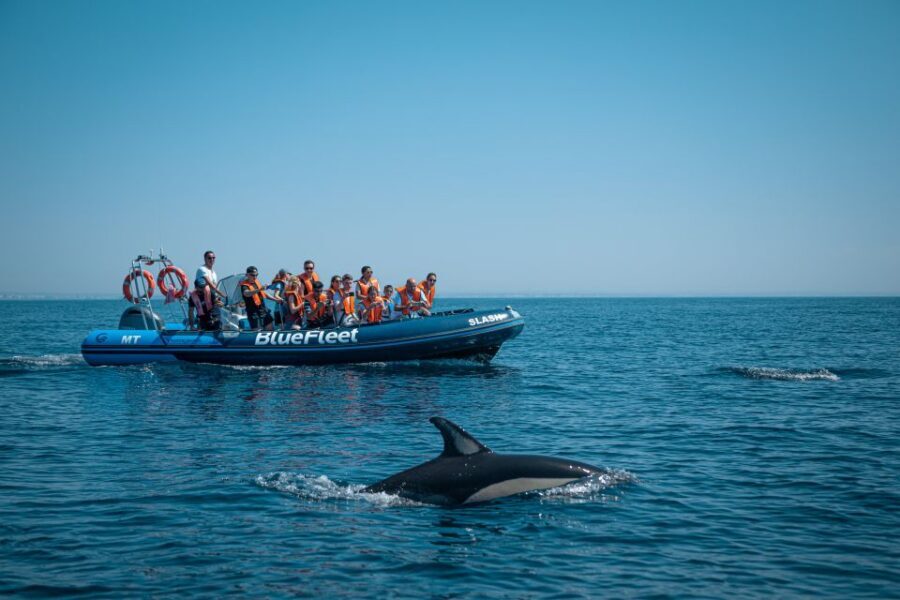
- Small-group max of 18 means more personal space and fewer blocked views when dolphins surface.
- Marine biologists onboard turn random sightings into real learning about behavior and conservation.
- Offshore-ready RIB speed helps the crew cover distance and respond fast to signs of marine life.
- Ethical wildlife rules (no feeding, no touching, no interference) are clear from start to finish.
- Weather-driven plan changes: if conditions make it harder, you still go out with a backup approach.
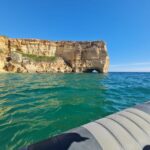
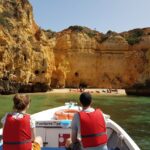
- Bonus moments happen when sightings work out, like extra time with the pod or a pass by the caves on the way back (when possible).
Why a RIB boat makes Lagos dolphin spotting work
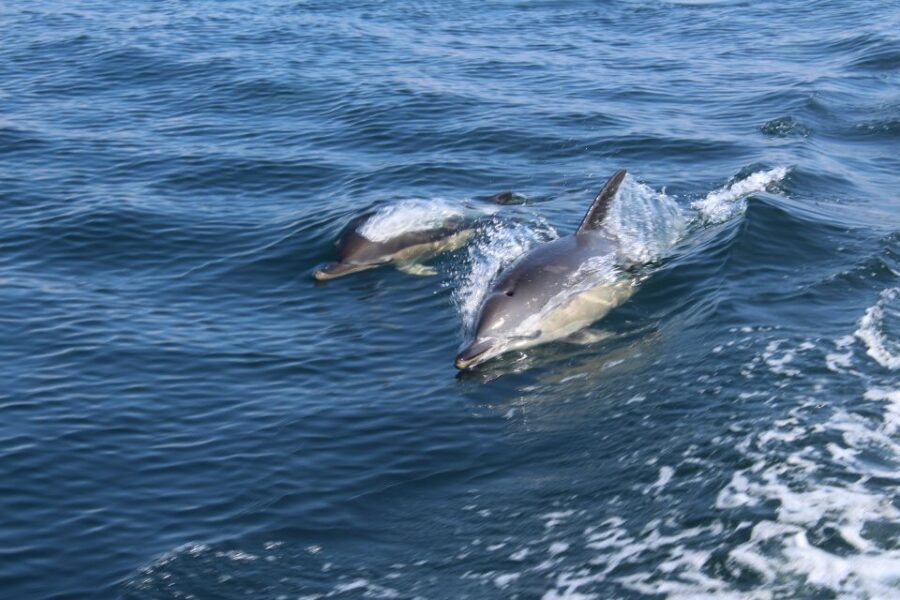
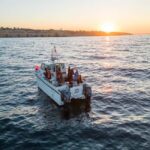
In Lagos, the dolphins aren’t sitting on a postcard pose. They move, and the most effective tours treat that like a reality, not a problem. That’s why a fast rigid inflatable boat (RIB) matters here: it lets the crew cover more water during your 1.5-hour window.
The other big plus is how the RIB is designed for open-ocean conditions. You’re not stuck in a slow boat that can’t reposition quickly when the crew gets a lead on marine life. The result is a better shot at seeing pods rather than just watching for hope.
You can also read our reviews of more boat tours in Algarve

Meeting at Lagos Train Station area and getting set up
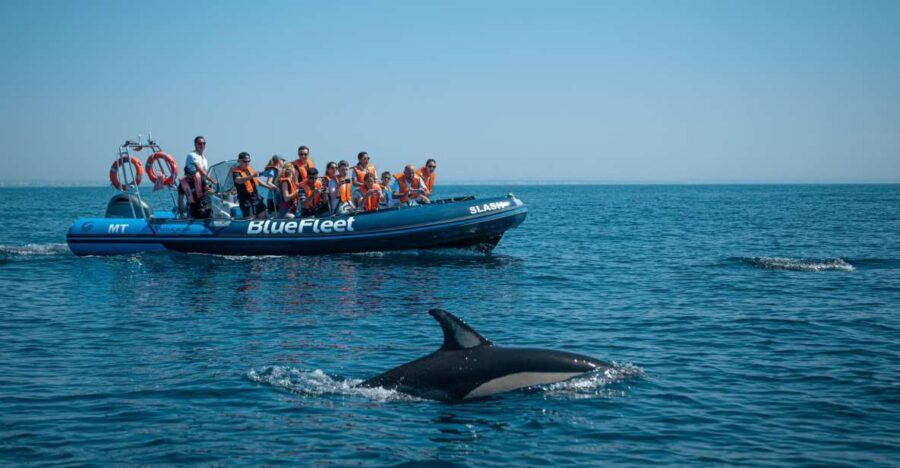
You meet at the local supplier’s office near Lagos Train Station, at Estrada de São Roque (GPS 37.108669, -8.672152). Expect to check in there before you head out from Lagos Marina.
Once you’re onboard, you’ll do the basics: a safety briefing and life jackets. That setup is more than paperwork. It matters because you’re on a high-speed boat over real Atlantic conditions, and knowing where to sit and how to move around helps you enjoy the trip instead of bracing for every wave.
You should also plan on going without a pickup. This tour is set up as a meet-at-the-point experience, so build in time to get yourself there.
The 1.5-hour dolphin hunt: what the crew and biologists actually do
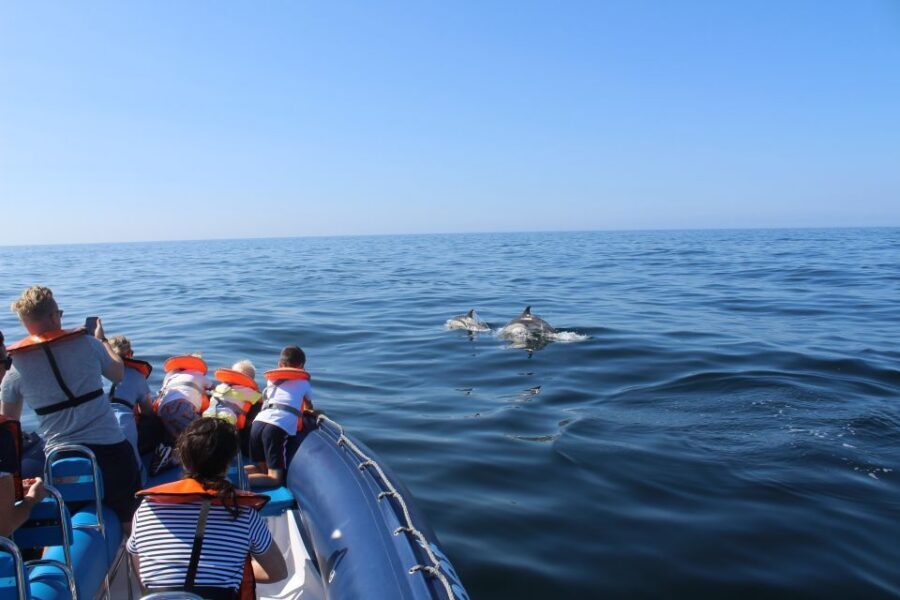
This isn’t a long cruise where you hope something appears. It’s an active search from the open Atlantic, timed so you can relocate fast if dolphins show up somewhere else.
As you travel out along the Algarve coast, your onboard marine biologist guides your attention. You’ll learn what the crew is looking for—dolphin movement patterns, group behavior, and the kinds of signs that often mean you’re close. Then when you spot them, the biologists tie it back to real behavior: communication, how pods interact, and why these animals choose certain areas.
How the sightings typically feel varies by day. Some trips turn into a near-immediate success. Others take a bit, and the crew keeps searching. The good news is that the boat’s speed and offshore capability help you stay in the game rather than wasting time.
From the experiences shared, you might see common dolphins and pods that include young dolphins jumping near the surface. On at least one outing, people also reported fin whales alongside dolphin sightings. If dolphins are harder to find due to conditions, you may still see other marine life such as porpoises.
And yes, sometimes you get extra time when the pod is cooperating. One reason I like this tour format is that the team doesn’t just count sightings and move on. If the dolphins are there, you tend to get a proper window to watch them.
Ethical spotting rules that keep it respectful (and better for you)
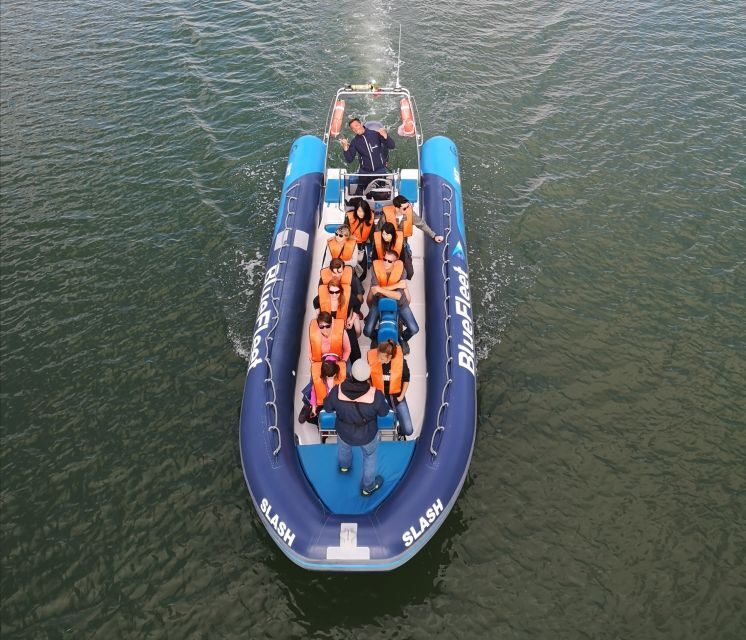
The ethical rules here are not hidden in fine print. They’re part of how the tour works on the water.
You’re not allowed to feed dolphins or touch marine life. You also won’t be allowed to interfere by touching animals or jumping. Pets, smoking, and alcohol or drugs are off-limits too.
Why you’ll feel this is practical, not just moral: when the crew sticks to respectful distance, dolphins keep acting like dolphins. You get calmer behavior, more natural movement, and usually better viewing. It also means the crew can keep searching efficiently because they’re not trying to force anything.
When the Atlantic is windy: what happens if dolphins are tough
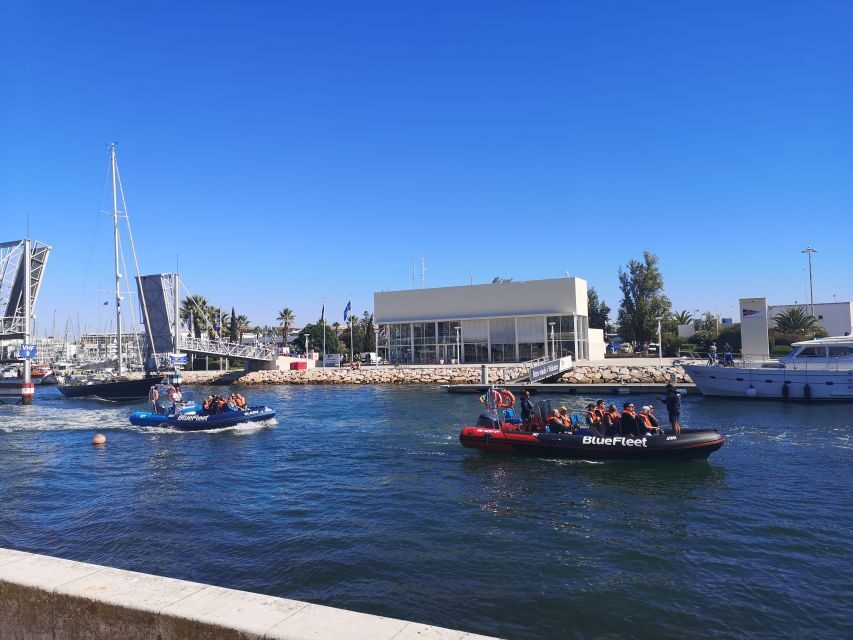
Dolphin tours live and die by weather and sea state. On windier days, the boat ride can still be fun and safe, but the search can be harder. The main thing is that the operation doesn’t treat that as a dead end.
On at least one windy outing, the staff explained that finding dolphins might be difficult and used a plan B approach. In that case, the group still went out farther and ended up seeing porpoises even without dolphins.
So if you’re the type who hates uncertainty, this might feel annoying. But if you’re okay with a good, honest nature search, you’ll probably appreciate how the crew manages the day instead of giving up early.
You can also read our reviews of more dolphin watching tours in Algarve
Where to sit and what to wear for comfort in Algarve wind
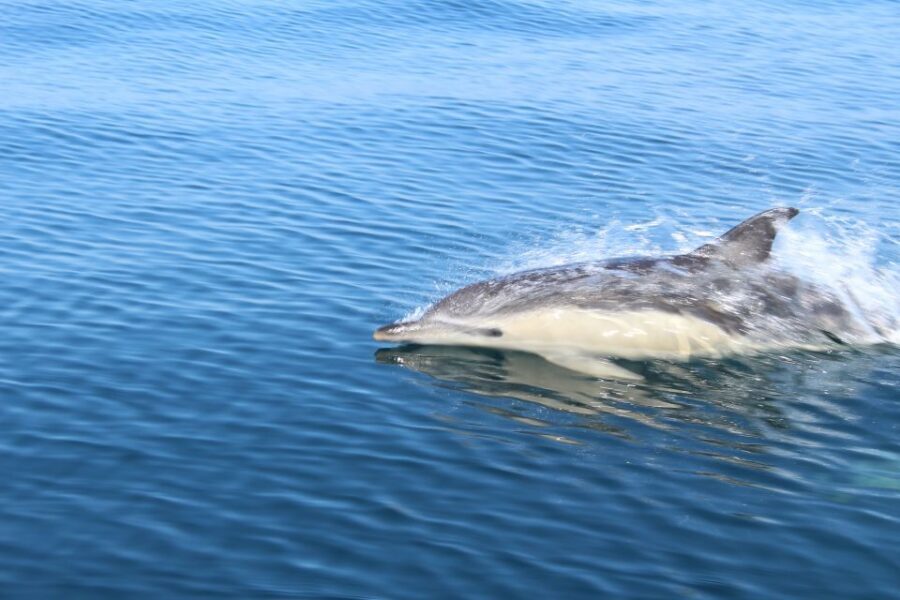
The RIB is quick and agile, which is great for dolphin chances. The tradeoff is that it can be bouncier than a big slow boat, especially when waves are pushing over the bow.
A very useful tip from experience: if you have a bad back, sit toward the back. People have noted that the front can hit water harder as the boat rides the chop.
What to wear depends on season, but your safest bet is layers. Bring something warm enough for wind on the open Atlantic and something that won’t soak instantly. One common practical advice from experience: pack a jacket if you have one.
Also, leave valuables at home if you can. The operator notes they aren’t responsible for lost or damaged items on board, so treat the boat like a place where you keep only what you’ll happily get wet.
Value check: is $42 worth it for 90 minutes on a RIB?
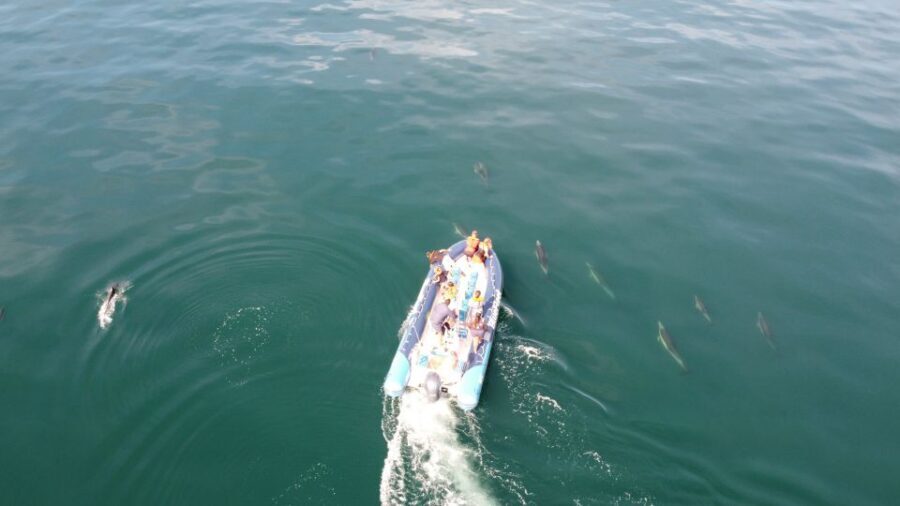
$42 per person for 1.5 hours is fair when you factor in what you’re buying: an offshore-ready RIB ride, a small-group cap of 18, life jackets, an onboard marine biologist, and insurance. This isn’t just a scenic harbor loop.
It becomes even better value if you’re serious about spotting dolphins rather than taking a casual boat stroll. The faster boat and active search pattern mean your time is spent looking, not drifting.
One more value point that’s easy to miss: guide expertise changes how you watch. When your marine biologist points out behavior and communication, every dolphin sighting feels more meaningful. You’re not just collecting a photo. You’re learning how pods live in the wild.
That said, the only real “cost” is the luck factor. Even with a strong crew and a good boat, dolphin sightings depend on conditions and animals being present.
Who this tour suits best (and who should skip it)
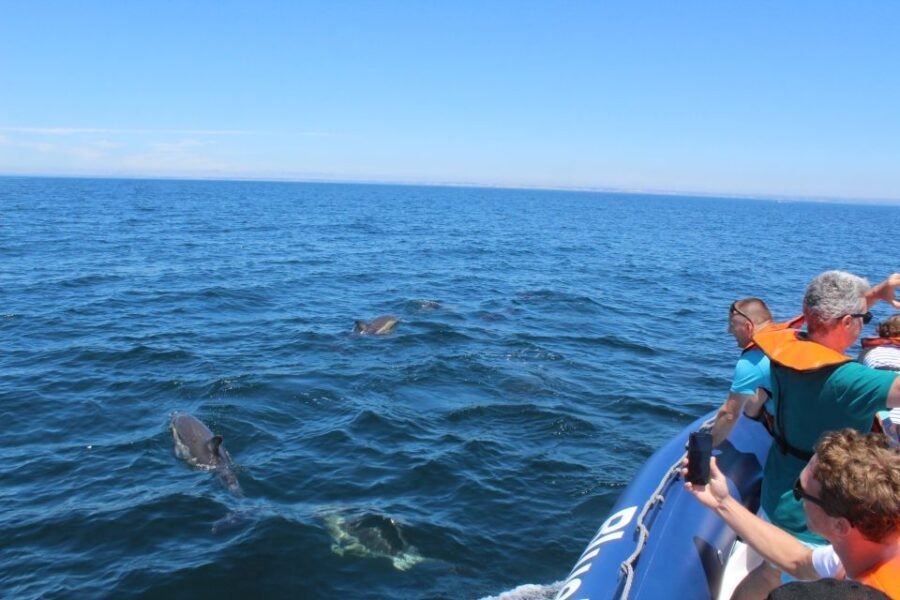
This tour is a good fit for nature lovers, couples, families old enough to handle the ride, and anyone who wants the chance of wild dolphin encounters with real science behind it.
It is not suitable for children under 4 years. It also isn’t recommended for wheelchair users, people with mobility impairments, people with heart problems, back problems, or pregnant women. If any of those apply, your body matters more than your bucket list.
Also note the activity is not a “bring everyone and everything” kind of day. Pets aren’t allowed, alcohol isn’t allowed, and touching marine life is not allowed.
If you can handle windy, fast boat conditions and you’re comfortable with the idea that you’re searching the Atlantic rather than expecting guaranteed sightings, this fits nicely.
Practical booking tips that improve your odds
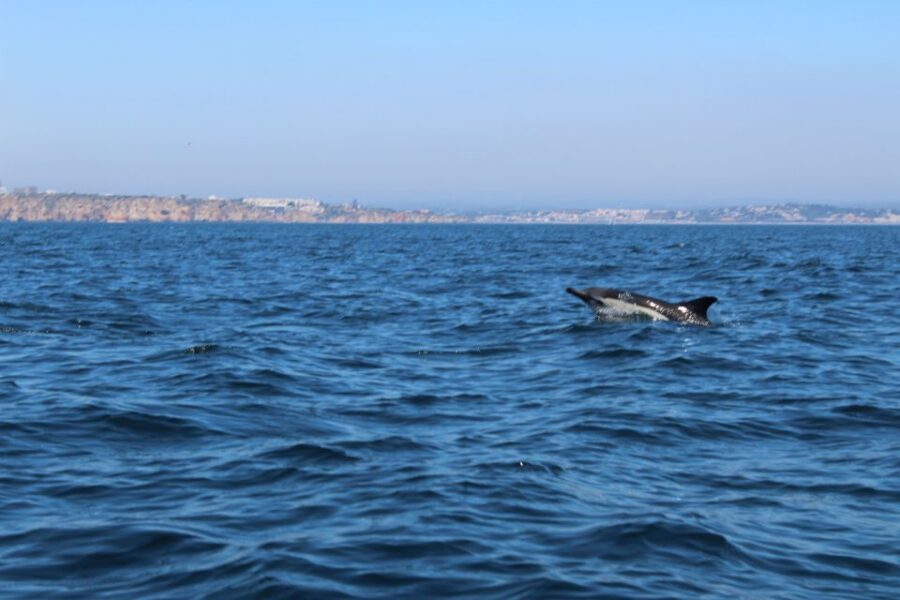
If you want the best chance to see dolphins, choose an early slot if options are available. One shared tip suggests booking the first morning slot for better chances, which makes sense for wildlife activity and calmer planning.
Bring a jacket, keep your valuables minimal, and plan to arrive at the meeting point on time. There’s no pickup, so being late can mean missing the start.
Finally, keep your expectations flexible. Even great days can turn into a longer search, and the crew’s job is to respond to what the sea gives them.
Should you book the Lagos dolphin watching trip with marine biologists?
Yes, you should book it if you want a serious dolphin-watching experience in Lagos, not a casual boat ride. The small-group size, the RIB that can relocate quickly, and the marine biologists onboard make this a strong use of 90 minutes, especially at the $42 price point.
Skip it if you need guaranteed dolphin sightings, have mobility or health constraints listed as not suitable, or want a quiet, slow, fully comfortable ride. And do be honest with yourself about weather: this is an Atlantic outing.
If you can handle a bit of motion and you’re excited to watch wild dolphins behaving naturally, this is one of the most worthwhile ways to spend time on the water from Lagos.