REVIEW · BRAGA
Braga: Private & Flexible Walking Tour in Historic Center
Book on GetYourGuide →Operated by Travelbox, Lda. · Bookable on GetYourGuide
Braga clicks into place fast on foot. This self-guided Walkbox tour makes the historic center feel easy to navigate, with audio that plays as you reach each stop. I especially love the offline audio so you can keep moving without hunting for signal, and I love the clear, step-by-step directions that keep you from wandering in circles.
One thing to consider: there’s no live guide, so the experience depends on your smartphone (battery and headphones) and your willingness to follow prompts.
In This Review
- Key highlights at a glance
- Walking Braga your way, with audio that tells you when to look up
- Where the loop starts: Porta Nova and Campo das Hortas Square
- Rua da Violinha: your first taste of narrow-street Braga
- Dom Diogo de Sousa Archaeology Museum stop: a smart bridge between eras
- Largo de São Paulo and Largo de Santiago: plazas with momentum
- São Paulo Church inside: the golden carvings moment
- Sé Cathedral: Braga’s monumental centerpiece
- Paço Square: a calmer pause with palace-energy nearby
- Carlos Amarante Square and São Marcos Hospital: history you can’t ignore
- São Marcos Church: another spiritual stop with local weight
- Raio Palace and Avenida da Liberdade: shifting from stone to city swagger
- Donjon Tower, Crivos House: details that make Braga feel real
- Santa Bárbara Garden: a green reset before the finish
- Biscaínhos Museum area: ending near where you began
- Price and value: why a $9 self-guided tour can be a bargain
- Practical tips so the tour feels smooth (not like work)
- Should you book this Braga Walkbox tour?
- FAQ
- Where does the tour start and end?
- How long is the walking tour?
- How far do you walk?
- Is the route circular, and can I start anywhere nearby?
- Can I do the tour in parts over multiple days?
- Do I need tickets for attractions?
- Is there a live guide with you?
- What languages are available?
- Does the app work offline?
- How do I get help during the tour?
Key highlights at a glance
- Offline-first audio that runs as you pass landmarks, so you can keep your eyes on the street.
- WhatsApp support hours from 8:00 AM to 8:00 PM if you need help getting oriented.
- A tight 3 km loop route (about 3 to 4 hours) that hits major monuments without being exhausting.
- Iconic stops like Sé Cathedral and São Paulo Church, plus the leafy pause of Santa Bárbara Garden.
- Real-world flexibility: you can do the tour in parts over up to 5 days after booking.
Walking Braga your way, with audio that tells you when to look up
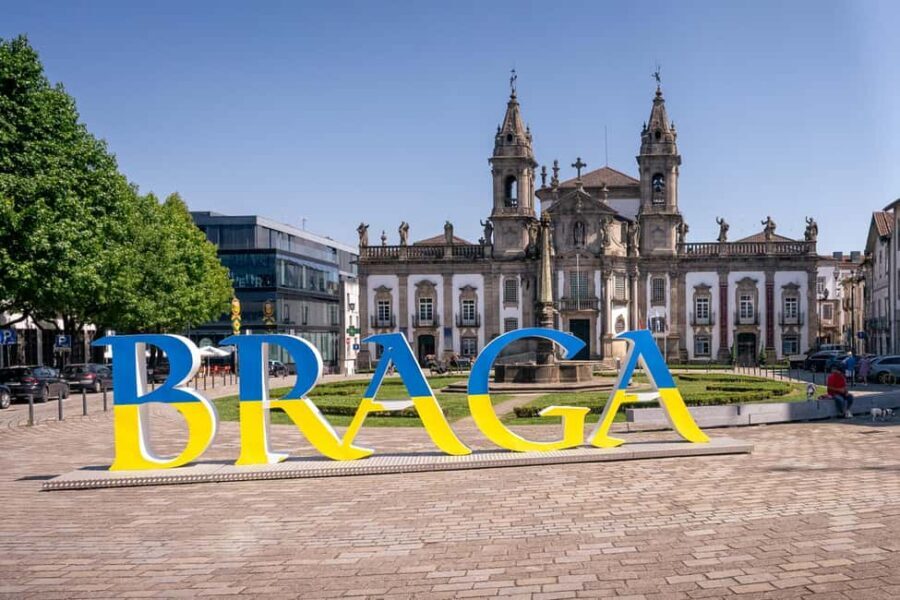
This tour works like a smart walking buddy. You start at Campo das Hortas Square, and the route pushes you into Braga’s old town through the Porta Nova triumphal arch. From there, the city unfolds through a sequence of stone churches, narrow lanes, and plaza moments—without the pressure of keeping up with a group.
What really makes it work for me is the timing. The audio guides aren’t just general facts you have to read later. They play at the right moment as you approach each point of interest. That means you’re not stuck staring at your phone. You can slow down when something catches your attention and move faster when you want to get to the next highlight.
The other big plus is support. After you book, the curator sends clear instructions, and you can message through WhatsApp during the day (8:00 AM to 8:00 PM). In other words: you’re not totally on your own if something doesn’t load or if you’re unsure about where to turn next. Reviews also point to Bernardo as the person behind the app experience, and it shows in how smooth the guidance feels.
You can also read our reviews of more tours and experiences in Braga.


Where the loop starts: Porta Nova and Campo das Hortas Square
Campo das Hortas Square is a sensible launchpad. It’s the kind of central spot where you can reset your bearings before heading into the historic lanes. Once you begin, the route guides you through Porta Nova, Braga’s grand arch entry. That arch is a great visual marker: it tells you you’ve officially crossed into the older layers of the city.
From here, the tour leans into Braga’s classic walking rhythm—turn, pause, look back, then move again. You’ll be nudged from wider spaces into tighter streets, which is exactly what you want on a compact loop.
Rua da Violinha: your first taste of narrow-street Braga
After Porta Nova, you head toward Rua da Violinha, described as the city’s narrowest street. It’s short, but it matters. Narrow streets change how a city feels. You’ll notice the sound, the shadows, and the way buildings seem to lean toward each other.
This is also a good “warm-up” segment for first-time self-guided walkers. The directions are designed to keep you from second-guessing yourself, and you get a quick win early: you learn the format before you’re deep in the route.
Dom Diogo de Sousa Archaeology Museum stop: a smart bridge between eras
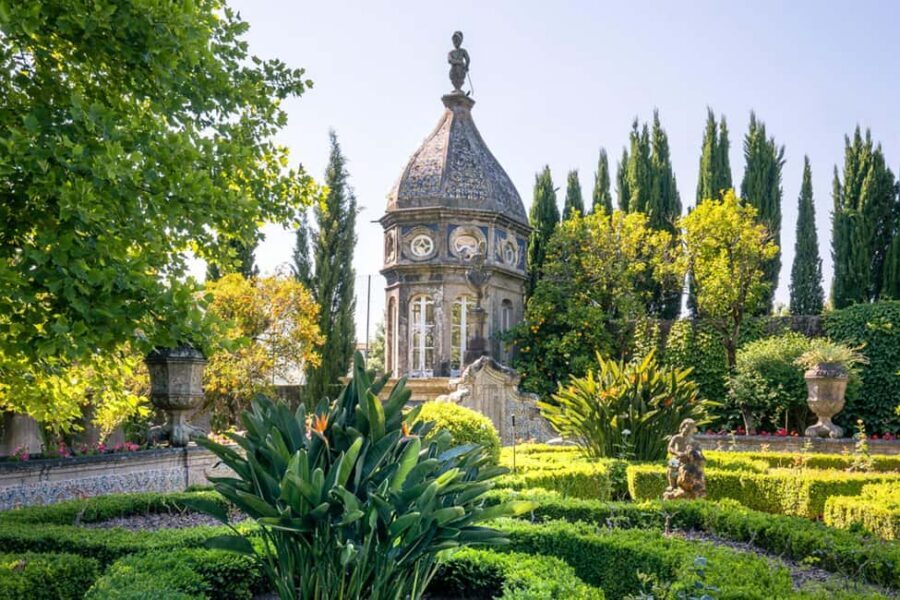
Next comes the Dom Diogo de Sousa Archeology Museum area. Even if you don’t go inside, the stop works as a historical hinge between medieval Braga and the later civic life around the squares. It’s the kind of location where it’s easy to understand why Braga has so many layers stacked close together.
A practical note: this tour includes guidance on opening hours and prices for attractions where applicable, but tickets themselves aren’t included. So if you want to enter museums or churches with an admission fee, plan on paying separately.
Largo de São Paulo and Largo de Santiago: plazas with momentum
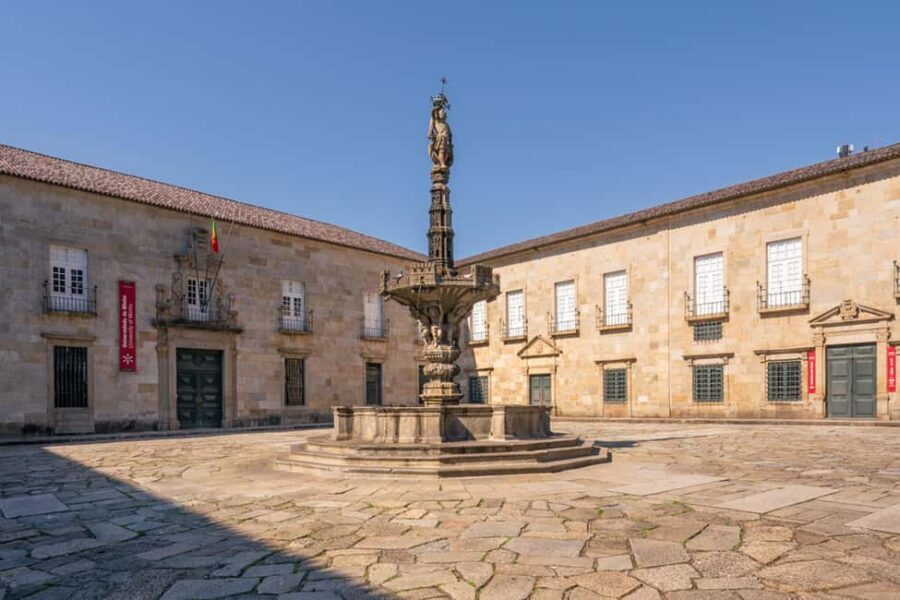
You’ll then move through Largo de São Paulo and Largo de Santiago. These are plaza-style stops, which means you get built-in breaks from the street-walking. Plazas are where the city’s day-to-day feel shows up—people lingering, chatting, and passing through.
This part of the route also sets up what’s coming next: the churches. Braga is a city where religion and civic identity historically ran together, and that shows most clearly in these landmark buildings.
You can also read our reviews of more private tours in Braga




São Paulo Church inside: the golden carvings moment
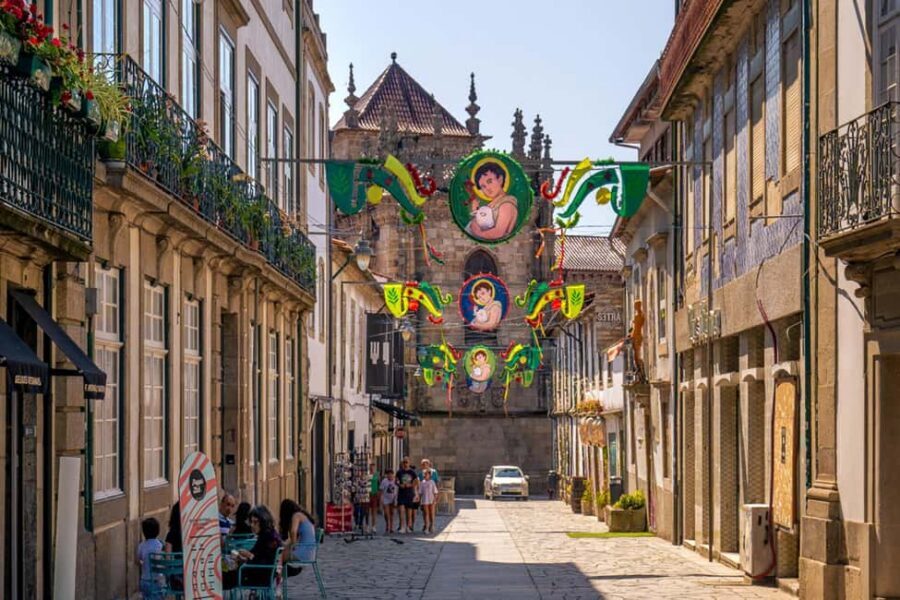
One of the tour highlights is São Paulo Church, specifically the dazzling golden carvings inside. The outside is impressive, but the real payoff is what you see once you’re inside—ornament, detail, and that “wait, stop right here” feeling.
Because this is self-paced, you can do this stop your way. If you’re a quick look-and-go type, you can keep it moving. If you like slower photo time and reading inscriptions, you can linger. Just remember that churches can have their own visiting rules, so plan to be flexible.
Sé Cathedral: Braga’s monumental centerpiece
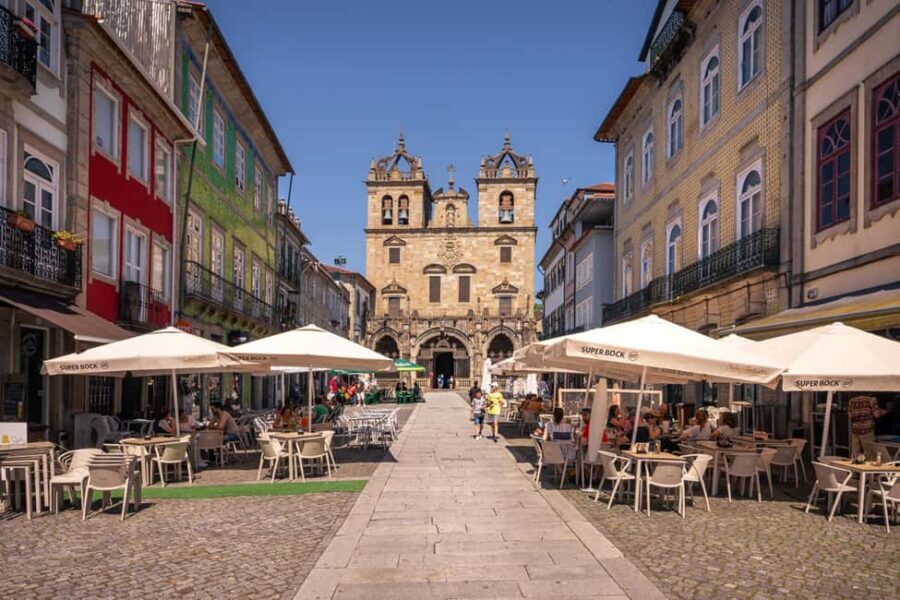
Now you hit the star of the show: Sé Cathedral. This is where Braga’s scale becomes obvious. The cathedral isn’t just another church stop—it’s the anchor monument that makes the rest of the city make more sense.
I like having Sé in the middle of a walking circuit rather than at the end. It acts like your north star. After you’ve seen it, the surrounding squares and streets feel more connected: you start noticing how the city’s layout supports daily life around major religious institutions.
Also, cathedral visits tend to work best when you give yourself enough time to look up and down. The app’s prompts help, but you still control how long you spend at each view.
Paço Square: a calmer pause with palace-energy nearby
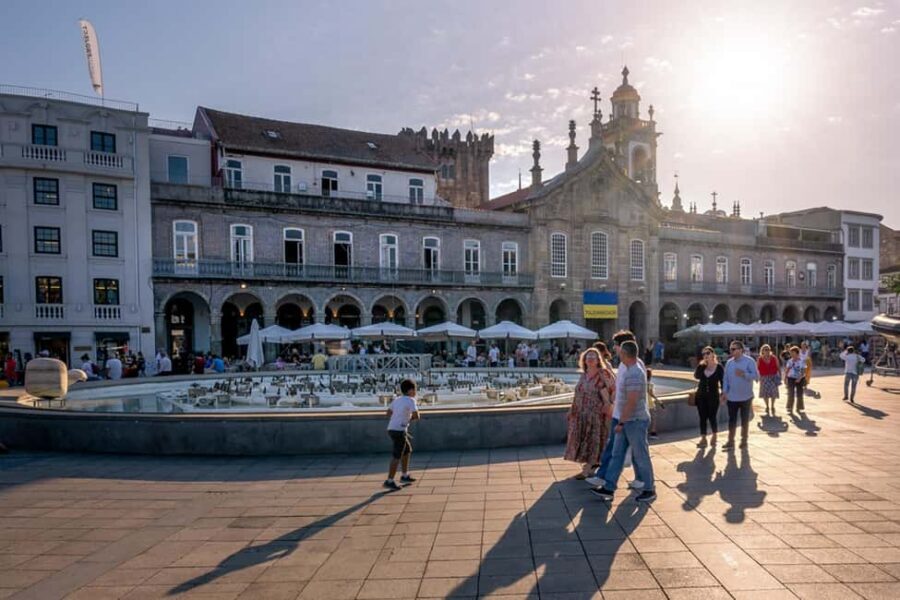
From the cathedral area, you’ll pass through Paço Square. Compared with the cathedral, it feels more open and less overwhelming. That’s useful. You need one or two calmer segments during a walking route so your brain can absorb what you’ve already seen.
This is the kind of stop where I often take a moment to scan the buildings and streets before moving on. It helps you “read” Braga instead of just walking past it.
Carlos Amarante Square and São Marcos Hospital: history you can’t ignore
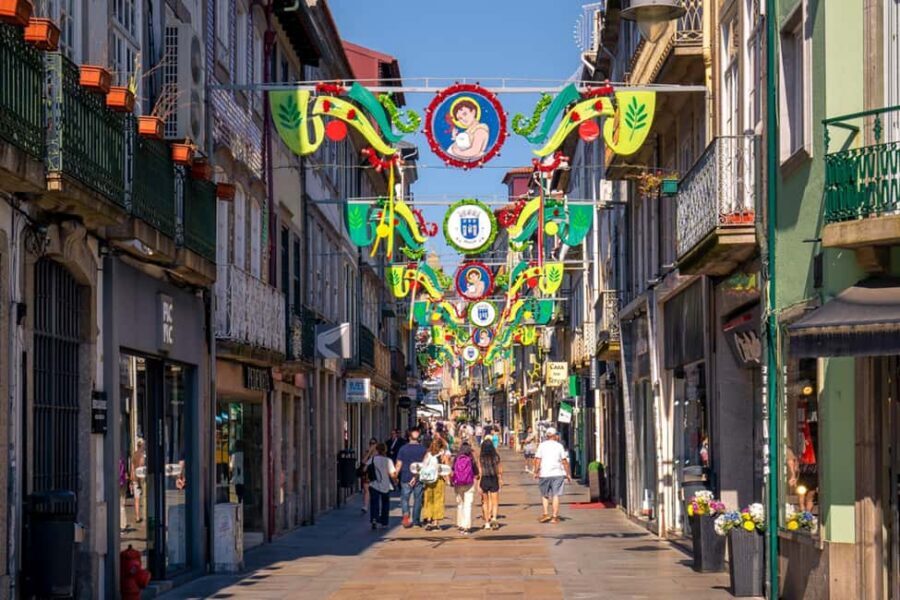
Heading toward the north side of the loop, you reach Carlos Amarante Square, known for the impressive São Marcos Hospital nearby. Hospitals in old European cities often weren’t just medical facilities—they were major institutions that shaped neighborhoods and helped define community life.
This stop adds variety to the tour. You’re not only seeing religious architecture and civic squares. You’re also seeing how Braga’s institutions cared for people, for centuries, in a city center that’s still walkable today.
São Marcos Church: another spiritual stop with local weight
The highlights also include São Marcos Church, which you’ll encounter as part of the historic cluster around these institutions. If you like churches for their craft, details, and the quiet atmosphere inside, this works well. If you’re more interested in street life, it’s still worth a quick stop so you understand why these buildings dominate the skyline.
Raio Palace and Avenida da Liberdade: shifting from stone to city swagger
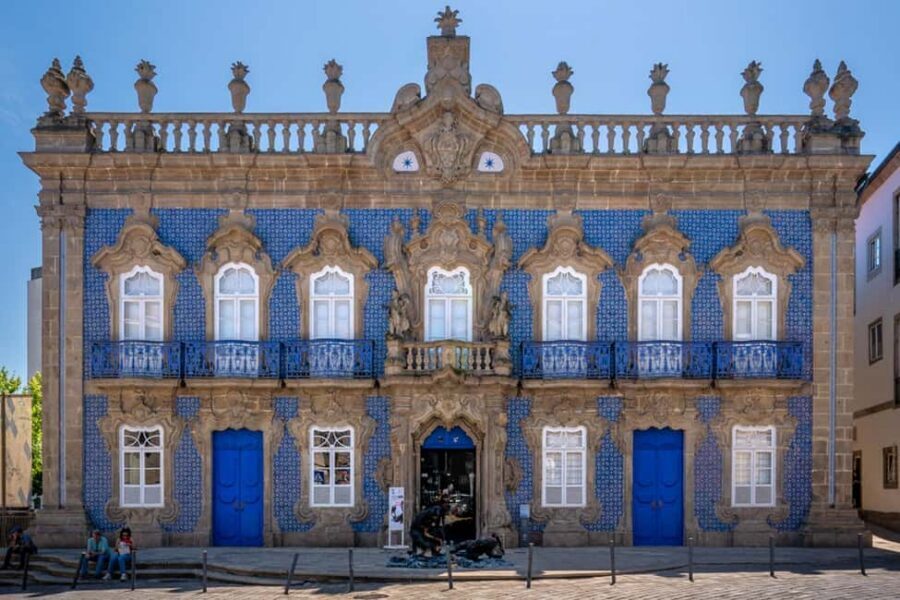
After the cathedral-and-square intensity, the route turns toward Raio Palace and then down Avenida da Liberdade to Praça da República. This shift is important. You go from tight historic streets into a more civic, public-facing avenue.
Praça da República is a highlight because it’s a social center. It’s where the city feels present in everyday life rather than only in monuments. Even if you don’t sit for long, it’s a good place to rehydrate, check your phone battery, and plan your pace for the final stretch.
Donjon Tower, Crivos House: details that make Braga feel real
Near the later part of the route you’ll see spots like the Donjon Tower and Crivos House. These are the kinds of landmarks that can be easy to miss if you’re only chasing the biggest names. The tour helps by giving context, so you’re not just looking at old stone—you know what you’re looking at.
This is where self-guided tours can either feel empty or feel rich. In this case, the prompts help you notice what matters. You walk away feeling like Braga stayed with you, not like you just checked boxes.
Santa Bárbara Garden: a green reset before the finish
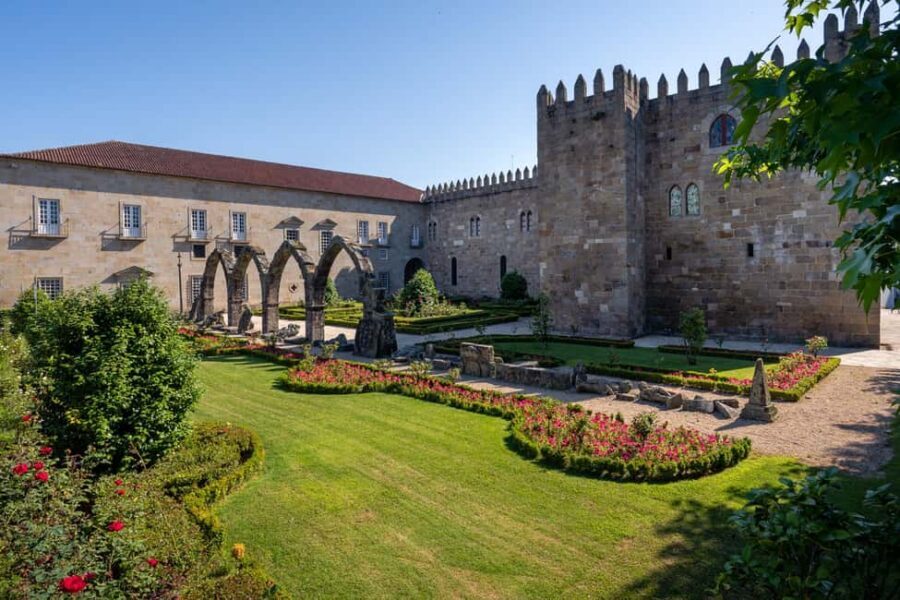
The loop brings you to Santa Bárbara Garden. Gardens are valuable on walking tours because they reset your senses. After church interiors and plaza stops, a calmer, quieter space lets your feet recover and your eyes rest.
If you’re taking this route in warmer months, this is also the segment where you’ll appreciate any shade and slower pace. Even a short stop here makes the last part of the walk feel less like effort and more like a pleasant stroll.
Biscaínhos Museum area: ending near where you began
The tour concludes at the Biscaínhos Museum, conveniently close to the starting point back at Campo das Hortas Square. Ending here makes the “loop” feel complete. You finish with something reflective rather than just one last rush to the exit.
If you want to extend your time, you’re not far from where you can keep exploring on your own. This is one of the best uses of a loop route: it gives you a strong structure, then lets you wander without getting lost.
Price and value: why a $9 self-guided tour can be a bargain
At about $9 per person for a 3-hour experience, the value depends on how you like to travel. If you prefer a fixed itinerary with a live human guide, this won’t be your style. But if you like moving at your own speed and you’re comfortable using a smartphone, this price is hard to beat.
Here’s why it feels fair:
- You’re getting a planned route that covers major sights in a compact 3 km loop.
- You get offline audio and multi-language content (English, Portuguese, French, Spanish).
- You get practical support via WhatsApp during set hours.
- You can do the route in full or in parts over up to 5 days, which lowers the stress of timing.
In plain terms: you’re paying for convenience and clarity, not just facts.
Practical tips so the tour feels smooth (not like work)
Bring comfortable shoes. The route is relatively easy, but it’s still a walking circuit of 3 km with enough turns and stops to keep you on your feet.
Also, bring a charged smartphone. Because this tour uses the app for guidance, battery life matters more than you might think—especially if you like taking photos.
Plan your direction. The route is circular, and you can start from nearby points of interest, but you should walk clockwise if you want the directions to match what you see. If you start in the middle and walk the wrong way, the prompts might feel like they’re “talking past you.”
Finally, the tour isn’t meant for people with mobility impairments. If that applies to you, I’d choose a different format that’s more accessible.
Should you book this Braga Walkbox tour?
Book it if you want an independent way to experience Braga’s historic center without the stress of group timing. It’s a strong fit when you enjoy churches, plazas, and architecture, and when you like the idea of guidance that adapts to your pace.
I’d skip it if you need a live guide to explain things on the fly, or if you don’t want to rely on a smartphone for navigation and audio. If you’re comfortable with self-guided travel and you want real support when you need it, this is one of the better low-cost ways to get a lot of Braga in a few hours.
FAQ
Where does the tour start and end?
The tour starts and ends at Campo das Hortas Square and enters the historic area through the Porta Nova arch.
How long is the walking tour?
The tour takes about 3 hours (and the route typically takes 3 to 4 hours depending on your pace and how many stops you enjoy).
How far do you walk?
The route is about 3 km total.
Is the route circular, and can I start anywhere nearby?
Yes, the route is circular. You can start from any nearby point of interest, but you should walk clockwise so the directions match your route.
Can I do the tour in parts over multiple days?
Yes. You can complete the full tour or do it in parts within 5 days of your booking date.
Do I need tickets for attractions?
Tickets to paid attractions are not included. The tour provides pricing and opening hours information where applicable.
Is there a live guide with you?
No. This is a self-guided experience through the Walkbox app (no live guide).
What languages are available?
The tour content is available in English, Portuguese, French, and Spanish.
Does the app work offline?
Yes. The guide works offline, and audio plays automatically as you reach points of interest.
How do I get help during the tour?
You can contact the tour curator via WhatsApp, with support available from 8:00 AM to 8:00 PM (and phone support is also available if needed).