REVIEW · PONTA DELGADA SAO MIGUEL
AZORES: Surf Lesson for Beginners
Book on GetYourGuide →Operated by Black Sand Box · Bookable on GetYourGuide
Atlantic waves, zero experience, real coaching. Surfing here means you learn in the middle of the Atlantic—cooler water, real conditions, and instructors who keep it controlled and beginner-friendly. It’s a short 1.5-hour session that feels action-packed, not rushed.
What I like most is the small-group setup (max 6 per instructor), which makes it easy to get noticed and corrected. I also love that the lesson includes personalized feedback in the water, plus safety basics so you know what to do when you’re paddling and popping up.
One thing to plan around: your exact beach and timing can shift with sea conditions and tide, and the lesson doesn’t include transportation to the surf location.
In This Review
- Key Things I’d Prioritize Before You Go
- Why Surfing in the Azores Feels Different Than Usual
- Finding Your Beach: The Van, the One-Day Update, and Common Spots
- The 1.5-Hour Flow: Wetsuit Up, Basics, Then Into the Water
- Learning the Basics Fast: Paddling, Pop-Up, and Real Coaching
- Small Groups and Personalized Attention (Why It Matters in Real Life)
- Price and Value: What $53 Buys You in the Azores
- What to Bring (So Your Lesson Doesn’t Feel Like a Rescue Mission)
- Who This Beginner Lesson Is For (and Who Might Reconsider)
- Should You Book This Beginner Surf Lesson?
- FAQ
- Do I need prior surfing experience?
- How long is the surf lesson?
- What’s the group size?
- Where do we meet?
- What beaches might the lesson use?
- Is equipment included?
- What should I bring with me?
- What languages do the instructors speak?
Key Things I’d Prioritize Before You Go
- Max 6 students per instructor for real coaching time, not just a group pep talk
- Licensed instructors with insurance, plus clear safety rules from the start
- All the gear included: board, leash, and wetsuit
- Hands-on help in the water with on-the-spot corrections and practice
- Safety and ocean basics first, so you can surf with confidence
- Beach choice depends on the day, so you’ll ride the best conditions they can find
Why Surfing in the Azores Feels Different Than Usual
If you’ve tried surfing anywhere else, the Azores adds a layer of real ocean context. The Atlantic can be cool, sometimes choppy, and always changeable. That’s exactly why a guided beginner lesson is worth it—you’re not guessing. You’re learning what to do as conditions evolve.
This lesson is also built for progress in a small window. In 1.5 hours, you’re not just standing around. You’re putting on a wetsuit, warming up, learning how to handle your board, then getting time in the water with coaching and quick fixes when something isn’t working.
And yes, the goal is simple: get you on the board safely, with enough technique to enjoy the ride instead of just fighting the waves.
You can also read our reviews of more tours and experiences in Ponta Delgada Sao Miguel.



Finding Your Beach: The Van, the One-Day Update, and Common Spots
You meet directly at the beach. The meeting spot is sent to you one day prior to the activity, so don’t expect the same exact location every time. When you arrive, look for a white van with black sand box on the back—an easy landmark if you’re early or unsure.
The most common beaches used are Milícias on the south coast, and Monte Verde or Santa Barbara on the north coast. Which one you get depends on where conditions are best that day, which matters more than it sounds. Beginners do better when the surf is manageable and the timing is right.
Transport is on you; it isn’t included. So factor in how you’ll get to the chosen beach once you receive the day-before message. If you’re renting a car, this is straightforward. If you’re relying on local transport, give yourself extra buffer time because you won’t know the final location until the message comes.
The 1.5-Hour Flow: Wetsuit Up, Basics, Then Into the Water
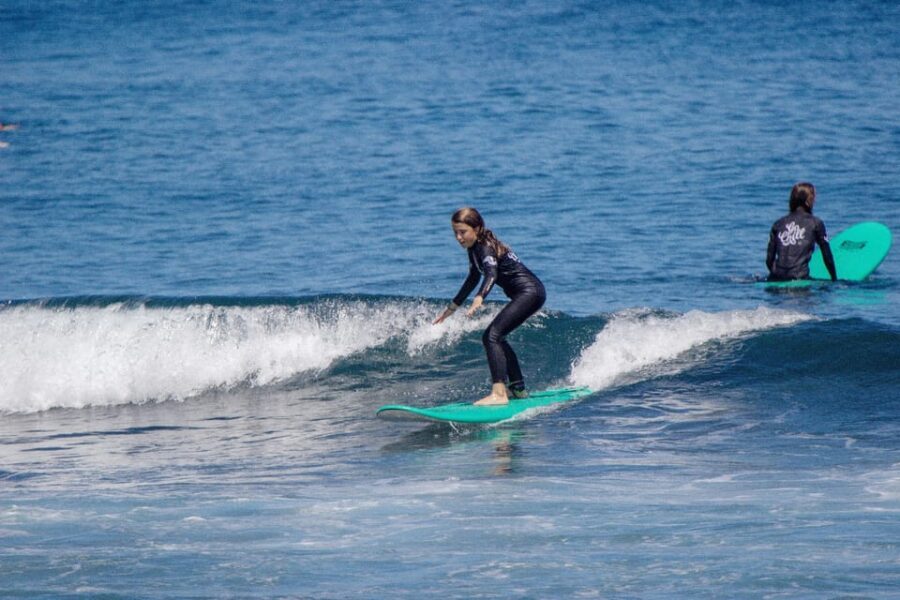
Expect a classic beginner structure, but with enough flexibility to match the ocean. First you meet, then you put on your wetsuit and grab your board. Equipment is part of the package, so you’re not hunting down a board rental or a leash at the last minute.
After that, you head to the sand for warm-up and instruction. The surf instructor explains the basics of surfing, including equipment and safety rules. This is the part that often gets skipped in casual lessons elsewhere, but here it’s treated as the foundation. When you understand where your leash matters and how to behave in the water, you can focus on surfing instead of panicking.
Once you’re ready, the instructor takes you into the surf. Each student gets personalized attention, and the coaching doesn’t stop once you’re wet. They may step you out briefly to correct mistakes, then send you back with practice like paddling and pop-up drills. That stop-and-reset approach is how you improve faster during limited time.
Learning the Basics Fast: Paddling, Pop-Up, and Real Coaching
Beginners usually struggle with two things: managing the board and timing the pop-up. This lesson works on both. You’ll practice the movements on land and then refine them in the water with direct feedback.
Here’s what makes this setup effective. Instead of letting everyone figure it out on their own, the instructor can quickly notice what’s going wrong—like how you’re holding your board, how your paddling is working for you, or how your pop-up timing is lining up. Then they correct it and give you reps.
If it’s your first time, you’ll get the safety context and the basic rules right away. If you’ve surfed before and want a refresh, you’ll still get coached. The lesson is designed for both complete beginners and people who simply want to regain confidence and clean up technique.
A bonus from the experience: it’s not described as dangerous or chaotic. The emphasis is on control—learning how to stay safe in the water while still getting enough wave time to feel progress.
Small Groups and Personalized Attention (Why It Matters in Real Life)
The max group size is 6 participants per instructor, and that’s a big deal for a beginner lesson. When you’re learning, you need eyes on you. You also need quick feedback—especially if you’re about to try something new like paddling out or popping up at the right moment.
In a larger group, beginners often become background characters. They watch, they wait, and they hope their turn leads to improvement. In a small group, the instructor can adjust the pace and correct issues while you’re actually trying the skill.
This is also where the friendly tone reported in the reviews becomes more than just “nice.” Friendly instructors can lower the stress level, and lower stress helps you learn faster. When you don’t feel rushed or judged, you try harder—and you absorb corrections instead of freezing.




Price and Value: What $53 Buys You in the Azores
At $53 per person for about 1.5 hours, this lesson isn’t just a cheap activity. It’s competitive value because equipment is included: surfboard, leash, and a surf wetsuit. Insurance is included too, which is reassuring when you’re learning in open water.
The other value point is the coaching ratio. With small groups and licensed instruction, you’re paying for guided time, not just access to the ocean. That’s the difference between “I tried surfing” and “I actually learned something.”
The one thing that can change the real cost is transportation. The lesson itself doesn’t include it, and since your final beach location is chosen based on sea conditions, your travel planning matters. If you’re already set up with a way to reach beaches on your own, this should feel like a straightforward, good deal.
What to Bring (So Your Lesson Doesn’t Feel Like a Rescue Mission)
Keep it simple. Bring:
- Swimwear (you’ll go in a wetsuit, but you need something underneath)
- A towel
- Sunscreen
- Water
The key here is comfort. You’ll be in the water in a wetsuit, which is great for warmth, but you’ll still want sunscreen since you’ll likely be outside for the full session. A towel helps you dry quickly before you change or head back out.
Also note what’s not allowed: no smoking, and no alcohol or drugs. That’s part of keeping the group safe and focused.
Who This Beginner Lesson Is For (and Who Might Reconsider)
This is ideal if you’re:
- brand-new to surfing
- returning after a break and want a structured refresh
- traveling as a couple or solo but still want instructor attention
- looking for an active ocean experience without committing to a multi-day course
The experience is also described as suitable for beginners of all ages. That matters if you’re traveling with older kids or trying to find something age-appropriate that still feels safe and coached.
You might reconsider if you’re genuinely uncomfortable being in the ocean or if you can’t swim confidently. The lesson is designed to teach safety and basics, but it still happens in open water.
Should You Book This Beginner Surf Lesson?
Yes, I’d book it if you want real instruction in a short time. The combination of small groups, licensed coaching, included gear, and feedback in the water is exactly what beginners need to get beyond “I stood on a board for a second.”
It’s also a smart choice for the Azores specifically because the instructor picks the best conditions on the day. You’re not just arriving and hoping the waves cooperate—you’re learning with guidance matched to what the ocean is doing.
Only hesitate if you hate flexibility. Your beach and lesson time can vary based on sea conditions and tide, and you’ll need your own transportation to the meeting beach. If you can handle that, this is a fun, practical way to experience the Atlantic—and come away feeling like you learned something, not just survived a cold swim.
FAQ
Do I need prior surfing experience?
No. This lesson is designed for beginners of all ages, including people who have never surfed before.
How long is the surf lesson?
The duration is 1.5 hours.
What’s the group size?
It’s a small group, limited to 6 participants.
Where do we meet?
You meet directly at the beach. The exact meeting spot is sent to guests one day prior. On arrival, look for a white van that says black sand box on the back.
What beaches might the lesson use?
Common options include Milícias Beach on the south coast, and Monte Verde Beach or Santa Barbara Beach on the north coast.
Is equipment included?
Yes. You get the necessary equipment: a surfboard, leash, and a surf wetsuit.
What should I bring with me?
Bring swimwear, a towel, sunscreen, and water.
What languages do the instructors speak?
The instruction is available in English and Portuguese.