REVIEW · SAGRES
Sagres Wildlife Adventure: Dolphin and Whale Watching Tour
Book on GetYourGuide →Operated by Cape Cruiser · Bookable on GetYourGuide
Sagres sea life can surprise you. This 3-hour Cape Cruiser tour is built for up-close marine watching from one of Portugal’s best “search zones,” with a marine biologist on board helping you read what you’re seeing. I especially like the way the crew makes the trip feel personal, not like a cattle call, even though you’re out on the open water.
Second, I like that this isn’t only about hoping for whales. You get a fun, interactive wildlife learning layer that turns random sightings into real understanding, and the team is focused on your comfort before, during, and after the boat time.
One thing to consider: wildlife is wildlife. In one review, the dolphins and whales simply did not show up on that particular outing, so you’re buying an experience with strong odds, not a guaranteed animal checklist.
In This Review
- Key things I’d zoom in on
- Why Sagres makes sense for dolphins and whales
- Cape Cruiser and the real rhythm of the day
- What you do at sea: watch, don’t chase
- The marine biologist experience: learning without lectures
- Wildlife possibilities: dolphins, whales, seabirds, and maybe more
- Comfort and safety on a 3-hour boat outing
- Who should think twice
- Quick reality check on motion
- Price and value at about $111 per person
- Who this tour fits best (and who might prefer another plan)
- Quick practical prep checklist for your packing brain
- Should you book Sagres Wildlife Adventure with Cape Cruiser?
- FAQ
- How long is the Sagres Dolphin and Whale Watching Tour?
- Where do I meet for the tour?
- What animals can you look for during the trip?
- Who is on board with you?
- What languages are available?
- Is the tour wheelchair accessible?
- What should I bring?
- What happens if the trip is canceled due to bad weather?
Key things I’d zoom in on
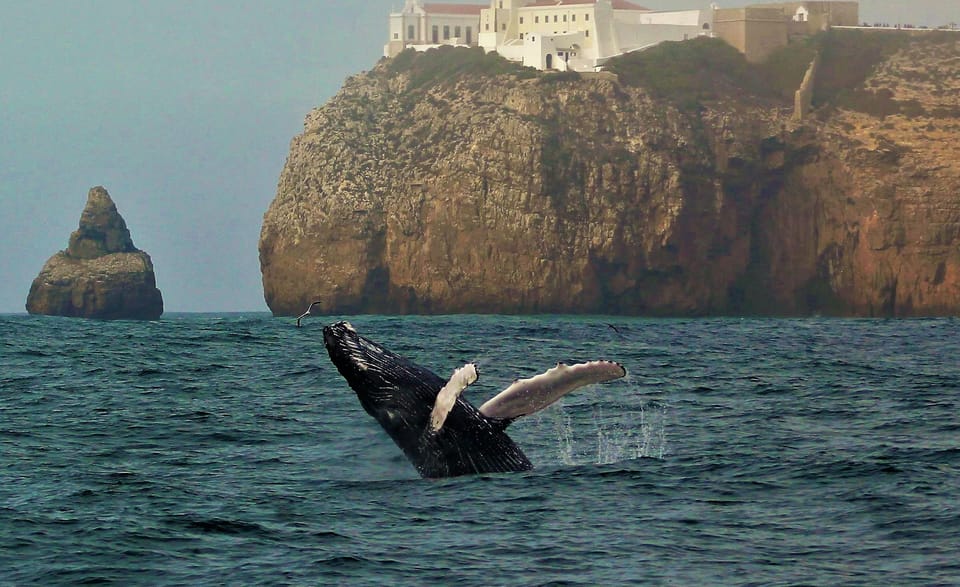
- Sagres’ two-coast advantage means you can look for dolphins nearshore and whales farther out on the same trip
- Marine biologist on board with a chatty, interactive style that helps you identify what you’re seeing
- Up-close watching with respect: you observe from designed viewing distances, without chasing animals
- No two trips the same: you’re dealing with changing conditions and animal behavior, which keeps it fresh
- Crew focus on comfort and safety: life and wind jackets, briefing, and insurance included
- Real sightings from recent departures like dolphins, seabirds, and even Bryde whale reports
Why Sagres makes sense for dolphins and whales
Sagres sits where Portugal’s West coast meets the South coast, and that matters for marine spotting. On this tour, the plan is to work the area so you have a real chance at dolphins along the coast and whales in deeper waters—all during one outing.
That’s not just geography trivia. Dolphins often show up in shallower, food-rich zones, and whales tend to be more of a “look outward” situation. If you’ve ever tried to pick one area and one species, you know how quickly luck can spoil the plan. Here, the route thinking is: cover more water that can plausibly host different wildlife.
Also, the tour doesn’t sell a scripted moment like a parade float. The idea is that each journey is different, and the crew adapts as conditions shift. That keeps the experience honest. You’re not being promised a specific animal; you’re being given a smart shot at seeing multiple kinds of marine life.
You can also read our reviews of more tours and experiences in Sagres.

Cape Cruiser and the real rhythm of the day
Your trip starts at the Cape Cruiser office by Porto da Baleeira, next to Baleeira Beach. It’s close to the center of Sagres, with an easy check-in and drop-off that saves you from extra shuttling time.
Once you arrive, you do a briefing before you go aboard. This is one of those “boring on paper, useful in real life” parts: you’ll get the itinerary overview and wildlife insights, then the crew guides you to the vessel after the briefing.
The tour itself is straightforward in structure: you go out from Cape Cruiser, spend your 3 hours in the sea searching and watching (dolphins and whales), then you return back to Cape Cruiser. There’s no grand land-based “rest stop” or long waiting period. You’re trading time on the water for time off the water—which is exactly what you want if your goal is marine spotting.
What you do at sea: watch, don’t chase
This is a wildlife tour, so the rules are about behavior as much as about safety. The boat is designed so you can observe up close while still keeping proper respect for the animals and their habitat.
In practical terms, that means you’re not doing thrill-seeking animal harassment. You’re positioned for viewing, and the crew manages the boat approach responsibly. The description also notes that, because some marine animals are curious, you might see animals approach and even swim alongside the boat at times—so you could get those memorable moments without turning the trip into a pursuit.
And yes, animal behavior is the wildcard. You may get a feeding event with dolphins, or you may see a lone individual. Sometimes the best sightings come when you slow down and pay attention to smaller signs—seabirds circling, surface activity, sudden changes in how the water moves.
One of the strongest signals from the experience pitch is that the crew is actively oriented toward conservation awareness, not just “count the species.” That’s why their distances and boat etiquette matter.
The marine biologist experience: learning without lectures
The standout “value add” here is the onboard marine biologist. You get insights about marine wildlife and the natural park in a fun, interactive way.
I like this approach because it changes how you watch. Instead of treating dolphins and whales like random fireworks, you start noticing patterns: what kind of surface behavior you’re seeing, how birds can clue you in, and why certain animals appear where they do.
You’ll also benefit from learning that helps you stay calm. If you’re new to whale/dolphin watching, it can feel like everyone else magically knows what to look for. A good biologist onboard turns that into something you can actually do yourself—watch, interpret, and ask questions.
Language help is part of the package too. The tour guide is listed for English and Portuguese, and live guide language includes Spanish as well. That matters if your group has mixed language comfort, and it also helps you follow what the biologist is saying when the action starts.
Wildlife possibilities: dolphins, whales, seabirds, and maybe more
This tour is designed around spotting cetaceans (dolphins and whales), plus marine life on the side. The specific species you see can vary, but the tour describes a broad chance set:
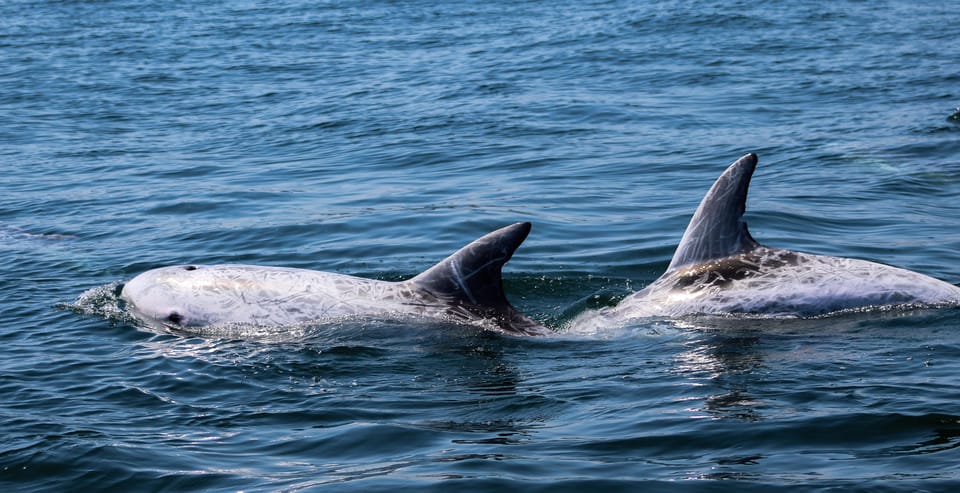
- Dolphins: including possibilities like common dolphins and bottlenose dolphins
- Whales: with hopes for species like fin whale-type sightings and even Bryde whale mentions in real outings
- Other marine wildlife: sharks, seabirds, fish, turtles
- Rare excitement: orcas are listed as a possible sighting
Recent sightings tied to this experience include reports of dolphins, a Bryde whale, and lots of seabirds. There’s also at least one mention of a mom with a baby in the group—those are the moments you remember because you’re seeing real life behavior, not just a single surface “pop.”
The balanced truth: you can’t bank on one exact animal every time. One review notes that dolphins and whales did not appear that day. That doesn’t mean the tour is unreliable—it means you’re doing nature watching in the Atlantic, and nature runs the schedule.
Comfort and safety on a 3-hour boat outing
If you’re worried about being cold, wet, or just stressed on a small boat, this tour is built to handle that. You get life and wind jackets, plus a crew that focuses on well-being before, during, and after.
That’s not just corporate-speak. On a 3-hour wildlife search, people often feel fine at the dock and then get uncomfortable once they’re moving and scanning. Having the right gear and a crew that checks in helps you keep your attention on the animals instead of your own discomfort.
You’ll also be traveling with an insurance-covered setup and a skipper on board, and a marine biologist as your learning anchor. The briefing before you go matters here, too. It sets expectations for how the search may work and how to behave if animals come close.
Who should think twice
The activity notes it’s not suitable for:
- pregnant women
- people with back problems
- children under 3
- people over 75
Also, if you have a condition like recent surgery or any health condition that might put you at risk on a boat trip, it says to contact Cape Cruiser before booking so they can guide you on whether it’s a good fit.
Quick reality check on motion
Nothing in the provided details talks about seasickness medication or guarantees, so I’d treat this like any open-water outing: wear comfortable clothes, plan for breeze, and be ready to slow down your scanning if you feel motion effects.
Price and value at about $111 per person
At $111 per person for 3 hours, you’re paying for more than “just a boat.” You’re paying for:
- the marine biologist experience with interactive learning
- a skipper plus an operation that’s built for safe wildlife viewing
- life and wind jackets
- insurance included
- responsive handling around weather (reschedule with no extra cost or full refund if the trip is canceled due to bad weather)
Is it pricey compared to a casual harbor cruise? Yes. Is it good value for a focused wildlife outing with expert interpretation? In my view, it’s in the right range—especially if marine wildlife learning is the reason you’re going to Sagres.
Also, the free cancellation window is generous enough to keep plans flexible, and you’re not taking on the full risk of a gray day at sea. The weather part is crucial here, since this kind of tour depends on conditions.
Who this tour fits best (and who might prefer another plan)
This works best if you want:
- a guided wildlife spotting mission, not just sitting on a sightseeing boat
- a family-friendly adventure vibe for school-age kids and above
- a group experience where someone helps you interpret what you see
It’s also a strong pick if you like the idea of “surprise factor.” The tour emphasizes that no two trips are the same, and that lines up with the real-world animal variable. You’re not doing a checklist tour; you’re doing an ocean watch.
It might not be the best fit if you:
- need a fully predictable animal guarantee (no tour can promise dolphins and whales every time)
- have mobility limits or health concerns that make boat time stressful
- are in one of the listed non-suitable categories (pregnancy, back problems, very young children, or over 75)
Quick practical prep checklist for your packing brain
For this trip, keep it simple. Here’s what you should do based on what the tour asks for:
- bring comfortable shoes (the dock/boarding area can be uneven)
- wear comfortable clothes you can layer
- consider protective sunscreen on sunny days
- bring a passport or ID card (a copy is accepted)
And leave at home:
- weapons or sharp objects
- baby strollers
- luggage or large bags
- pets (assistance dogs allowed)
- smoking and vaping during the tour
- alcohol and drugs
- anything like glass objects, plus anything that adds mess or danger
If you know you’re traveling with pregnancy, mobility impairment, recent surgery, back problems, or any health condition, contact Cape Cruiser before booking so they can advise you.
Should you book Sagres Wildlife Adventure with Cape Cruiser?
My take: book it if dolphins and whales are the main reason you’re in Sagres and you want the learning layer that a marine biologist adds. The route logic (dolphins nearshore, whales in deeper waters) is smart, and the emphasis on respectful viewing plus crew support makes it feel more grounded than a pure adrenaline boat.
Be realistic about the animal part. One day might be all-action with dolphins, seabirds, and even a Bryde whale. Another day might be quieter. You’re buying access to a well-run wildlife search, not a guaranteed whale calendar invite.
If you want the best chance of a great outing, plan your day so you’re not rushing. Let the full 3 hours on the water do what it’s meant to do: give you time to watch, learn, and catch the best moments when they happen.
FAQ
How long is the Sagres Dolphin and Whale Watching Tour?
The tour lasts 3 hours.
Where do I meet for the tour?
You meet at Cape Cruiser’s office next to Baleeira Beach at Porto da Baleeira.
What animals can you look for during the trip?
The tour is designed for dolphins and whales, and you may also see seabirds, sharks, fish, turtles, and possibly orcas.
Who is on board with you?
There is a skipper and a marine biologist on board, plus a tour guide.
What languages are available?
The tour guide is available in English, Portuguese, and Spanish.
Is the tour wheelchair accessible?
Yes, the tour is listed as wheelchair accessible.
What should I bring?
Bring comfortable shoes and comfortable clothes, and a passport or ID card (a copy is accepted). Sunscreen is recommended if the weather is very sunny.
What happens if the trip is canceled due to bad weather?
If canceled due to bad weather conditions, you can reschedule with no extra cost or request a full refund.