REVIEW · PESO DA REGUA
Régua to Pinhão
Book on GetYourGuide →Operated by Rota do Douro · Bookable on GetYourGuide
A two-hour river ride can feel like a whole wine-country chapter. I like the calm pace from Régua Pier to Pinhão and the wow-factor of the 27-meter rise at Bagaúste Dam, both paced for photos and relaxed sightseeing. One thing to consider: timing can wobble, and if you’re aiming for a specific train back, you’ll want extra buffer.
You’ll get clear narration via a live guide (Spanish, Portuguese, English, French) plus a 4-language audio setup, so you’re not stuck guessing what you’re seeing while the boat glides past terraced vineyards and wine estates. The other practical note is simple: the best experience comes when you treat this as a cruise first, not a rushed transfer, because docking and getting off can take longer than you’d expect.
In This Review
- Key things to know before you go
- Régua to Pinhão: the “easy mode” way to see Douro wine country
- The 15:30 Cais da Régua departure: simple, but don’t be late
- Douro Valley cruising: what you’ll actually see from the water
- Bagaúste Dam: the 27-meter lift moment that changes your perspective
- Pinhão arrival around 17:45: ending in the Douro heart
- The guide setup: live narration plus audio in four languages
- Price and value: does $35 make sense for what you get?
- Timing and logistics: trains, docking, and the “leave slack” rule
- Who should book this cruise, and who might want something else
- Should you book the Régua to Pinhão cruise?
- FAQ
- How long is the cruise from Régua to Pinhão?
- Where do we board and where do we end the trip?
- What time does this sailing depart?
- Is there a tour guide, and what languages are offered?
- What is the main highlight during the cruise?
- Is cancellation free if I change plans?
- Can I reserve now and pay later?
Key things to know before you go
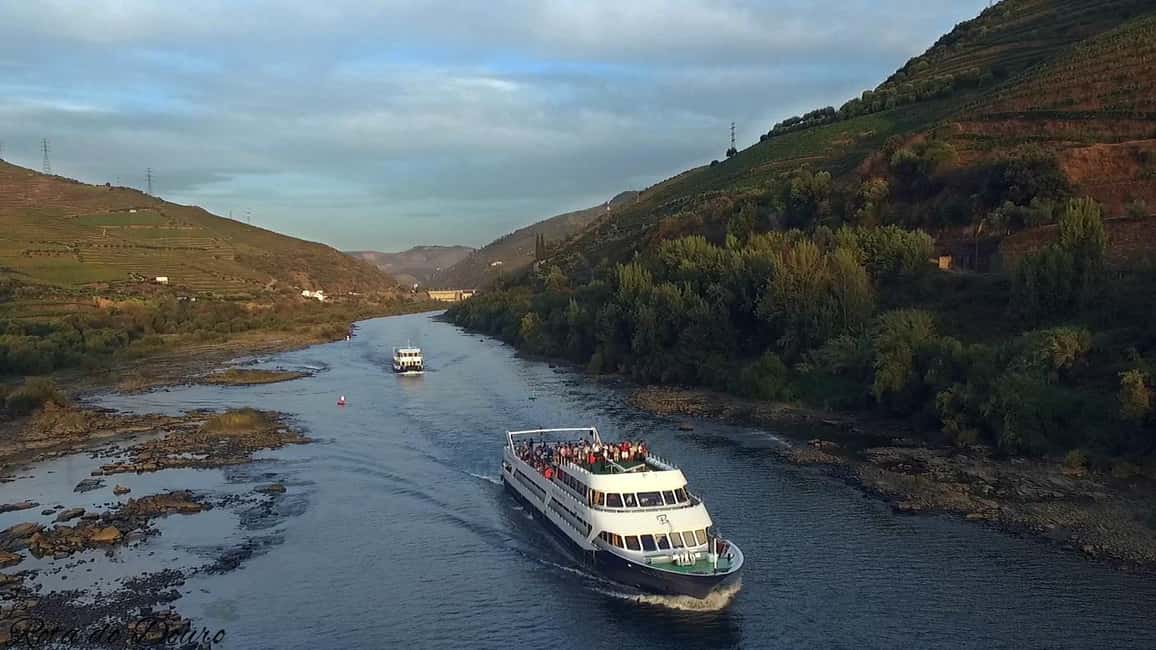
- Cais da Régua at 15:30 is the start point for this sailing, with arrival in Pinhão around 17:45
- Bagaúste Dam lift rises 27 meters, giving you a different angle on how the Douro works
- Multilingual narration in four languages (live guide plus audio) keeps the trip informative
- You’ll have time to photograph terraces, estates, and villages as the river carries you along
- Build in delay slack if you’re connecting to trains on your own schedule
Régua to Pinhão: the “easy mode” way to see Douro wine country
This is the kind of Douro trip that fits real life. Two hours on the water means you get the core views without the logistics stress of hopping between viewpoints. I like that it feels intentionally relaxed: the river is the pace-setter, and you can just settle into it.
The route also lines up with why the Douro matters to Portugal’s wine culture. You’re not just watching scenery. As you pass terraced vineyards, old wine estates, and small villages, you’re following the story that connects the Douro to Port wine. It’s a satisfying way to connect what you see with why it exists.
The crown jewel is the engineering moment at Bagaúste Dam. The boat doesn’t just pass through like a highway. It rises up with the river system, so you see the Douro as more than a pretty valley—you see the mechanism that makes navigation possible there.
You can also read our reviews of more tours and experiences in Peso Da Regua.
The 15:30 Cais da Régua departure: simple, but don’t be late
The boat boards at 15:30 at Cais da Régua. For this kind of cruise, being a little early is your friend. Even when everything runs smoothly, you’ll still need time to get oriented, find the correct vessel, and settle before departure.
One practical thing I’d plan for: meeting and docking can be less straightforward than in a big-city port. Some departures have involved slower-than-expected boarding and getting off, and the dock situation may not always line up with a quick step-off. That’s not a reason to skip the cruise. It’s just a reason to show up early and avoid scheduling tight next steps.
If you’re the type who likes to know every minute of your day, this trip may feel like a small reality check. The river schedule, especially around locks and lift systems, can change. The good news is that the overall experience is flexible and scenic enough that small timing shifts don’t fully ruin the day.
Douro Valley cruising: what you’ll actually see from the water
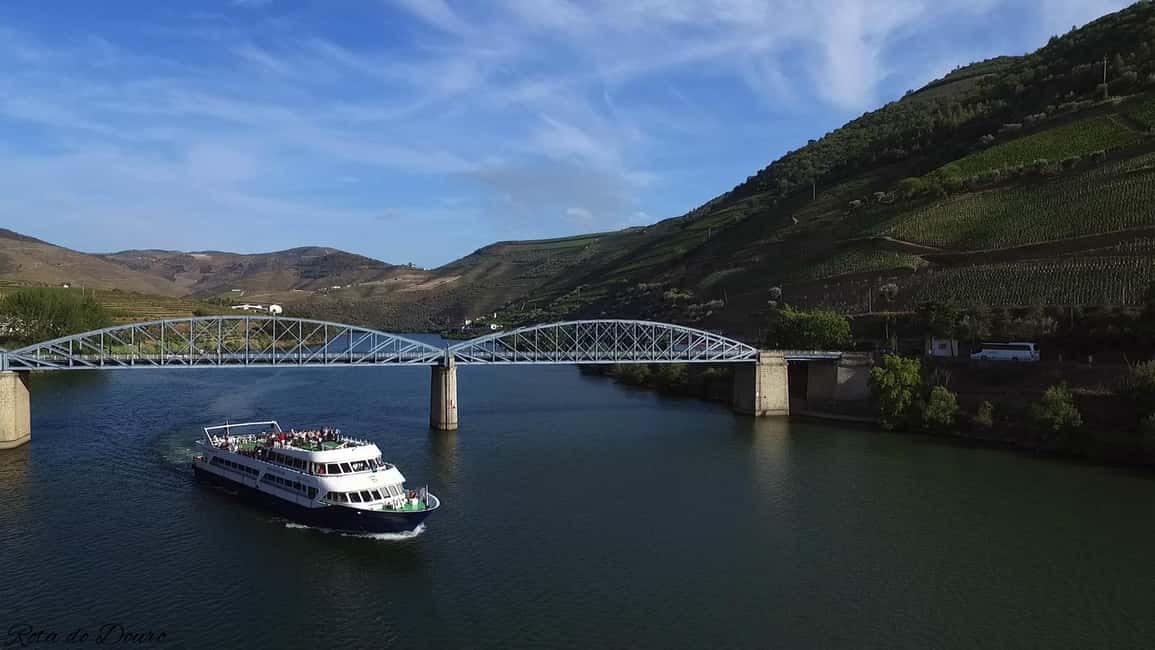
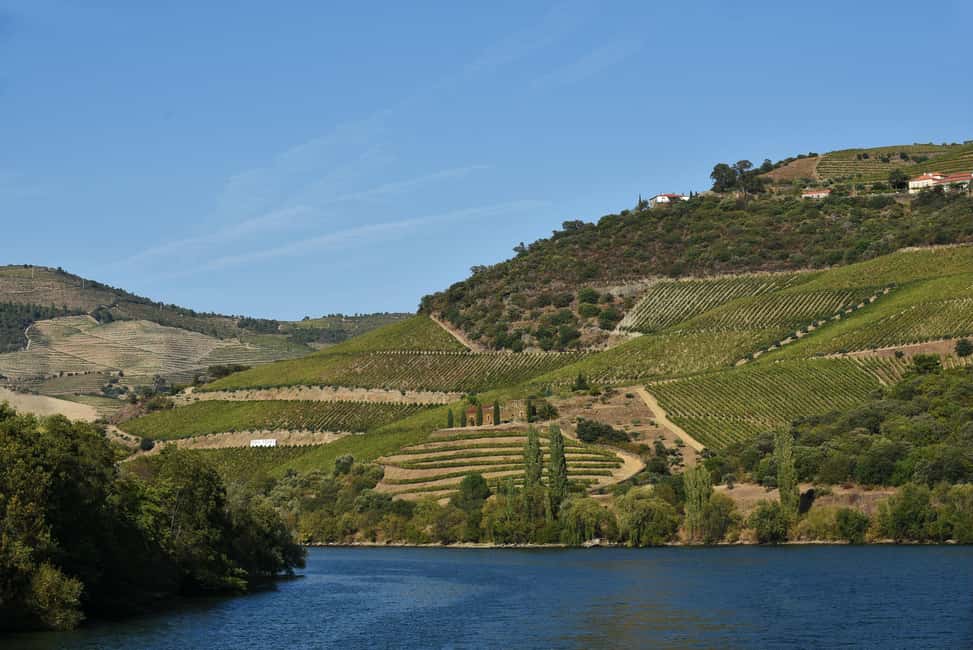
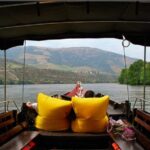
Once you’re moving, the experience clicks into place. You sail along calm waters with the Douro’s defining look: terraced vineyards stacked up along hillsides, dotted with historic wine estates. From the boat, these terraces look almost designed, like someone carved farming into the slopes on purpose—and then built the rest around it.
You’ll also see picturesque villages along the river. The charm isn’t just in the view. It’s in the way the river acts like the spine of the region. Roads and buildings make more sense when you realize how much the Douro shaped travel, trade, and wine-making over time.
A subtle plus: the cruise format helps you avoid the common “spot hopping” problem. You get sustained looking time. That makes it easier to notice patterns—how terraces change, where estates cluster, and what parts of the valley are most densely farmed.
Bagaúste Dam: the 27-meter lift moment that changes your perspective
The big headline moment is the ascent through Bagaúste Dam, where the boat rises 27 meters. This is one of those experiences that’s hard to understand from descriptions alone. From the deck, it feels like the river is folding upward around you.
What I like about this part is the shift in perspective. Before the lift, you’re watching vineyards line the valley in a classic way. During the lift, you feel the geometry of the waterway—deep valleys, controlled levels, and the sheer scale of the engineering that keeps the Douro navigable.
It’s also a moment that gives you a change in pace. Instead of just cruising past views, you get an event. Even if the narration isn’t constant in every moment, the structure of the lift itself tells you you’re seeing something important.
One timing consideration: passing the lift system can take longer when conditions aren’t ideal. If you’ve built a tight connection afterward, keep that in mind. If you’re treating Pinhão as the endpoint and you can go with the flow, this section becomes pure payoff.
Pinhão arrival around 17:45: ending in the Douro heart
You’re scheduled to arrive at Cais do Pinhão around 17:45, and that timing matters because Pinhão is set up for a relaxed arrival. It’s commonly described as the center of the Douro wine region, and on this cruise it lands you right at that “wine valley finale” feeling.
From the boat, Pinhão looks like exactly what you hoped for: a village threaded into the river scene. From a practical point of view, that arrival time is also useful. It gives you a window to explore a bit on foot after the cruise before your evening plans.
If you’re hoping to turn this into a full day with rail connections, keep your schedule roomy. Some experiences have included late departures that then squeeze the return timing by minutes, not hours. That doesn’t mean the cruise isn’t worth it—it just means your backup plan should be realistic.


The guide setup: live narration plus audio in four languages
This experience includes a tour guide and an audio guide in four languages. The live guide is listed for Spanish, Portuguese, English, and French. In practice, that’s valuable because it reduces the risk of missing context if you don’t catch everything in passing views.
Here’s the practical impact for you: you can focus on looking without feeling like you have to constantly read signs or guess what you’re seeing. Terrace systems, estates, and village layouts make more sense when someone ties them to the Port wine story and the Douro’s geography.
One more practical detail from real-world operation: narration style may vary across parts of the journey. Some moments can feel more like audio pacing than live commentary, especially around the dam/lift segment. That’s not a dealbreaker if you’re there for the views and the engineering event, but it’s worth knowing your expectations.
Price and value: does $35 make sense for what you get?
At $35 per person for a 2-hour cruise, the value depends on what you’re comparing it to. If you’re thinking of replacing a longer bus tour, this feels like good tradeoff: you pay for comfort on the water, a guided interpretation, and a highlight that would be hard to replicate on your own.
If you’re comparing it to shorter scenic experiences, the payoff is that you’re not just getting a view—you’re getting a structured route that includes the Bagaúste lift and narration support. That’s the difference between watching the Douro and learning how the Douro works.
Also, this price includes both a live guide and a multilingual audio system. That matters when you’re traveling with a group with different language comfort. Even if you speak one language, audio coverage lets you tune in at your own pace while you take photos or step around for better angles.
My takeaway: $35 feels fair if you go with the right mindset—treat it as an experience on the river rather than a quick hop between towns.
Timing and logistics: trains, docking, and the “leave slack” rule
This is the part you plan around. The cruise is designed as a standalone experience that ends in Pinhão, not as a razor-straight connection maker.
From the information you’ve got, boarding is at 15:30 and arrival is expected at 17:45. But river conditions and lock/lift timing can affect departures and later movements. In a few real departures, low-water conditions delayed sailing, and in other cases, the return timing wasn’t perfect enough to avoid missing a train by a narrow margin.
So here’s my straightforward advice: if you want to connect to rail or a strict dinner plan, treat this as a “flexible day.” If you can’t, you’re taking an unnecessary risk for a trip that’s meant to be relaxed.
Also expect that stepping on/off may not be as frictionless as a perfect dock scenario. When boarding or disembarking takes time, it’s often because passenger flow isn’t instant, not because anything is broken. Just don’t plan to rush out the second the boat stops.
Who should book this cruise, and who might want something else
This tour fits best if you want:
- A low-effort Douro view with a clear route and a real highlight (Bagaúste Dam lift)
- Multilingual guidance without having to stare at a screen or signage
- A calming pace that doesn’t require driving, parking, or switching between multiple stops
You might want to consider alternatives if:
- You need a very precise schedule with no buffer at all
- Your main goal is a museum-style deep dive where the guide speaks constantly the entire time
- You’re traveling with the kind of timing pressure that can’t handle a delayed departure or slower-than-expected docking
For me, the sweet spot is couples, friends, and solo travelers who want the Douro’s “main story” in one smooth motion, and who can appreciate engineering plus river views as the event, not just the backdrop.
Should you book the Régua to Pinhão cruise?
Yes, if you want a relaxing, guided river experience that covers the Douro’s heart without turning your day into a checklist. The combination of the calm cruise, the terrace-and-estate views, and the 27-meter lift at Bagaúste Dam is exactly the kind of “worth paying for” highlight that’s hard to DIY.
Book it with one mindset adjustment: plan your onward steps with slack. If you keep your connections loose and treat Pinhão as an endpoint you’ll enjoy, this cruise earns its place as a simple, memorable Douro day.
FAQ
How long is the cruise from Régua to Pinhão?
The duration is 2 hours.
Where do we board and where do we end the trip?
You board at Cais da Régua and finish at Cais do Pinhão.
What time does this sailing depart?
Guests board at 15:30 at the Régua Pier, and arrival in Pinhão is expected at 17:45 for this scheduled option.
Is there a tour guide, and what languages are offered?
Yes. A live tour guide is included, with Spanish, Portuguese, English, and French. There’s also an audio guide in 4 languages.
What is the main highlight during the cruise?
The standout moment is the ascent through Bagaúste Dam, where the boat rises 27 meters.
Is cancellation free if I change plans?
Yes. You can cancel up to 24 hours in advance for a full refund.
Can I reserve now and pay later?
Yes. You can reserve your spot and pay nothing today.