REVIEW · RUA AUGUSTA ARCH
Lisbon: Rua Augusta Arch Admission Ticket
Book on GetYourGuide →Operated by Distributor: GetYourGuide Tours & Tickets GmbH · Bookable on GetYourGuide
Lisbon feels different from higher ground. With a Rua Augusta Arch admission ticket, you climb up past famous sculptures and then step into a viewpoint that puts Praça do Comércio and the river in the same frame. It is a compact stop, but it changes how you read the city street by street.
I really like two things here: the 360° panoramic views from above the Terreiro do Paço area, and the fact that you get more than scenery—you also walk through the monument’s internal history in the clock-room setting. It’s short, affordable, and easy to pair with the walking streets below.
One thing to plan around: the Arch was built as a monument, not originally as a visitor site. The elevator helps, but you still have to climb a spiral staircase, and there is no alternative access for reduced mobility.
In This Review
- Key highlights at a glance
- Rua Augusta Arch: the quick ticket that turns into Lisbon’s best orientation
- What the view really looks like: 360° sights from Terreiro do Paço to the Tejo
- Up the Arch: elevator almost all the way, then a spiral staircase
- Sculptures you can actually spot: Glory, Valor, and famous historical figures
- Clock Room history: from the 1755 earthquake to completion in 1875
- Tickets, lines, and value: $5 for a high payoff
- Planning your visit in Lisbon: when to go and what to pair it with
- Who should climb and who should reconsider
- Should you book the Rua Augusta Arch admission ticket?
- FAQ
- What are the opening hours for Rua Augusta Arch?
- How long should I plan for this experience?
- What views can I expect from the top?
- Do I get an elevator to the top?
- Is the ticket good for one day?
- Where do I meet for the ticket?
- Are skip-the-line tickets included?
- Is there any accessibility alternative if I can’t climb stairs?
- Can I cancel for a refund?
Key highlights at a glance

- Elevator up first, then a spiral staircase for the final climb
- 360° views covering Terreiro do Paço, downtown Lisbon, the river, and key landmarks
- Sculptures by Célestin Anatole Calmels and Vítor Bastos built into the exterior
- Clock Room history showing the Arch’s timeline from the 1755 earthquake to 1875
- Small upper spaces where the stairway and viewpoint can feel tight
Rua Augusta Arch: the quick ticket that turns into Lisbon’s best orientation
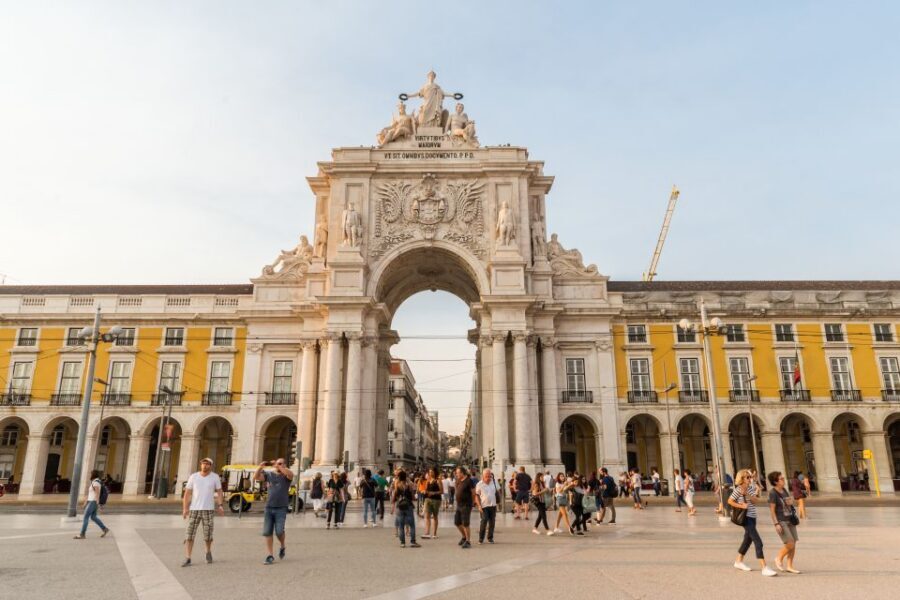
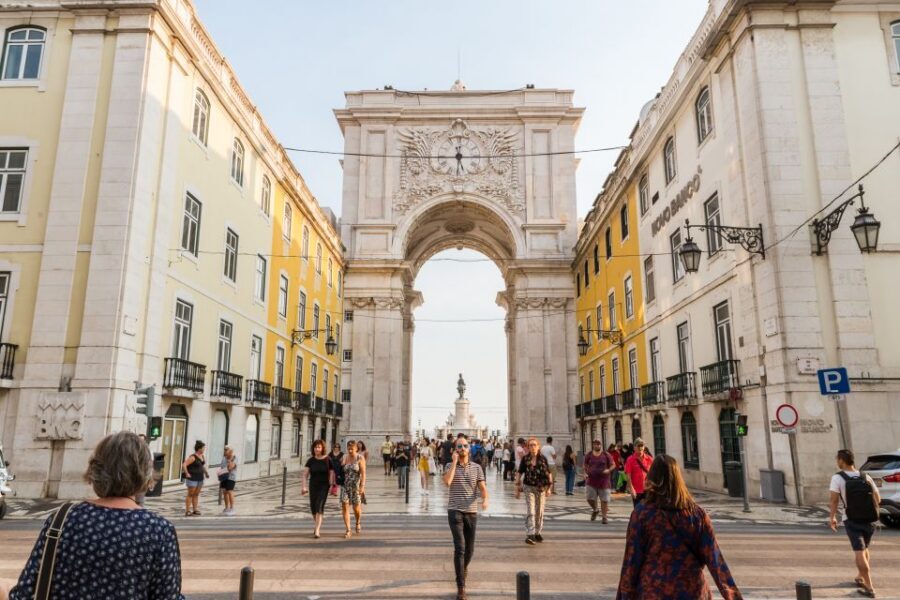
Rua Augusta Arch sits right where Lisbon likes to gather—near Rua Augusta and the wide open area of Terreiro do Paço (Praça do Comércio). That location is the real magic. From the top, the city stops feeling like separate neighborhoods and starts looking like a single plan.
This is also one of those rare “small effort, big payoff” stops. The whole experience doesn’t eat an entire day. You can fit it between walks through the Baixa area, coffee breaks, or museum time, and still come away with a clear mental map for the rest of your trip.
The Arch is more than a photo spot. It’s built as a triumphal monument, decorated with symbolic sculptures, and it includes an indoor history stop in the Clock Room. So you’re not just looking out; you’re also learning what this monument represents and why it exists.
At $5 per person, it’s a strong value for visitors who want a big city viewpoint without paying big-city prices. And if you’re a photographer, it’s one of the easiest ways to get recognizable angles of Lisbon’s most central sights.
What the view really looks like: 360° sights from Terreiro do Paço to the Tejo
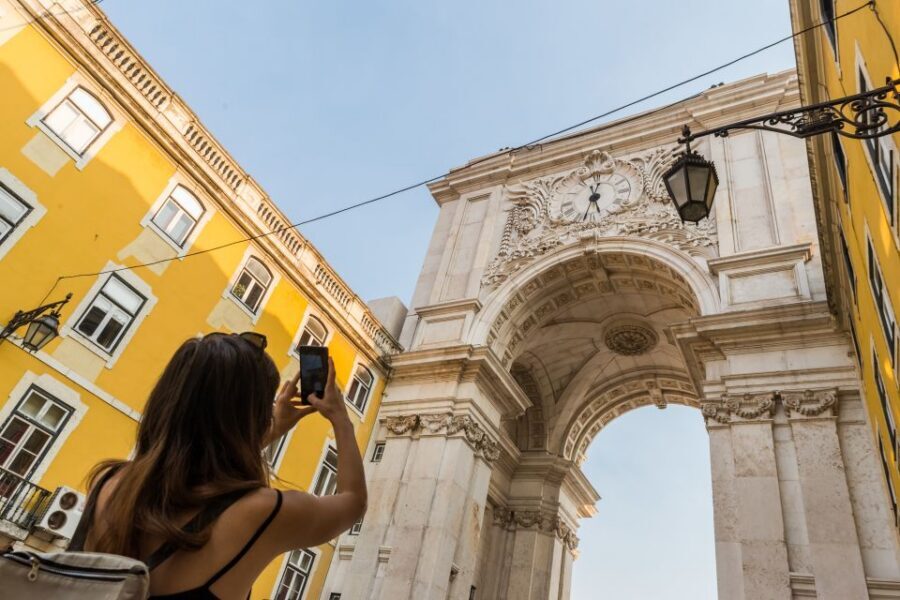
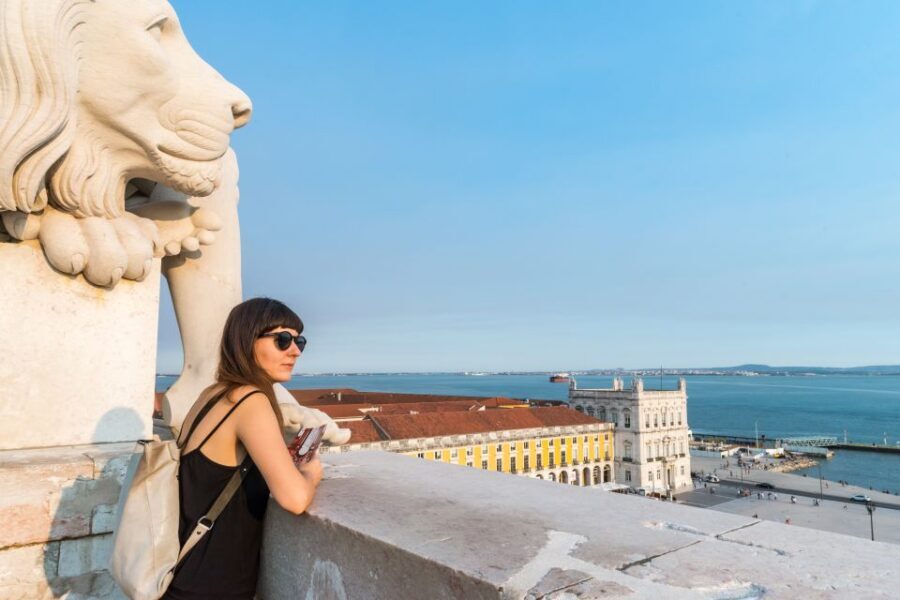
The main reason to come is the viewpoint. With your admission ticket, you can see iconic landmarks across downtown Lisbon and out toward the river (the Tejo). The area around Terreiro do Paço sits directly below you, so the shape of the square and the street grid become easy to understand.
From the top, you can pick out (depending on your angle) these highlights mentioned for the viewpoint:
- Terreiro do Paço and the Praça do Comércio area
- Pombaline downtown (the organized layout of the Baixa rebuild)
- Lisbon Cathedral
- Castle of St. Jorge
- The Tejo River
A useful way to think about it: the Arch gives you a “high-level summary” of Lisbon’s geography. If you’ve been walking in circles, this viewpoint helps you correct your mental map fast. You’ll likely recognize streets you already walked—and also spot where you want to go next.
There’s also a practical viewing rhythm. You tend to move along the upper area, taking photos and then slowly turning your head as new landmarks come into frame. In tight spots, that motion matters. It’s not a huge terrace; it’s more of a compact viewpoint experience where you should be ready to share space and move carefully.
If the clock chimes during your visit, you may get a fun bonus moment. One account notes being able to see the clock mechanics at work when the chimes happened, which adds a little character to what could otherwise be “just a view.”
Up the Arch: elevator almost all the way, then a spiral staircase
The ascent is built around compromise: this monument wasn’t originally designed for visitors, so access was added carefully. The experience starts with an elevator that takes you as high as possible without damaging the structure. Then, to reach the top viewpoint level, you climb a spiral staircase.
This matters for two reasons.
First, it affects comfort. If stairs are hard for you, you need to take the spiral section seriously. There is no alternate access route for reduced mobility. So even though the elevator helps, you still face stairs to complete the climb.
Second, it affects pacing. The spiral staircase is narrow and the upper space is described as quite small in accounts. Plan to take your time. Good shoes help too, because you’ll be stepping up in a tight vertical route where turning and hand placement matter.
One more small but real tip: because the elevator takes you partway, it can make the stairs feel shorter than you expect—until you hit the final climb. If you’re prone to fatigue, start slow on the staircase. You’ll enjoy the views more if you arrive calm rather than out of breath.
Sculptures you can actually spot: Glory, Valor, and famous historical figures

The Arch doesn’t just decorate the top—it tells stories through sculpture. As you move upward, you can look for figures positioned in different zones of the monument.
On the upper part of the Arch, sculptures by Célestin Anatole Calmels include:
- Glory crowning Genius and Valor
Lower down, sculptures by Vítor Bastos represent historical figures. These are the names to keep an eye out for:
- Viriatus
- Vasco da Gama
- Marquis of Pombal
- Nuno Álvares Pereira
If you’re the kind of traveler who likes to connect art to context, this is a nice added layer. From street level, it’s easy to see a big arch and stop there. From the top, you’ll notice how those figures frame the monument’s message. It becomes easier to understand why the Arch reads like a victory structure rather than only a decorative gateway.
Even if you do not read every detail, having these names in your head changes what you’re looking at. You’ll likely find yourself turning to locate the sculptures, then looking outward again to connect symbolism with Lisbon’s rebuilt identity.
Clock Room history: from the 1755 earthquake to completion in 1875

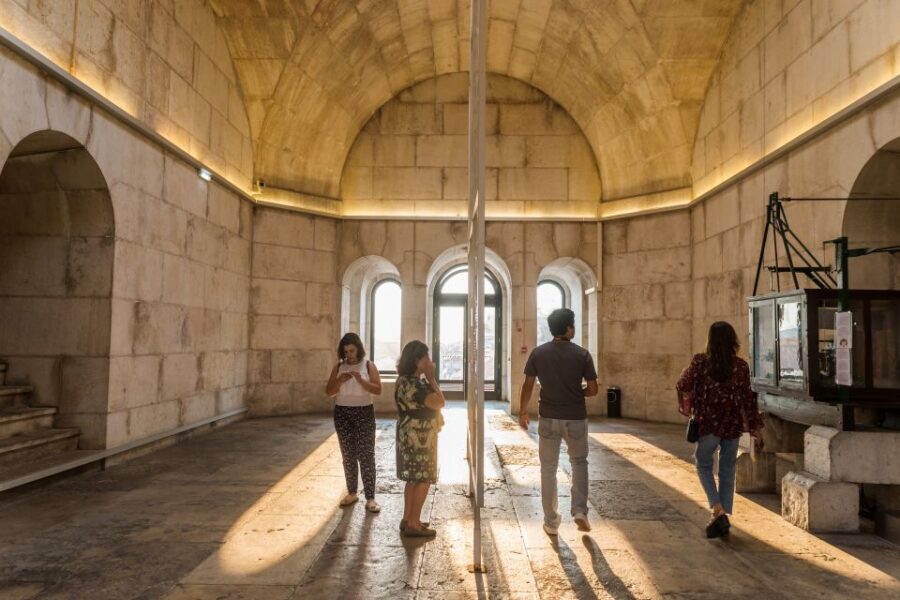
Inside the Arch, you get a history stop in the Clock Room. This is where the monument’s story becomes clearer.
The core timeline presented is:
- construction began after the 1755 earthquake
- the Arch was completed in 1875
That arc matters. Lisbon’s Baixa area is famous for rebuilding, and the monument fits that same long reconstruction story. Seeing a timeline inside the structure helps you place what you’re looking at in time, instead of treating it as an isolated landmark.
This is also the moment when the Arch stops being just a viewpoint. The internal exhibit gives you context for why the monument exists at all, which makes your exterior photos feel more meaningful. When you later look back at the city from above, you’ll recognize the monument as part of Lisbon’s larger recovery narrative.
One practical note: if you’re traveling with limited time, prioritize the viewpoint first. But don’t rush through the Clock Room too much. Even a short stop here improves how the whole experience clicks.
Tickets, lines, and value: $5 for a high payoff
At $5 per person, the admission price is low enough that you won’t feel guilty if you’re just checking one “quick win” attraction. You’re paying for two things:
1) access to the viewpoint from a major central landmark
2) the internal Clock Room history component
Add in skip-the-ticket-line access, and it starts to feel like a smart use of time, especially if you’re already in the Baixa area.
That said, there’s one caution worth mentioning. Pricing can vary. One account notes that at the counter it may be as low as €3. Another notes an issue with pre-bought tickets being invalid on arrival, which caused a lengthy wait. So here’s how I’d handle it:
- If your schedule is tight and you want less friction, the skip-the-line setup is worth considering.
- If you are price-sensitive and don’t mind a little extra on-the-spot effort, you might compare with the counter rate when you arrive.
- Either way, double-check your voucher details before you head inside.
Location also helps. Meeting point is Rua Augusta, 2, and the Arch is right in the thick of central pedestrian streets. That makes the visit easy to stack with other Lisbon classics like the riverfront walk and historic downtown strolls.
Planning your visit in Lisbon: when to go and what to pair it with
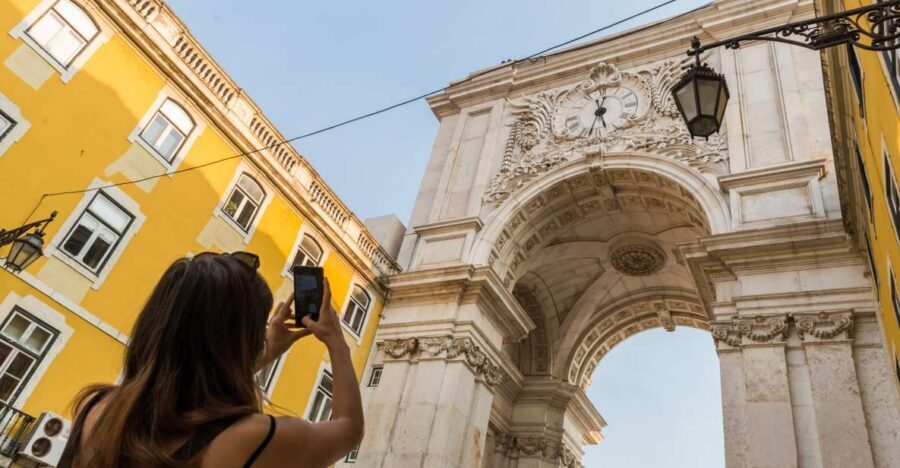
The Arch is open daily from 10:00 AM to 7:00 PM. Your ticket is valid for 1 day, and you can check available starting times. If you’re trying to squeeze this into a packed day, pick a time that leaves buffer—because the viewpoint is small enough that it can take a moment to circulate and get photos.
This stop is especially good for:
- First-time Lisbon visitors who want fast orientation
- People who want a viewpoint without committing to a longer climb
- Photographers looking for recognizable angles of the city core
It also pairs well with nearby walking areas. Think of it as an “above the map” checkpoint. Walk the streets first if you want, then go up and see how the grid and landmarks connect from above.
If you’re visiting with someone who gets tired easily, this is a good compromise. It’s not a long tour, and you’ll get the major view payoff quickly. Still, remember the final spiral staircase portion when planning energy levels.
And if the weather isn’t perfect, that doesn’t ruin the value. Reviews mention times when weather led to less waiting, making it feel even more efficient. You’re still climbing for the city-wide angles.
Who should climb and who should reconsider
This is a good match if you:
- want panoramic views over downtown and the river
- like when art and architecture come with names and symbolism
- appreciate a short history component, not a full museum visit
It’s less of a match if you:
- cannot manage stairs, because the climb includes a spiral staircase and there’s no alternative access
- feel uncomfortable in tight spaces, since the upper areas and stairway can feel narrow and cramped
If you’re unsure, base your decision on how you handle stairs in enclosed, narrow settings. The elevator helps, but it does not replace the staircase entirely.
Should you book the Rua Augusta Arch admission ticket?

I’d book it if you want a compact, high-value way to understand Lisbon from above. The combination of skip-the-line access, 360° viewpoint coverage, and the Clock Room history makes it more than a quick selfie stop. For $5, it’s one of the easier “worth it” attractions to fit into a central day.
I’d think twice if stairs are a problem for you, because the spiral staircase is part of the final climb and there’s no alternative access route.
Bottom line: if you’re physically able to handle the stairs and you want a fast, recognizable overview of Lisbon’s heart, the Rua Augusta Arch ticket is a smart use of time.
FAQ
What are the opening hours for Rua Augusta Arch?
The Arch is open daily from 10:00 AM to 7:00 PM.
How long should I plan for this experience?
It’s designed as a short visit (listed as 1 day), and the viewpoint portion can take additional time if you want to linger.
What views can I expect from the top?
From the viewpoint, you can see Terreiro do Paço/Praça do Comércio, downtown Lisbon areas, the Lisbon Cathedral, the Castle of St. Jorge, and the Tejo River.
Do I get an elevator to the top?
You get an elevator that takes you as far up as possible, but you still climb a spiral staircase for the rest of the ascent.
Is the ticket good for one day?
Yes. The ticket is valid for 1 day, and you can check starting times based on availability.
Where do I meet for the ticket?
The meeting point is Rua Augusta, 2.
Are skip-the-line tickets included?
Yes, skip-the-ticket-line is included with the admission ticket.
Is there any accessibility alternative if I can’t climb stairs?
No. There is no alternative access for persons with reduced mobility.
Can I cancel for a refund?
Free cancellation is available up to 24 hours in advance for a full refund, and there’s also a reserve now & pay later option.