REVIEW · SINTRA
Lisbon-Cascais: Surf Local Experience
Book on GetYourGuide →Operated by Surf Local Experience · Bookable on GetYourGuide
Carcavelos makes beginners feel brave. This Lisbon-to-Cascais surf lesson is a straight shot to real waves near the city, not a sit-and-watch experience. I like the small groups (so you actually get coached) and the certified instructors who keep things safe and fun. One thing to consider: it’s a 2-hour class, so you’ll probably leave wanting more time in the water.
The format is simple and practical: you warm up, get easy theory, then you get hands-on in the surf. I also like that the package includes high-quality gear plus year-round comfort with quality wetsuits—surfing in summer or winter is the point here.
You’ll get English, Spanish, or Portuguese instruction, and there’s wheelchair accessibility. Bring a towel and shorts, and be ready for a salty, happy workout—plus optional photos you can purchase.
In This Review
- Key highlights worth your attention
- Why Carcavelos Beach is the right starting point near Lisbon
- What happens in your 2-hour session: warm-up, theory, then waves
- Gear check: wetsuit, board, leash, sunscreen, and safety basics
- Instructors and group size: getting corrected fast (Adonai and Nai)
- Photos and film: keeping the memories without losing the session
- Cascais context: surfing roots and local tips you can use after
- Price and value: what $47 covers and where it doesn’t
- Who should book this surf lesson (and who might not)
- Practical tips to make your lesson smoother (and drier)
- Should you book Lisbon–Cascais Surf Local Experience?
- FAQ
- How long is the surf lesson?
- Where does the surfing take place?
- What equipment is included?
- What do I need to bring?
- What languages do the instructors speak?
- Are photos included in the price?
- Is transfer from the airport or my hotel included?
- Is this experience wheelchair accessible?
- What’s the cancellation policy?
Key highlights worth your attention
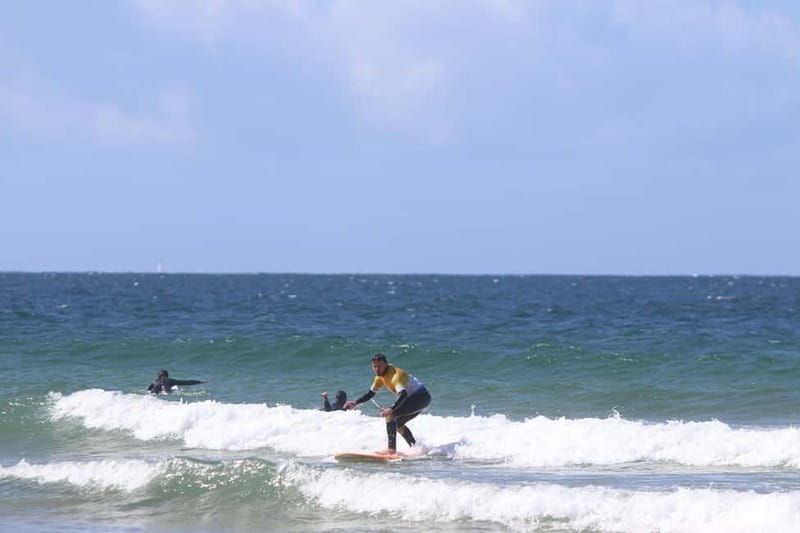
- Carcavelos Beach focus: the lesson happens at the iconic surf spot near Lisbon
- 2 hours of wave time: warm-up, theory, then practice in the water
- Quality wetsuits for winter or summer: you stay warm enough to keep surfing
- Small groups with personalized coaching: instructors can correct you fast
- Gear and safety basics included: board, wetsuit, leash, sunscreen, and insurance
- Cascais local tips: guidance beyond surfing, around town and the coast
Why Carcavelos Beach is the right starting point near Lisbon
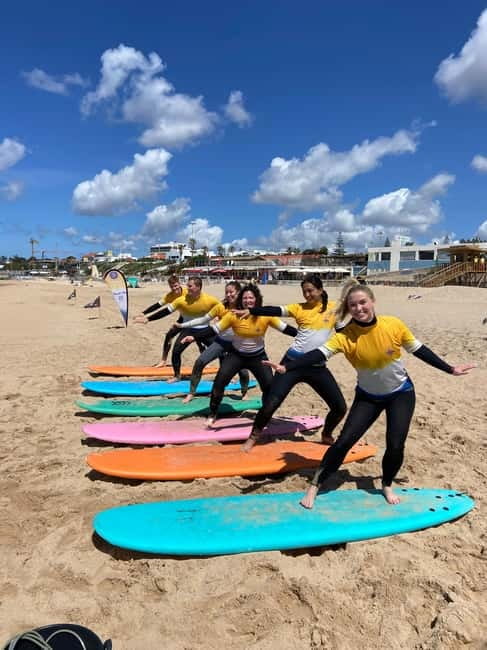
Carcavelos Beach is one of the most recognizable places to surf close to Lisbon, and it makes a lot of sense for a short lesson. You’re not trekking across Portugal to find a random break. You show up to an established surf environment, where instructors can focus on teaching instead of constantly solving logistics.
This is also a great way to experience the Lisbon coastline without turning your day into a full travel day. Cascais is close, and it’s famous for being the birthplace of surfing in Portugal. That matters because the vibe is already “surf-literate” around you. When you finish the session, you can keep moving through the coast with a better sense of what you just felt under your feet.
I especially like that the course is designed for year-round conditions. The winter months near Lisbon can be cold and windy—most first-timers underestimate that. Here, the wetsuit is part of the solution, not an afterthought. The whole “we surf summer or winter” idea only works when the wetsuit quality is there, and this one is specifically described as high quality.
You can also read our reviews of more tours and experiences in Sintra.



What happens in your 2-hour session: warm-up, theory, then waves
A lot of surf lessons get the timing wrong. You spend too long getting organized, and the water time disappears. This course is built around a tight rhythm that keeps you learning while you’re still fresh.
Your session runs about 2 hours and typically follows this flow:
1) Warm-up to get your body ready
You start with a dynamic warm-up before you hit the water. It’s not just about stretching; it’s about getting your shoulders, core, and legs ready for paddling, popping up, and balancing on a surfboard.
2) Easy theory you can use immediately
Then you get short, clear instruction—stuff you can apply in the next wave. The goal is to explain the why behind each step without drowning you in jargon. This matters for beginners, because confusion is what usually turns falls into frustration.
3) Hands-on practice where coaching actually happens
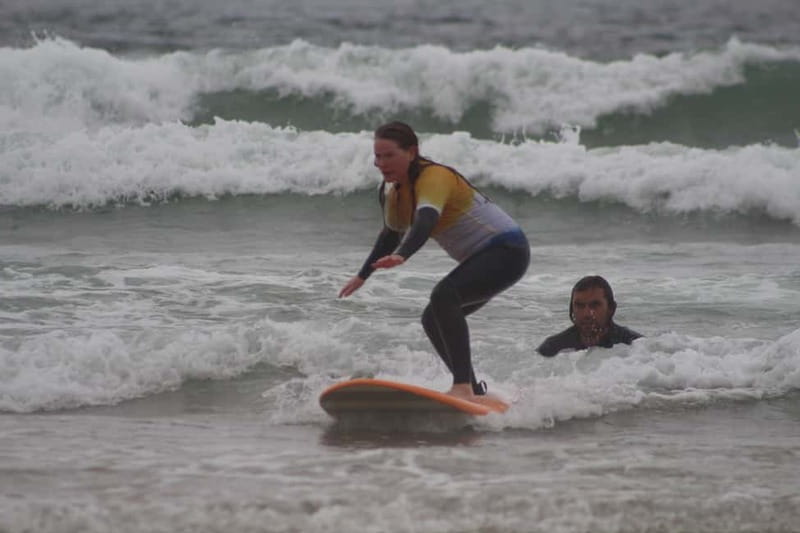
After theory, you’re out in the water practicing. The instructors guide you in real time, so if you’re doing something wrong, you don’t learn it the hard way over and over.
One reason I think this format works is that it respects how learning surfing feels. You’re not just learning a skill. You’re learning timing, reading the surface, managing your balance, and staying calm when you wipe out. A good instructor keeps you focused on the next small goal, not your last missed attempt.
Also, the small-group setup helps here. In a bigger group, an instructor can only shout cues from a distance. In this one, they can get hands-on with personalized guidance—exactly what you want when it’s your first time.
Gear check: wetsuit, board, leash, sunscreen, and safety basics
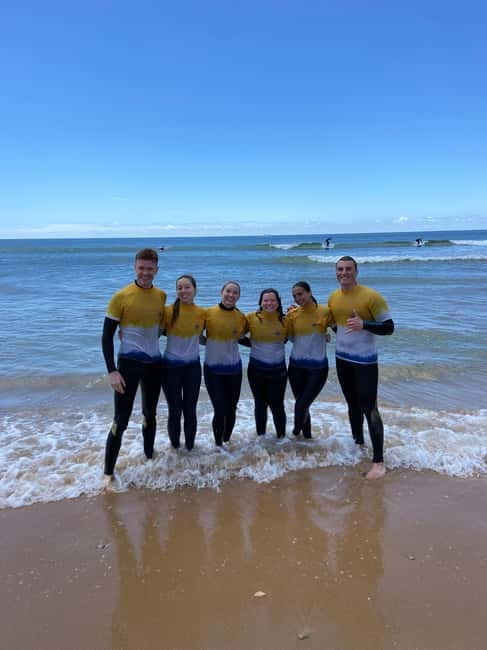
You don’t have to hunt down rentals or figure out what gear you actually need. The lesson includes the important stuff:
- Board
- Wetsuit
- Leash
- Sunscreen
- Insurance
That list sounds “standard,” but the details matter for value. Surfboards and leashes aren’t just accessories; they affect how easily you can catch waves and how safely you recover when you fall. Leashes, in particular, are a small item with a big safety role, and it’s reassuring when it’s included.
The wetsuit is where year-round surfing gets real. A weak wetsuit turns a fun lesson into a shivering sprint. Here, the quality wetsuits are explicitly part of the pitch, because they want you to enjoy surfing whether it’s summer or winter.
And yes—insurance is included. That’s one of those unglamorous details that makes the whole day feel less stressful.
Two small things you still need to bring:
- Towel
- Shorts
If you’ve ever done a beach activity that requires a towel and forgot it, you already know why I’m mentioning it. Keep it simple: pack a towel, and wear shorts you’re okay getting sandy and salty.
Instructors and group size: getting corrected fast (Adonai and Nai)
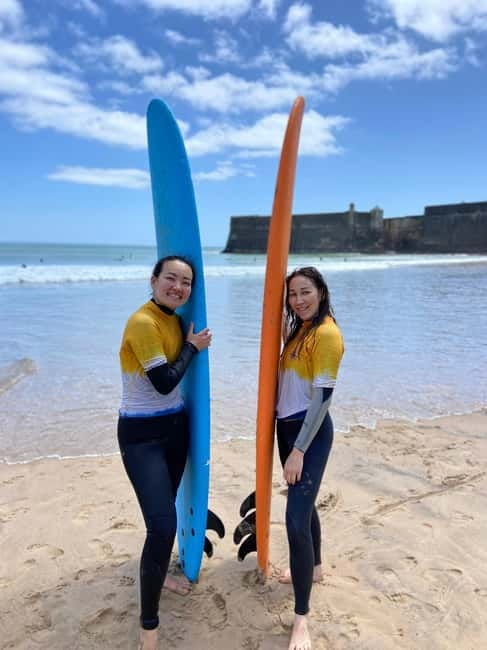
Good surf instruction is mostly about attention. When instructors can see what you’re doing, you improve faster and you feel safer. This course keeps groups small, and that’s a recurring theme in the experience.
In the feedback, Adonai shows up as a standout instructor—friendly, encouraging, and quick to point out what to change. People describe him as patient with first-timers and attentive enough to keep the energy positive even when you’re falling a lot. That’s the kind of tone beginners need. Surfing punishes ego. A calm coach helps you stay in the game.
Another name that comes through is Nai (spelled as written in the message). The praise is similar: lots of help in the water, clear advice, and the ability to teach even when you’re scared of messing up. That’s a big deal, because fear can be the biggest barrier to getting up on the board.
What I like most is that the instruction isn’t just technical. It’s also emotional. Several people highlight feeling welcome, safe, and happy from the moment they meet the instructor through the session and afterward. That’s not fluff. If you feel comfortable, you’ll keep trying, and trying is where the improvement happens.
Photos and film: keeping the memories without losing the session
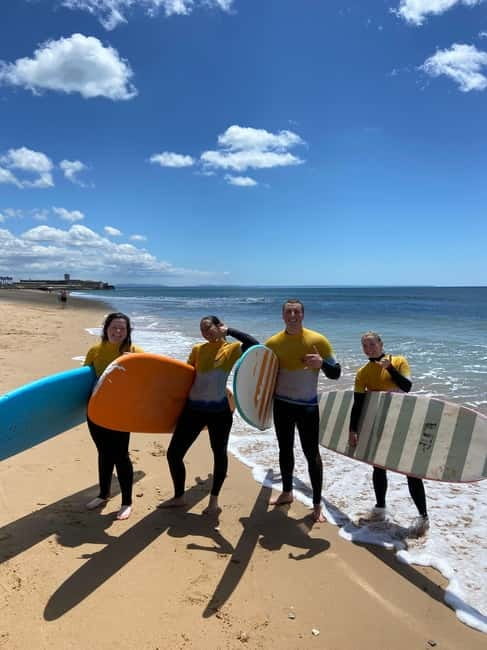
Surf lessons are messy. That’s the point. You’ll get splashed, you’ll fall, and you’ll look a little goofy while learning (perfectly normal). This experience includes film and photo services, with photos available for purchase.
Photos being optional keeps things flexible. You can focus on surfing during the session, then decide later if you want the pictures. And since the photos are connected to the activity, you’re not stuck trying to get your own shots while you’re still learning how to stand.
One more practical note: if you hate stopping mid-lesson for pictures, you’ll probably be fine here. The service is described as part of the experience, not something that steals time from instruction.






Cascais context: surfing roots and local tips you can use after
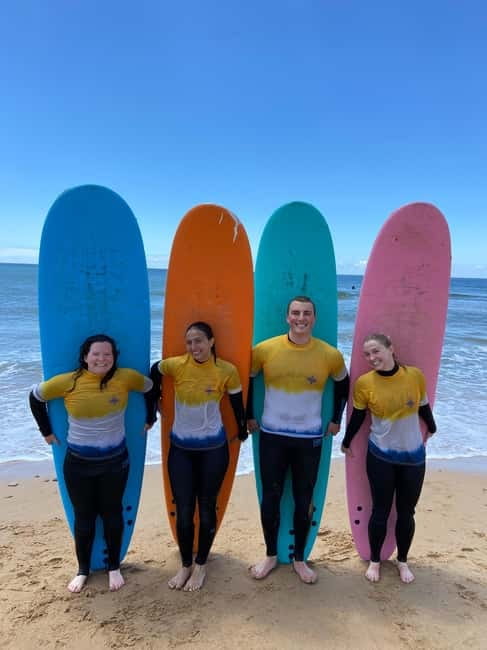
This isn’t just a lesson with a clean “drop-off and forget” feeling. You also get local tips around Cascais—plus a dose of context about why this area is a big deal for Portuguese surfing.
The coast around Cascais is known as a surf hub, and it’s often described as the birthplace of surfing in Portugal. Whether you’re a surfer or a first-timer, that story helps you look at the waves differently. You stop thinking of it as random water outside Lisbon and start seeing it as part of a local culture.
After your session, you’ll likely want to walk the shoreline and pay attention to where surfers are entering and exiting. Even if you’re not ready to rent a board, you can still read the beach like a surfer now—by spotting patterns in where the sets break and where people line up.
This is also a nice way to make your time outside Lisbon feel purposeful. You’re not commuting just to be “near the ocean.” You’re there to learn something real, then soak up the coast with a better lens.
Price and value: what $47 covers and where it doesn’t
At $47 per person for about 2 hours, this is the kind of activity that can feel like a bargain if you compare it to doing everything separately.
Here’s what’s included in the lesson:
- Experienced instructors
- High-quality equipment (board, wetsuit, leash)
- Sunscreen
- Insurance
- Photos available for purchase
What’s not included:
- Airport transfer
- Transfer from your accommodation
- Food and drinks
Let’s translate that into real life. You’re paying for instruction, safety basics, and the gear that matters. You’re not paying extra for rentals or worrying about whether you got the right wetsuit thickness.
The trade-off is straightforward: you’ll still need to handle your own travel to the start area. Also, bring your own plan for food and water. Since food/drinks aren’t included, I’d treat this like an active half-thing, not a full-day picnic.
If you’re staying in Lisbon, that can still work well. You get out to the coast, learn a core skill, and return with energy (and sand) instead of just a few photos and a short walk.
Who should book this surf lesson (and who might not)
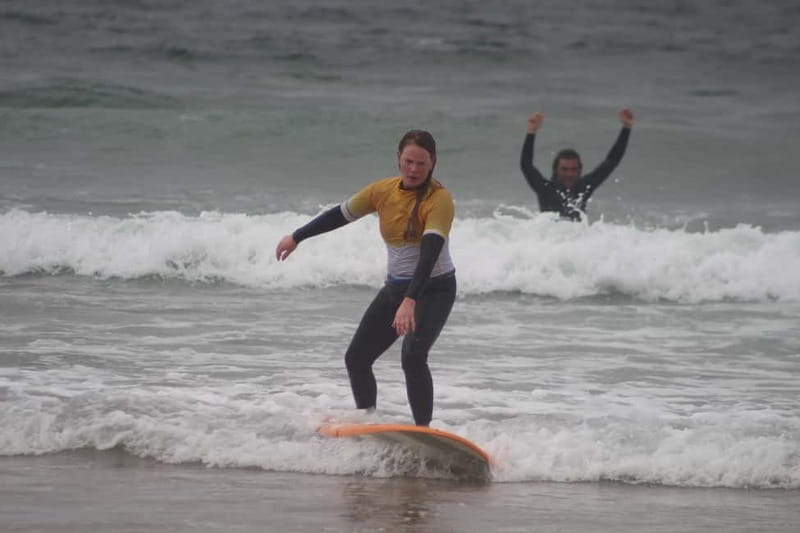
This experience is a good match if:
- You’re a beginner and want clear instruction plus patience in the water
- You want small groups so you can get personal guidance
- You care about safety and gear, not just the thrill
- You want to surf near Lisbon without spending all day commuting
It’s also a solid choice for people visiting in different seasons. The wetsuit approach supports surfing in summer or winter, so you’re not stuck choosing only warm-weather dates.
Who might reconsider:
- If you’re looking for a long adventure day, this is a 2-hour lesson, not a full-day surf expedition
- If you need pickup from the airport or your exact hotel address, this specific option lists those transfers as not included, so you’ll want to plan your route
If you’re doing this as part of a bigger coast itinerary, it can slot nicely alongside other sightseeing. The broader tour services listed include routes like Lisbon–Cascais–Sintra–Ericeira, so your surf day can fit into a wider coastal plan if you want it.
Practical tips to make your lesson smoother (and drier)
A few small choices can make your surf lesson feel way easier.
Bring the basics. A towel and shorts are all you’re told to bring, so follow that. Shorts that dry quickly are a smart move because you’re getting wet and moving around.
Wear easy layers. The wetsuit does the heavy lifting, but you still want clothes you can put on quickly afterward.
Show up ready to learn, not perfect. The best coaching in the world can’t remove the learning curve, but good instructors can keep you motivated. The feedback strongly suggests the instructors focus on making you feel safe and welcome while correcting technique.
If you’re nervous, that’s normal. First-time surfing is usually a mix of excitement and fear. The praise for instructors includes handling exactly that—teaching even when you’re scared and helping you enjoy the moment.
Plan your day for energy, not just time. You’ll be paddling, falling, and wiping water out of your nose and goggles (unavoidable). Treat it like an active workout, then plan a meal afterward.
Should you book Lisbon–Cascais Surf Local Experience?
Book it if you want a short, focused way to surf near Lisbon with real instruction, good gear, and an instructor team that keeps things calm and fun. The small groups and attentive coaching are the heart of why people rate it highly, and the year-round wetsuit approach makes it usable outside the typical summer bubble.
Skip—or at least plan extra carefully—if you need your accommodation or airport pickup included, or if you want a full-day outing rather than a 2-hour class. Also remember: the included photos are optional to buy, and food/drinks are on you.
If your goal is to catch waves and leave with a new skill (not just a beach day), this is a strong choice for Cascais and Carcavelos.
FAQ
How long is the surf lesson?
The session lasts about 2 hours.
Where does the surfing take place?
Your surfing experience takes place at Carcavelos Beach.
What equipment is included?
The package includes the surfboard, wetsuit, leash, and sunscreen.
What do I need to bring?
Bring a towel and shorts.
What languages do the instructors speak?
Instructors speak English, Spanish, and Portuguese.
Are photos included in the price?
Photos are available for purchase.
Is transfer from the airport or my hotel included?
No. Airport transfer and transfer from your accommodation are not included.
Is this experience wheelchair accessible?
Yes, it’s listed as wheelchair accessible.
What’s the cancellation policy?
You can cancel up to 24 hours in advance for a full refund.