REVIEW · FAIAL ISLAND
Horta: University Startup Whale and Dolphin RIB Boat Trip
Book on GetYourGuide →Operated by NATURALIST - SCIENCE & TOURISM · Bookable on GetYourGuide
Whales feel close here. This 3-hour Horta RIB trip pairs land-based whale spotters with a university biologist on board, so you get real-time species info and a science-minded outing. I like that you’re not just chasing sightings—you’re learning what you’re seeing and why it matters.
One thing to weigh: the ride is on a semi-rigid RIB, so if you have back issues or are pregnant, it’s not recommended. Also, like any ocean trip, the itinerary depends on conditions and may get rescheduled.
In This Review
- Key things to know before you go
- Whales and science in Horta: what this trip really is
- From land spotters to the right patch of ocean
- The 10-minute safety briefing: quick, but worth paying attention to
- Photo stop and watching time: how the 30 minutes feels
- What you could see: whales, dolphins, turtles, sharks, and seabirds
- Whales (what’s most likely)
- Dolphins (when action usually starts)
- Turtles and other ocean life
- Birds over the same waters
- Meet the experts: what the onboard marine biologist changes
- Timing, groups, and the “bring the right stuff” checklist
- Price and value: is $101 worth it?
- Who should go, and who should skip this RIB day
- Should you book Naturalist Science & Tourism’s whale and dolphin RIB trip?
- FAQ
- How long is the whale and dolphin RIB trip?
- Where do I meet the tour?
- Is hotel pickup included?
- What’s included in the price?
- Are food and drinks included?
- What languages are offered for the tour?
- What animals might I see on the trip?
- How many different cetacean species are usually spotted?
- What happens if the weather cancels the trip?
Key things to know before you go
- University of Lisbon/Azores biologist onboard to collect data and explain what’s happening
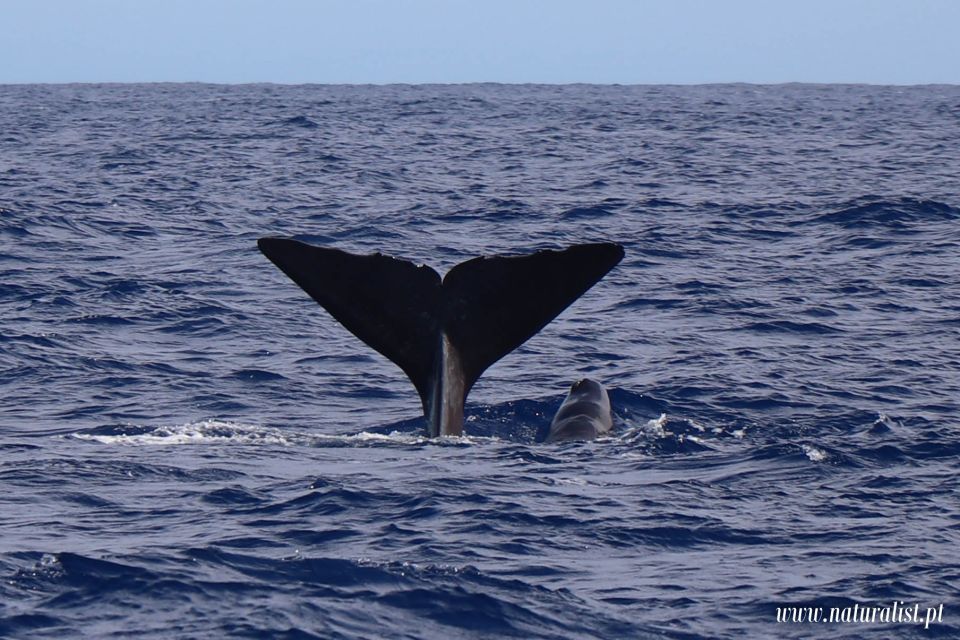
- Normally 2 to 3 different cetacean species per trip, from a regional pool of 25+
- Year-round sperm whales, with blue and fin more common in spring
- Expect dolphins too, including bottlenose, risso’s, and common dolphins
- Birdwatching while you watch the water (Cory’s shearwaters, great/manx shearwaters, and terns)
- Waterproof clothes included, but the sea can still spray over you
Whales and science in Horta: what this trip really is
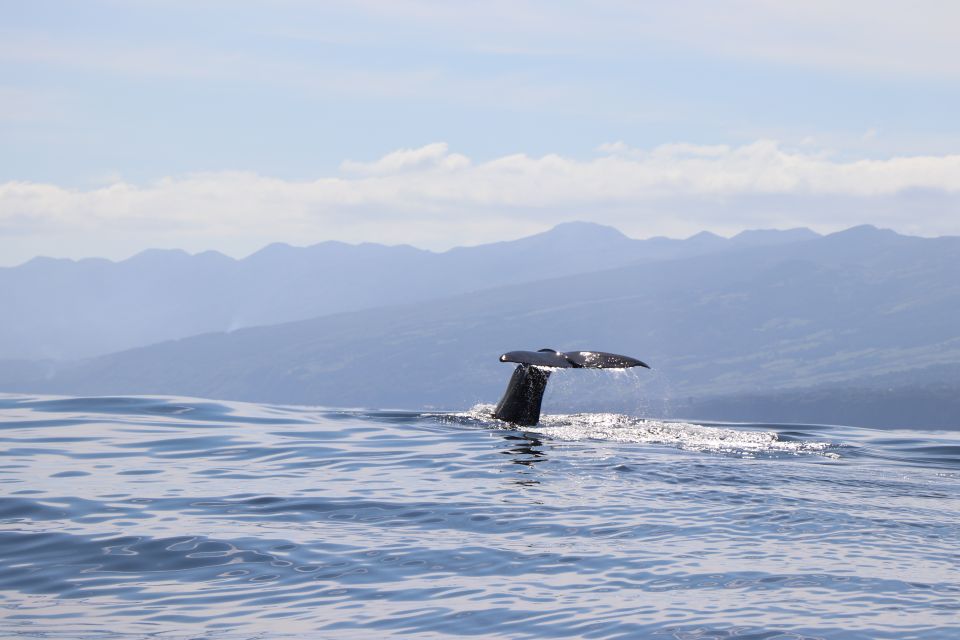
This isn’t a generic boat ride where you scan the horizon and hope for the best. The heart of the experience is the combination of (1) spotting from land on Faial and Pico and (2) having a marine researcher on board from the university ecosystem in Lisbon and the Azores.
That changes the tone of the trip. You’ll still be thrilled when you see a blow or a wave pattern, but you also get context—what species is most likely at that moment, what their movements mean, and how the team is thinking about the area. Even if you know nothing about cetaceans today, you leave with a mental map for the Azores marine scene.
The other big plus is variety. You can get several whale and dolphin species on the same outing, and the ocean isn’t limited to big mammals. Depending on the day, you might see turtles, sharks, and fast-moving surface life like squid or flying fish, plus seabirds circling the same feeding zones.
You can also read our reviews of more tours and experiences in Faial Island.


From land spotters to the right patch of ocean
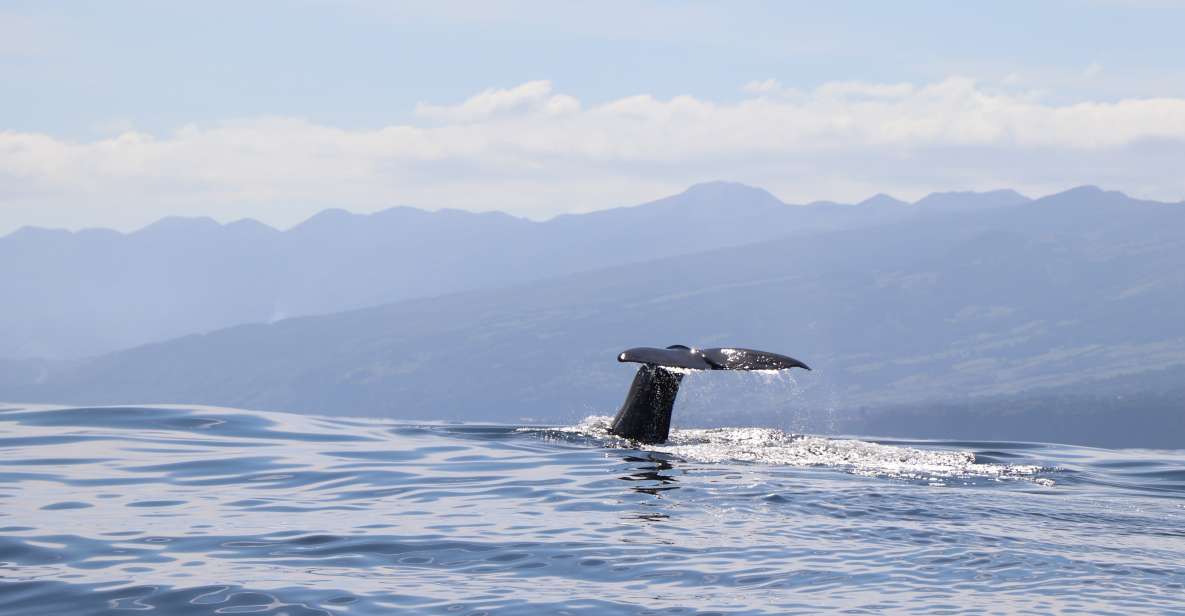
The operation is built around local “eyes” on the water before you ever leave the marina. Here, whale spotters work from land around Faial and Pico, and then the crew heads out to where life is most active.
For you, that matters because whale watching is partly luck, and partly “being in the right place at the right time.” When a captain is guided by solid observations from shore, your odds improve. And it shows in how the trips are structured: you’re not out there drifting with no plan. You’re searching with purpose, and the guides keep adjusting as conditions change.
The region itself helps. The Azores sit along migratory routes, and the highlights you’re told before the trip line up with seasonal patterns—like sperm whales staying around year-round, while other whales appear more often in spring or summer.
The 10-minute safety briefing: quick, but worth paying attention to
Before the boat heads out, you get a short safety briefing—about ten minutes. On a RIB, it’s not theater. It’s how you handle speed, spray, and where to sit so you can stay stable when the captain adjusts course for wildlife.
I’d treat this briefing like part of the experience, not paperwork. Listen carefully and follow the crew’s guidance about seating and movement. If you’re the kind of person who gets stiff or seasick easily, this is also your moment to decide how you’ll manage it for the rest of the trip.
And yes, the sea can get choppy. One helpful tip from real-world trips: even with waterproof gear, you’ll want footwear that can handle getting wet or dry quickly after. If you wear something precious, the ocean will take its share.
Photo stop and watching time: how the 30 minutes feels
The trip includes time set aside for a photo stop and guided viewing—then you focus on dolphin watching, marine life viewing, and whale watching, with wildlife viewing time built in.
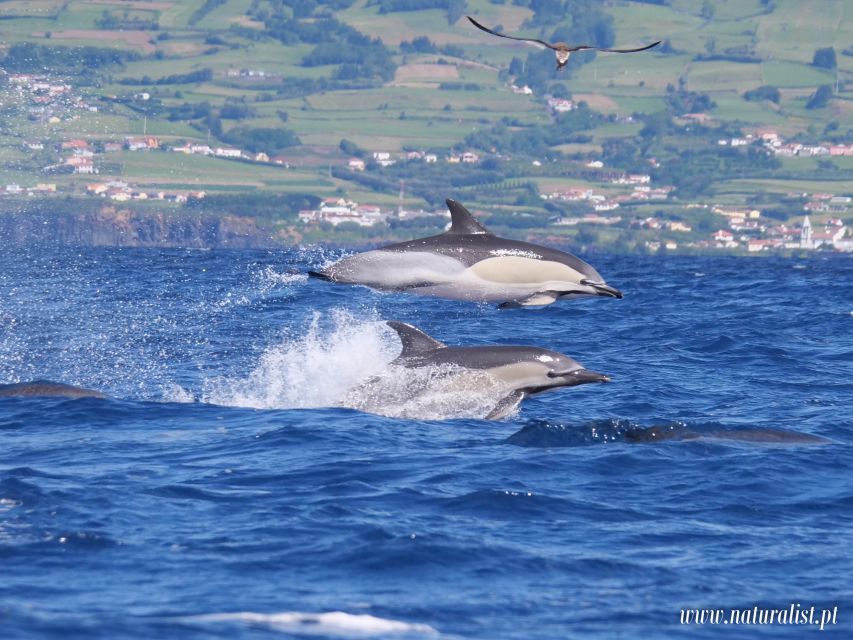
Here’s what that usually means on the water. You’re watching for behavior, not just bodies. Dolphins often show up first—fast groups, surface activity, and rolling movement that tells you they’re feeding or traveling together. Then whales can appear with a different pace: fewer breaks, longer waits, and sudden reveals when they surface near the boat.
You might also see the captain reposition carefully so you get a better angle. On at least some trips, the crew has moved after waiting to bring the boat in front of whale activity, aiming for a clearer viewing approach rather than rushing past.
That “pause, reposition, try again” style is a big reason this trip earns such high marks. It’s not stubborn luck. It’s active management.
What you could see: whales, dolphins, turtles, sharks, and seabirds
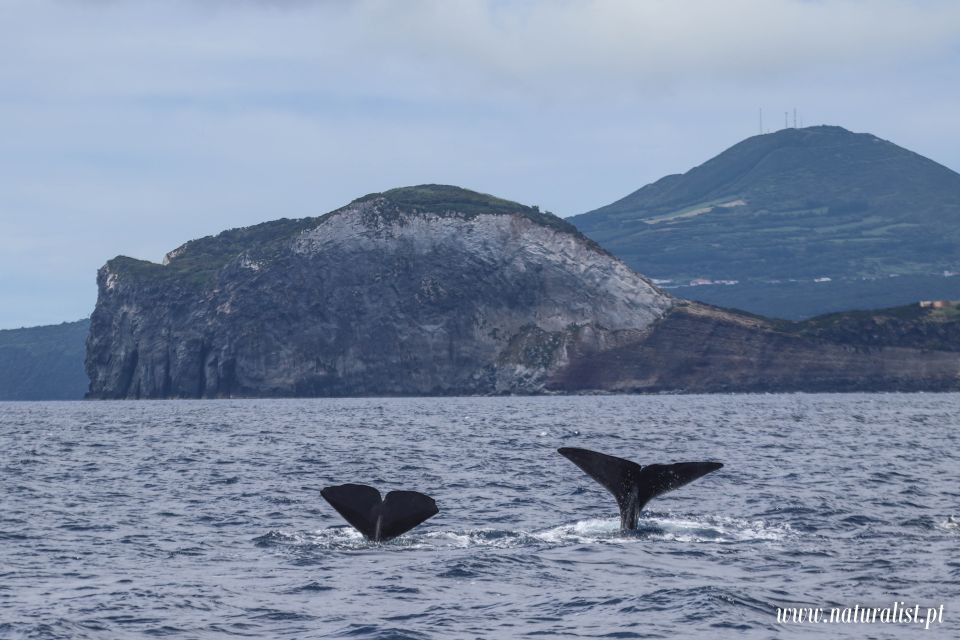
The Azores are one of Europe’s best places to combine whale watching with serious marine biodiversity. The trip’s species list is broad for a reason: the region can host more than 25 cetacean species.
You can also read our reviews of more whale watching tours in Faial Island
Whales (what’s most likely)
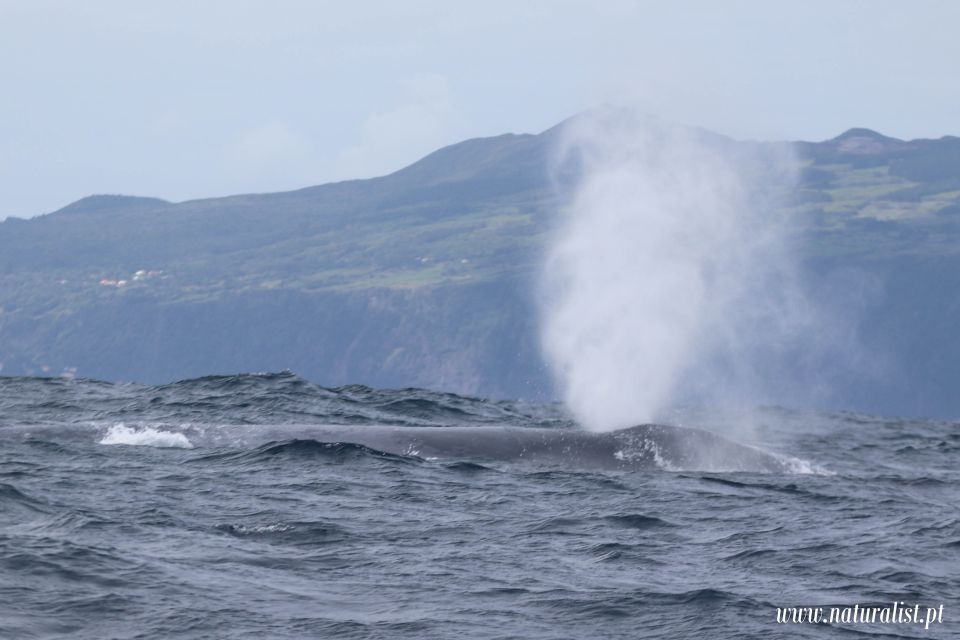
- Sperm whales: described as resident year-round.
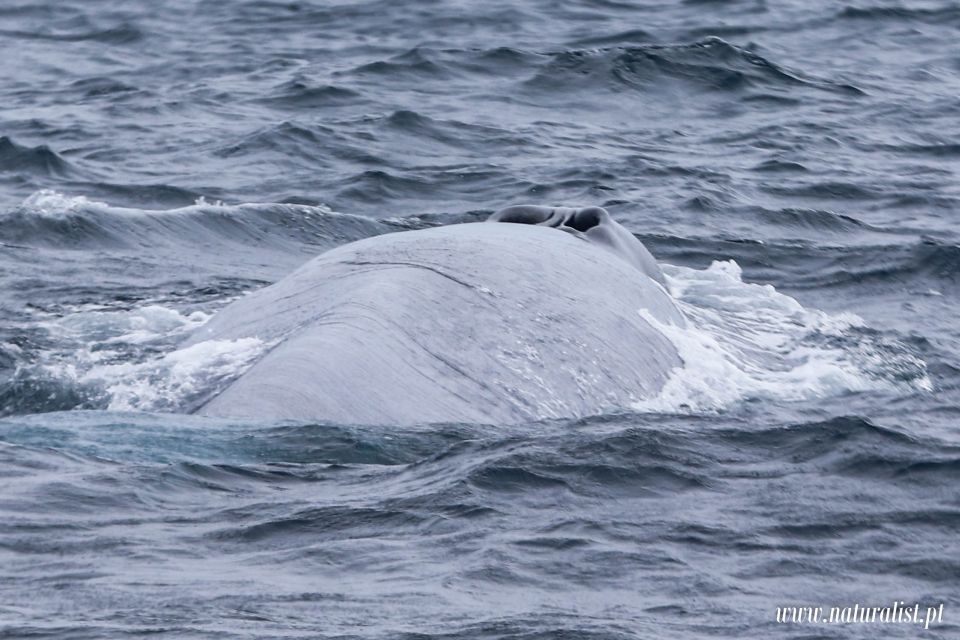
- Blue and fin whales: highlighted for spring.
- Humpback and sei whales: noted among migratory species.
- Bryde and sei whales: also possible in summer.
If you’re hoping for sperm whales, you’re not chasing a rare seasonal bird. For others, timing helps—spring increases the odds for blue and fin, while summer can bring additional surprises.
Dolphins (when action usually starts)
The itinerary highlights multiple resident dolphin types:
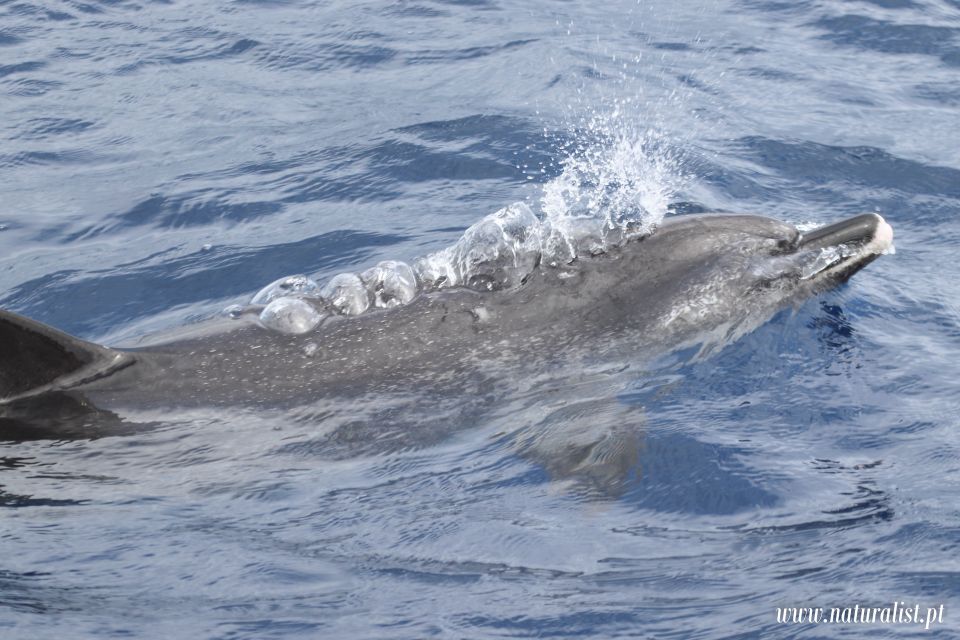
- Bottlenose dolphins
- Risso’s dolphins
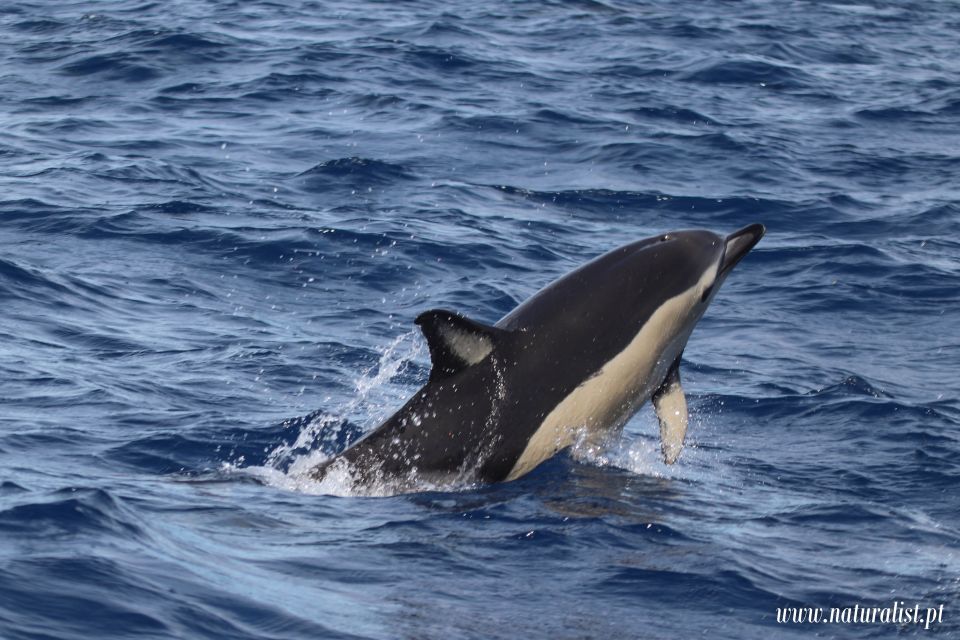
- Common dolphins
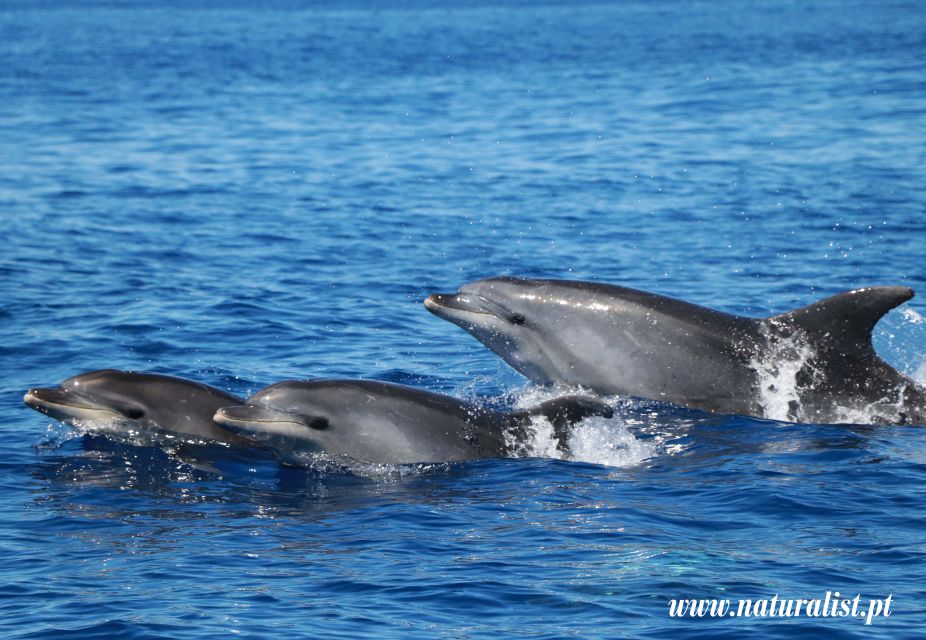
Dolphins tend to steal the spotlight because they move like they own the ocean—turning feeding zones into an energetic show. The good news is that dolphin sightings also set up the larger picture. When dolphins are active, it can point toward the kinds of conditions where whales are likely to appear.
Turtles and other ocean life
You might see:
- Loggerhead and green turtles in the Azores
- Leatherback and Kemp’s turtles as possibilities too
- Plus surface life like flying fish, squid, and octopus
- And occasional larger predators listed like hammerhead and blue sharks, along with sunfish
Realistically, you won’t control which extras show up. But the fact that the team talks about these animals from the start means you’ll notice more than just a whale spout.
Birds over the same waters
Birdwatching is part of the deal, not a bonus afterthought. The trip highlights:
- Cory’s shearwater
- Great shearwater
- Manx shearwater
- Common tern and roseate tern
This is more than fun birding. Seabirds often react to feeding activity. When they’re working the air above the sea, it’s a sign something is happening below.
Meet the experts: what the onboard marine biologist changes
A marine researcher from the university is on board to collect data and provide up-to-date information about marine life. That’s the main difference between this tour and a basic whale cruise.
In practice, you’ll get a better connection between the animal and the environment. For example, you might hear how different whale species feed and move differently, or how to read the patterns you’re seeing—dolphins clustering, birds gathering, and then the slower surfacing rhythm of whales.
Some biologists you may encounter include Anna and Cristiana, based on past guide names associated with this operator. Regardless of the name, the goal stays the same: give you current, accurate info while you’re out there.
And the best part is that you’re learning in real time. You’re not watching a slideshow while you wait. You’re watching animals while the explanation adjusts to what the boat finds.
Timing, groups, and the “bring the right stuff” checklist
The tours run about 3 hours on two daily options: 09:00 (meeting at 08:45) and 14:00 (meeting at 13:45). Average timing helps you plan, but you should also expect ocean-based changes. If conditions don’t allow safe operation, the trip can be rescheduled, with a full refund if cancellation happens.
The RIB carries up to 16 people, which is a useful detail. Smaller groups tend to mean less chaos when you’re trying to spot wildlife and keep your footing. You’re also more likely to hear the guide clearly when the boat isn’t packed.
For what to bring, here’s the simple truth: you’re told waterproof clothes are included, but you’ll still want to think about comfort and quick drying. Based on real trip feedback, good shoes that handle spray help a lot—especially if you’re seated toward the front where water can come over more.
A practical approach:
- Wear layers you can tolerate in wind and spray
- Bring a dry change of clothes for after
- If you’re prone to seasickness, plan ahead before you arrive
Price and value: is $101 worth it?
At about $101 per person for roughly 3 hours, this trip is priced like a serious wildlife outing rather than a casual sightseeing cruise. The value isn’t just the boat ride. It’s what’s included:
- A marine researcher/biologist onboard
- Waterproof clothes
- Safety insurance
- A briefing about cetaceans and the regional marine biodiversity
When you add those together, you’re essentially paying for a guided, science-led field experience with gear support. If you’ve done wildlife tours before, you know the difference between a guide who shares general facts and a researcher who connects what you’re seeing to real marine life patterns.
Also, the operator is clear about matching the trip to what’s happening in the area before you set off. They provide information about the presence of species before each outing, so you’re not going blind.
Who should go, and who should skip this RIB day
This trip is best for people who want close wildlife viewing and are okay with a marine adventure that includes some spray and motion.
You should skip it if any of these apply:
- Children under 5
- Pregnant women
- People with back problems
- Anyone with recent surgeries
Because it’s a semi-rigid RIB, those limits are not small print. The boat’s feel matters. If you’re on the edge physically, it’s smarter to choose a more stable option.
Who will love it most:
- People who enjoy animals but also enjoy explanations
- Bird lovers who like spotting seabirds alongside whales and dolphins
- Anyone visiting Faial and Pico who wants a hands-on way to understand the marine ecosystem
Should you book Naturalist Science & Tourism’s whale and dolphin RIB trip?
Book it if you want a whale watching day that’s more than a guessing game. The standout advantage is the university biologist onboard plus the operational planning based on spotters from Faial and Pico. You’re paying for both the chance to see whales and dolphins and the chance to understand them while it’s happening.
Skip it if your body can’t handle a semi-rigid RIB ride, or if you strongly prefer a dry, calm sightseeing format. And go into it knowing that weather is part of the equation. When conditions are right, the payoff can be huge: multiple cetacean species, intense dolphin activity, and birds working the same feeding areas.
If your schedule allows flexibility, this is the kind of trip that turns the Azores ocean into a living classroom.
FAQ
How long is the whale and dolphin RIB trip?
The tour averages 3 hours. There are departures in the morning at 09h00 and in the afternoon at 14h00.
Where do I meet the tour?
Meet at Naturalist – Science & Tourism. Whale Watching in the marina. Plan to arrive 15 minutes before departure.
Is hotel pickup included?
No. Pick up from hotel is not included.
What’s included in the price?
You get a marine researcher/biologist onboard, waterproof clothes, safety insurance, and a briefing about the tour and animals.
Are food and drinks included?
No. Food and drinks are not included.
What languages are offered for the tour?
The tour is available in English or Portuguese. French needs to be requested in advance based on availability.
What animals might I see on the trip?
You might see resident sperm whales (year-round) and other cetaceans depending on season, plus bottlenose, risso, and common dolphins. The highlights also list loggerhead and green turtles, possible leatherback and kemp’s turtles, plus birds like Cory’s shearwater and various terns.
How many different cetacean species are usually spotted?
Normally 2 to 3 different cetacean species are observed on each tour.
What happens if the weather cancels the trip?
Trips depend on weather conditions. They can be rescheduled, with a full refund if the trip is cancelled.