REVIEW · SINTRA PALACE
Sintra: National Palace and Gardens Skip-the-Line Ticket
Book on GetYourGuide →Operated by Distributor: GetYourGuide Tours & Tickets GmbH · Bookable on GetYourGuide
Sintra’s palace hits fast and stays with you. With a skip-the-line ticket to the National Palace of Sintra, you get straight into one of Portugal’s most important royal sites and a route packed with Moorish-to-Portuguese history. I especially like the blue-and-white glazed tilework in the courtyards and rooms, and I love how the architecture shows different eras side by side.
One thing to plan around: the palace and its courtyards involve lots of stairs and uneven walking, and not every area may be open on your day. If you’re short on time or have mobility limits, you’ll want to set expectations before you go in.
In This Review
- Key takeaways before you book
- National Palace of Sintra: what your skip-the-line ticket really gives you
- 1,000 years of Portuguese power, told through rooms and stone
- Manueline and Mudejar courtyards: where the details do the talking
- The 14-figure audiovisual route and the audio guide (how to use both)
- A practical 1–2 hour route: stairs, the Chapel, and the Heraldic Room
- Gardens and water features: when they help your visit (and when timing hurts)
- Crowd reality in Sintra: choose a start time that gives you breathing room
- Who this palace ticket is best for (and who should think twice)
- Price and value: is $15 a smart move?
- Should you book the Sintra National Palace skip-the-line ticket?
- FAQ
- What time does the National Palace of Sintra open?
- When is the last admission time?
- How long should I plan to visit?
- What is included with the ticket?
- Is there a guided tour included?
- What languages are available for the audio guide?
- Is transportation included?
- Where is the meeting point?
- Is this ticket refundable if I change my mind?
Key takeaways before you book

- Skip-the-line entry means less time stuck at the gates and more time inside.
- The palace spans Moorish roots to Portuguese royal expansion, so you’re not just looking at pretty rooms.
- Look closely for Manueline and Mudejar details, especially geometric glazed tiles and arched windows.
- A new 14 historical figures audiovisual route adds voices to the palace story (Portuguese and English).
- You’ll likely need one to two hours for the main visit, plus extra time if you also want gardens/courtyards.
National Palace of Sintra: what your skip-the-line ticket really gives you
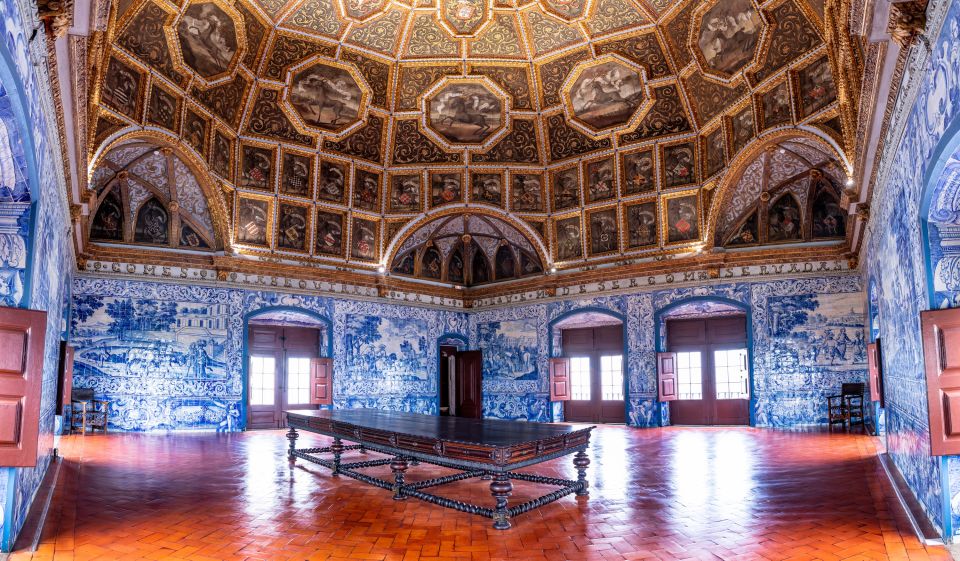
This ticket is built for efficiency. You’re paying to enter the National Palace with less hassle at the entrance, which matters in Sintra. On busy days, that difference can turn a stressful half-hour into a calm start.
The visit is self-paced. You’re not getting a full guided narration bundled in, but you do get a free audio guide via an app. That’s a smart trade-off: you can pause for photos, take extra time in the rooms that catch your eye, and skip the parts you don’t need.
Timing matters because the palace opens in the morning and has a final admission cutoff. Official hours are 9:30 AM–6:00 PM, with last admission at 5:30 PM. If you arrive late, you may feel rushed and miss the courtyards or gardens when the day closes early for you.
1,000 years of Portuguese power, told through rooms and stone
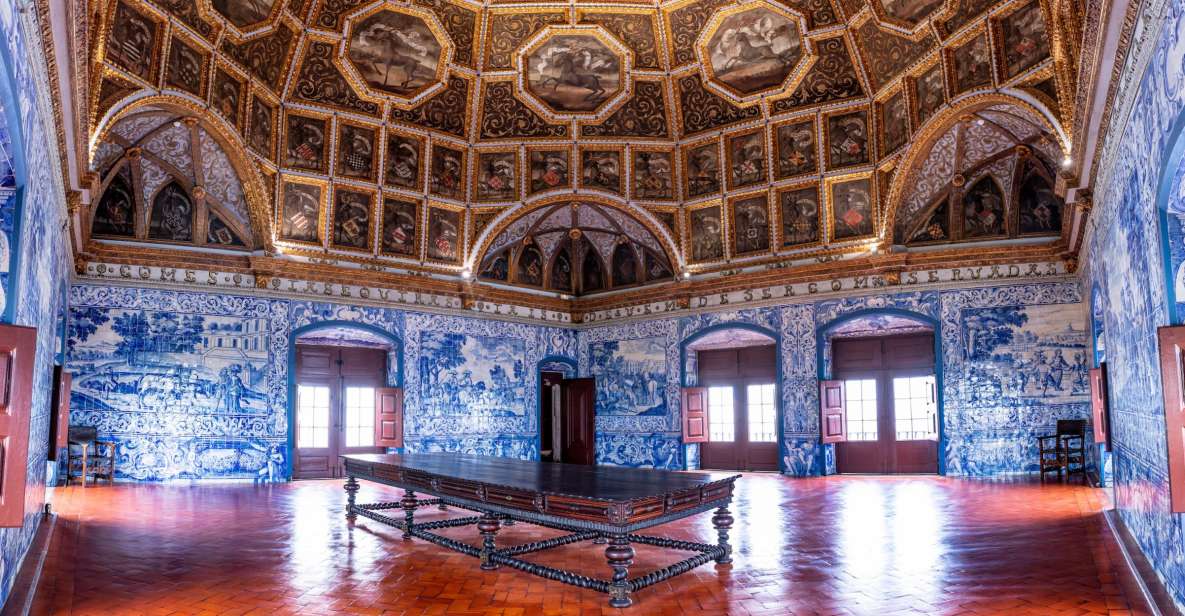
The National Palace of Sintra isn’t a single-era “theme park.” It’s a layered building where each chapter left physical traces. The palace began as a Moorish castle after the Umayyad conquest in the 8th century, and then it was extended by the early Portuguese kingdom in 1147.
That long timeline is the real value of the site. You don’t just see royal living spaces. You see how rulers adapted a fortress, then transformed it with new tastes and techniques. And because the additions use the natural terrain, the building feels practical and evolved rather than polished and blank.
Inside, the architecture hints at the politics behind the art. Manueline and Mudejar elements show how Portugal’s court absorbed influences while still building something unmistakably Portuguese. When you spot those details—especially the glazed tile patterns—you’re looking at decoration with a backstory, not just color.
Manueline and Mudejar courtyards: where the details do the talking
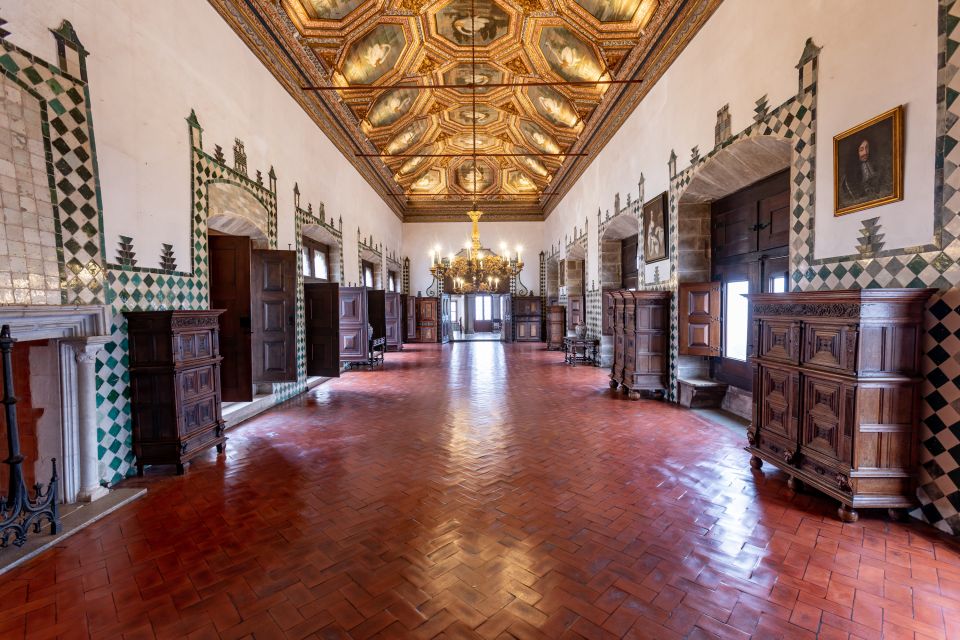
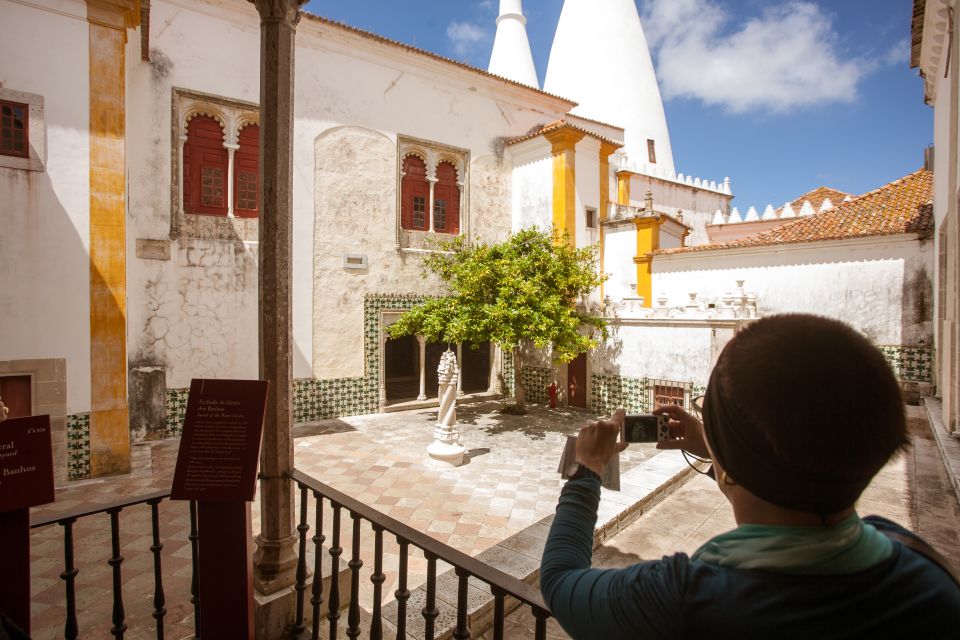
If you like craftsmanship, you’ll enjoy the interior courtyards with water features. These spaces are where the palace shows off. The design blends aesthetics with everyday royal life: light, ventilation, and a sense of controlled beauty.
Keep your eyes open for:
- Windows with surmounted arches (little architectural crowns above openings)
- Walls covered in glazed tiles with geometric patterns
- Manueline flourishes mixed with Mudejar style touches
The tilework is a highlight in the experience, and it’s one of the easiest places to “read” a room. Spend a few minutes just scanning patterns—some are regular and formal, others feel like decorative logic. That attention pays off because the palace isn’t huge, so you get to zoom in on the details rather than just moving past them.
Also, courtyards can feel different depending on time of day. Late afternoon light can make the tiles pop more than you expect. If you can, aim to reach the main courtyards before the last-hour crowd pressure starts to build.
The 14-figure audiovisual route and the audio guide (how to use both)
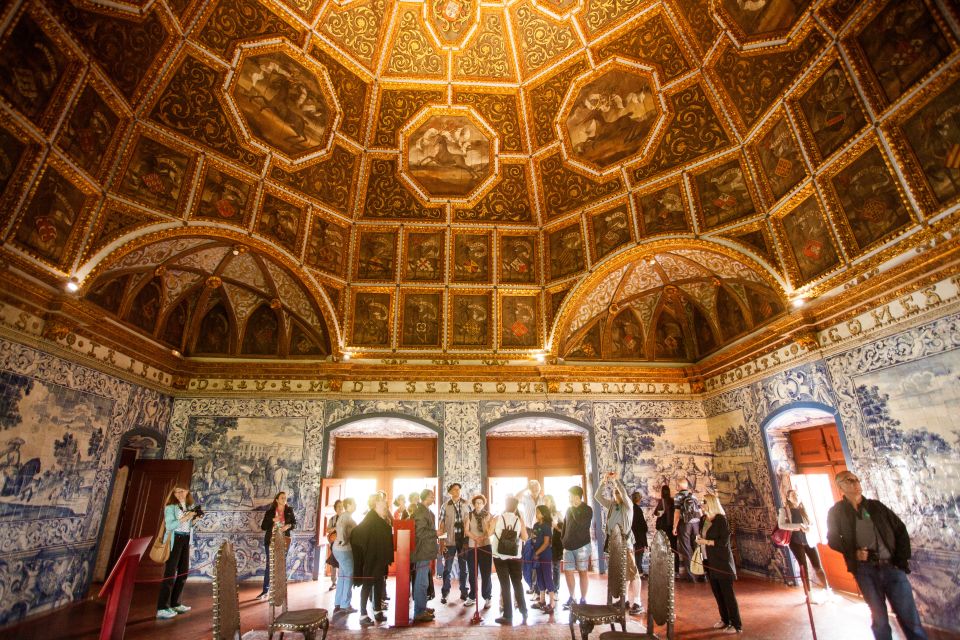
This experience adds a modern layer to an old building: an audiovisual journey built into the visitor route. It presents 14 forgotten historical figures, from cooks to queens, using short films embedded along the path.
The big practical win here is emotional storytelling. Instead of only “what happened,” you get “who was here and what did their days look like.” The route uses interactive video portraits voiced by Portuguese actors, and it’s available in Portuguese and English.
You’ll also have access to the free audio guide app in Portuguese, English, Spanish, and French. The app experience is different: it’s more like a structured companion to the rooms. The audiovisual route is more character-led.
My suggestion: don’t try to do everything at maximum speed. If you’re using both tools, use them in short bursts:
- audio guide for context in the rooms
- audiovisual route for key moments in the courtyards/sequence highlights
If you like museums that let you set the pace, this combo works well.
A practical 1–2 hour route: stairs, the Chapel, and the Heraldic Room
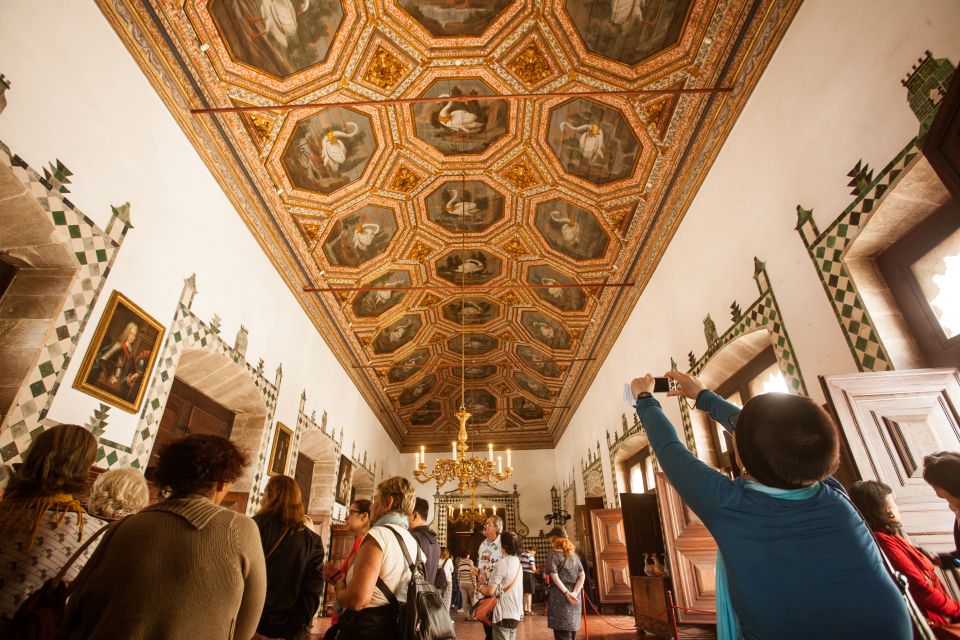
The palace can be surprisingly manageable in time. Many visitors find they can see a lot in about an hour and a bit, especially if you focus on the main interior areas and courtyards. If you’re a slower reader or you stop for every tile detail, plan closer to two hours.
Here’s a route flow that keeps you from wandering:
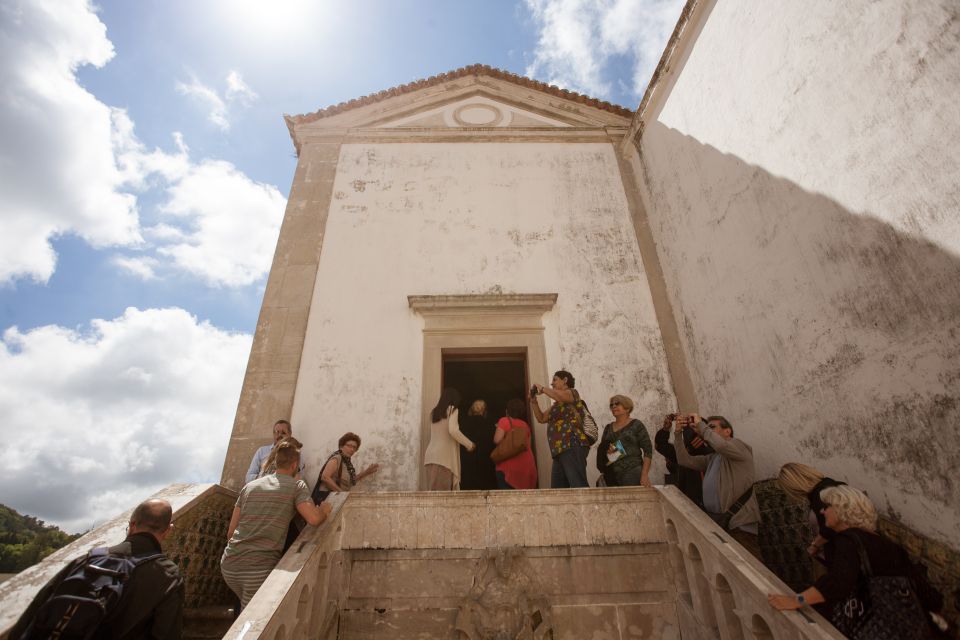
- Start with the rooms that clearly mark the palace’s royal identity—things like the Heraldic Room and the Chapel tend to be top priorities.
- Move through the interior spaces with standout staircases and decorated features. Expect stairs and up-and-down movement; Sintra doesn’t do flat walking.
- Spend deliberate time in areas with visible tilework and courtyard design. This is where the Manueline/Mudejar details become obvious.
- If you’re adding gardens/courtyards with water features, save that for after you’ve seen the key interiors so you don’t feel rushed if time runs short.
One note: some visitors have run into days when certain parts weren’t open. It’s smart to keep a little flexibility in your plan. If you find a room closed, redirect your time toward the courtyards and the Chapel/Heraldic areas rather than trying to force a perfect route.
And yes, bring shoes that can handle uneven stone. If you struggle with stairs, plan for that in your pacing.
Gardens and water features: when they help your visit (and when timing hurts)
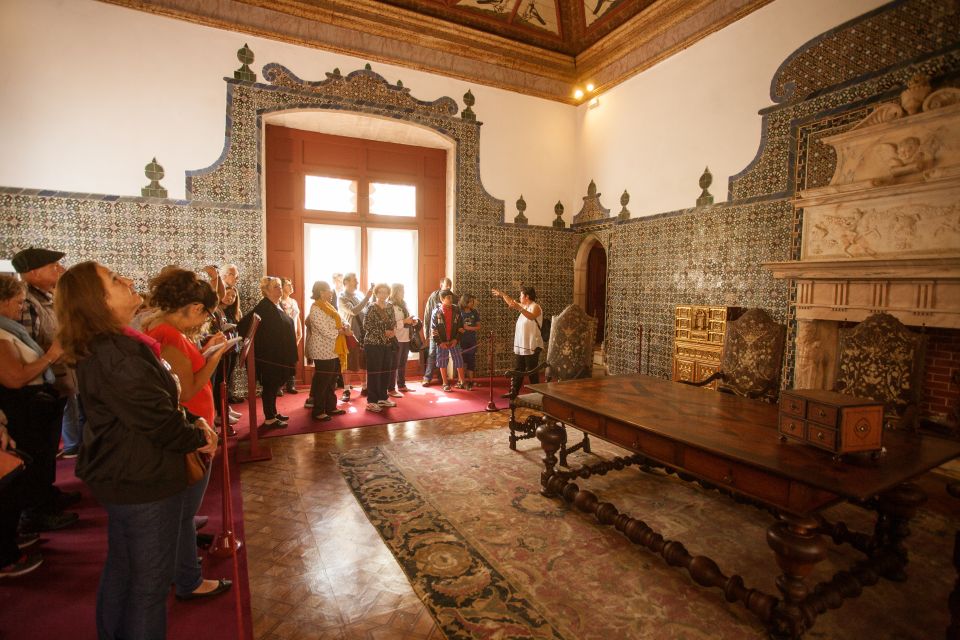
The activity is presented as National Palace and Gardens, and the palace experience includes courtyards with water features. That matters because these spots add freshness and visual movement to the interior tile-and-stone world.
But garden time is the easiest part to lose. The palace has a hard closing schedule, and if you arrive later you may miss areas that normally feel like the payoff. Some people also report that the gardens can feel less compelling than the interiors—so think of them as a bonus, not your main reason for choosing this ticket.
If your goal is maximum palace beauty per minute, you’ll likely get the best return by focusing on:
- interiors with architecture and tiles
- the courtyards tied to those architectural styles
- the Chapel and major decorated rooms
If you’re determined to see more outdoor space, start earlier in the day so closing time doesn’t chop your visit in half.
Crowd reality in Sintra: choose a start time that gives you breathing room

Sintra can be crowded. Even with a skip-the-line ticket, the site can still feel busy once inside, especially during peak visiting hours. The upside: once you’re through the entrance, you can spread out by taking your time in smaller rooms and courtyards.
A practical strategy is to avoid arriving at the last possible moment. With last admission at 5:30 PM and a closing time at 6:00 PM, it’s easy to misjudge how long you’ll want to linger in tile-heavy spaces.
On hot or restricted days, the experience can also change. One visitor couldn’t see much of what they planned due to a high fire risk situation. That’s a reminder to check near your trip: sometimes local safety conditions affect access.
The bottom line: pick a time slot that feels comfortable, then slow down once you’re inside. The palace works best when you’re not racing.
Who this palace ticket is best for (and who should think twice)
This is a great fit if you want:
- a focused royal palace visit in Sintra without committing to a full-day of multiple sites
- architecture lovers who enjoy Manueline and Mudejar details
- people who like self-paced museum time with help from an app
- anyone who appreciates character-based interpretation through the 14-figure audiovisual route
It may be less ideal if you:
- have mobility limitations, because many areas involve stairs and steep movement, and access can feel limited (including reports of difficulty and lack of hand rails)
- expect a fully guided tour experience. You’re getting entry and audio support, not a live guide walking alongside you the whole time.
If you’re doing multiple Sintra stops, this ticket is a strong “anchor” option—especially if you want something efficient and detail-rich rather than only vast grounds.
Price and value: is $15 a smart move?
At about $15 per person, this ticket is priced to be a high-value entry into Sintra’s most meaningful palace story. You’re not paying for transportation, food, or a guided group tour—those aren’t included—so you’re paying for the core value: entry, skip-the-line access, and a free audio guide.
For me, the value logic looks like this:
- If you want the palace interiors and courtyards, you get a lot of visual payback per dollar.
- The free multilingual audio guide reduces the need to hire a separate guide.
- The audiovisual route adds a modern interpretation layer that can make history feel more human.
Could you spend more elsewhere in Sintra? Sure. But if your goal is to see the National Palace properly without burning your day on lines, this is a practical buy.
Should you book the Sintra National Palace skip-the-line ticket?
Yes—if you want one of Sintra’s most important monuments with minimal waiting, and you’re happy to explore at your own pace with an app-based audio guide. The palace is a strong choice when you care about Portuguese royal history, tilework, and architecture that changes character as you move through the building.
Book it with extra caution if stairs and mobility are a concern, because the palace layout can be tough. Also, if you’re visiting during a period when outdoor access might be restricted, be flexible about how much garden time you’ll realistically get.
If you’re juggling limited time, this ticket is one of the easiest ways to turn Sintra from a checklist into a real visit.
FAQ
What time does the National Palace of Sintra open?
The palace opening hours are 9:30 AM to 6:00 PM.
When is the last admission time?
The last admission is 5:30 PM.
How long should I plan to visit?
The activity is listed as 1 day, and many visitors find they can see the palace in about an hour and a bit if they focus on the main areas.
What is included with the ticket?
Your ticket includes entry to the National Palace of Sintra plus a free audio guide via an app.
Is there a guided tour included?
No. This ticket does not include a guided tour.
What languages are available for the audio guide?
The audio guide is available in Portuguese, English, Spanish, and French.
Is transportation included?
No, transportation is not included.
Where is the meeting point?
The meeting point may vary depending on the option you book.
Is this ticket refundable if I change my mind?
No. This activity is non-refundable.