REVIEW · COSTA DA CAPARICA
Lisbon: Surfing Lesson on Costa de Caparica Beach
Book on GetYourGuide →Operated by SurfChamp SurfSchool · Bookable on GetYourGuide
A first surf lesson near Lisbon sounds simple, then it gets real fast. I like that this one mixes hands-on coaching with a beginner-friendly setup on Costa de Caparica, plus you finish with a sweet end-of-lesson treat led by instructor Sandro.
I also love the small-group limit (6 max), which means you spend more time practicing and less time waiting, and your instructor can correct your stance and timing as you go. One thing to consider: you need to get yourself to the meeting point in the parking lot, and there’s no included transport.
In This Review
- Key points I’d plan around
- Why Costa de Caparica Surfs Well for Beginners
- Meeting SurfChamp SurfSchool: Finding the Grey Peugeot Van
- 3 Hours of Learning: Sand Basics, Safety Briefing, and Real Waves
- Your Instructor and the Small-Group Advantage
- Equipment, Insurance, and the Portuguese Surfing Federation Certificate
- What to Bring (and What to Wear) for Costa de Caparica
- The Sweet Finish: Pastéis de Nata and a Real Sense of Reward
- Who Should Book This Lisbon Surf Lesson
- Price and Value: Why $34 Can Make Sense Here
- Book It or Pass: My Practical Recommendation
- FAQ
- How long is the Lisbon surfing lesson on Costa de Caparica?
- What’s included in the price?
- Do I need to bring my own surf gear?
- Where do I meet the instructor?
- Is transportation included?
- What languages does the instructor speak?
- What should I bring to the beach?
- Is this lesson suitable for children or pregnant women?
Key points I’d plan around
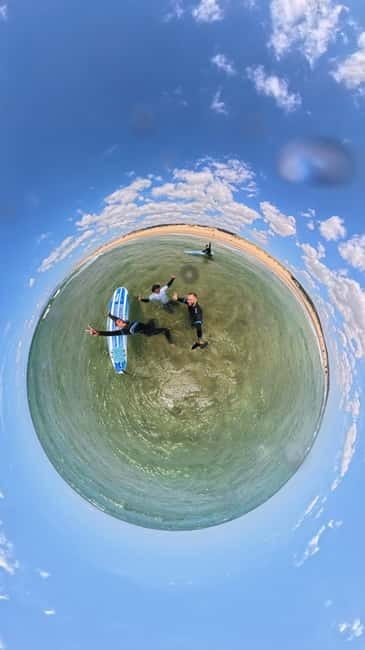
- Small group, 6 max: you get closer, more personal attention as you learn.
- Sand + ocean teaching: start on the sand first, then move into the waves with a clear safety plan.
- Certified, insured setup: equipment, insurance, and even a Portuguese Surfing Federation certificate are included.
- Advance instruction with Sandro-style coaching: patient teaching and technique corrections happen while you’re on the board.
- Sweet special gift at the end: pastéis de nata show up often enough to be worth looking forward to.
- 3 hours total: enough time to learn the basics, practice, and cool down with stretching.
Why Costa de Caparica Surfs Well for Beginners
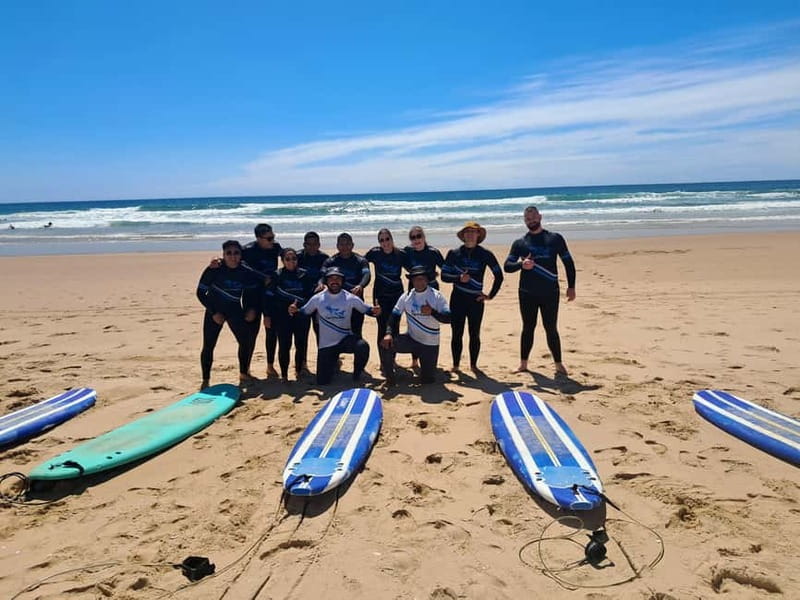
Costa de Caparica is the classic beach option when you want a Lisbon-area surf lesson without turning the day into a logistics puzzle. The big win here is the learning flow: you get kitted out, do the fundamentals, then hit the water with an instructor guiding you step by step.
What makes this setting work for first-timers is the balance between fun and control. You’re not pushed into a chaotic scene where you’re fighting for a wave. Instead, the lesson structure is meant to help you build confidence quickly, then turn that confidence into actual standing and riding attempts.
And if the ocean feels a bit bigger because of recent weather, that doesn’t automatically ruin the lesson. I like that the coaching approach stays safety-first, with instructors watching what you’re doing and adjusting guidance accordingly.
Meeting SurfChamp SurfSchool: Finding the Grey Peugeot Van
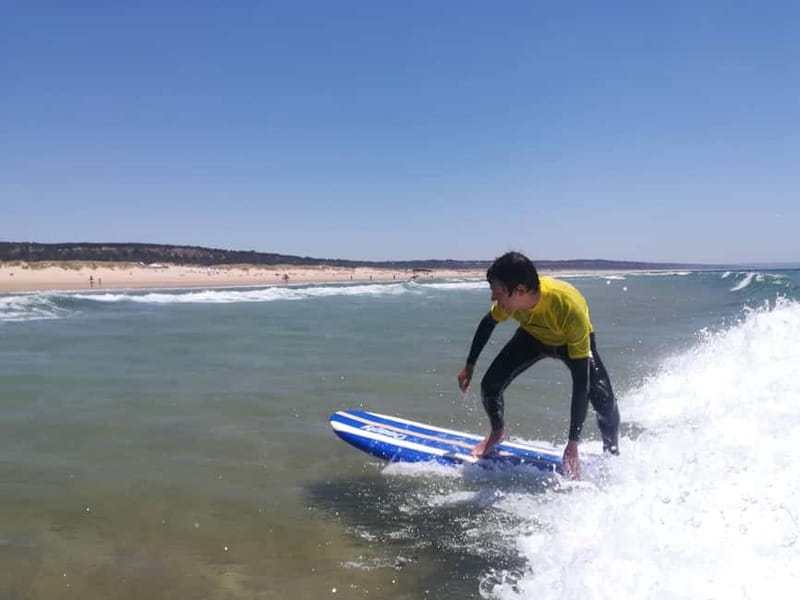
This lesson starts at the parking lot meeting point. You’ll be looking for a grey Peugeot van, which is your easy cue that you’re in the right place before you head into the sand and surf.
Transportation isn’t included, so plan to arrive on your own schedule and on your own route. If you’re coming from Lisbon by car or rideshare, give yourself extra time during busy periods, because coastal traffic can slow you down and still leave you responsible for being on time.
Once you arrive, the session runs as a tidy package: gear, briefing, then teaching. The whole point is to minimize your stress before you even get wet.
3 Hours of Learning: Sand Basics, Safety Briefing, and Real Waves
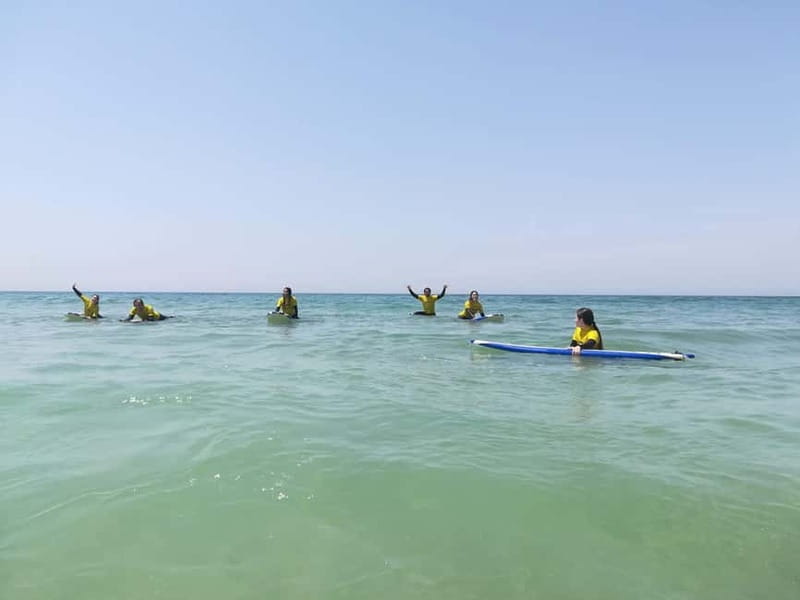
The total lesson time is 3 hours, and it’s paced like a proper surf class instead of a quick, chaotic try-it event.
You’ll start with getting swimming-ready for the water and a safety briefing. Expect the instructor to cover the basics that keep the day calm, not panicky. That matters, because surfing looks simple until you’re wearing a wetsuit, holding a board, and trying to time something you’ve never done before.
After the safety talk, you’ll get your equipment: wetsuit and surfboard. Then you begin with learning on the sand. This is one of the smarter parts of the lesson design, because you can practice the motions where mistakes don’t add up to falling in cold water over and over.
Then comes the ocean part, where you put the skills into motion. The teaching isn’t just generic tips from shore. In a lot of the feedback, instructors like Sandro are described as staying hands-on in the water, giving advice without rushing you, and correcting technique so you improve fast.
The lesson winds down with stretching. I appreciate this because it signals they’re thinking about the full body reality of surfing, not just the “catch your first wave” moment.
Your Instructor and the Small-Group Advantage
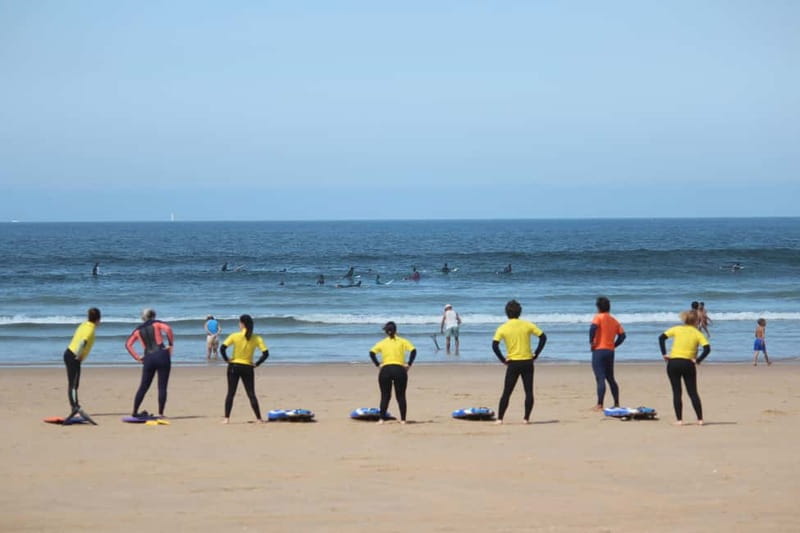
This is where the experience earns its top scores. The lesson is limited to 6 participants, which gives you something you won’t get in bigger groups: attention that actually lands.
With a small group, your instructor can watch how you’re standing, how your weight shifts, and how you’re approaching waves. You also get repeated coaching cues instead of hearing one piece of advice and then waiting until the next person finishes.
Sandro is a name that comes up again and again in the feedback. People describe him as patient, fun, and consistently focused on making sure everyone understands the steps. The theme is technique correction without making you feel rushed or singled out, which is exactly what you want the first time you try to surf.
You also have language flexibility. The instructor can teach in English, Portuguese, Spanish, and Italian, so you’re less likely to lose key instructions in translation. That is a big deal for safety and learning.
Equipment, Insurance, and the Portuguese Surfing Federation Certificate
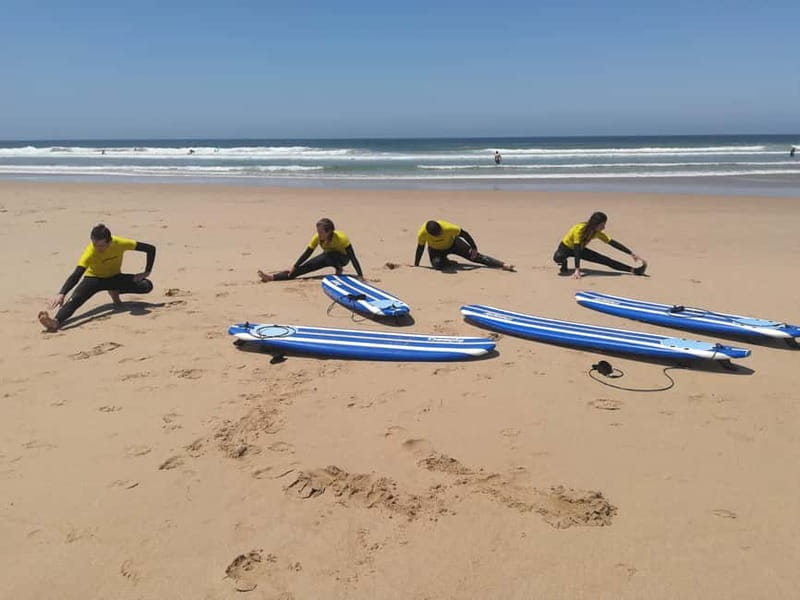
For value, this lesson is stronger than many “tourist try-surfing” options because the basics are handled for you. You don’t just rent a board and get pointed toward the water. You get surfing equipment, and the lesson includes a certified instructor plus insurance.
There’s also a Portuguese Surfing Federation certificate included. That’s not the kind of thing you frame on Instagram, but it’s a practical signal that the activity is run under a recognized structure and standards.
You’ll also receive a special gift at the end. Most commonly, the gift is described as pastéis de nata, which turns the day into more than just physical effort. It becomes a small ritual that makes the whole experience feel personal.
If you’re the type who worries about whether your lesson is “real” versus just a demo, these included elements are part of why the experience works.
What to Bring (and What to Wear) for Costa de Caparica
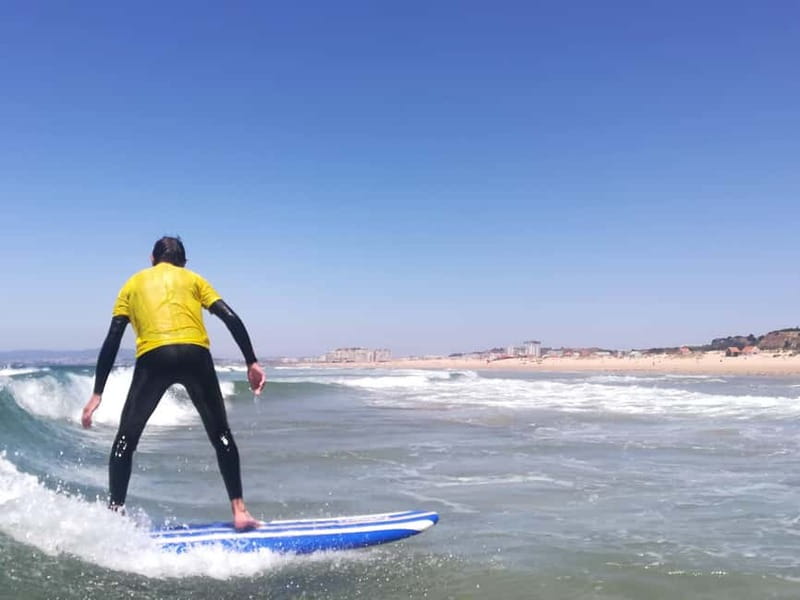
The good news: the surf gear is provided, so you’re not doing the heavy-lift packing. Still, you should show up prepared for beach reality.
Bring:
- Swimwear
- Sunscreen
- Water
I also strongly recommend bringing something for your feet. One lesson participant noted that walking on hot sand can be intense, and sandals can help. You won’t need them in the water, but you’ll likely appreciate them while moving around the beach before and after sessions.
If you sunburn easily, plan sunscreen like you’re spending the whole afternoon outside, because you basically are. Even when you’re moving around quickly, surf lessons involve time on the shore, plus gear changes and briefing.
The Sweet Finish: Pastéis de Nata and a Real Sense of Reward
A surf lesson ends when your body is tired, your brain is full, and you’re ready to feel like you accomplished something. Here, the experience adds a satisfying bookend.
The included special gift shows up in the feedback often as pastéis de nata, and the vibe is that it’s a small, thoughtful touch rather than a random “freebie.” I like rewards that feel tied to place, because Costa de Caparica is already a little piece of Portugal outside Lisbon.
If you’re hungry after you’ve been in a wetsuit, this kind of end-of-lesson treat is more useful than it sounds. It helps you transition from activity mode into normal life without scrambling for food right after.
Who Should Book This Lisbon Surf Lesson
This lesson is best for people who want a beginner-friendly way to try surfing or practice early skills. The coaching style is designed for learning, not for advanced competition.
It’s also built for comfort:
- small group size
- clear safety briefing
- coaching aimed at standing and improving technique
That said, it’s not suitable for children under 12 and not suitable for pregnant women, based on the provided rules.
If you’re going with friends, it’s a great choice because everyone gets time in the water and instruction. If you’re going solo, the small group can actually be a relief. You’ll feel less lost and more supported than in a larger, louder group.
Price and Value: Why $34 Can Make Sense Here
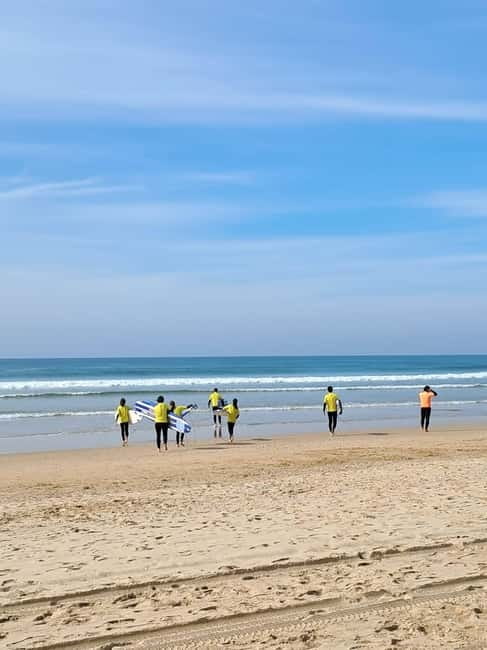
At $34 per person for a 3-hour surfing lesson, the value comes from what’s included. You’re not paying for just access to a board. You’re paying for instruction, gear, insurance, and a Portuguese Surfing Federation certificate.
Also, the small group limit is part of the pricing logic. Paying a bit more for fewer people usually translates into more coaching time, and in surfing that changes results. Standing up sooner means fewer “what do I do wrong?” moments and more “I get it now” moments.
The biggest value trade-off is one you control: since transportation isn’t included, you may spend time and money getting to the parking lot meeting point. If you’re already near Lisbon’s coastal access routes, that’s easy. If you’re far away, plan your timing so you don’t lose the day to logistics.
For many first-time surfers, this ends up feeling like a smart deal because it combines fun, safety, and real instruction in one block of time.
Book It or Pass: My Practical Recommendation
If you want a Lisbon surfing lesson that prioritizes safety, clear instruction, and a small-group learning environment, this one is easy to recommend. I’d book it if:
- you’re trying surfing for the first time (or returning to basics)
- you want coaching you can actually hear and apply
- you care about getting equipment, insurance, and a structured lesson, not just a “trial”
I’d think twice if:
- you don’t want to manage getting yourself to a parking-lot meeting point
- you’re under 12 or pregnant (since it’s not suitable under the stated rules)
The standout takeaway is that the instruction style is consistently described as patient and hands-on, with Sandro-style coaching that focuses on getting you standing and improving quickly. Add the stretching finish and the sweet pastéis de nata-style reward, and you have a full, satisfying half-day that feels like Portugal, not just an activity stop.
FAQ
How long is the Lisbon surfing lesson on Costa de Caparica?
It lasts 3 hours total.
What’s included in the price?
You get a surfing lesson with a certified instructor, surfing equipment, a Portuguese Surfing Federation certificate, insurance, and a special gift.
Do I need to bring my own surf gear?
No. The wetsuit and surfboard are provided as part of the lesson.
Where do I meet the instructor?
The meeting point is in the parking lot. Look for a grey Peugeot van.
Is transportation included?
No. Transportation is not included, so you’ll need to get yourself to the meeting point.
What languages does the instructor speak?
The instructor can teach in English, Portuguese, Spanish, and Italian.
What should I bring to the beach?
Bring swimwear, sunscreen, and water.
Is this lesson suitable for children or pregnant women?
No. It is not suitable for children under 12 and not suitable for pregnant women.