REVIEW · ALGARVE
Lagos: Boat Cruise to Ponta da Piedade
Book on GetYourGuide →Operated by Boatrips.Lda · Bookable on GetYourGuide
Lagos cliffs feel like they were carved for boats. I love the chance to get up close to Ponta da Piedade and the way this traditional Portuguese boat is used to reach tight grottos. I also like the quick beach photo stops, which help you understand what you’re seeing before you’re even near the rocks.
One thing to know up front: the exact program can shift because sea conditions and tides matter.
This is a small-boat outing, so you’re not stuck watching other boats from far away. I like that the ride comes with live commentary from the skipper/guide, and the crew’s humor shows up as much as the facts (Pedro, Hugo, Luís, Denis, and others are mentioned by name in guide stories).
You’ll also feel how the captain’s skill matters when you go in and out of arches and caves. The big payoff is seeing the coastline from offshore, not just from the promenade.
The possible drawback is that the caves portion depends on what the sea allows that day. Even if conditions aren’t perfect, this cruise is still designed to be fun and safe, but you should expect the route to be adjusted.
In This Review
- Key Highlights You’ll Notice Right Away
- Finding the Boat: Marina de Lagos and Passeio dos Descobrimentos 10
- A 75-Minute Cruise That Doesn’t Drag
- The Boat: Built for Tight Grottos, Not Just Big Views
- Dona Ana Beach and Praia do Camilo: The Setup Stops
- Ponta da Piedade: Caves, Arches, and the Best Angles for Pictures
- What You Might See Besides Rocks
- Praia do Barranco do Martinho: Another Viewpoint Before You Return
- Live Commentary From the Local Crew: What You Learn While You Ride
- Safety and Comfort: When the Sea Gets a Say
- Price and Value: Getting Caves + Expert Guiding for Around $20
- Who This Cruise Fits Best (and Who Might Feel It’s Not for Them)
- Should You Book This Boat Cruise in Lagos?
- FAQ
- How long is the Lagos boat cruise to Ponta da Piedade?
- How big is the group on each boat?
- What languages is the live guide commentary available in?
- Where do I meet for the tour?
- What does the tour include?
- Which places will we see during the cruise?
- What should I bring, and can the schedule change?
Key Highlights You’ll Notice Right Away
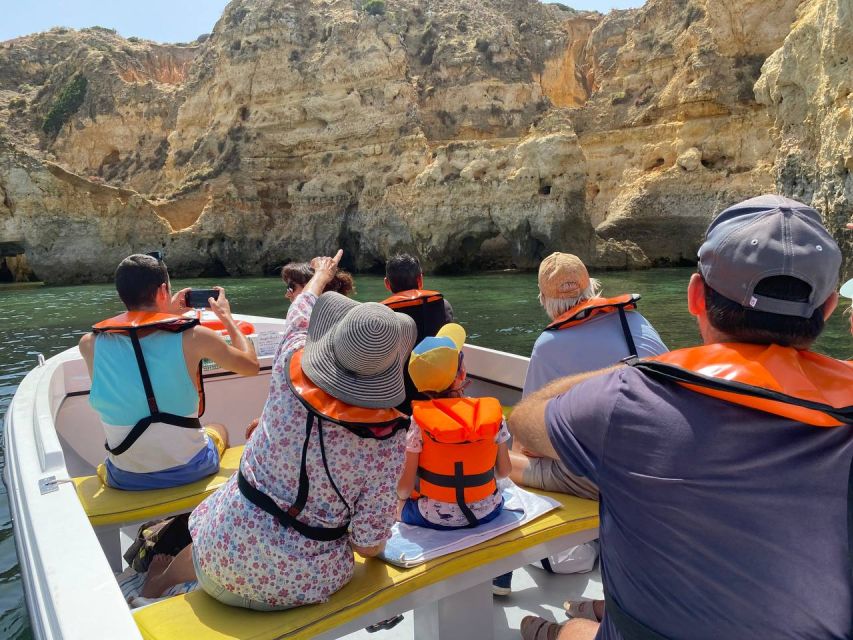
- Traditional Portuguese boat access to small grottos that larger boats can’t reach
- Ponta da Piedade viewpoints plus a cave visit time designed around what tides allow
- Photo stops at Dona Ana Beach and Praia do Camilo to set up the bigger scenery
- Live commentary in Spanish, English, French, and Portuguese with a local skipper vibe
- Small group size (max 10) for a more relaxed pace and easier photo moments
- Bonus wildlife chances like dolphins, if the day’s right
Finding the Boat: Marina de Lagos and Passeio dos Descobrimentos 10
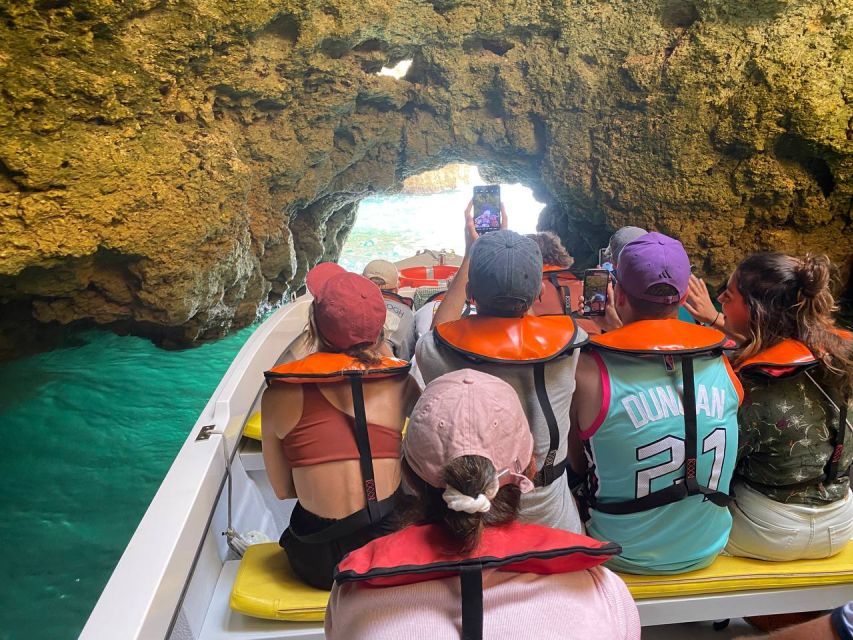
You start at Passeio dos Descobrimentos 10, at the Marina de Lagos. The meeting point is at the Portão/Gate for Passeios de Barco / Boat Trips, right by a white gate in front of Amuras Bar.
If you’re arriving on foot, give yourself a little extra time to spot the gate area, because you’ll want to be there early enough to settle in. This is especially helpful in busy seasons, when multiple tours overlap and it’s easy to get turned around.
You can also read our reviews of more boat tours in Algarve

A 75-Minute Cruise That Doesn’t Drag
This trip runs about 75 minutes, which is the sweet spot for a first (or last) day in Lagos. It’s long enough to feel like you did something special, but short enough that it’s not a whole half-day commitment.
The timing is built around a flow: beach photo stops first, then the main rock-and-cave area at Ponta da Piedade, and finally another coastal viewpoint before the cruise wraps up. That pacing matters because it keeps you looking outward the entire time, instead of bouncing between long waits on land.
And because it’s a small boat, you get more natural movement through the sights. You’re not just present—you’re actually part of the action at the right moments for photos and views.
The Boat: Built for Tight Grottos, Not Just Big Views
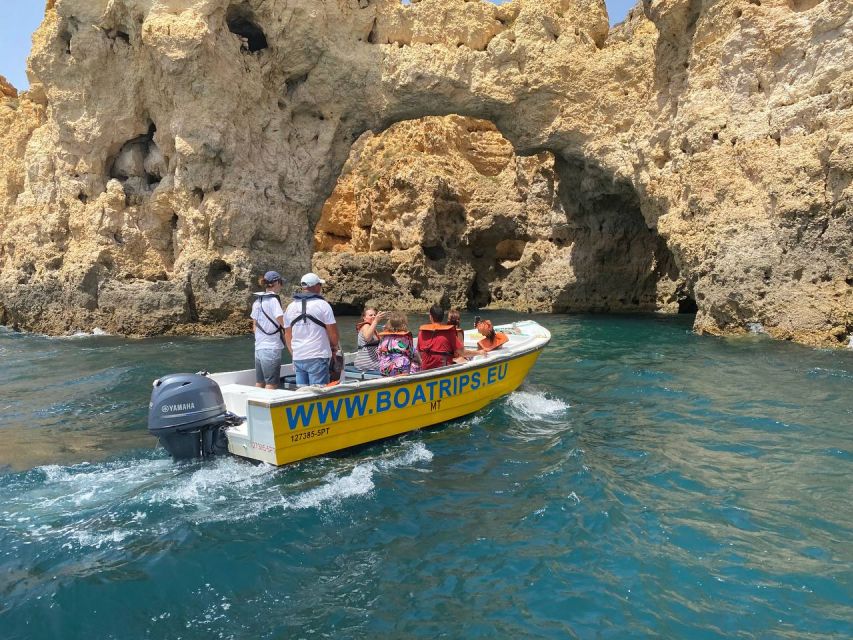
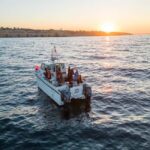
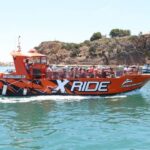
The boat is described as a traditional Portuguese-style vessel, designed to get into the smallest grottos. That’s not just marketing fluff—your experience depends on the boat’s ability to maneuver near rock formations.
You’ll feel that in how the skipper positions the boat close to caves and arches, plus the way the group can handle the inside sections briefly. Multiple guide stories highlight skilled navigation through narrow rock spots, which is exactly what you want here.
You should also know the boat capacity is max 10 people. If you book for 11 or more, the group splits between two boats. In practice, smaller groups tend to mean you get more room for photos and less rushing.
Dona Ana Beach and Praia do Camilo: The Setup Stops
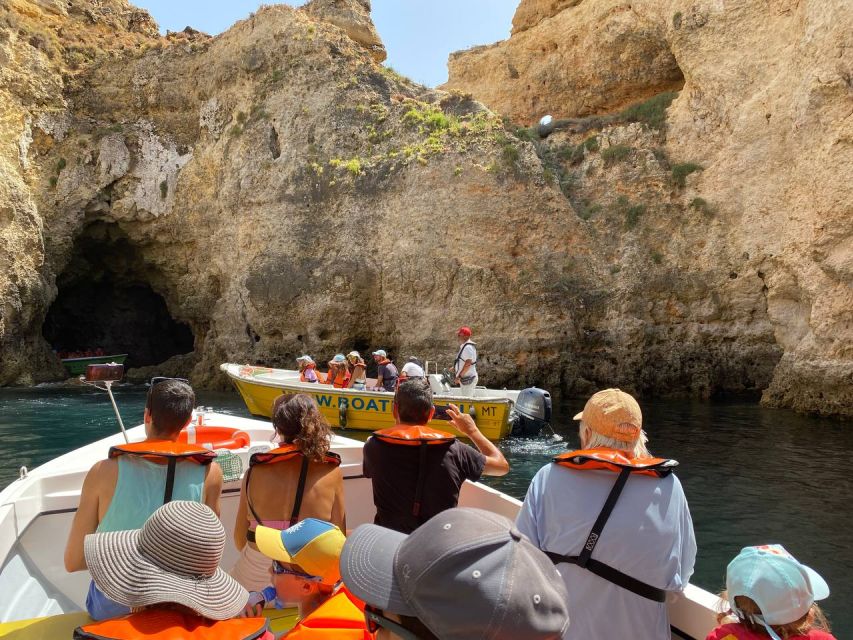
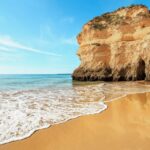
Right at the start, you get a Dona Ana Beach photo stop. It’s about 10 minutes, with a mix of guided talk and scenic viewpoints while you’re moving. This is useful because it gives you a first sense of the Algarve coastline before the main rock show.
Next comes Praia do Camilo. You’ll have another brief photo stop, then a guided look and a scenic boat segment. Why it’s worth it: it helps connect the beaches you’ve likely seen on postcards to the rock shapes you’ll soon ride past from offshore.
These quick stops are also a practical win if you don’t want to commit to a long hike or a full day of walking. You still get the drama—just with less effort.
Ponta da Piedade: Caves, Arches, and the Best Angles for Pictures
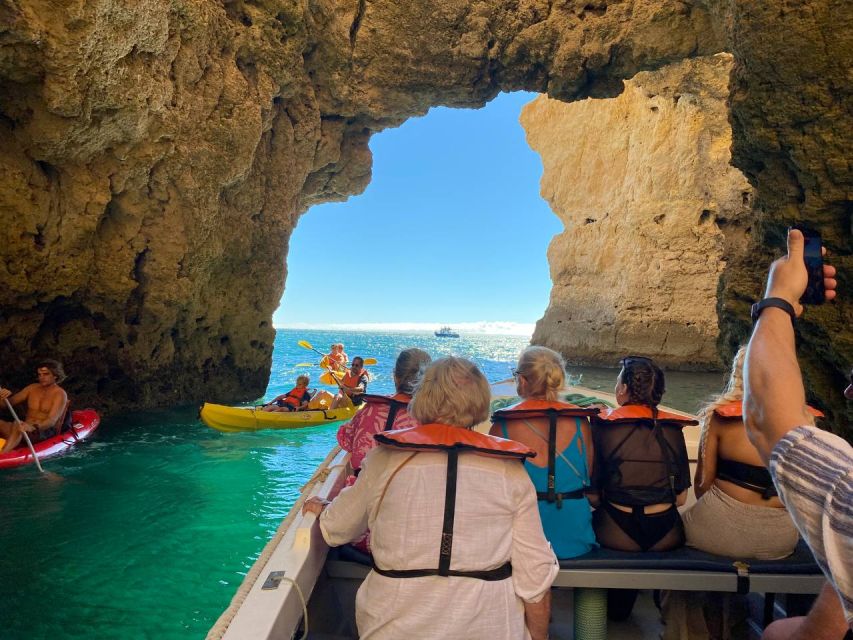
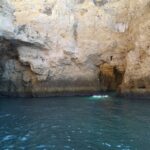
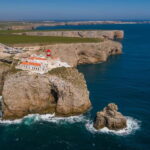
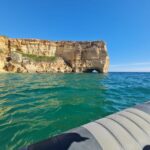
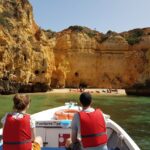
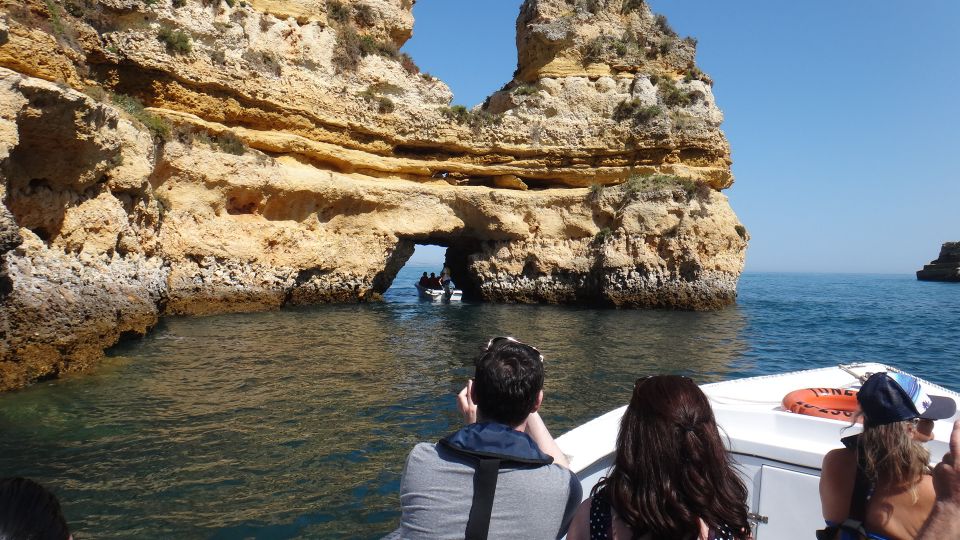
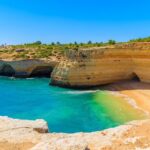
This is the star section, around 30 minutes, centered on Ponta da Piedade. You’ll get a guided visit here, plus photo opportunities from the water. The rock formations are the reason people come, but the real value is how close you can get when you approach by boat.
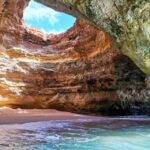
The tour includes entering caves briefly and revealing hidden grottos from the inside. That detail changes everything: you’re not only looking at the coast, you’re experiencing the rock as a series of chambers and passages.
A lot of the satisfaction comes from timing and positioning. The skipper and crew manage navigation so you can see the cave fronts and then catch the best angles for photos. In guide stories, people call out both the safety feeling and the focus on getting everyone the right viewing moments.
What You Might See Besides Rocks
On some days, dolphins show up nearby. Several stories mention dolphins during the cruise, and that’s a nice “extra” when conditions allow. Don’t plan your day around it, but if you’re open to surprises, you’ll be glad you took this tour.
Also, there can be a fun burst of speed at the end of the ride. One family story notes kids loved it, and adults usually smile too when the skipper turns the moment into a little celebration.
Praia do Barranco do Martinho: Another Viewpoint Before You Return
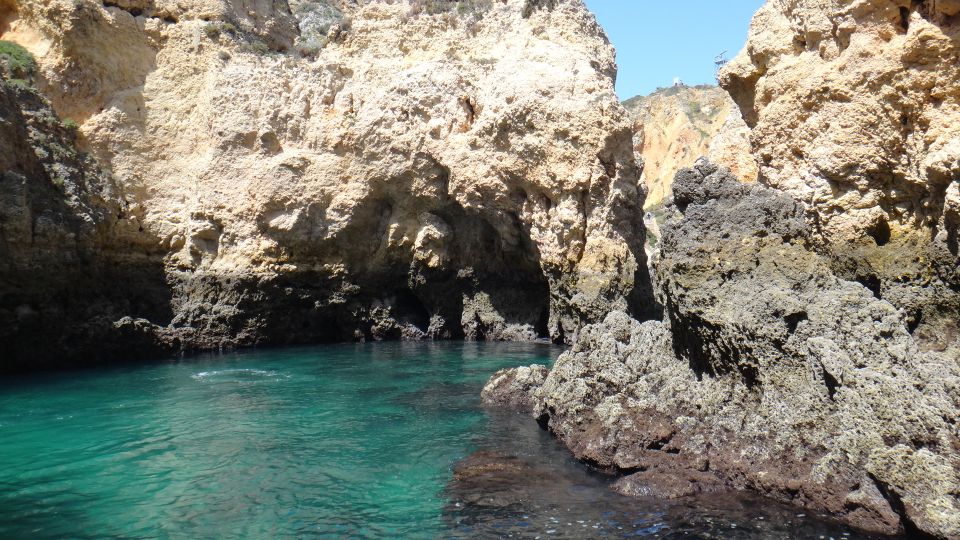
After Ponta da Piedade, you move toward Praia do Barranco do Martinho. It’s a shorter photo stop, about 10 minutes, with guided info and scenic views on the way.
This stop is worth it because it keeps the coastline feeling continuous. You’re not jumping between unrelated spots—you’re seeing how the rock formations and beaches relate to one another along this stretch of Lagos.
Think of it as the final piece of the puzzle. By then, you’ve already learned what to look for, so even a brief stop turns into a better photo and a better understanding of the coastline’s structure.
Live Commentary From the Local Crew: What You Learn While You Ride
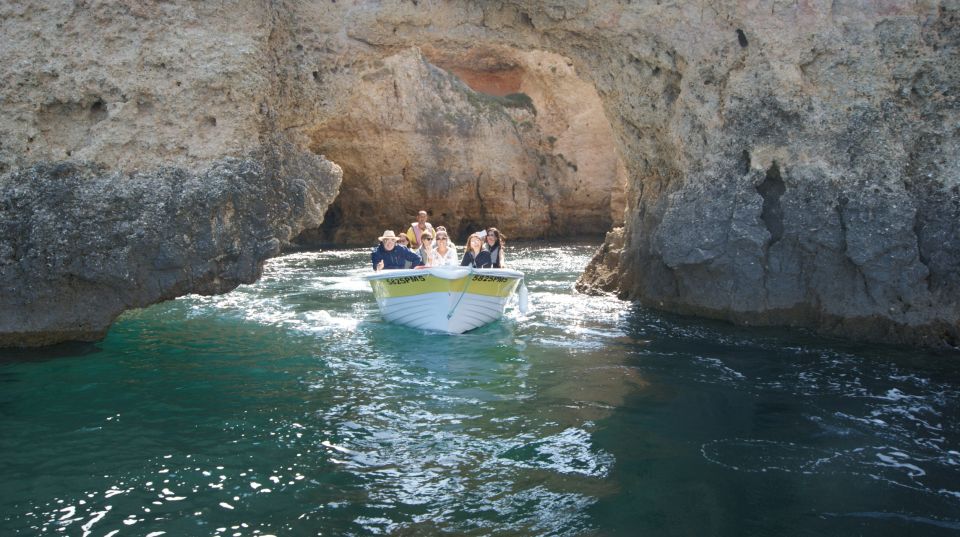
This cruise includes live commentary, and the languages listed are Spanish, English, French, and Portuguese. You’re not stuck with one-way sightseeing. The guide brings the area to life as you pass it.
From the guide stories, the commentary blends local knowledge with humor. Names like Pedro, Hugo, Luís, Denis, and Zach show up in crew mentions, and the pattern is consistent: the skipper is focused on both information and timing.
You might also hear cultural context tied to Lagos itself. One story specifically mentions Lagos town walls, which hints that the talk doesn’t stop at geology. It helps you see Algarve scenery as part of a lived-in place, not just a shoreline on a map.
Safety and Comfort: When the Sea Gets a Say
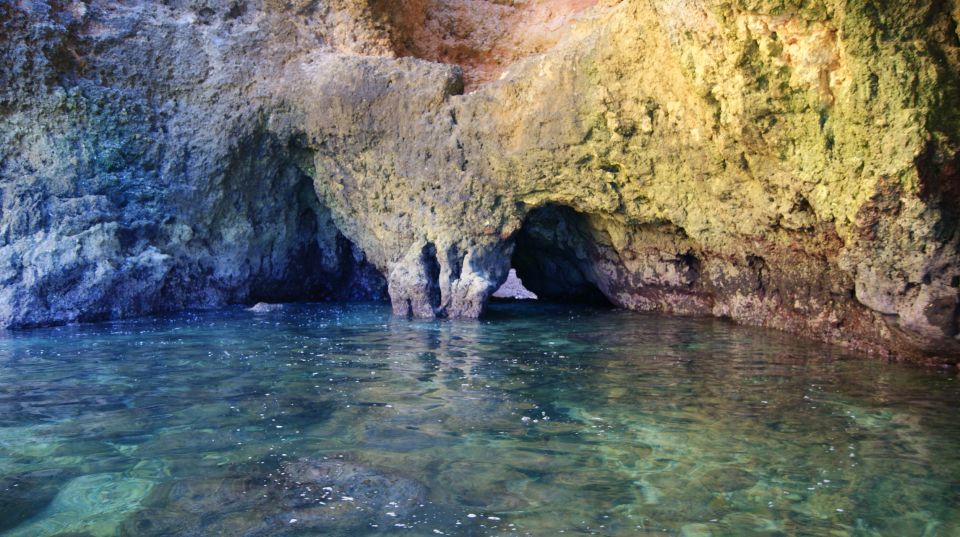
A key point: the program is subject to change due to sea conditions. That doesn’t mean you’re out of luck—it means the skipper adjusts the plan based on tides and what’s safe and possible that day.
So if the sea is choppy, expect a more lively ride. One story calls the caves portion thrilling, but also says people still felt safe. That’s exactly how to frame it: you’re on the water, so conditions matter, and the skipper’s job is to respond smartly.
For comfort, come dressed for wind and sun. Sunglasses and a sun hat help a lot because you’ll be outside during scenic stretches and while taking photos.
Price and Value: Getting Caves + Expert Guiding for Around $20
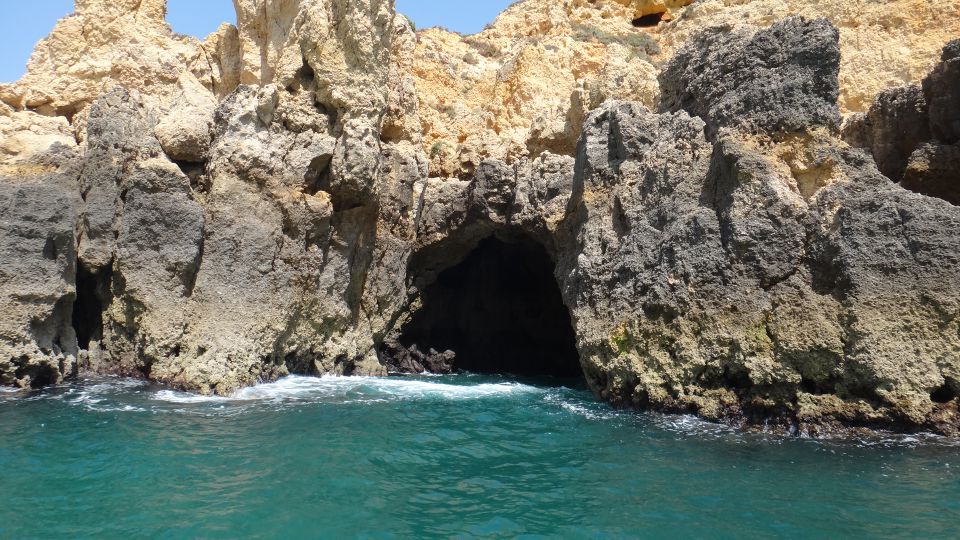
At $20 per person for about 75 minutes, this is strong value because you’re paying for more than a scenic cruise. The included pieces are the boat cruise itself, the guide/skipper, live commentary, and visits to the caves.
If you tried to replicate this by yourself, you’d likely spend time figuring out where to go and how to get the boat access for cave interiors. Here, that’s handled, and you also benefit from the local explanations that make the scenery click.
The small group size (max 10) also boosts perceived value. You get closer viewing and less crowd pressure, especially around photo moments. Several guide stories praise the small-boat access to narrow spots, which is the kind of practical advantage that matters when you’re paying for a specific experience rather than generic sightseeing.
Who This Cruise Fits Best (and Who Might Feel It’s Not for Them)
This is a great choice for families because it’s short, paced, and focused on eye-level fun. One family story highlights kids ages 3 and 7 enjoying it, and that makes sense: you’re combining beaches, caves, and occasional dolphin excitement without a long endurance test.
It also works well for couples and solo travelers who want a high-impact outing without planning transport between viewpoints. If you’d rather spend your energy on photos and learning rather than walking, the boat version is a smart use of time.
Who might hesitate? If you strongly dislike any motion on the water or you’re expecting a totally predictable, never-changed route. Since the cave experience depends on tides and conditions, the tour can shift slightly. Still, the overall concept is designed for what the sea allows.
Should You Book This Boat Cruise in Lagos?
Yes, if your goal is Ponta da Piedade by water, including cave access and a guide who actually talks as you go. This is the kind of activity that pays you back quickly: you get dramatic rocks, inside-the-cave glimpses, and photo-friendly viewpoints in under 90 minutes.
Book it especially if you want a small-group experience with a skipper who can navigate tight areas, and if you enjoy learning while you look. Bring sunglasses and a hat, show up ready for wind and sun, and keep your schedule flexible in case the sea nudges the plan.
FAQ
How long is the Lagos boat cruise to Ponta da Piedade?
The duration is about 75 minutes.
How big is the group on each boat?
The maximum capacity is 10 people per boat. If you book for 11 or more people, the group is split between two boats.
What languages is the live guide commentary available in?
Live commentary is available in Spanish, English, French, and Portuguese.
Where do I meet for the tour?
Meet at Portão/Gate for Passeios de Barco / Boat Trips, Marina de Lagos, Passeio dos Descobrimentos, 8600-315 Lagos. The hint says it’s next to the white gate in front of Amuras Bar.
What does the tour include?
The tour includes a boat cruise, guide/skipper, live commentary, and visits to the caves.
Which places will we see during the cruise?
You’ll see Dona Ana Beach, Praia do Camilo, Ponta da Piedade (including caves/rock formations), and Praia do Barranco do Martinho, plus additional scenic cruising along the coastline.
What should I bring, and can the schedule change?
Bring sunglasses, a sun hat, a camera, and comfortable clothes. The program is subject to change due to sea conditions, since tides and weather affect what’s possible.