REVIEW · ALMADA
Fragata D. Fernando II e Glória: Admission Ticket
Book on GetYourGuide →Operated by Marinha · Bookable on GetYourGuide
If you like ships, this one feels real fast. The Fragata D. Fernando II e Glória is a rare chance to walk through the last wood sailing frigate tied to Portugal’s old East Indies routes. You’re in a dry dock on the Tagus, not behind glass, so the atmosphere hits harder.
Two things I like right away: you get access to four decks, and the visit is supported by a free QR code app guide that helps you make sense of what you’re seeing. The ship’s long service record also gives the walk a clear sense of scale, from launch in 1843 to more than 100,000 nautical miles logged.
One key consideration: you’re not going to be able to go inside the U-boat because it’s still closed. So if you’re hoping this ticket covers more than the frigate itself, plan around that.
In This Review
- Key things to know before you go
- Fragata D. Fernando II e Glória: why this Lisbon ship matters
- Price and time: getting real value from an $8 ticket
- Before you board: voucher exchange and where to find the ship
- Entering the ship: what the first minutes feel like
- Exploring four decks: how to get the most from the ship spaces
- The Carreira da Índia story: translating distance into meaning
- The fire of 1963, the Tagus River, and why the rebuild matters
- QR code app guide and on-board activities: using them without slowing down
- What to expect from staff and the visitor vibe
- The U-boat isn’t included: plan your expectations
- Accessibility and comfort: who should (and shouldn’t) choose this
- Should you book the Fragata D. Fernando II e Glória ticket?
- FAQ
- How much does the Fragata D. Fernando II e Glória admission ticket cost?
- How long is the visit?
- Where do I go when I arrive?
- What’s included with the ticket?
- Is the U-boat included?
- Are food and drinks included?
- What languages are used for explanations?
- Is the experience accessible for wheelchair users?
- Is free cancellation available?
Key things to know before you go
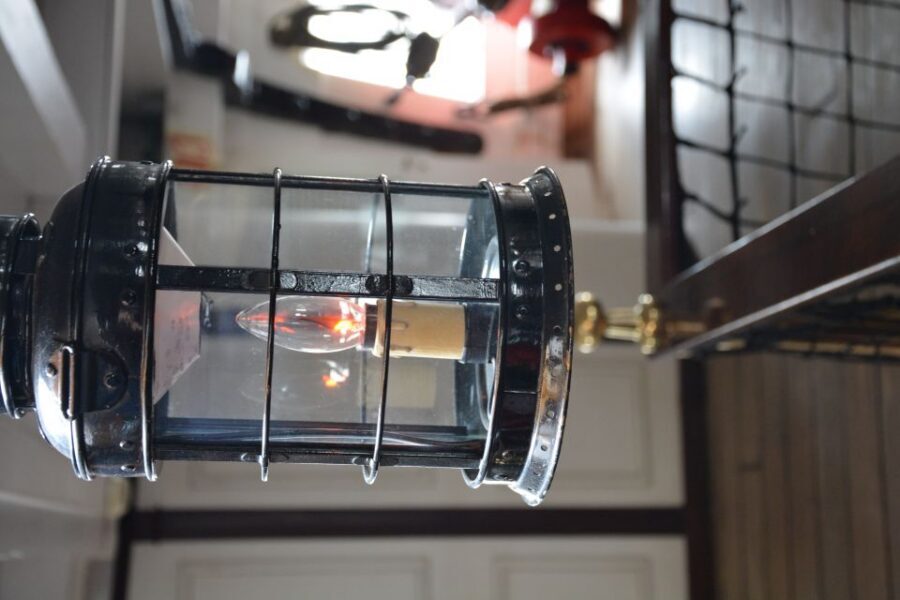
- Four decks to explore, giving you real movement through the ship instead of one flat exhibit
- Last sailing ship of the Portuguese Navy, so the context goes beyond a generic boat museum
- Carreira da Índia connection, with the “East Indies” trade route story built into the experience
- Free QR app guide so you can control your pace instead of rushing with a big group
- Ship history made physical, shaped by a 1963 fire, near-submersion in the Tagus, and later rebuilds
- Dry-dock museum setting, which makes it easier to concentrate on details than on a moving vessel
Fragata D. Fernando II e Glória: why this Lisbon ship matters
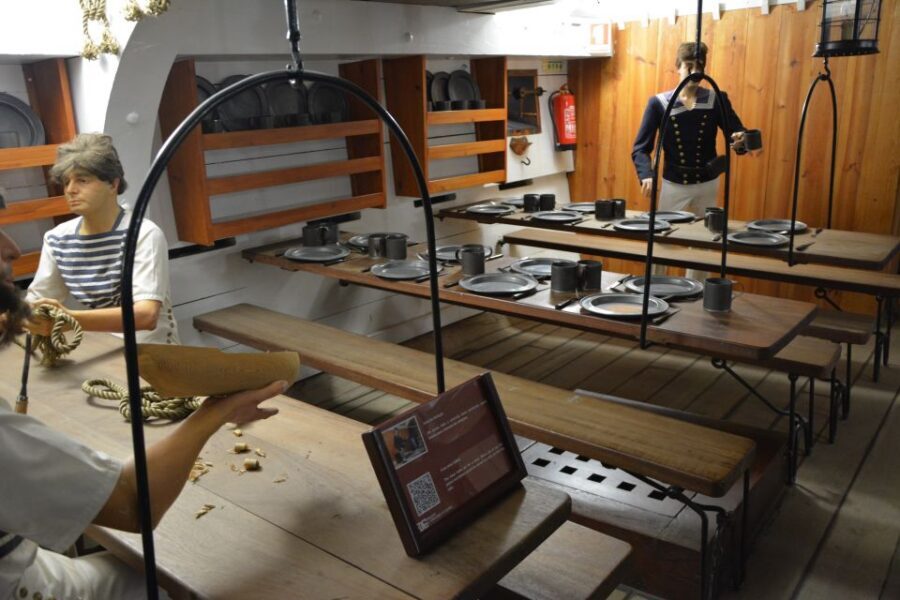
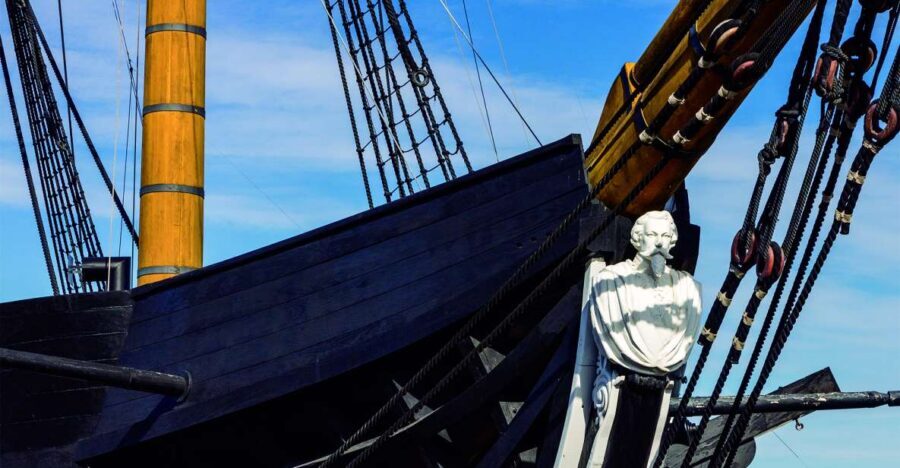
Lisbon has plenty of museums. This one is different because you’re inside a working-era vessel that still shows shipboard life. The experience centers on the last wood sail ship of the Portuguese Navy, the last sailing ship tied to the Carreira da Índia, the route between Portugal and the East Indies.
The ship was launched in 1843 and sailed for over 33 years. In that time, it traveled more than 100,000 nautical miles, which is the equivalent of going around the world about five times. Even if you don’t love math, that kind of distance tells you the ship wasn’t a short-lived symbol. It was built to do work.
You can also read our reviews of more tours and experiences in Almada.


Price and time: getting real value from an $8 ticket
This ticket is priced at about $8 per person and the visit runs for around 1 hour. That time window matters because it’s long enough to explore all the decks, but short enough that you won’t feel trapped if you arrive late or you’re still sorting out Lisbon logistics.
At this price, you’re not paying for a fancy, staged show. You’re paying for access to a ship museum built from the actual structure. If you’re trying to use your time wisely in Lisbon, a one-hour ship visit can be a smart way to add something authentic without losing a whole morning.
Before you board: voucher exchange and where to find the ship
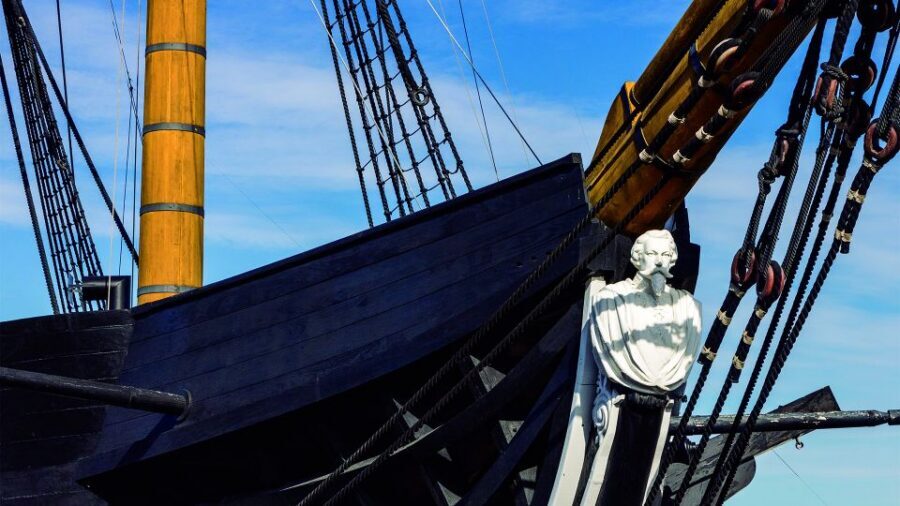
You’ll need to swap your voucher for an actual ticket at the ticket counter first. After that, you’re heading to the ship itself in a dry dock.
The ship is located just at the square, so you’re not hunting through side streets for an obscure entrance. I suggest treating it like a quick “check-in first, then wander” stop: handle the exchange, then focus on the decks while your attention is fresh.
Entering the ship: what the first minutes feel like
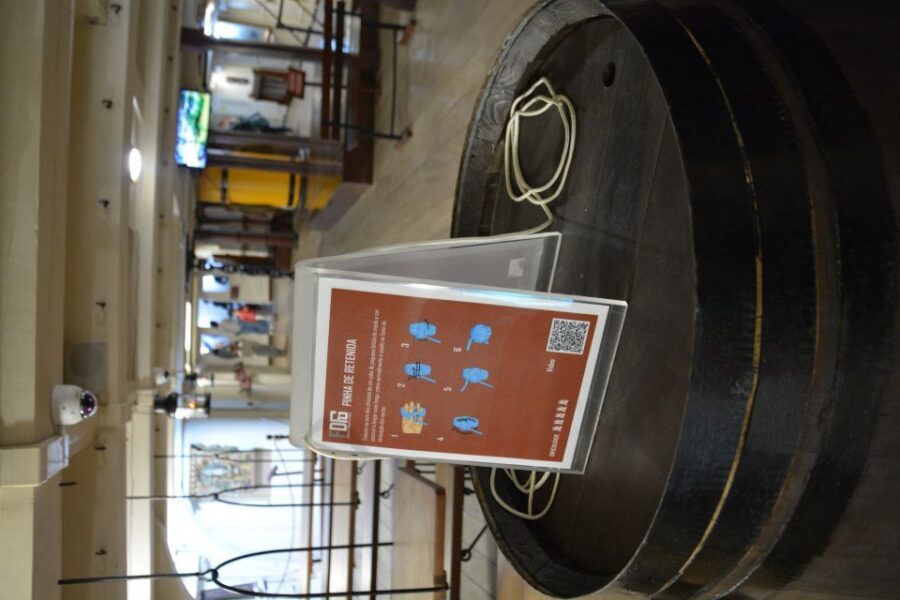
Once you’re inside, the big idea is movement. You’re not just looking at models—you’re stepping into spaces that were meant for life at sea. Because the experience is laid out across four decks, your first few minutes usually set the tone: you start noticing how navigation, storage, and crew space would have fit together.
If you’re the type who reads signs only when something catches your eye, this works well. The app guide and ship activities are there to help you connect the dots without making you feel like you’re on a homework assignment.
Exploring four decks: how to get the most from the ship spaces
This ticket includes exploration of all decks, so you’ll want to plan a simple route instead of bouncing around randomly. With four levels to cover, the best approach is steady: one deck at a time, then circles back if a detail pulls you in.
Here’s how to think about each section of the ship:
- Lower decks: This is where you often get the strongest sense of the ship as a machine. Even if you don’t know every term, you’ll see the logic of how a large sailing vessel was organized.
- Middle decks: This is usually where the sense of crew workflow becomes clearer. I like this part because it turns the ship from an object into a workplace.
- Upper decks: You start connecting the interior to the idea of wind, sail power, and open space. The views and structure help you understand why wooden ships required discipline.
- Final deck pass: This is your chance to slow down. Use your phone for the QR code guide so you can match what you’re seeing to what you’re reading.
One practical note: the visit isn’t made for one long straight hallway. Expect stairs and shifts in level between decks, so wear shoes you’re comfortable with.

The Carreira da Índia story: translating distance into meaning
The ship’s identity is tied to Portugal’s East Indies routes, often referred to through the Carreira da Índia. That’s not just trivia. It changes how you interpret the ship, because it frames the vessel as a tool for long-distance trade and navigation, not a short coastal tour.
You learn that the last frigate of the carreira da Índia status isn’t a marketing label—it’s the reason the ship survives in public memory at all. When you connect the “why” (long voyages) with the “how” (sailing ships built for sustained travel), the museum visit becomes less about collecting facts and more about understanding function.
That sense of function is what makes the experience stick after you leave.
The fire of 1963, the Tagus River, and why the rebuild matters
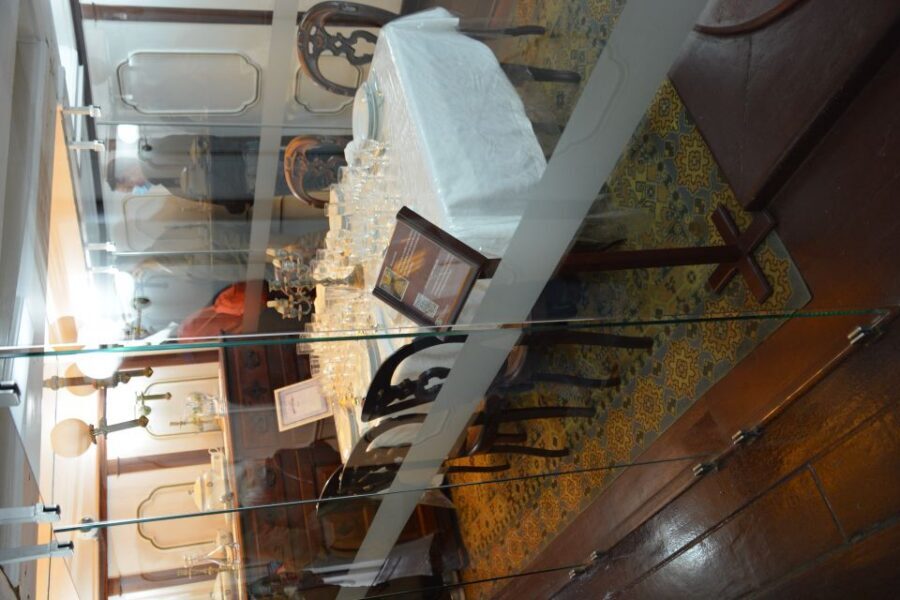
A big part of the ship’s story isn’t heroic sailing. It’s survival. After a fire in 1963, the ship was left almost submerged in the Tagus River until 1992. That is a brutal reminder of how hard it is to preserve wooden vessels and how much water and time can do to anything built for the sea.
Then came reconstruction. The ship was rebuilt after that event and has been set up as a museum since 1998, standing in a dry dock. For you as a visitor, that means you’re seeing an artifact that had to be saved twice: once from disaster, and again from disappearing entirely under decades of exposure.
It also explains why the experience feels grounded. You’re not walking through a perfectly untouched scene. You’re walking through a recovered one.
QR code app guide and on-board activities: using them without slowing down
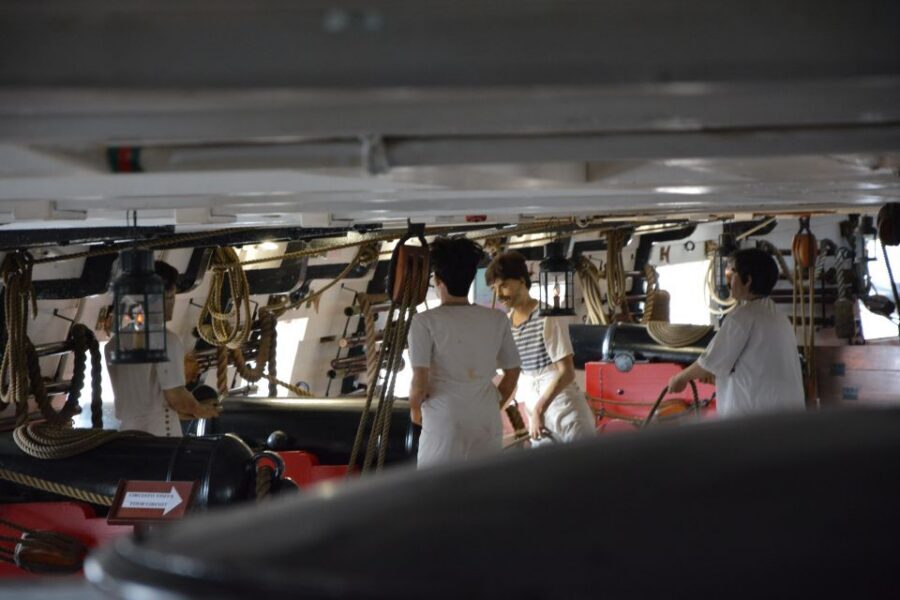
Your ticket includes a free QR code app guide plus activities throughout the ship. In practice, this is how you get the most out of a one-hour visit: let the app keep you oriented, and let the activities pull you toward details that you might otherwise miss.
A key tip: go in with your phone charged and ready to scan. If your screen brightness is low or you’re saving battery, QR codes become frustrating fast, and the whole point is to make the ship readable at your pace.
Language can also shape how smoothly the guide works. One review experience reported that written explanations were available in English and Portuguese, and that French wasn’t offered for their visit. If you’re a French speaker, plan to rely on English/Portuguese text and your own curiosity when something isn’t clearly translated.
What to expect from staff and the visitor vibe
Service quality can vary in any museum, and this one has had some sharp feedback. One negative experience described an unfriendly welcome and also an unpleasant incident tied to a parking payment machine nearby. That’s not part of the ship itself, but it’s worth knowing so you can protect your mood.
On the positive side, the interior visit is what usually lands best. People tend to come away feeling they saw the ship in a meaningful way, not just looked at it from a distance.
And here’s a genuinely useful detail: one visitor had the good luck of meeting an older former ship member on-site, who acted like an extra guide for their group. That kind of informal help can turn the museum into a more personal lesson. You can’t count on it, but it’s a reminder to ask questions respectfully if someone looks like they know the ship well.
The U-boat isn’t included: plan your expectations
The ticket includes the frigate and the deck exploration. It does not include entrance to the U-boat, which is still closed.
This matters because one of the easiest ways to feel disappointed is to assume a broader lineup. If you’re buying for the ship experience itself, you’re in the right place. If you were expecting a multi-vehicle tour, you may feel like something is missing once you realize the U-boat area isn’t open.
Accessibility and comfort: who should (and shouldn’t) choose this
This activity is not suitable for people with mobility impairments and wheelchair users. That’s important because four-deck exploration inside a ship naturally involves vertical movement and tight spaces.
If you can handle stairs and narrow areas, you’ll likely do fine. If mobility is an issue, it’s better to look for another Lisbon option where you can move without barriers.
For comfort in general, bring a mindset of “ship museum shoes.” Even when it’s stationary, it still feels like a real vessel, and your body will notice the change in surfaces and levels.
Should you book the Fragata D. Fernando II e Glória ticket?
Yes—if you want an authentic Lisbon stop that’s short, focused, and unusually hands-on. At $8 for about an hour, it’s excellent value for a real wooden sailing ship tied to the Portuguese Navy and the Carreira da Índia. The four decks and the QR app guide help you turn a simple visit into an understandable experience.
I’d think twice if you need French language support, because explanations may be English and Portuguese depending on the materials working on-site. Also, if you were hoping for the U-boat, skip this ticket expecting that part. Finally, if stairs and ship-style movement are hard for you, this one isn’t a fit.
If your ideal museum day includes walking through history with your senses turned on, this is a smart booking.
FAQ
How much does the Fragata D. Fernando II e Glória admission ticket cost?
The admission ticket is priced at about $8 per person.
How long is the visit?
The visit lasts about 1 hour.
Where do I go when I arrive?
You exchange your voucher at the ticket counter first. Then you go to the ship, which is located in a dry dock just by the square.
What’s included with the ticket?
You can explore the four decks, and you get a free QR code app guide. There are also activities throughout the ship.
Is the U-boat included?
No. Entrance to the U-boat is not included because it is still closed.
Are food and drinks included?
No. Food and drinks are not included.
What languages are used for explanations?
Explanations are reported as written in English and Portuguese, and French may not be available for your visit.
Is the experience accessible for wheelchair users?
No. The activity is listed as not suitable for people with mobility impairments and wheelchair users.
Is free cancellation available?
Yes, you can cancel up to 24 hours in advance for a full refund.